When the King Climbs the Car: A Heart-Stopping Moment on Safari
The afternoon sun hung low over the vast African plains, turning the dry grasslands into a shimmering sea of gold. The wind moved like breath across the savanna — quiet, rhythmic, ancient. Dust swirled in the wake of the few safari trucks making their way down a narrow dirt road that cut through the wilderness.
It was the kind of day that makes you feel small — where the horizon stretches endlessly and every sound seems older than time itself.
For most tourists, a safari is the thrill of the unknown — the hope of spotting lions in the distance, elephants at the watering hole, or cheetahs slipping through the grass. But for one driver and his passengers, that thrill would turn into something else entirely: a close encounter with the raw, unpredictable power of nature.
The Unexpected Roadblock
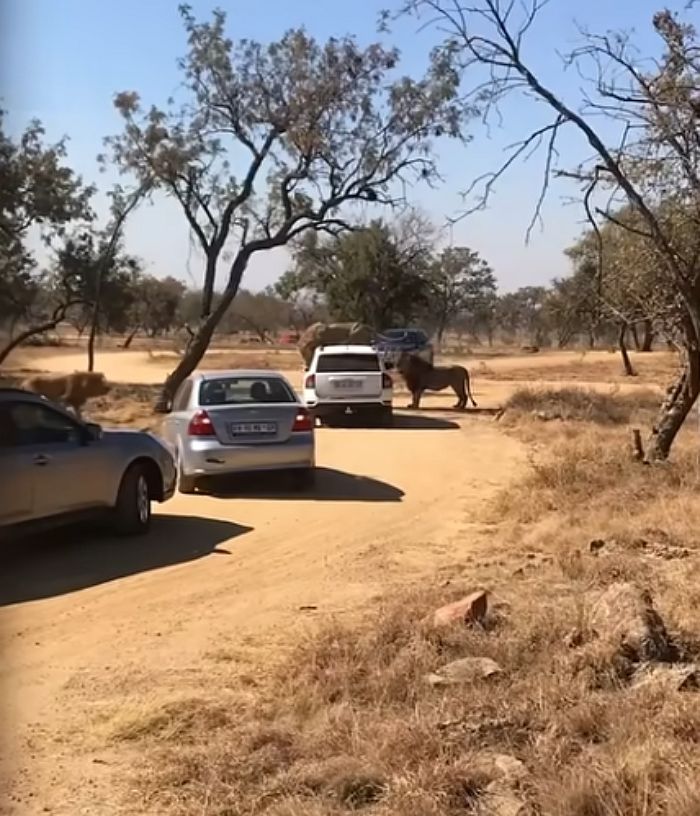
The moment began like any other stop on a safari drive. Ahead, a few cars had pulled over. The road was blocked. But it wasn’t by fallen branches or a broken vehicle — it was by lions.
A whole pride sprawled across the road, soaking up the warmth of the sun. Some were lying on their sides, tails flicking lazily, while others watched the horizon with regal disinterest. They were in no rush to move — this was their land, their kingdom.
Drivers waited quietly, engines off, cameras raised. No one dared disturb them.
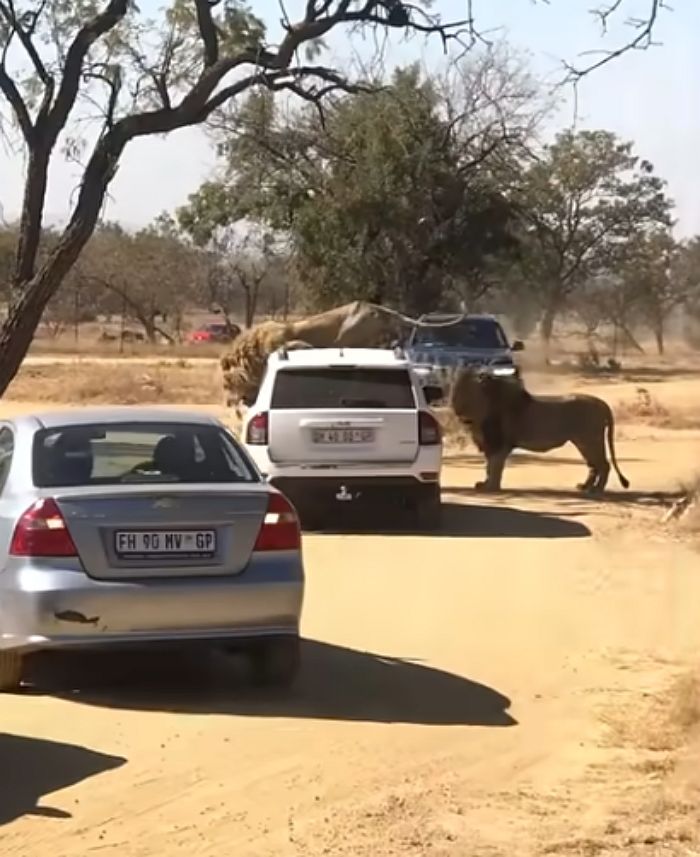
But in the middle of the line of vehicles, a white SUV drew unexpected attention. A young male lion, his golden mane darkened with dust, began circling it. His eyes glinted — curious, cautious, and commanding. Then, with a sudden burst of power, he leapt.
In one effortless motion, the lion landed on the rear of the vehicle.
The King on the Roof
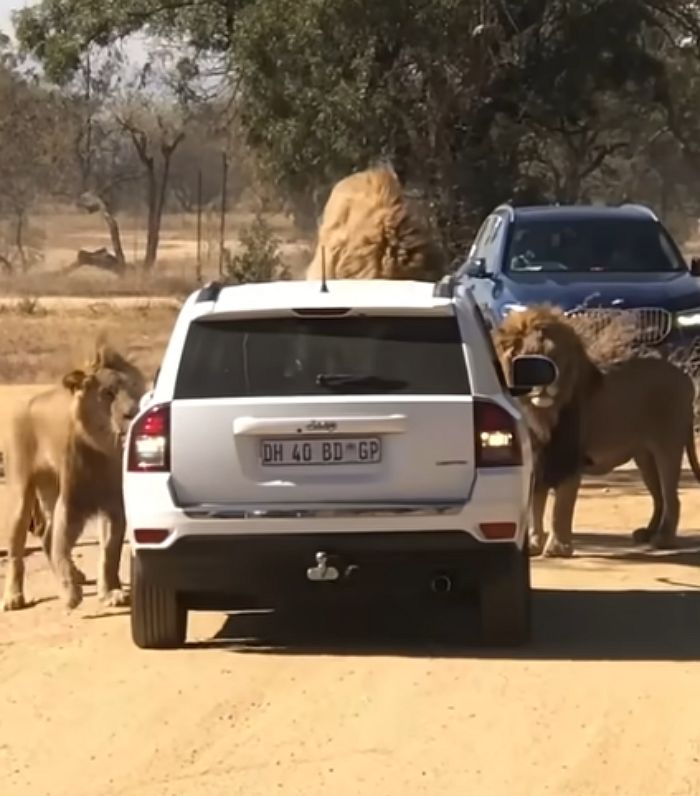
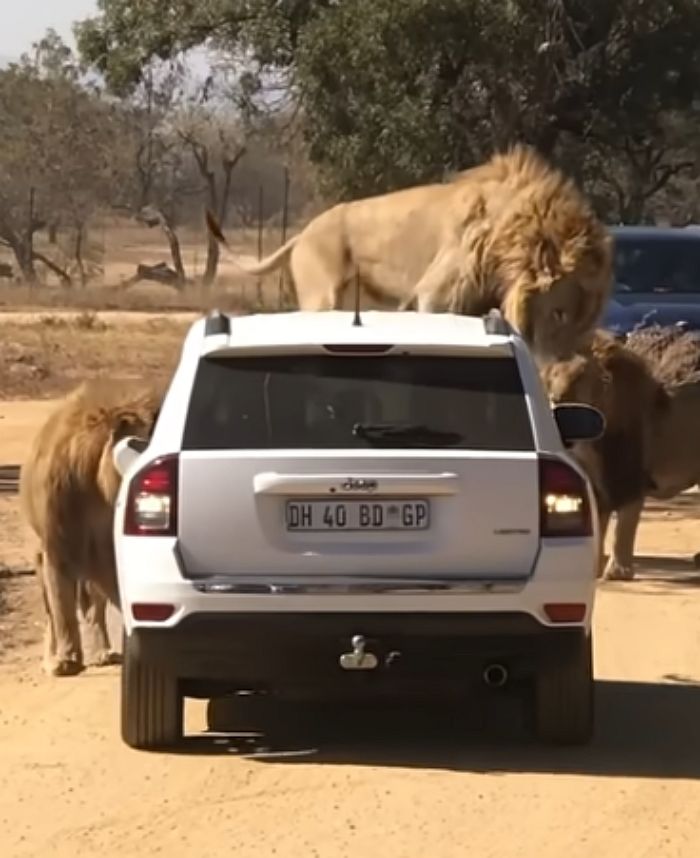
The sound of his paws hitting metal echoed like thunder in the still air. Gasps rippled through the other cars. The lion’s massive body pressed down on the SUV’s roof, his claws gripping the edges for balance. He stood tall, scanning the horizon — every muscle taut, every movement deliberate.
From inside the car, the driver and passengers froze. The air must have felt heavy, suffocating. Through the rear window, all they could see was golden fur, muscle, and the rise and fall of breath.
Outside, the rest of the pride stirred. A few females got up, circling closer. Cubs peered from the grass. The males’ tails flicked — a low rumble of authority passing through the pride.
The man behind the wheel didn’t dare move. Any sudden sound or motion might provoke the lions. For minutes that felt like hours, he sat still, hands locked on the steering wheel, eyes flicking between mirrors and windows.
Around him, cameras clicked from the other vehicles, capturing the surreal moment — a lion claiming the top of a car as his throne.
A Test of Nerves
The scene was both magnificent and terrifying. The lion, unmoved by the panic he caused, shifted his weight, the car creaking under him. His massive paws left dusty prints across the roof and rear glass.
The driver’s heart must have been pounding. The silence was broken only by the occasional huff from the lions and the soft rustle of wind through dry grass.
Finally, after what felt like forever, the man decided he couldn’t wait any longer. He reached for the gear, his movements slow, deliberate. The engine started with a low growl — barely a vibration.
For a moment, nothing happened. The lion didn’t flinch. The driver reversed, inch by inch, hoping not to startle his uninvited passenger.
But the lion didn’t move. He stayed put — calm, commanding, as though asserting that the savanna, and even this machine, was his domain.
When Power Meets Patience
Inside the SUV, every second was a battle between fear and instinct. The human response was to escape; the wiser one was to stay still. The driver’s dilemma mirrored the ancient struggle between humans and nature — control versus surrender.
And yet, sometimes, nature decides for you.
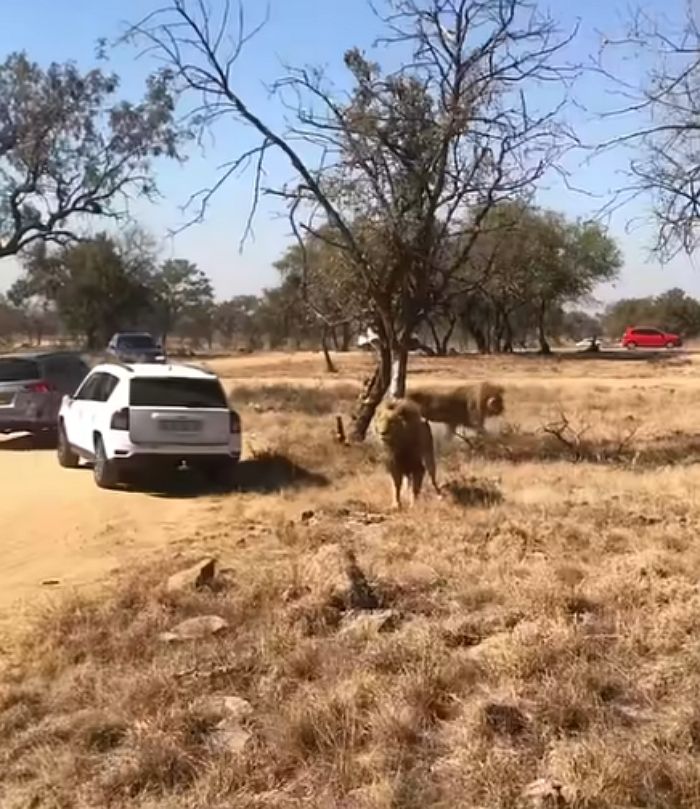
After a few tense moments, the lion shifted. Slowly, he crouched, the muscles in his shoulders rippling like waves beneath his coat. Then, without warning, he leapt down from the vehicle, landing silently in the dust.
The road was still. Every eye followed him.
The lion walked calmly toward the grass, joining his pride as if nothing extraordinary had happened. Within moments, they were gone — their golden forms blending back into the savanna, leaving behind only the marks of their paws on the SUV’s roof.
Silence After the Storm
When the danger passed, the driver finally exhaled — the kind of breath you don’t realize you’ve been holding until it’s gone. The stillness that followed was deafening.
He glanced at the roof through the mirror: faint dents, a few scratches, a patch of lion fur clinging to the back window. Proof of how close they’d come to the wild — and how lucky they’d been to leave unharmed.
No one spoke for a while. Words seemed too small for what had just happened.
Reflections on a Wild Encounter
Later, those who witnessed the moment described it as both terrifying and humbling. Watching a lion up close, not from behind a fence or through a lens, but pressed against your vehicle — it strips away any illusion of control.
It reminds you that in the wilderness, humans are guests.
Safaris offer a glimpse into a world where instincts rule — where survival is not a story but a heartbeat. We enter that world with cameras and curiosity, but moments like this one remind us that respect is the true price of admission.
The driver later said that during those tense minutes, he wasn’t thinking about photos or stories. He was thinking about stillness — about not making a sound, not even breathing too hard. Because in the eyes of the lion on his roof, he was not a tourist or a driver. He was prey, or perhaps simply irrelevant — another creature in the great, indifferent rhythm of the wild.
The Lesson the Lions Left Behind
As the vehicles slowly moved forward again, the dust settled over the road as though nothing had happened. But for those who witnessed it, the world felt different — sharper, quieter, more fragile.
They had seen what few ever do: the raw power of a lion unfiltered by cages or fear. And they had survived it.
It was a moment that would stay etched in memory forever — a heartbeat of awe and terror, wrapped in the golden silence of the savanna.
For the driver, it was more than just a close call. It was a reminder that out here, in the wild, we are only ever visitors — passing through the kingdom of kings who need no throne.
And as the sun began to set, casting long shadows over the grasslands, the road stretched on — empty now, but echoing with the quiet message of the wild: respect the power you do not control.