The River of Life
At the edge of Katmai National Park, Alaska, there is a place where the wild still breathes as it did thousands of years ago.
A place where the air smells of cold water and pine, and the sound of rushing falls drowns out everything — even time.
This is Brooks Falls, a small waterfall on the Brooks River that, for most of the year, runs quiet and calm. But for a few weeks each summer, it becomes something else entirely.
The salmon come.
And with them — the bears.
2. The Gathering
Photographer Christopher Ang had dreamed of this moment for years. Armed with his camera and a deep respect for the wilderness, he made the long journey to Katmai by bush plane, landing on a thin strip of gravel surrounded by mist.
He hiked to the viewing platform above the falls — the place where photographers from around the world wait in silence, their lenses trained on the frothing water.
But what he saw that morning wasn’t the serene scene of bears calmly fishing as postcards suggest.
It was chaos.
Seven massive brown bears stood in the shallows — each weighing nearly half a ton, their fur slick and dark from the water, their breath steaming in the cold air.
The salmon run had begun — and so had the showdown.
3. The Rules of the River
Normally, brown bears are solitary. They roam alone across hundreds of miles, avoiding others except during mating season. But during the salmon run, instinct overrides solitude.
Every bear wants the same thing — the best fishing spot at Brooks Falls, where the salmon leap straight into open jaws.
There’s an unspoken hierarchy here. The biggest and oldest males claim the best ledges; smaller bears and mothers with cubs linger downstream, waiting for leftovers.
It’s a delicate balance, held together by dominance, respect, and the raw law of nature.
But today, something had shifted.
The water was thick with fish — but so were the bears’ tempers.
4. The Clash
The moment came without warning.
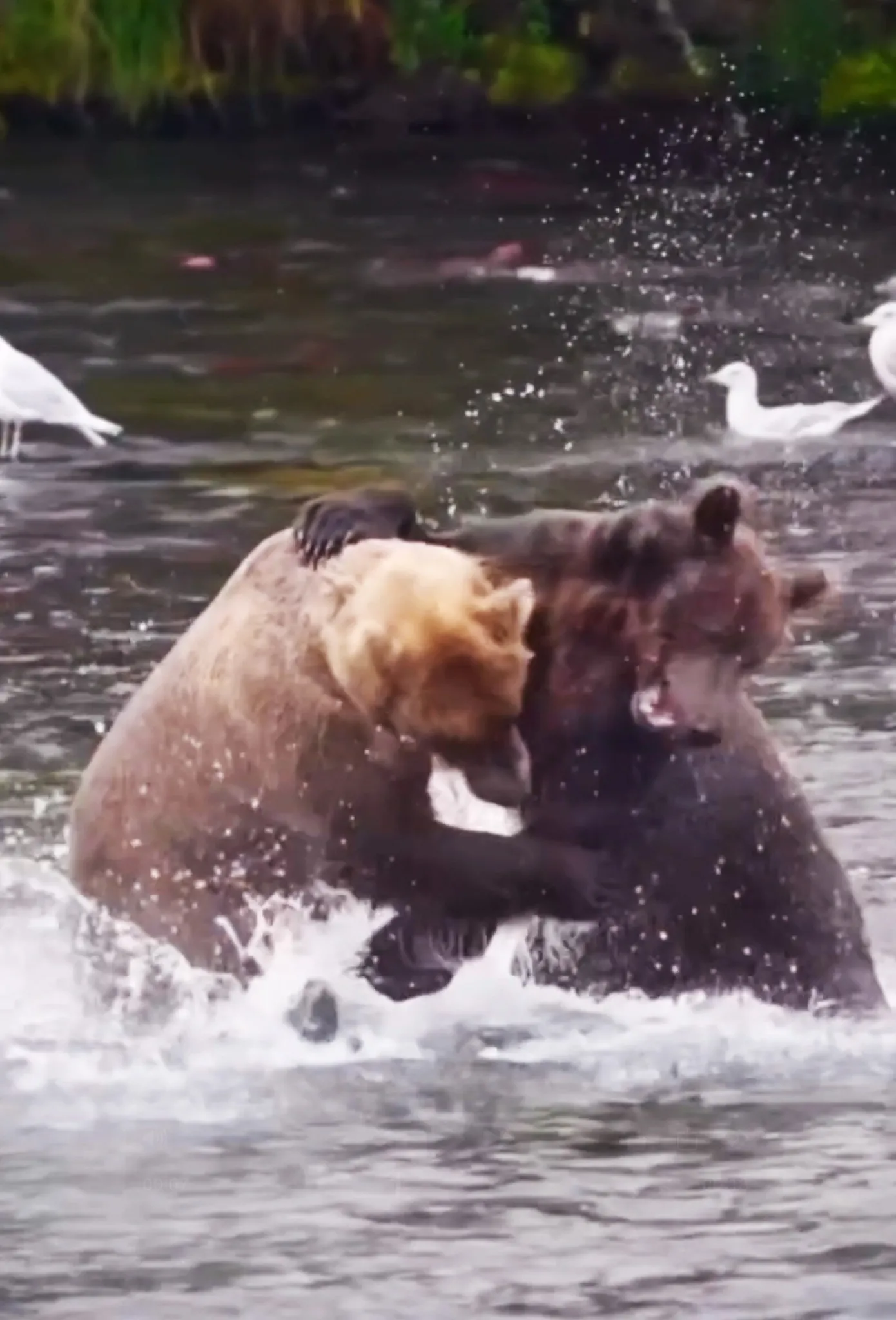
Two bears — both huge, both scarred — locked eyes across the current.
One lunged.
The other didn’t flinch.
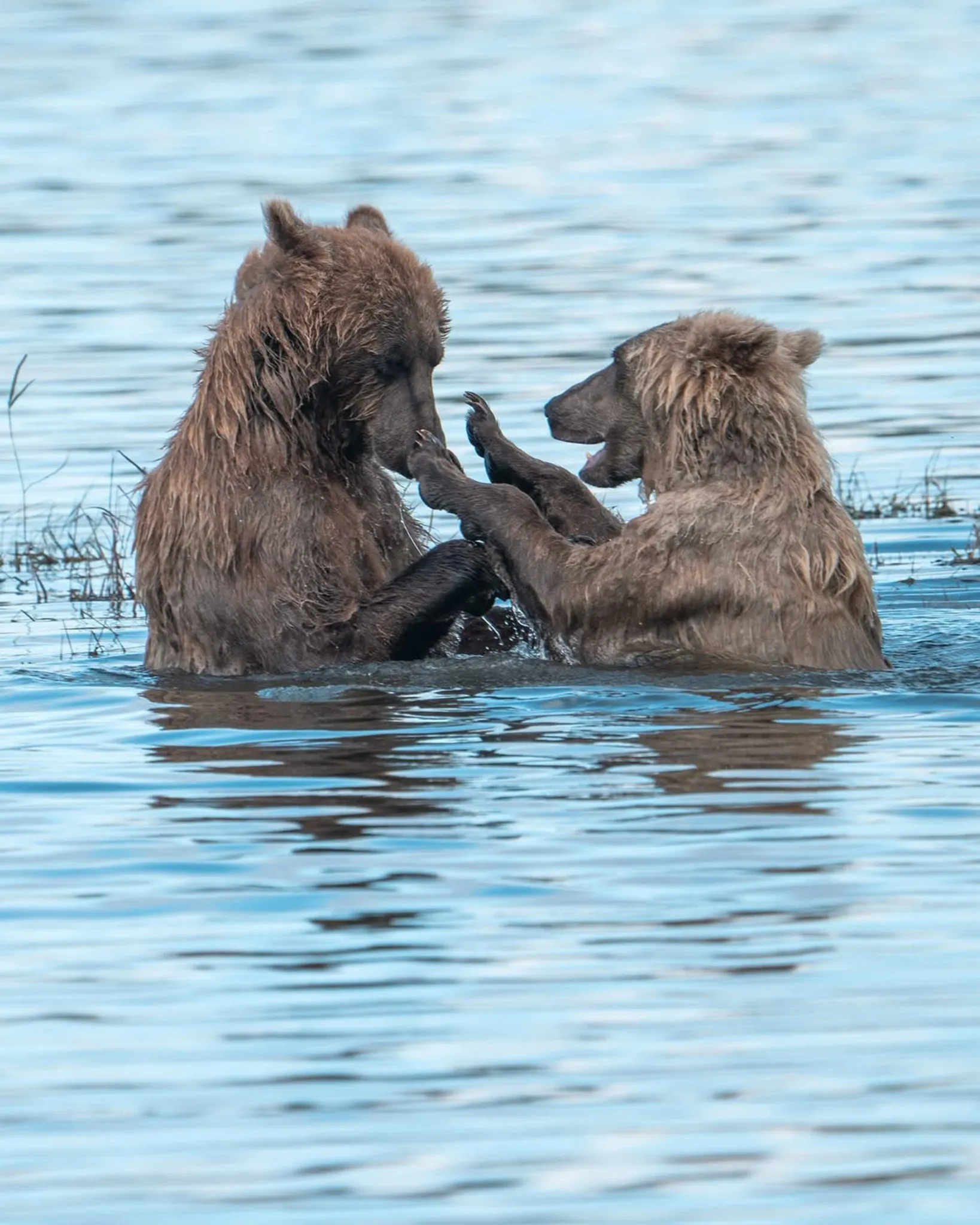
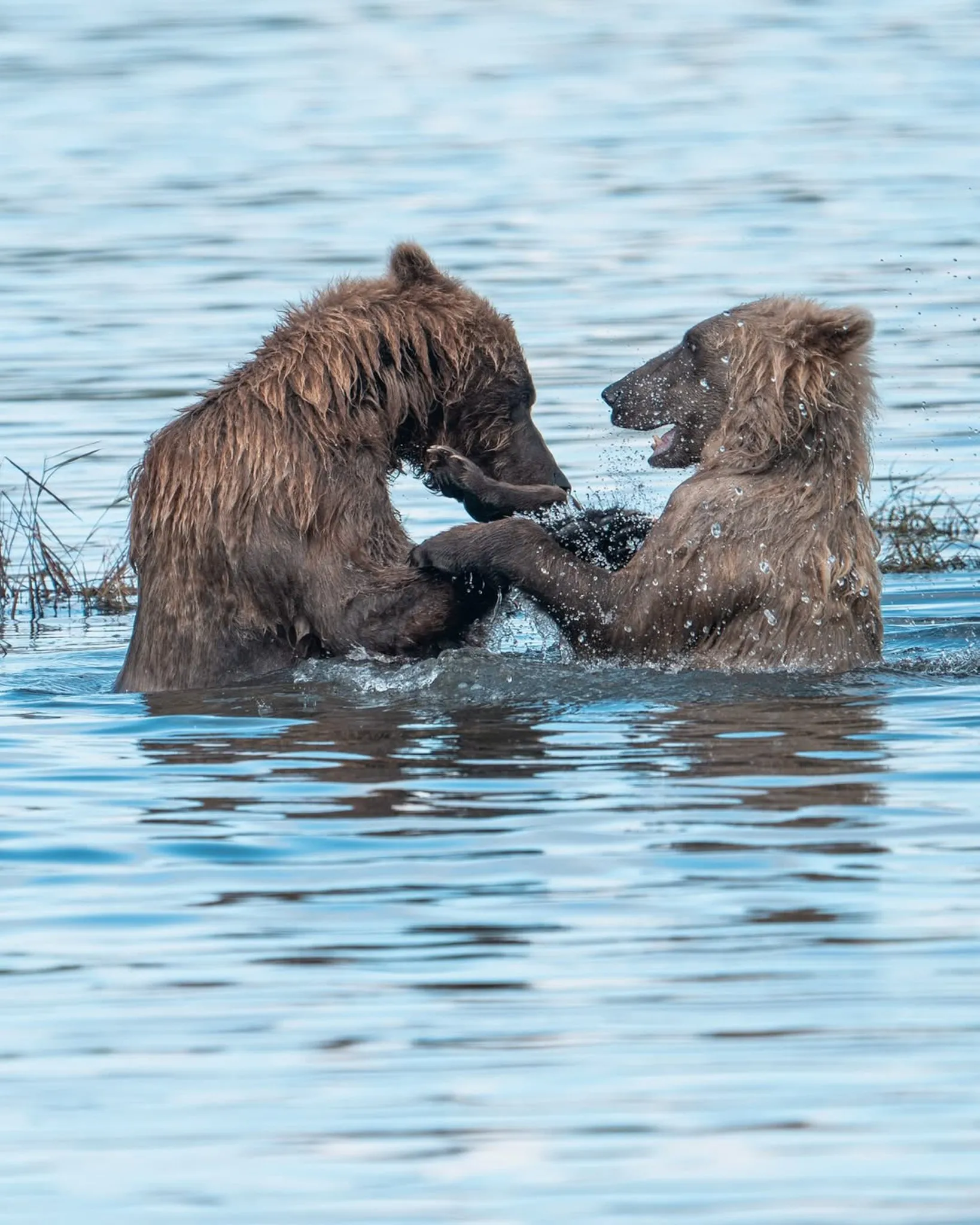
In an explosion of water and fur, they collided, roaring so loudly that Christopher felt it in his chest. Their claws slashed through the spray, muscles rippling, droplets flying like shattered glass in sunlight.
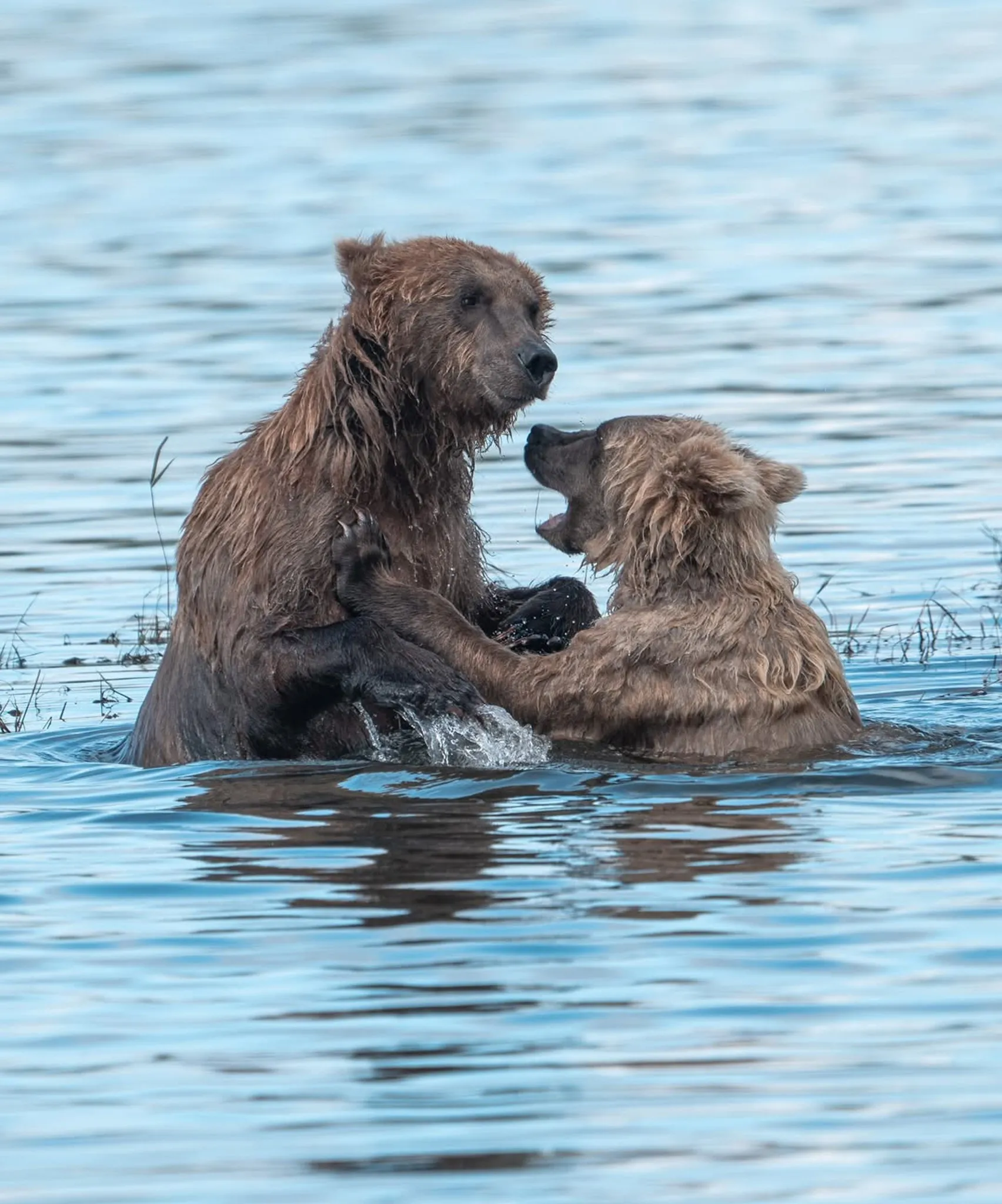
For minutes, they circled — swiping, growling, standing upright like titans testing each other’s strength.
“One bear lunges one way, another reacts instantly,” Christopher recalled. “It’s pure chaos until everything aligns for the perfect moment.”
He snapped photo after photo, heart racing, capturing something both violent and beautiful — a dance of dominance, primal and ancient.
Finally, one bear yielded, stepping back into the shallows. The victor let out a low grunt, then turned toward the falls — his prize reclaimed.
5. The Silence After the Storm
As quickly as it began, the battle was over.
The winner climbed onto a slick rock ledge above the cascade, watching the silver blur of salmon below. Every few seconds, one would leap into the air — and in a single, fluid motion, he’d catch it midflight.
The others returned to their posts, tension dissolving into rhythm once again.
It was the wild’s version of peace — not the absence of conflict, but the balance after it.
Christopher lowered his camera and exhaled. He realized he had just witnessed a moment that few ever do — not just a fight, but the story of survival written in movement and instinct.
6. The Eternal Cycle
At Brooks Falls, the salmon run is more than a spectacle — it’s a cycle of life and death that sustains everything around it.
Each year, millions of sockeye salmon make the impossible journey upstream, driven by the urge to spawn. They battle currents, waterfalls, and exhaustion — only to meet their end in the jaws of bears, eagles, or wolves.
It sounds cruel, but it’s not.
It’s balance.
The salmon feed the bears.
The bears scatter their remains across the forest, feeding the soil, the trees, and the rivers that will one day carry more salmon home.
Everything is connected.
“You can feel the pulse of the earth here,” Christopher said later. “It’s not chaos — it’s order, just older and wilder than we can understand.”
7. The Photographer’s Eye
That night, back at camp, Christopher reviewed the photos on his laptop under a dim lantern glow.
In frame after frame, he saw more than just a fight — he saw emotion.
Determination in the way one bear squared its shoulders.
Focus in the eyes that followed each flash of silver.
Even hesitation — as though they, too, understood what was at stake.
Each image told a story older than words — of hunger, survival, and the rhythm of the wild that refuses to fade.
He named the photo series “The River of Thunder.”
8. The Power Beneath the Beauty
To an outsider, it’s easy to romanticize Alaska’s wilderness — to see only beauty and forget the cost. But for the bears, every salmon caught means strength for the long winter ahead.
Each strike, each roar, is survival made visible.
And yet, despite the ferocity, there’s grace.
No hatred. No malice.
Just life — raw and unfiltered.
Christopher wrote in his journal:
“They fight not to win, but to endure. The river doesn’t choose sides — it only carries their stories.”
9. A Lesson from the Falls
When the sun broke the next morning, mist rose from the river like smoke. The bears were still there — quieter now, bellies full, fur glistening gold.
The sound of water over rock became almost meditative.
Christopher thought about how these same scenes had played out for thousands of years — long before humans, cameras, or even language.
And perhaps that was the greatest lesson Brooks Falls had to give: that nature doesn’t need us to be magnificent. It just is.
All we have to do is watch — and remember.
10. The Final Frame
As he packed his gear, one last bear approached the riverbank — younger, leaner, hesitant. It waited until the others moved off, then stepped into the stream.
The current pushed hard against its legs, but it stayed steady, eyes locked on the water.
Then, with one swift motion, it lunged — and emerged with a glimmering salmon clutched in its jaws.
A small victory, invisible to most of the world, but monumental in the wild’s quiet calculus.
Christopher smiled. The story wasn’t over.
It never is.
Because here, in this remote corner of Alaska, life keeps flowing — fierce, beautiful, unstoppable.