The morning light spread softly over Masuwe Lodge, where the air was still and golden, filled with the songs of birds and the rustle of distant leaves. The elephants had gathered at the nearby waterhole, their reflections rippling across the calm surface. It was one of those rare, perfect African mornings — peaceful, unbroken, and full of quiet life.
But hidden beneath that beauty was suffering.
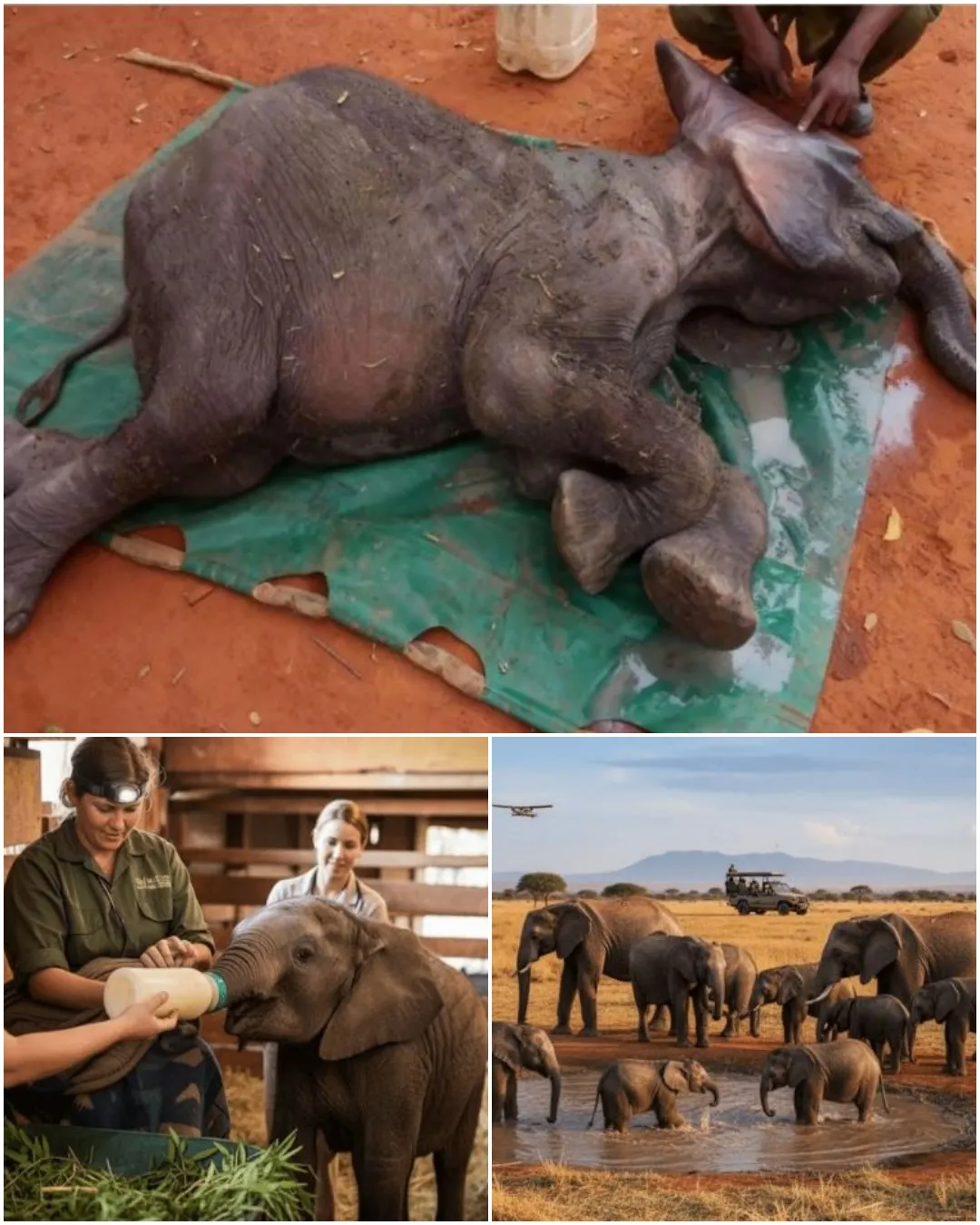
Somewhere among the herd, a young female elephant was in pain — silent, trapped, and struggling. A wire snare had wrapped tightly around her mouth and tusks, biting into her tender skin every time she tried to eat, drink, or lift her trunk. It was a cruel reminder that even here, in the heart of nature’s sanctuary, danger can come in the form of a single strand of wire twisted by human hands.

The Call for Help
It began with a call from Zimparks, Zimbabwe’s National Parks and Wildlife Authority. The message was urgent: a young elephant near Masuwe Lodge had been spotted with a snare wound. Time was critical — an untreated injury like this could quickly turn deadly.
We moved fast. Within the hour, our rescue team was on site, joined by Adrian Read and local wildlife officers. The air buzzed with focus and quiet determination. We’ve done rescues before — many, in fact — but every call like this carries its own weight. Every animal is a life, a beating heart, a story we’re trying to protect from ending too soon.
When we arrived, we saw the herd — a gentle gathering of giants — clustered near the waterhole, their trunks dipping rhythmically into the shimmering surface. And there she was — the young cow, barely into adulthood, standing close to her mother, her movements slow and uneasy.
Even from a distance, we could see the snare glinting in the sunlight, a cruel metal line cutting across her mouth. Each time she tried to use her trunk, she flinched.
A Plan in Motion
Approaching elephants — especially a herd protecting a distressed member — requires precision, patience, and deep respect. Elephants are not just intelligent; they are profoundly emotional creatures. They sense fear, compassion, and intent.
Working with Zimparks rangers and Adrian, we developed a plan. The team would carefully separate the young elephant from the herd, ensuring the others stayed calm and safe. The vet prepared the tranquilizer dart, his movements steady but urgent.
As we approached, the herd stirred. The matriarch lifted her trunk, her low rumble echoing like distant thunder — a warning, a plea. We kept our distance, moving with deliberate slowness, letting them understand that we meant no harm.

Then came the shot.
A sharp pfft cut through the air. The dart hit cleanly.
The young elephant took a few uneasy steps, her trunk brushing the ground, her eyes heavy with confusion. Within minutes, she sank gently to her knees, then onto her side. Her herd watched from a distance, their massive forms frozen in silence, as if they too understood what was happening.
The Rescue
We rushed forward. Every second counted. The vet checked her breathing and pulse while the others stabilized her position. Up close, the sight was heartbreaking — the snare was twisted tightly around her tusks and across her mouth, leaving raw marks along her skin.
With steady hands, we worked to free her. The metal was thick and rusted, likely placed long ago by poachers setting traps for bushmeat or smaller animals. But elephants, with their curious trunks and large movements, often get caught unintentionally — innocent victims of human carelessness.
Using bolt cutters, we began slicing through the wire. It resisted at first, digging deeper with every shift. The smell of metal and dust filled the air. Then, with one last strong cut, the snare gave way — a small sound of freedom that felt louder than thunder.
We cleaned the wounds, applied antibiotics, and collected vital health samples — blood, tissue, and saliva — part of our ongoing efforts to monitor the health of local elephant populations. These samples tell stories too: about nutrition, disease, and survival.
As the vet worked, I stood watching her chest rise and fall, each breath a fragile miracle. Around us, the world seemed to hold its breath too — the rustling of leaves, the call of distant birds, the soft splash of the nearby waterhole.

A Moment of Awakening
When everything was done, the vet prepared the reversal injection. The team stepped back, giving her space. Within minutes, her breathing deepened, her ears flicked, and her trunk twitched as if testing the air.
Then, with a deep, trembling exhale, she lifted her head. Slowly, unsteadily, she rose to her feet. The sunlight caught her skin, and for a brief second, it looked as if she were glowing — alive, free, whole again.
Her herd, who had been watching from a distance, began to rumble softly. The matriarch took the first step forward, followed by the others. The young elephant turned toward them, lifted her trunk high — and then, in a moment that will stay with us forever, she ran to rejoin them.
They greeted her gently, touching her sides and face with their trunks, as if to say, You’re safe now. You’re home.
Reflections in the Dust
As we watched the herd disappear into the bush, the golden light fading behind them, I felt that familiar mix of exhaustion and awe. It’s humbling, this work — to stand in the wild, hands dirty, heart full, knowing that for at least one animal, the story ends differently today.
We packed our gear, but the sight of that rusted snare on the ground lingered in everyone’s mind. A loop of wire — small, simple, but deadly. It’s a reminder of how fragile the balance between life and loss can be.
And yet, it’s also a symbol of hope — because as long as there are people like Zimparks rangers, Adrian Read, and countless others who care enough to act, there’s always a chance to rewrite that story.

A Call to Action
Every rescue begins with one person who notices, one person who cares enough to make a call. That’s how this story started — and it’s how so many lives are saved.
If you ever see an injured or distressed animal, or signs of poaching like snares or traps, report it immediately. Your vigilance could mean the difference between life and death.
Together — conservationists, guides, travelers, and local communities — we form a chain of compassion that protects these magnificent creatures.
Because in the end, saving one elephant doesn’t just change her life. It changes ours.
It reminds us that kindness, courage, and quick action can restore balance — and that every creature deserves a chance to live wild, free, and unafraid.