In the wide, open plains where the wind sweeps across sagebrush and hills stretch to the horizon, a young foal once danced freely, the sunlight glinting off its coat, the rhythm of its hooves echoing the heartbeat of the land. Born to a tight-knit band of wild horses, the foal’s early days were filled with exploration, warmth, and the gentle guidance of its mother. Every sound, every scent, every shadow was a lesson — a step toward independence in a life that seemed boundless.
But freedom is fragile.
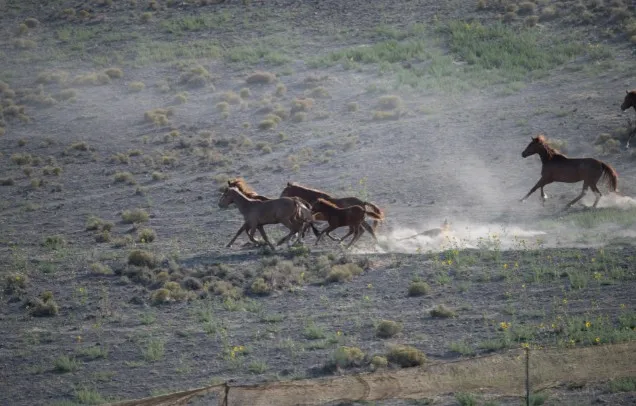
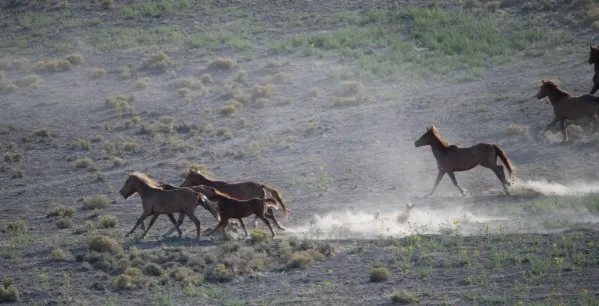
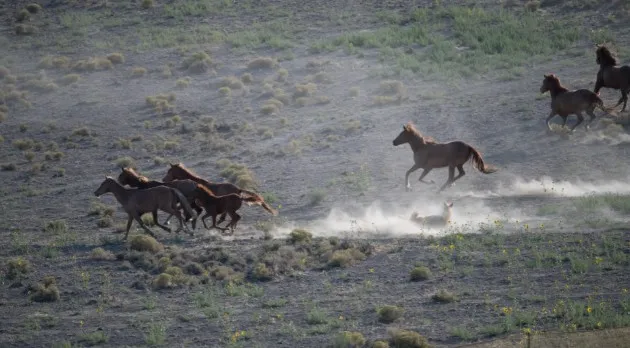
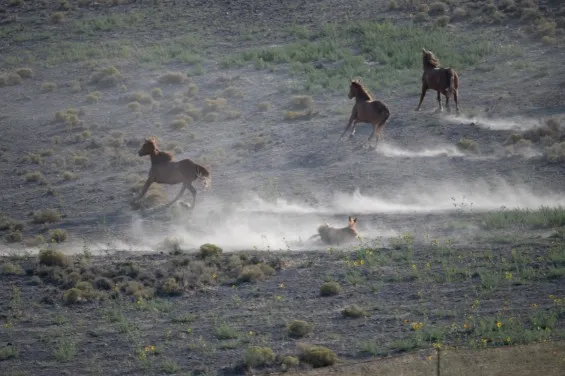
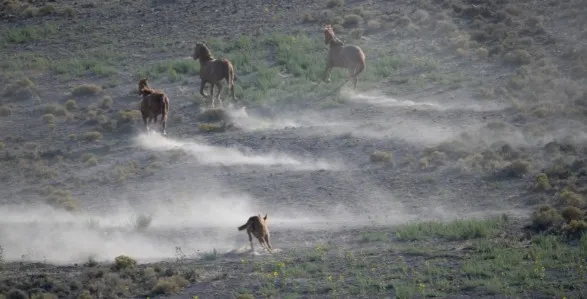
During a routine low-flying helicopter roundup, chaos erupted. The thunderous roar of rotors sliced through the still air, spooking the herd. Panic rippled through the band. Mothers whinnied, stallions charged, and young foals, with legs still learning their own strength, stumbled in confusion. One foal, barely days old, collided with the band as it tried to flee. The crash left it shaken, its legs trembling, a silent cry lost in the swirl of dust and fear.
This is not an isolated incident. Wild horse and burro roundups, while justified by some as population control, are inherently dangerous — particularly for the youngest members of a herd. Foals, who rely entirely on the protection of their mothers and the structure of their band, are often separated, injured, or even left behind during the frenzy.
Though the current government shutdown has temporarily paused roundups, the reality remains dire. More than 62,000 wild horses who have already endured the trauma of these operations remain stockpiled in government holding facilities. Many are left to grapple with the lasting effects of their capture — both physical and psychological.
Physical manifestations of extreme distress are common in these facilities. Horses often suffer from capture myopathy, a condition triggered by intense fear and exertion, which can lead to muscle breakdown, kidney failure, and death. Hyperlipaemia, another stress-related condition, can develop when a horse stops eating due to trauma, further compounding their vulnerability. Foals are especially at risk. Their bodies, still developing and entirely dependent on milk and guidance from their mothers, can fail under the strain of sudden separation and confinement. Yet even adult horses — strong stallions and matriarchs — are not immune, with fatalities observed among band leaders who collapse under the combined weight of fear and stress.
The psychological toll is equally devastating. Horses are deeply social creatures with intricate family bonds. Removal from the herd, abrupt confinement, and exposure to unfamiliar surroundings cause anxiety, depression, and erratic behavior. In holding facilities, these horses face months, even years, of monotonous captivity, far removed from the open range they once roamed. Their eyes, once bright with curiosity and confidence, often reflect confusion and sorrow.
Take, for example, the foal that collided during the helicopter roundup. After the initial trauma, it was separated from its mother and transported to a holding facility. The transition from sun-drenched plains to sterile pens was abrupt. Surrounded by the smells of strangers, the sounds of other terrified horses, and the confinement of narrow stalls, the foal struggled to stand, its legs weak, its heart pounding with residual fear. In the days that followed, caretakers monitored its physical health, providing food, water, and medication. But no treatment can replace the loss of maternal care and freedom.
Foals like this one often cling to the few familiar faces left — other young horses or sympathetic adults in the pen — but the bonds of family and herd cannot be recreated in captivity. Every step they take is shadowed by uncertainty. Every attempt to play or run is confined by fences and walls. For them, the world they were born into no longer exists.
Advocates for wild horse welfare have repeatedly warned about these dangers. Organizations monitoring the roundups stress that the animals’ suffering is not only immediate but long-term. Behavioral problems, weakened immune systems, and shortened lifespans are common outcomes for those who survive. Even with human care, the psychological scars remain, shaping how these horses interact with each other, with humans, and with their environment for the rest of their lives.
The plight of these horses also raises ethical questions about the methods used to control populations on public lands. While managing grazing resources and preventing overpopulation is necessary, critics argue that the current approach — high-stress helicopter roundups followed by indefinite confinement — is inhumane and unnecessarily cruel. Alternatives, such as fertility control, adoption programs, or non-invasive management, are suggested as more compassionate ways to protect both the land and the animals.
Yet, in the face of bureaucracy and logistical challenges, change comes slowly. In the meantime, tens of thousands of wild horses remain in holding, their once-free lives reduced to pens and pastures, their daily routines dictated by schedules and feedings rather than instinct and choice. Each foal, each adult horse, carries the silent memory of the day their freedom was taken — a memory that shapes every step they take, even years later.
And so, as we reflect on the image of the young foal colliding during the roundup, we are reminded of the fragility of freedom. We are reminded that behind every statistic is a life, a family, a story interrupted. We are reminded that these horses, born to roam and bound by instinct, are enduring trauma that will linger long after the dust settles.
The road ahead is uncertain, but awareness and advocacy offer a glimmer of hope. By highlighting the dangers of roundups, supporting adoption and rescue programs, and pushing for humane management practices, we can strive to ensure that future generations of wild horses are protected from such extreme distress. We can honor their families, preserve their freedom, and offer a chance at life beyond fear.
The foal, the band, and the thousands like them deserve more than survival — they deserve the chance to thrive, to run without constraint, and to live as they were born to live. While roundups may pause temporarily, the conversation about compassion, ethics, and care must continue. Only then can the legacy of these magnificent animals be preserved.
Because every hoofbeat in the wild should echo with joy, not fear. Every foal should grow surrounded by family, not fences. And every horse should have the life it was meant to live — free, proud, and unbro