A Second Chance: The Elephant Who Escaped the Pit
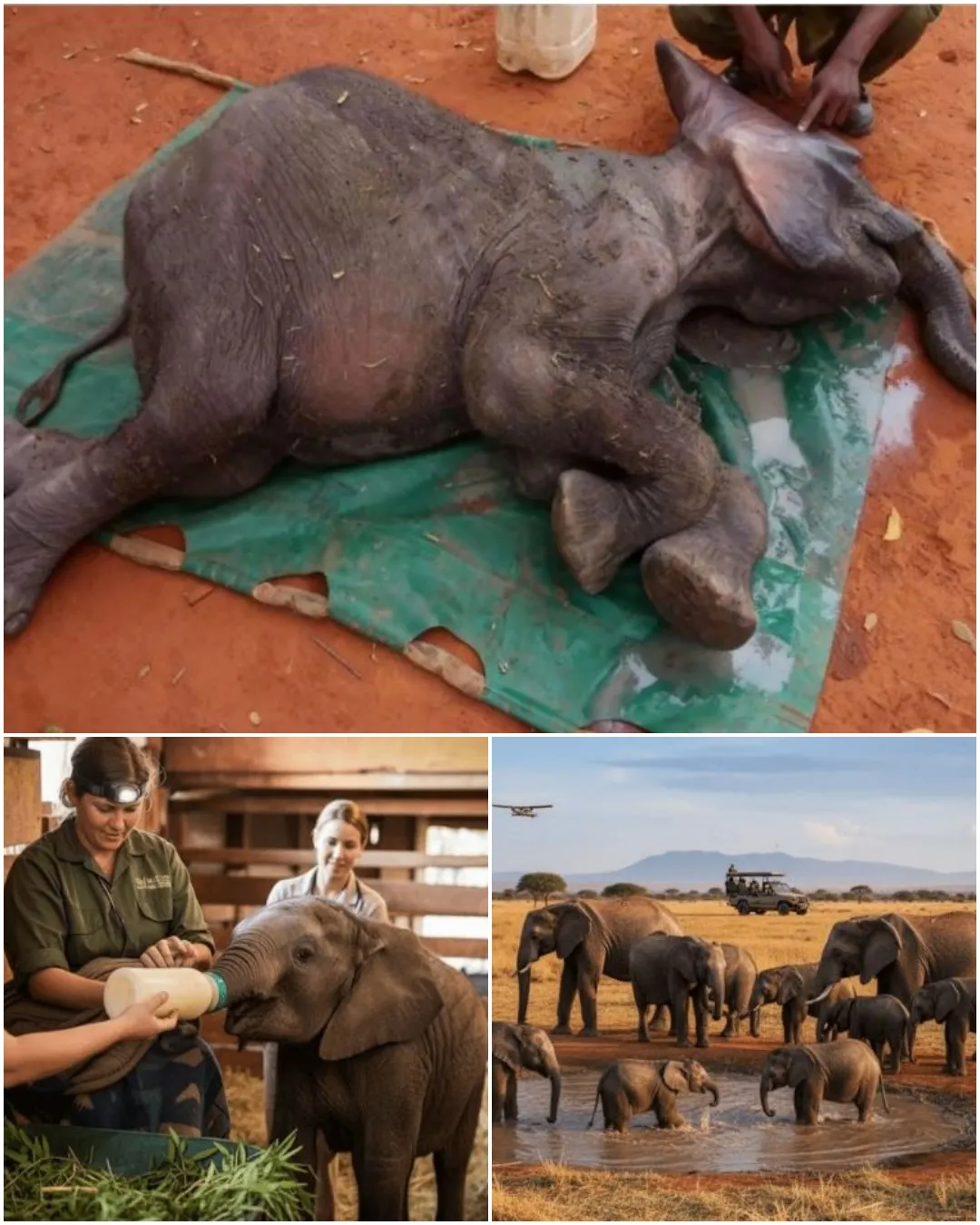
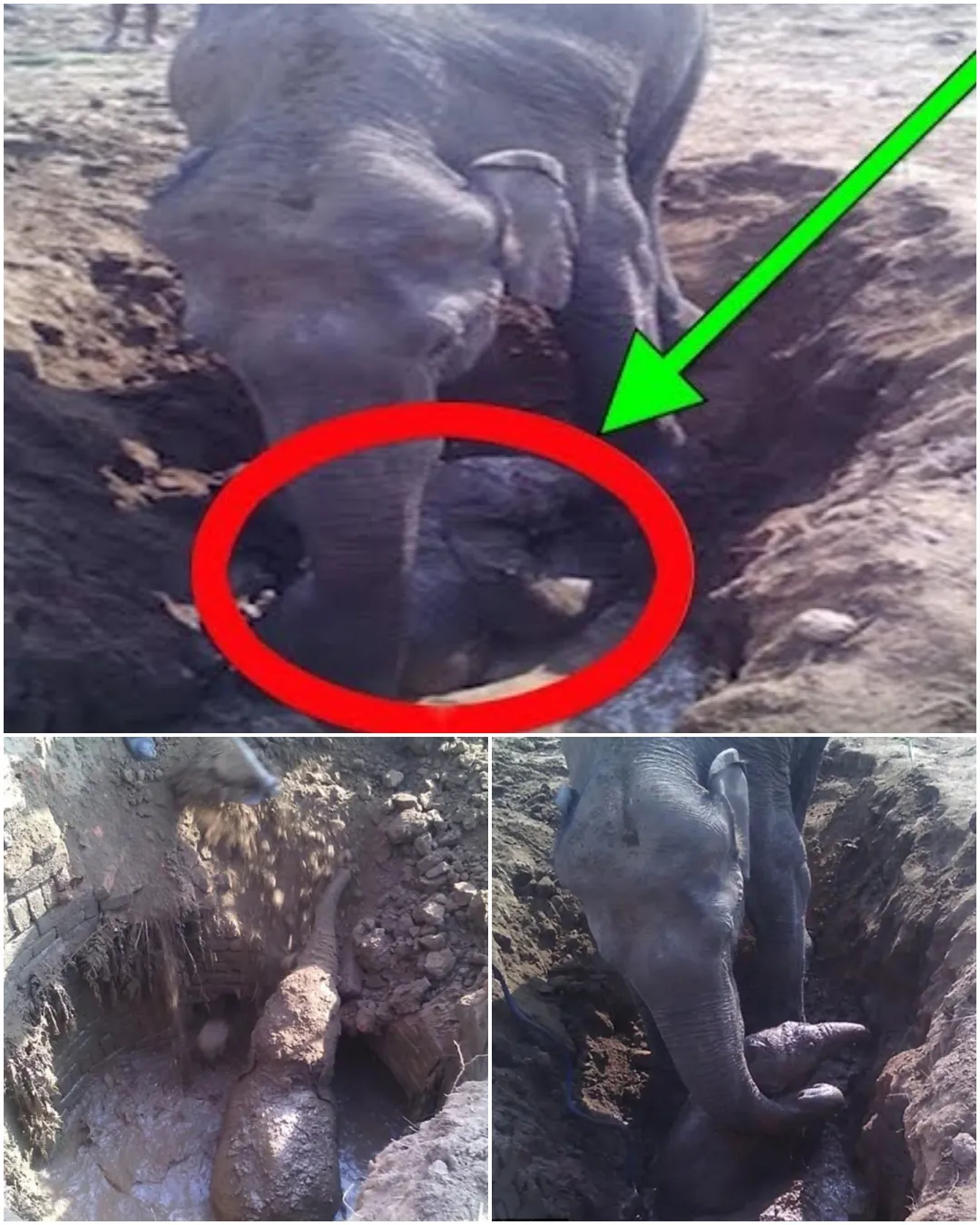
Under the scorching Kenyan sun, a young elephant’s desperate cries echoed across the dry plains near Makindu. It had been nearly twelve hours since the animal, parched and exhausted, slipped into a deep mud pit while searching for water. Each attempt to climb out only made things worse—the clay walls were slick, steep, and unyielding.
By the time local farmers found it, the elephant was on the brink of collapse. Its great body, weighing several tonnes, heaved with fatigue. The mud clung thick to its legs, trapping it like quicksand. Normally, farmers and elephants live in uneasy tension here—fields raided, crops destroyed, tempers flaring. But that morning, none of that mattered. What stood before them was not a threat, but a creature fighting for its life.

Without hesitation, the farmers called for help. Word spread quickly, and soon conservationists and rangers from The Kenya Wildlife Service and Big Life Foundation arrived on the scene. They assessed the situation carefully. The elephant was young and strong, but the pit was deep, its sides crumbling under any weight.
At first, rescuers tried ropes, digging, even coaxing the elephant to push upward—but every effort failed. The sun climbed higher, and the animal grew weaker. What had started as a rescue now turned into a race against time.

Then, from a nearby construction site, came an unlikely savior—a digger from the China Road and Bridge Corporation, whose crew was building infrastructure in the region. The conservation team reached out to them, and within minutes, the digger rumbled toward the pit. It was the only machine capable of carving a path steep enough for the elephant to climb without collapsing the walls entirely.
Wildlife scientist Jeremy Goss, who was there documenting the rescue, recalled the moment vividly:
“The elephant had wandered into the farmlands looking for water during this terrible drought,” he said. “It was heartbreaking to see it trapped, completely helpless. When the digger arrived, everyone held their breath. We knew this was the only chance.”

The operation began slowly. The machine’s massive arm carefully scooped away mud and clay, its operator working with the precision of a surgeon. One wrong move could spook the elephant—or worse, injure it. Rangers kept their distance, communicating through hand signals and radios, ensuring the animal stayed calm.
At last, after hours of delicate work, the digger had carved a rough ramp along one side of the pit. The elephant shifted its weight, testing the slope with a hesitant step. It tried once, slipped back, and trumpeted loudly—a sound of frustration and exhaustion.

Then, as the digger gently nudged the ground behind it, the elephant tried again. This time, it gained traction. With a final surge of strength, it climbed—mud flying, legs trembling—and stumbled onto solid ground. For a moment, the crowd fell silent. Then cheers erupted. Farmers, rangers, and construction workers—all strangers hours ago—found themselves united in triumph.
Jeremy snapped his final photo just as the elephant turned its head, as if to take one last look at the people who had saved it. “Watching it walk free,” he later said, “was a powerful reminder that humans can both harm and heal. The same hands that dug the well also rescued the elephant.”
But the work wasn’t done yet. The elephant, disoriented and frightened, lingered near the farmland. Rangers acted quickly, using vehicles and even a helicopter to guide it away from the growing crowd and back toward Chyulu Hills National Park—a safe haven of forests and volcanic ridges stretching toward the horizon.

As the sun dipped below the hills, the elephant disappeared into the tall grass, free once again.
For the people who stood witness, the rescue was more than just an act of compassion—it was a rare moment of unity between man and nature. Farmers who had once feared elephants now spoke softly about the young bull’s determination. The construction workers, who came only to build roads, had instead built a bridge of understanding.
Jeremy reflected on the symbolism of that day:
“In a world where wildlife and people are often in conflict, this was proof that coexistence is possible. The elephant’s survival wasn’t just its victory—it was ours too.”
Now, conservationists hope the young elephant will remain within the park’s protected boundaries, away from the dangers of wells and farms. They continue to work with local communities to create safer water sources—for both humans and animals—so that no more lives are lost to desperation.


Some say the elephant has been spotted near the park’s edge, healthy and calm, blending once again into the wild herd.
It’s a reminder that even in a world of shrinking wilderness, hope still finds a way to climb free.