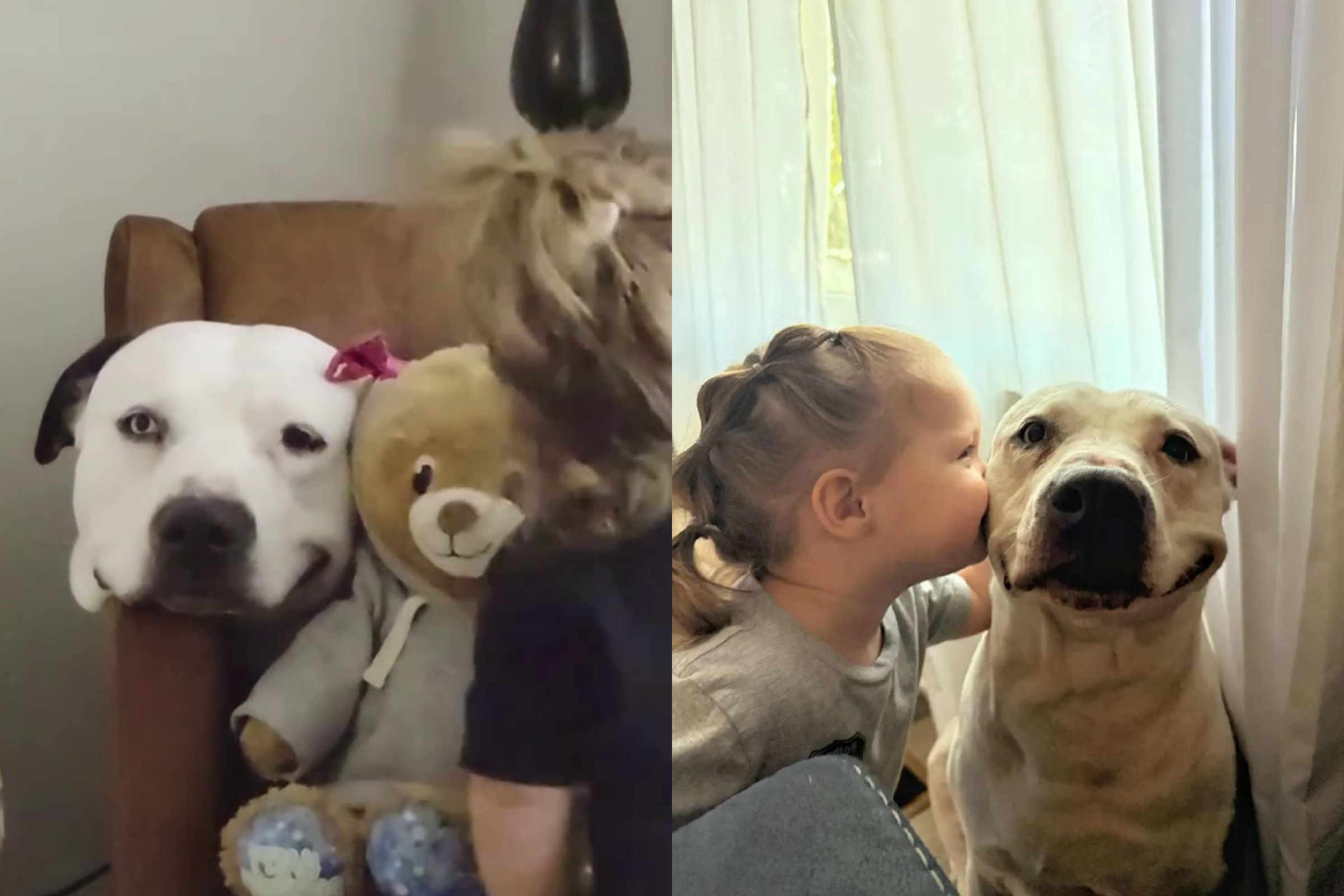
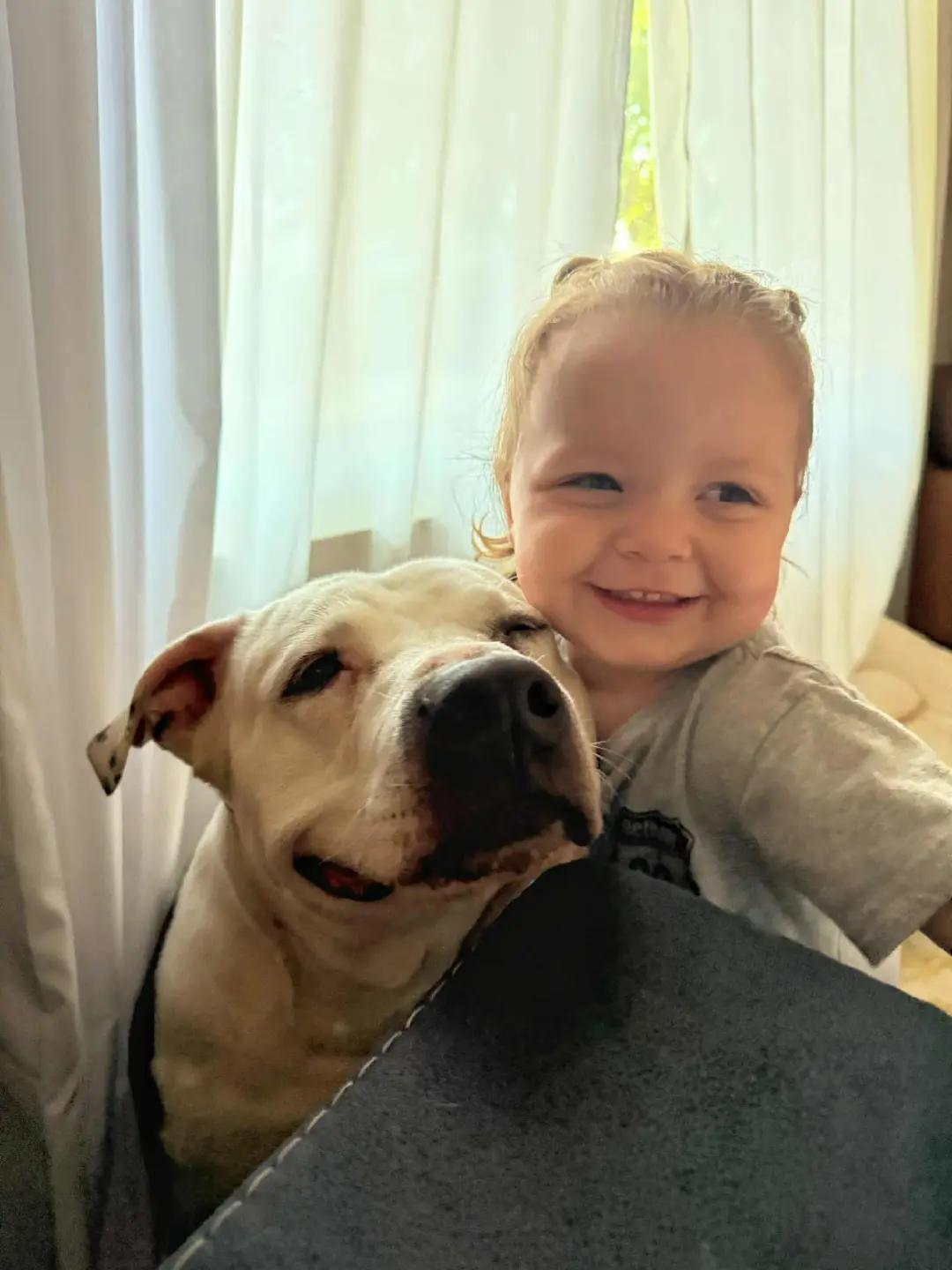
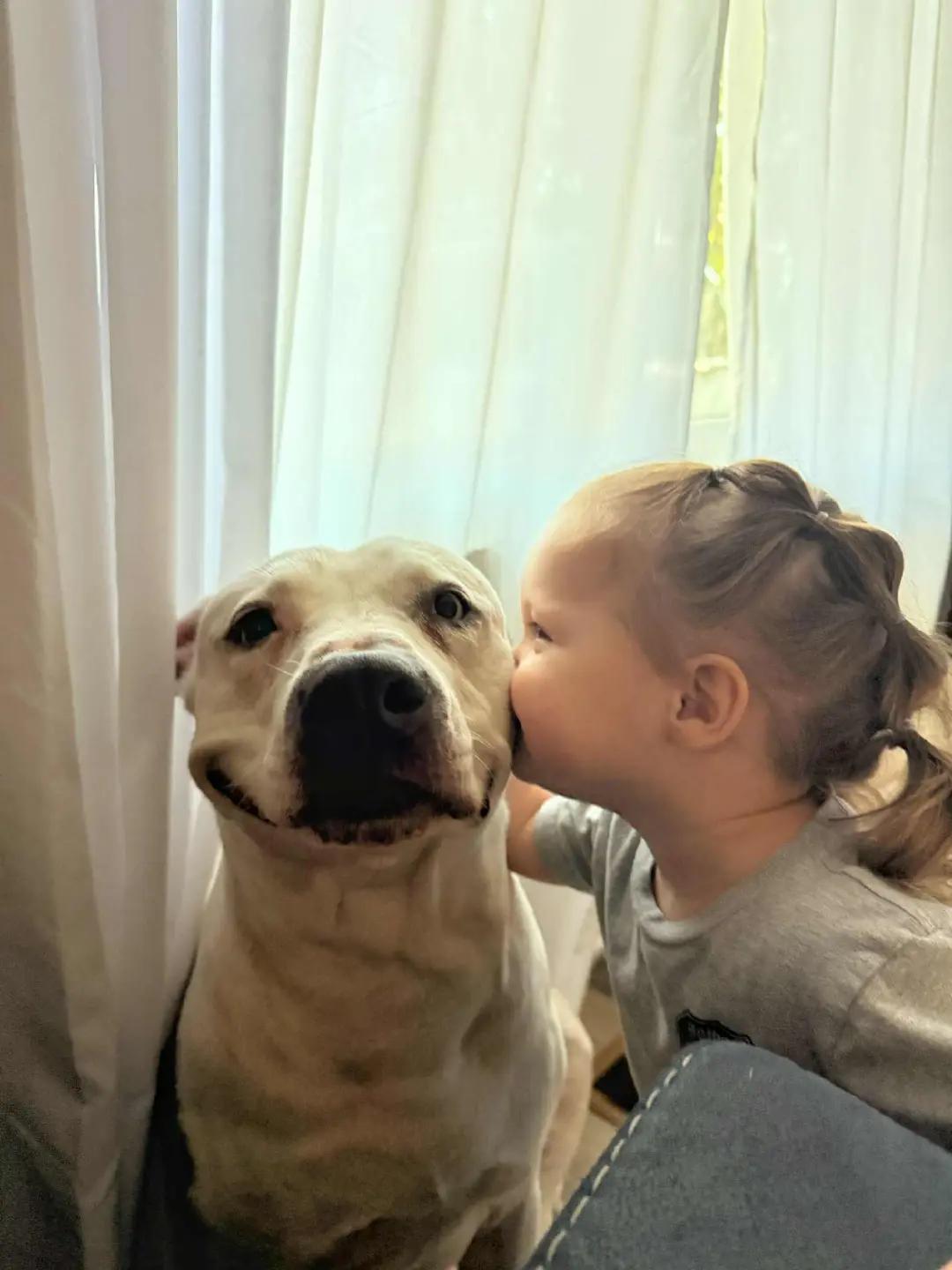
What could be purer than the happiness of a dog with his best friend? For Blueberry the pit bull, the answer is simple: nothing.
On August 10th, he was filmed showing a perfect smile while participating, with devotion and patience, in a game with a doll, created by his little guardian.
The scene, recorded in Bethany, Oklahoma, in the United States, and shared on TikTok, surpassed 1.6 million views and broke down prejudices about race.

In the video , Blueberry appears lying in an armchair, behind a teddy bear, with a serene expression and attentive eyes.
The song “Best Friend”, by Harry Nilsson , encapsulates the image of complicity between the dog and the child, reinforced by the caption of the profile @hottmess_boutique : “He is AMAZING with her”.
Among the thousands of comments, a few sum up the general sentiment:
“He was pretending to be a doll and dying of happiness.”
“The pinnacle of ‘I don’t care what we do, as long as I’m with you.’”
“Pits were used as nannies, they are great with children if raised properly.”
A role that has been around for a long time: the pitbull as a “nanny dog”
Blueberry’s behavior is nothing new to anyone who knows the breed’s history.
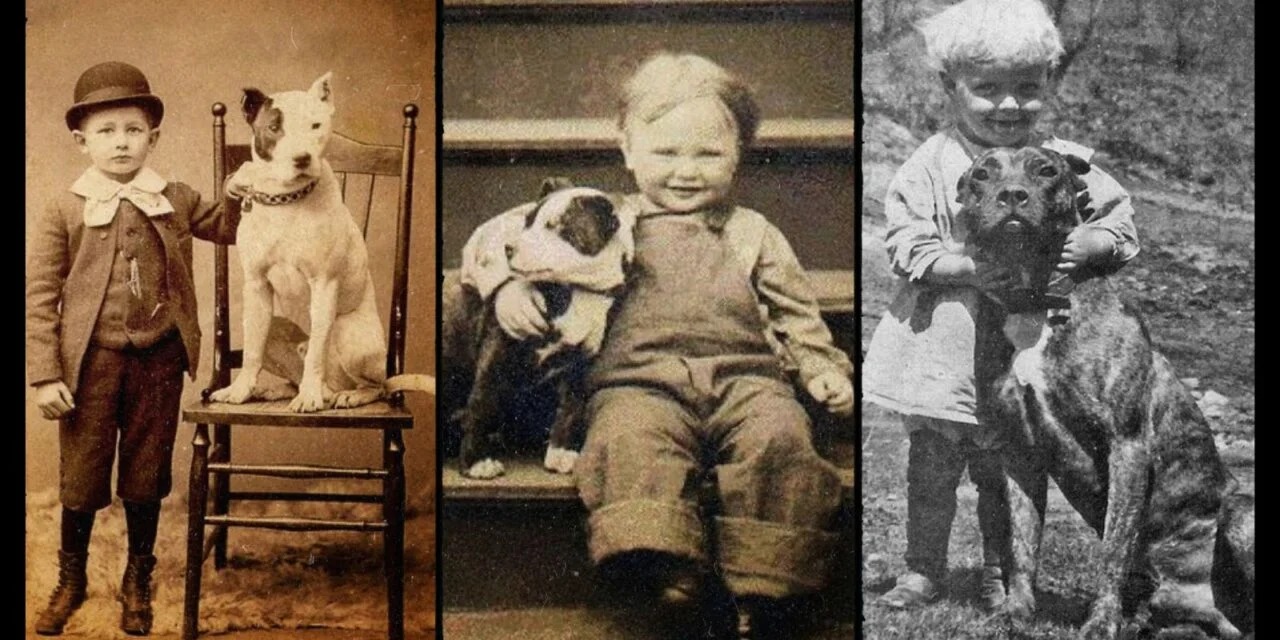
According to the website Imagens Históricas , between the end of the 19th century and the beginning of the 20th century, pitbulls were widely known as “nanny dogs”.
Their patience and protective instinct made them ideal companions for families with children.
Developed in the 19th century in Scotland, England and Ireland, pitbulls were bred for hunting and rural work.
Upon arriving in North America, they excelled in protecting farms, managing herds and, most importantly, in coexisting with humans.
Old portraits show children hugging pitbulls, revealing the trust families placed in these animals.
From affection to distrust: the change of reputation
The “nanny dog” image began to wear thin when the breed became associated with dog fighting, a cruel but popular practice in the early 20th century.
Negative media coverage, without contextualizing the cases, reinforced the perception that pit bulls were naturally aggressive.
After World War II, breed-specific laws (Breed Specific Legislation – BSL) spread throughout the United States, restricting or prohibiting their possession in various regions.
This drove pitbulls away from domestic life and contributed to a cycle of stigma that persists to this day.
What science says about pitbull temperament
Recent studies, such as those published in the Journal of Animal Behavior , show that pit bulls have high emotional stability and perform well in sociability tests.
Organizations like the ASPCA emphasize that aggressive behavior is not an innate characteristic of the breed, but rather a result of upbringing, socialization, and life experiences.
Raised with love, positive discipline, and proper stimulation, pit bulls are loyal, playful, and protective, just like Blueberry.
Impact and reaction on social media
Blueberry’s story sparked a ripple effect where pitbull owners from around the world began sharing videos and photos of their dogs interacting with children, cats, and other animals.
The result was a stream of comments with photos that reinforce the central message that with the right upbringing, pitbulls can be gentle and loving companions.
For many internet users, the video was an opportunity to rethink prejudices and recognize that the true “danger” in Blueberry’s gaze is that of stealing hearts.