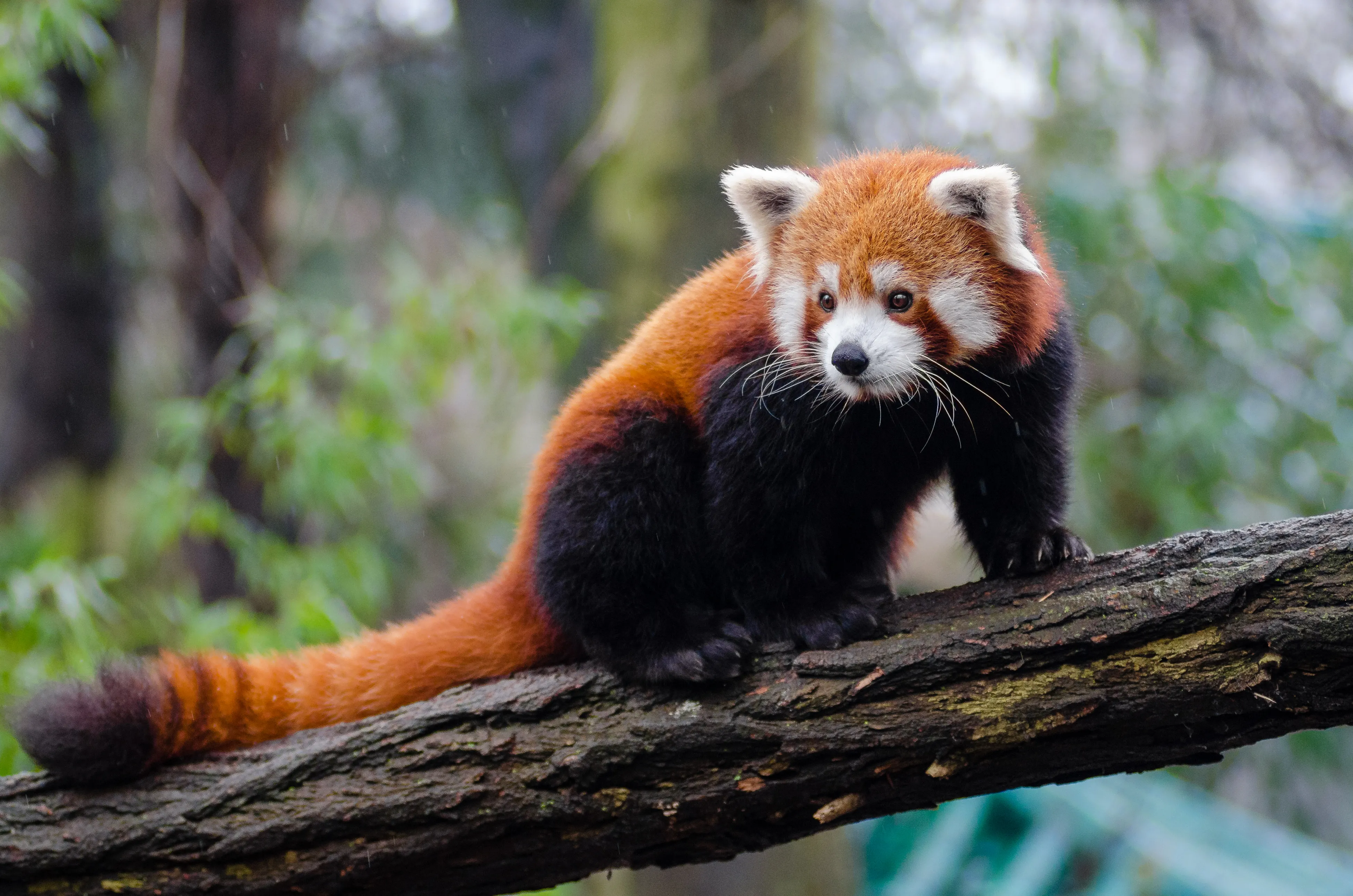
She was just three months old — small, bright-eyed, and full of promise. Her name was Roxie, a baby red panda born at Edinburgh Zoo, Scotland. She had already faced tragedy once: just five days before her death, her mother, Ginger, had unexpectedly passed away. Keepers had stepped in, caring for Roxie around the clock — bottle-feeding her, keeping her warm, and nurturing her fragile hope for survival.
But on Bonfire Night, that hope was shattered. As fireworks exploded across the city, the loud bangs and shrill whistles echoed into the zoo grounds. The sounds that delighted thousands terrified Roxie. Startled and panicked, the tiny red panda suffered what zookeepers described as a “stress-induced reaction.” Within moments, she choked — and despite frantic efforts from staff and vets, she didn’t make it.
“It happened so quickly,” one keeper shared quietly. “She had been feeding well that morning. We truly thought she was going to make it.”
The Royal Zoological Society of Scotland later confirmed that Roxie’s death was linked to the noise from fireworks. Though her enclosure was secure and carefully monitored, sound knows no barriers — it travels over walls and through steel doors. And for sensitive animals like red pandas, even distant explosions can trigger fatal stress responses.
Roxie’s passing has sparked a wave of grief and outrage among animal lovers and wildlife advocates worldwide. Social media filled with tributes — photos, fan art, and heartfelt messages from visitors who had followed her short journey. But beyond the mourning came a louder message: a call for change.
Organizations including the RSPCA and Born Free Foundation renewed demands for stricter controls on fireworks, urging local governments to limit their public sale and encourage “low-noise” or “silent” fireworks instead. These quieter alternatives offer the same vibrant visuals without the harmful sonic impact that can terrify wildlife, pets, and even vulnerable people such as veterans or children with sensory sensitivities.
In recent years, several UK councils — including Edinburgh, Glasgow, and Manchester — have begun exploring restrictions on unregulated fireworks displays, particularly around zoos, farms, and wildlife reserves. But for many keepers, progress feels too slow. “We lose animals every year to fear and shock caused by fireworks,” one wildlife rescuer explained. “It’s not just about Roxie. It’s about all the unseen lives we never get to save.”
Roxie’s story has since become a symbol — a reminder that joy for some can mean trauma for others. Fireworks may light up the sky for a few moments, but their echoes can cause lasting harm beneath it.
As winter approaches and fireworks season returns, animal advocates are urging the public to choose compassion over spectacle: attend organized, low-noise events, inform neighbors before lighting displays, and always consider the silent world of creatures who share our cities and skies.
Roxie never got the chance to grow up, to climb her first tree, or to live out her days among the bamboo forests her species calls home. But if her story inspires change — if one person chooses a quieter celebration — then her short life will have meant something.
Rest easy, little Roxie. You were loved, and you won’t be forgotten.