Hope After Pain: The Little Elephant Who Lost Her Trunk but Not Her Spirit
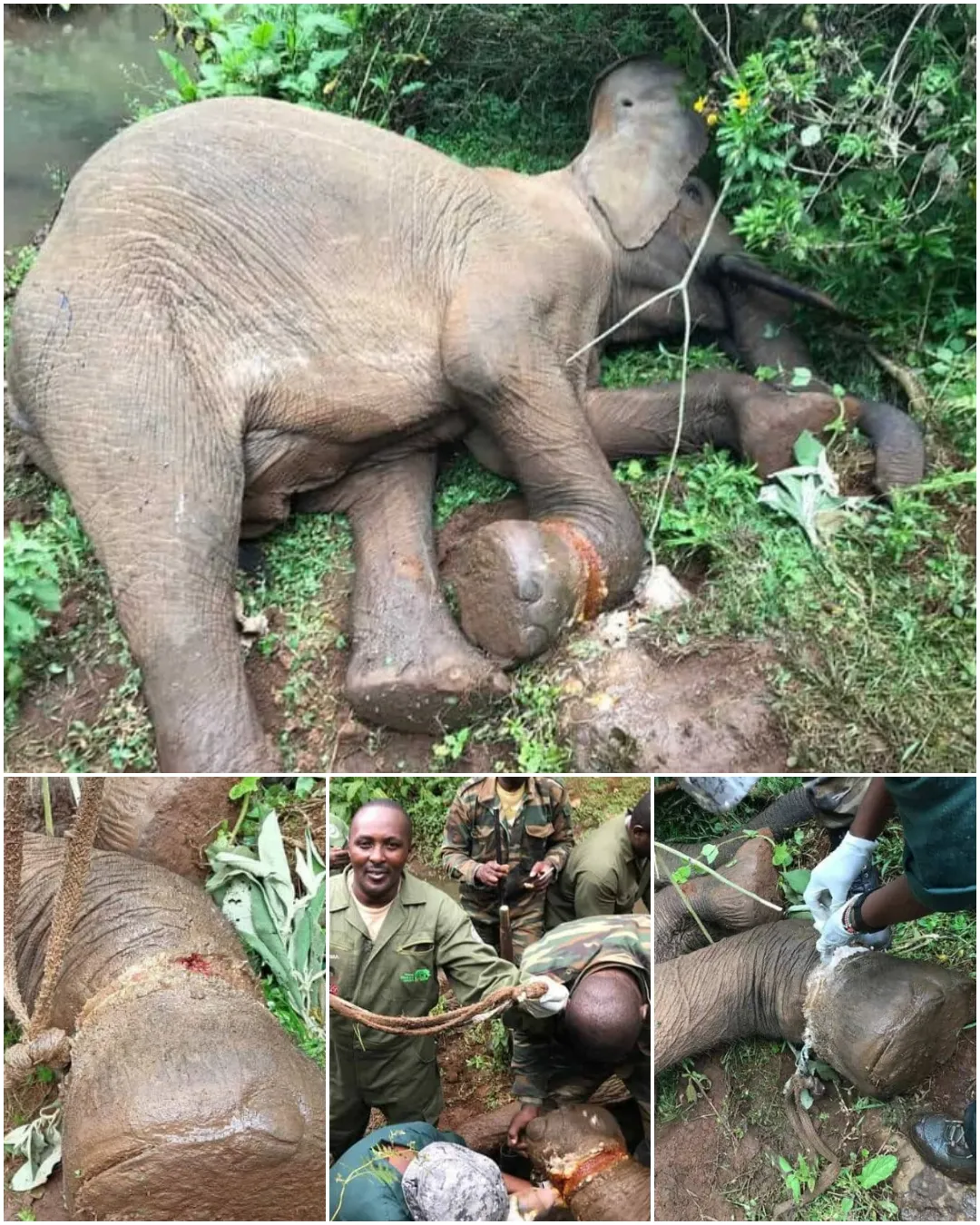
In the dense rainforests of Sumatra, where mist hangs low over the palm trees and the cries of hornbills echo through the morning air, a tiny figure was found struggling to survive. She was just a year old — a baby elephant, alone, starving, and in pain. Her herd was gone. Around her trunk, a metal snare had tightened so deeply that the flesh beneath it had rotted.
When rescuers arrived, they could see she had been trapped for days. The cruel device — likely set by poachers — had cut through to the bone. Each movement she made was agony. Her once-flexible trunk, the very tool she needed to eat, drink, and connect with her mother, was shredded beyond repair.

A Race Against Time
It was early Sunday morning when villagers in Alue Meuraksa, a forested area of Aceh Jaya district, spotted the young elephant. At first, they thought she was dead — her small frame slumped, her movements faint. But when she lifted her head weakly, they knew she needed help.
Rangers from the Aceh Province Conservation Agency were called immediately. The team, led by Agus Arianto, reached the site and were horrified by what they found. The calf’s trunk was nearly severed, the wire snare embedded so deeply that part of the tissue had already turned black.
“She had been alone for days,” Arianto said. “Her herd had moved on. The wound was infected, and she was too weak to follow.”
The rangers tranquilized the elephant and loaded her carefully onto a truck for transport to the Elephant Training Centre in Aceh Besar, where veterinarians were already preparing for emergency surgery. Every bump in the road was a risk. Every hour counted.

The Surgery
When the calf arrived, the veterinarians worked through the night. The stench of infection filled the room as they assessed the wound — the snare had cut through the nerves and veins of her trunk, making it impossible to save.
With heavy hearts, they made the decision: to amputate half of her trunk.
The surgery took hours. When it was finally over, the room was silent except for the soft, rhythmic sound of her breathing. The baby elephant had survived. But the cost was immense.
“She lost part of herself that day,” said one of the rescuers quietly. “But she also gained a second chance.”
They named her Hope — a symbol of what she represented for her species.
A Victim of Greed
What happened to Hope is not an isolated tragedy. Across Sumatra, elephants are being killed and maimed at alarming rates. Their tusks, worth thousands on the black market, make them targets for poachers. Others are caught in traps meant for deer or wild boar, crude devices that do not discriminate between species.
In the past nine years, 25 Sumatran elephants have been snared or poisoned in the Aceh region alone. Just months before Hope’s rescue, authorities found another elephant — a fully grown bull — decapitated in a palm oil plantation in East Aceh. Its tusks had been hacked off.
“It is heartbreaking,” said Arianto. “These are critically endangered animals, and every death brings us closer to losing them forever. Poaching is not only illegal — it is an attack on our national heritage.”
He added that the economic struggles caused by the COVID-19 pandemic have worsened the situation. Many villagers, desperate to provide for their families, have turned to illegal hunting and ivory trafficking.
In Hope’s case, her suffering was the result of a snare likely set for another animal — but she paid the price all the same.

A Species on the Edge
Sumatran elephants once roamed freely across the island, from the dense rainforests of Aceh to the swamps of Riau. But today, fewer than 700 remain in the wild, scattered across isolated patches of land.
Over the past 25 years, 69% of their habitat has been destroyed — cleared for palm oil plantations, logging, and human settlements. Forests that once connected herds are now fragmented, cutting off migration routes and increasing deadly encounters with humans.
The International Union for Conservation of Nature (IUCN) lists the Sumatran elephant as Critically Endangered, the highest risk category before extinction in the wild.
In 2014, there were an estimated 1,300 Sumatran elephants. Today, that number has plummeted to just 693. Conservationists fear that if urgent action isn’t taken, this unique subspecies of the Asian elephant could vanish within a generation.
Learning to Live Again
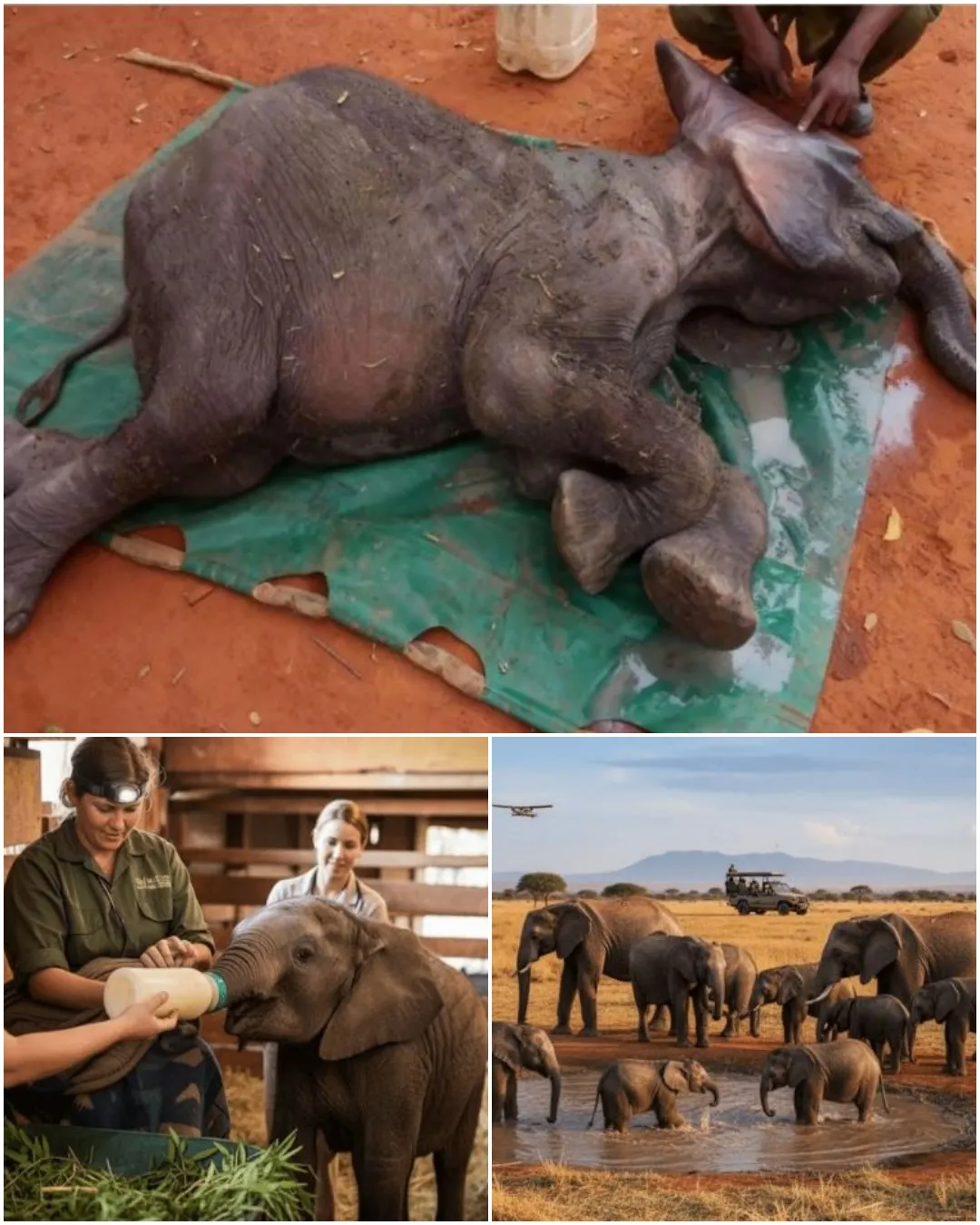
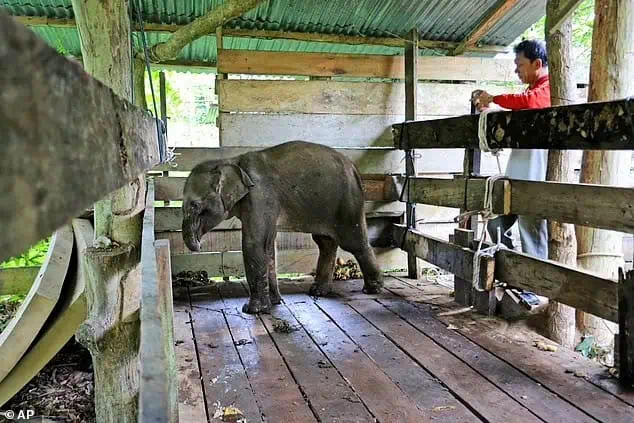
At the Elephant Training Centre, Hope’s recovery has been slow but steady. Her caretakers clean her wound daily, applying antiseptic and checking for signs of infection. At first, she struggled to eat, unable to use her shortened trunk properly. But elephants are intelligent, adaptable creatures — and Hope is proving that resilience runs deep in her kind.
Using the remaining part of her trunk and her mouth, she has learned to pick up fruit, splash water on herself, and even play with her caretakers. She is still small, but her spirit is fierce.
“She’s strong,” one of her handlers said with a smile. “She’s learning fast. Every day she surprises us.”
Despite her trauma, Hope has begun to show signs of joy again — flapping her ears when her keepers arrive, trumpeting softly at feeding time, even nudging them playfully when she wants attention.
“She trusts humans again,” Arianto said. “That, to me, is the most powerful thing of all.”

Justice and Protection
Authorities have launched an investigation into Hope’s case, working with law enforcement to track down those responsible. In the earlier East Aceh killing, one poacher and four ivory traders were arrested. If convicted, they face up to five years in prison and fines of 100 million rupiah (about £5,250).
But for conservationists, arrests are only part of the solution. The real challenge lies in protecting elephant habitats and educating communities about coexistence.
“Punishment is not enough,” said Arianto. “We must create alternatives — sustainable livelihoods that don’t rely on killing wildlife. These animals belong to our forests, and we must be their guardians.”
To that end, new patrol programs are being developed across Sumatra to remove snares and monitor herds in real time. Conservationists hope that by combining enforcement with education, fewer elephants will suffer the same fate as Hope.
The Spirit of Survival
Hope’s journey is far from over. She will never live completely wild again; her injury makes survival without human care impossible. But her story has already become a beacon for conservation — a reminder of both human cruelty and compassion.
When visitors meet her now, they see not just a wounded animal, but a survivor. Her eyes, deep and intelligent, reflect both pain and strength — a mirror of her species’ struggle in a changing world.
“She has every reason to give up,” said one of her caregivers, watching her play in the mud. “But she hasn’t. She’s teaching us that even after the worst cruelty, life goes on.”
In the wild, elephants are known for their memory — they never forget. And perhaps that is what Hope’s story asks of us too: to never forget what has been done, and to never stop fighting to make it right.