High on the slopes of Mount Kenya, where mist weaves through forests of towering cedar and bamboo, a fight for life was unfolding. Somewhere in the wilderness, a young bull elephant was trapped — his massive leg bound tightly by a poacher’s snare, his strength fading with each passing day.
For four relentless days, a team of rescuers would battle mud, altitude, exhaustion, and fear to give him a second chance at life.
Day One: The Discovery
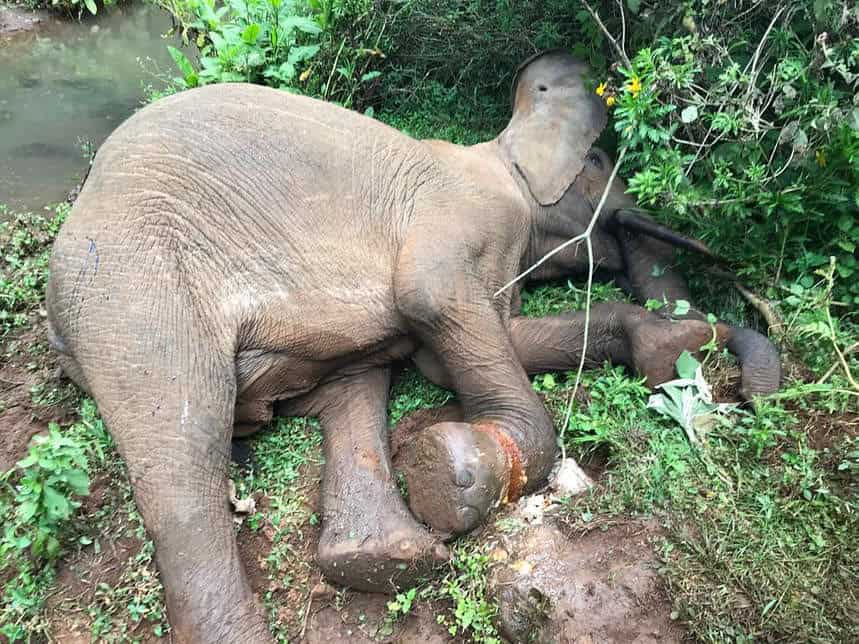
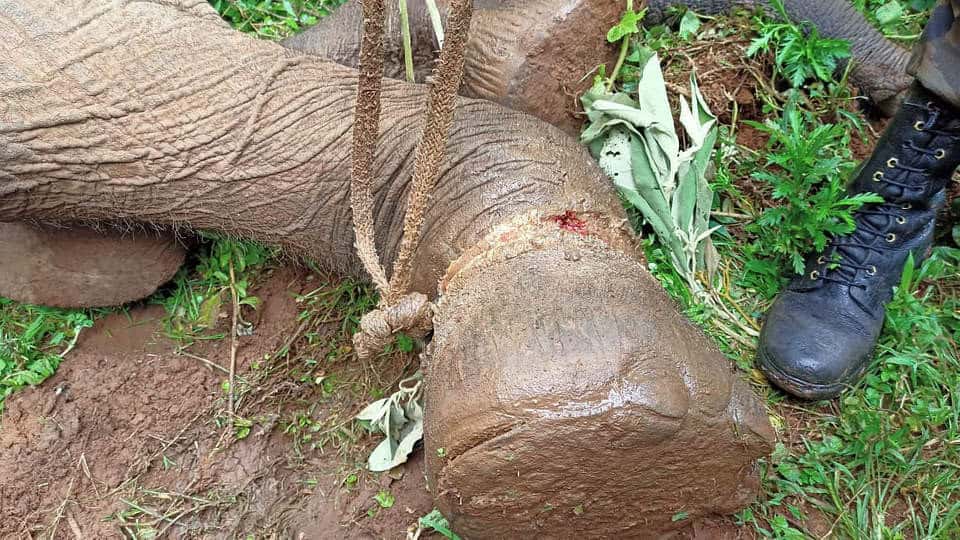
It began on January 20th, when rangers from the Kenya Wildlife Service (KWS) spotted the elephant. He was standing near a thicket, struggling to move. A thick rope — crudely fashioned into a snare — had wrapped around his front leg. Each step tore deeper into his flesh.
The rangers radioed for help, and within hours, the SWT/KWS Mount Kenya Mobile Veterinary Unit was on its way. Led by Dr. Njoroge, one of Kenya’s most experienced wildlife veterinarians, the team set off into the rugged highlands.
By evening, they found him — a young bull, about 15 years old, weighing several tons yet visibly weakened by pain. His ears flapped nervously; his trunk twitched as he sensed their presence.
But approaching him would prove nearly impossible. The terrain was unforgiving — steep ravines, tangled roots, and waist-high swamps. Worse still, the elephant, terrified and in pain, turned aggressive, charging at the team whenever they got close.
They had no choice but to pull back. The forest closed around him like a wall. Night fell. The team would have to try again.
Day Two: Calling in the Sky Vets
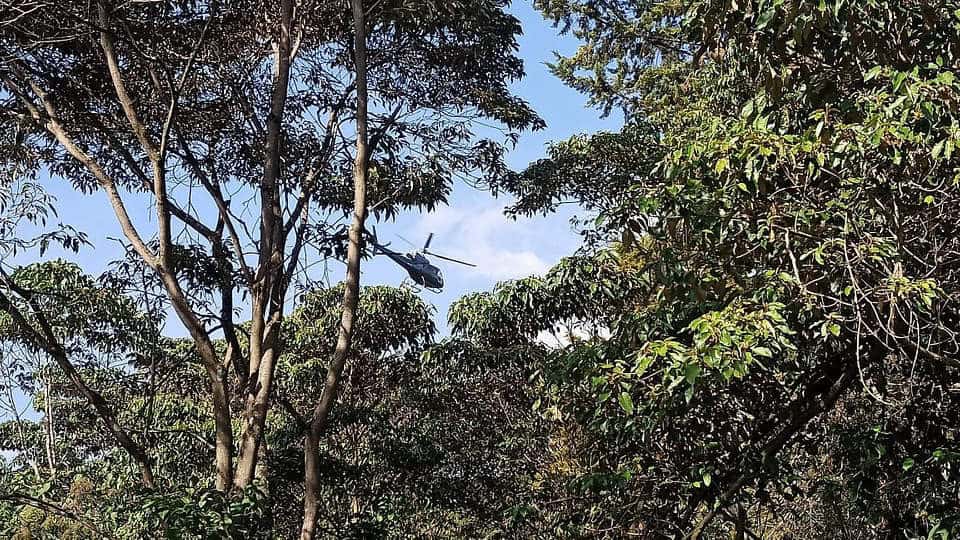
The next morning, the rescuers came up with a new plan. Through the Sky Vets initiative, a helicopter was dispatched to Mount Kenya, carrying Dr. Njoroge and additional rangers. From the air, they hoped to dart the elephant — a faster and safer method than approaching on foot.
But nature had other plans. The forest canopy was too dense; towering trees blocked any clear shot. The pilots circled again and again, trying to find an opening. The elephant, sensing danger, bolted deeper into the wilderness, vanishing into shadows and mist.
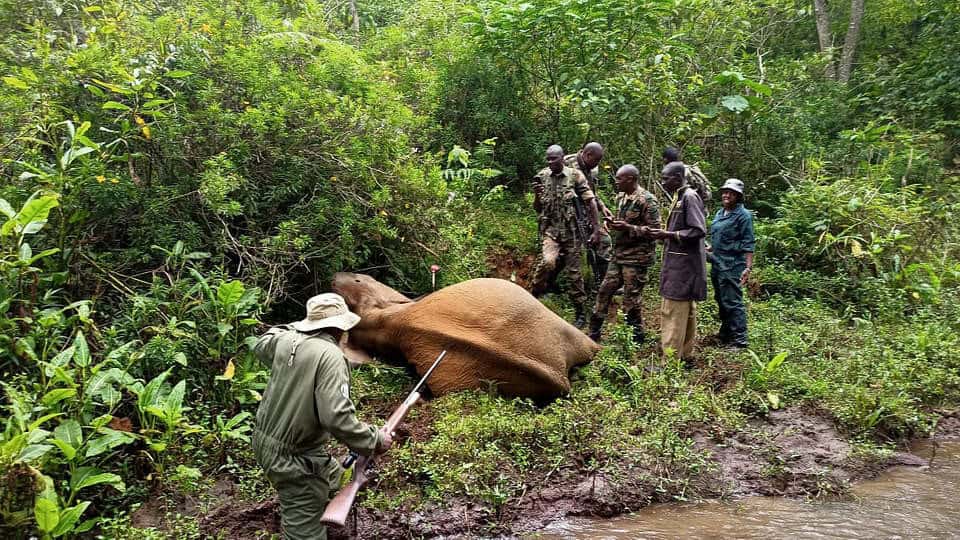
On the ground, the team slogged through mud and streams to follow him, guided only by distant footprints and broken branches. They knew he was weakening. They also knew time was running out.
Dr. Njoroge’s voice over the radio was calm but urgent:
“We can’t let him disappear. That snare is cutting off circulation. If we don’t reach him soon, infection will spread.”
Still, as darkness returned, the exhausted team had to admit defeat for a second night. The elephant was still out there, somewhere, suffering alone.
Day Three: Eyes in the Sky
Determined not to give up, the rescuers brought in reinforcements — this time, a fixed-wing aircraft. From above, the pilot scanned the vast green expanse of Mount Kenya, hoping to catch sight of the elusive bull.
Finally, he spotted him — limping slowly through the forest, his tracks cutting a lonely path through the undergrowth. Using onboard instruments, the pilot recorded the elephant’s GPS coordinates and relayed them to the team below.
It wasn’t enough to rescue him yet, but it gave them hope. Now they could track his movements. All they had to do was wait for him to move into open ground.
For hours, they watched and followed from a distance, careful not to spook him further. The young bull was wounded but still strong — proof of the raw resilience that had kept him alive this long.
Day Four: The Moment of Truth
At dawn on the fourth day, word came through the radio:
“He’s by a watering hole. Open terrain.”
It was the break they had prayed for.
The team mobilized immediately, driving through thick brush and crossing two swollen rivers to reach the site. When they arrived, they found the elephant standing near the water, his leg swollen and bleeding. His eyes, heavy with exhaustion, turned toward them.
But even now, the pain made him unpredictable. He trumpeted loudly, thrashing his trunk and retreating into the trees.
Dr. Njoroge quickly formulated a risky plan. To avoid another failed chase, they would dart him from the treetops.
Climbing a nearby acacia, the vet and a ranger balanced themselves among the branches, the tranquilizer gun steady in his hands. Below, the bull shifted restlessly, his breath loud in the silence.
Then came the shot — a soft pfft through the humid air.
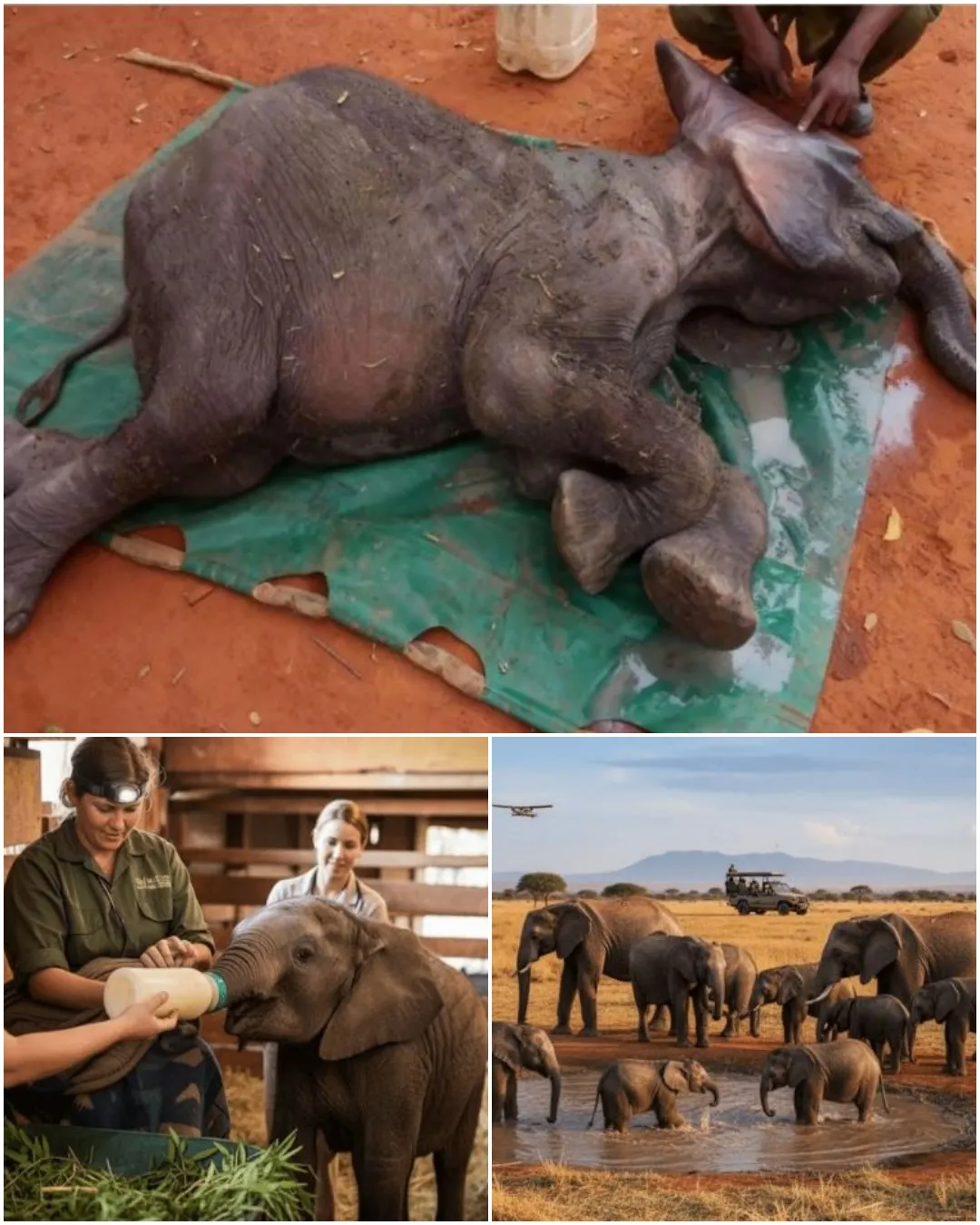
The dart hit. The elephant bellowed once, staggered, and began to sway. Within minutes, his legs buckled, and he collapsed gently onto his side near the stream.
After four days of pursuit, the rescuers finally had their chance.
The Operation
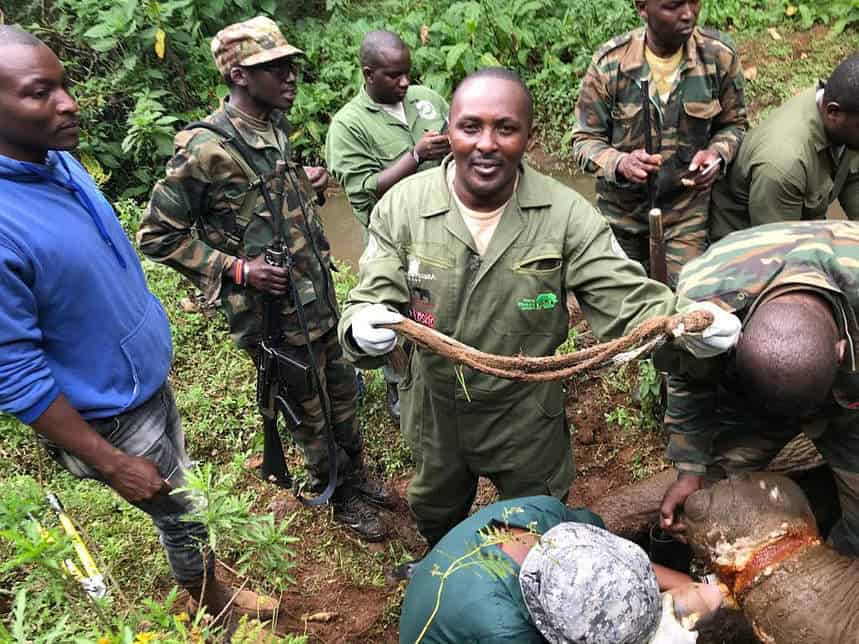
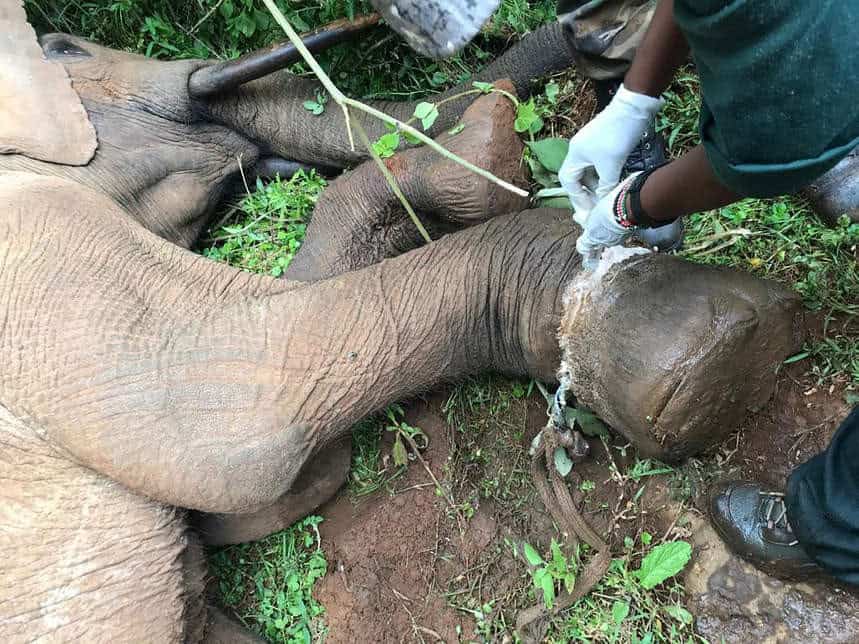
The team moved fast. First, they checked his breathing, then began cutting away the thick rope that had almost severed his leg. The wound was gruesome — the snare had sliced nearly 10 centimeters deep, exposing tissue and muscle.
Carefully, they removed the wire, cleaned the gash, and flushed it with antiseptic. Dead flesh was trimmed away to prevent infection, and long doses of antibiotics were administered to give him the best chance of recovery.
Flies buzzed around them. Sweat mixed with mud and blood. But no one stopped. After days of struggle, they weren’t about to lose him now.
In just 30 minutes, it was done.
Dr. Njoroge injected a reversal drug, and everyone stepped back. Minutes later, the elephant stirred — first a twitch of his trunk, then a slow heave of his shoulders. With a low groan, he rose, steady but cautious.
For a moment, he stood still, breathing heavily. Then, with a quiet strength that left the team in awe, he turned and disappeared into the green — free once more.
After the Rescue
The mission had taken four days, two aircraft, a helicopter, and a team of rangers who refused to give up. But in the end, their perseverance paid off.
The young bull, estimated to be 15 years old, will now be monitored over the next several weeks to ensure full recovery. His wound will take time to heal, but veterinarians are confident he will make it.
For the rescuers, it was more than just another mission. It was a reminder of why they do what they do — why they risk exhaustion, injury, and danger to protect wildlife.
“Every elephant saved is a victory,” Dr. Njoroge said afterward. “They are intelligent, emotional beings. When you look into their eyes, you know their lives matter.”
A Fight That Never Ends
Poaching and snaring remain some of the greatest threats to elephants across Africa. Traps meant for bushmeat often catch larger animals, leaving them to suffer slow, painful deaths.
But thanks to mobile veterinary units like the one on Mount Kenya — and to the rangers and pilots who never give up — countless elephants are getting a second chance.
For this young bull, those four days on the mountain will forever mark the line between life and death. His wounds may fade, but his story will remain a testament to courage — both his and that of the people who refused to let him die unseen.