A ROUTINE CALL THAT CHANGED EVERYTHING
When Officer Ramirez answered a call about two children breaking into private property on the outskirts of a northern Mexico town, it sounded like nothing more than mischief. But within hours, that call would expose one of the country’s largest illegal animal operations—and reveal two unlikely heroes.
THE DISCOVERY
Ramirez arrived at dusk to find two boys, Luis and Mateo, their faces streaked with dirt and tears, standing by a rusted gate. When officers detained them for trespassing, one boy whispered through sobs, “We were trying to feed the dogs.” Skeptical but uneasy, Ramirez looked past the fence—and froze. Faint whimpers echoed through the dark. When the gate finally swung open, the truth came crashing out like a nightmare.
THE NIGHTMARE BEHIND THE GATE
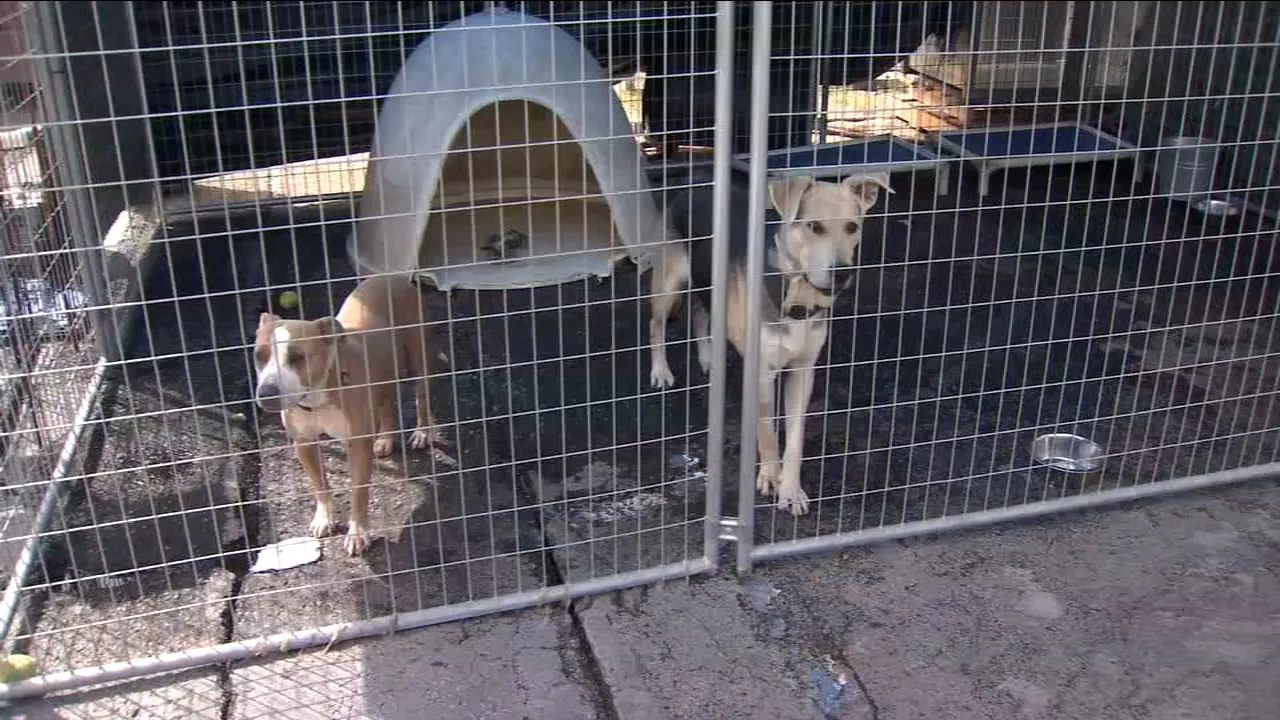
Rows of cages stretched across the property, stacked high with malnourished dogs of every size and breed. Their ribs pressed against rusted bars. Many were too weak to bark; others lay motionless on filthy mats. In one corner, a pile of bones told a story of suffering too long ignored. The air was heavy with decay and fear.
THE RESCUE OPERATION
Within minutes, the scene transformed. Sirens lit up the night as animal control and rescue volunteers rushed in. Officers found forged documents, illegal firearms, and ledgers tracking dog sales across multiple cities—proof of a smuggling and breeding ring that had operated undetected for years. By nightfall, over 300 dogs were carried out, wrapped in blankets, finally breathing the air of freedom.
THE BOYS WHO REFUSED TO LOOK AWAY
Luis and Mateo had been sneaking food to the dogs for months, slipping tortillas and scraps through the fence after school. That night, they’d tried to crawl in when the gate was locked. A neighbor saw and called the police—setting off the chain of events that saved hundreds of lives. The boys were released without charges, later honored by local rescue groups for their courage.
A COMMUNITY TRANSFORMED
The story, soon called “The Children’s Rescue,” made international headlines. Donations poured in. Shelters overflowed with volunteers. The once-forgotten dogs found new homes—and a town once silent to suffering found its voice. The property was eventually turned into a public park, with a bronze statue of a boy feeding a dog through a fence. On its base, a plaque reads: “For those who speak for the voiceless.”
A LEGACY OF HOPE
Luis and Mateo now volunteer at the local shelter every weekend. One of the rescued dogs, a small brown mix missing an ear, refused to leave their side—so they took her home and named her Esperanza, meaning Hope.
Looking back, Officer Ramirez still recalls that night vividly. “We think heroes wear badges,” he said quietly. “But sometimes, they’re just two kids with kind hearts—and the courage to do what no one else would.”