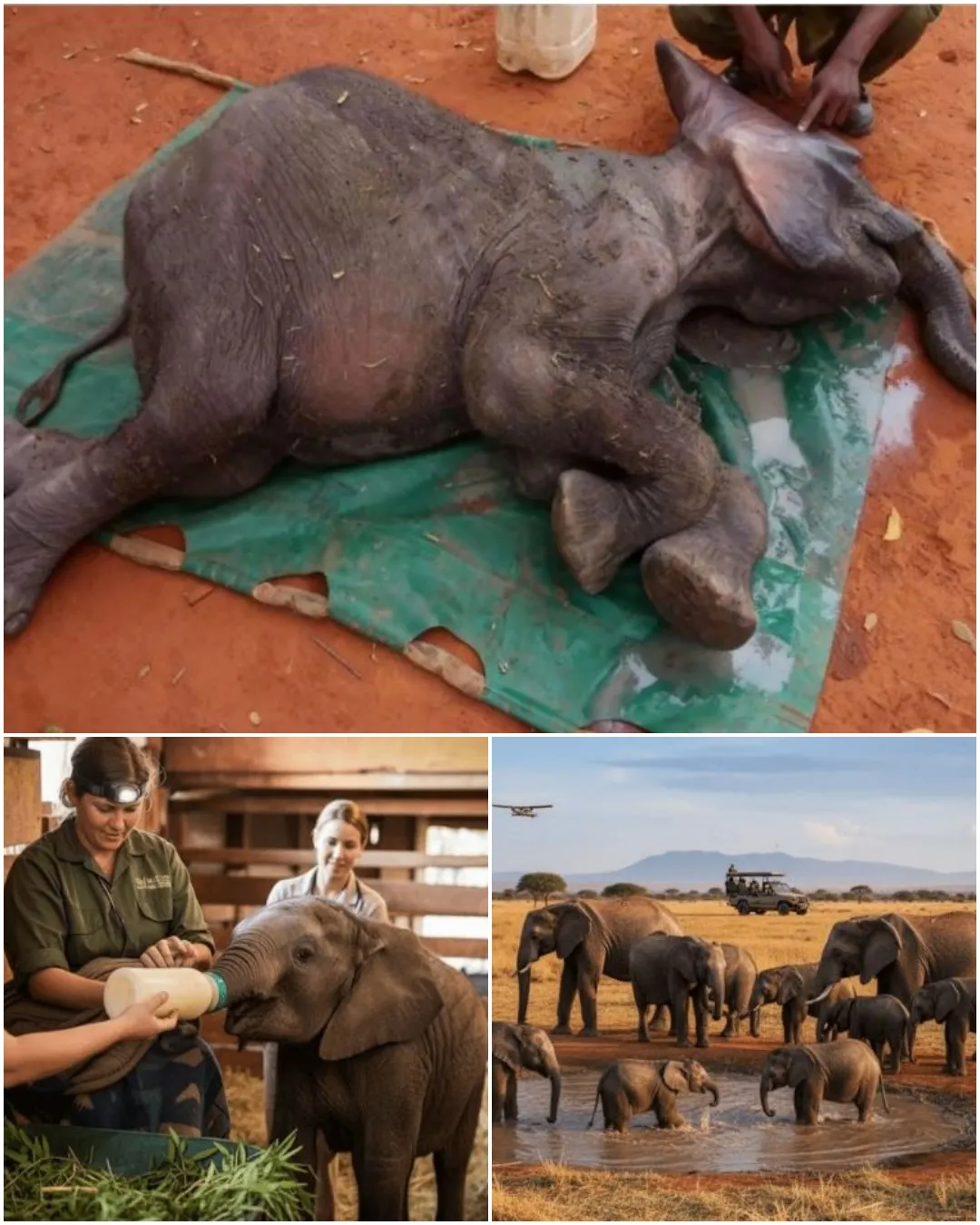
In the serene, lush coffee plantations of Chinnakanal, a town near the picturesque Munnar in Kerala, India, a heartbreaking story unfolded that would leave a lasting impact on all those involved. On a quiet day in the town, a distressed, five-month-old elephant calf was found wandering aimlessly through the plantation, crying in confusion and fear. The young elephant was lost, alone, and separated from its mother, a situation that would turn into a race against time to ensure its survival.
The calf, likely terrified by the strange environment, was unsure of its surroundings. Locals who came across the baby elephant immediately recognized the signs of distress. They knew that this was a wild animal in need of immediate help. Alarmed by the sight of the crying calf, they quickly alerted the forest officials, hoping that the team could help reunite the calf with its herd or at least ensure its safety.
Upon investigation, the forest officials learned that a herd of six elephants, including two other calves, was located about a kilometer away from where the baby had been found. With hopes of reuniting the calf with its family, they attempted to guide it toward the herd. However, the reunion did not go as expected. Neither the calf nor the herd recognized each other, and there was no immediate connection between the two. The baby elephant, disoriented and fearful, wandered away from the group, unable to find the comfort of familiar faces.

At this point, the situation became more complicated. It was clear that the calf would not be able to survive on its own, so the forest officials decided to take it into their care for the time being. The baby was placed in a secure enclosure, where it could be given fluids and rest while the team awaited the arrival of its mother. But as hours passed and there was still no sign of the mother elephant, the officials grew concerned. They dispatched a patrol team to search for her, and what they discovered left them devastated.
The lifeless body of the mother elephant was found nearby, her death the result of unknown circumstances. The calf’s mother, who had likely been struggling with her own survival, had succumbed to whatever misfortune had befallen her. The heartbreaking discovery revealed that the young calf would now be entirely alone, with no mother to provide the care and protection it so desperately needed.
Nibu Kiran, an official from the Devikulam Range Office, explained that the calf had been taken to a temporary holding cage where it could be monitored and cared for until a more permanent solution could be found. “We had to ensure the calf was stable, so we gave it fluids and tried to calm it as much as possible,” he said. “The poor animal was still in shock from the loss of its mother and the unfamiliar surroundings.”

Despite their efforts to reunite the calf with its herd, it was clear that the trauma of the separation was too great for both the baby and the herd. The forest officials had hoped that the familiar scent and sounds of the herd would help the calf settle, but it appeared that the bond between the baby elephant and its family had been irrevocably broken. With no immediate family to turn to, the officials knew they had to find a way to provide for the calf’s needs while ensuring its safety.
Dr. Abdul Fatah, a veterinarian from Periyar Tiger Reserve, examined the calf and confirmed that while the young elephant appeared to be in good health physically, the emotional toll of losing its mother was evident. “The calf is physically fine, but it’s clear that the trauma of separation and the loss of its mother will have long-lasting effects,” Dr. Fatah said. “We will continue to monitor its health and provide it with the care it needs.”

The situation in Munnar, a popular tourist destination known for its breathtaking coffee plantations, was a stark reminder of the growing issue of man-elephant conflict in the region. The destruction of elephant paths and the expansion of human settlements into once-wild areas had dramatically impacted the movement of these majestic creatures. As a result, encounters between elephants and humans had become more frequent, often with tragic consequences.
Elephants, known for their intelligence and complex social structures, were being forced into unfamiliar territory, leading to increased stress and aggression. In the case of the baby elephant, the destruction of its natural habitat and the disintegration of its herd had left it vulnerable, with no one to protect it or show it the way forward. Locals, who are all too familiar with the sight of wild elephants straying into their communities, recognized the gravity of the situation. Wild elephants had been known to cause traffic jams, damage property, and pose a risk to human life, but this particular calf’s plight was a reminder of the real cost of human encroachment on elephant habitats.

As the days passed, the young calf began to recover physically, although emotionally, the trauma of the separation from its mother was still evident. The rescue team, deeply moved by the calf’s plight, continued to provide it with the care it needed. The little elephant was given special attention, with caretakers offering comfort and nourishment, including fluids like coconut water, which helped the calf regain its strength.
The story of the baby elephant’s rescue was not just a tale of survival, but one of hope in the face of loss. The calf, while still traumatized and grieving, was slowly taking its first uncertain steps toward safety and recovery. Its journey, however, was far from over. As the forest officials worked tirelessly to ensure the calf’s well-being, they also realized that more needed to be done to protect the wild elephants of Kerala.
Efforts were made to rebuild and protect the natural habitats of elephants, ensuring that future generations would not face the same struggles. In the case of this young calf, its journey toward healing had just begun, and its future remained uncertain. But with the care of the forest officials and the hope that it would one day be reintegrated into a safe and supportive herd, there was a glimmer of hope for a brighter future for this orphaned elephant.
The moving story of the calf’s first steps, its fear and confusion, and the compassion shown by the forest team serve as a reminder of the delicate balance between humans and wildlife. It underscores the importance of conservation efforts to protect the natural world, not just for the animals, but for the communities living alongside them. And while this calf’s mother may no longer be there to guide it, the support of dedicated individuals gives the young elephant a chance at life in the wild once more.