How Visibility Bias and a Smarter Fridge Layout Quietly Save You Hundreds Each Year
Most food waste does not feel dramatic. It happens slowly and almost invisibly. A container of leftovers gets pushed behind taller items. Fresh herbs wilt in the crisper drawer. Berries spoil because they were forgotten for three days. None of these moments seem significant on their own, yet together they quietly drain both money and mental energy.
What makes this frustrating is that the problem is rarely about poor intentions. Most people do not buy groceries planning to waste them.
The issue is structural rather than moral. Our refrigerators are typically organized in ways that conflict with how human attention actually works. When the layout of your fridge ignores basic cognitive principles, waste becomes predictable.
There is a simple solution that costs nothing: reorganizing your refrigerator based on visibility bias rather than traditional storage categories. This small shift in layout can realistically reduce food waste by 20 to 30 percent over time because it aligns your environment with how your brain naturally prioritizes information.
What Is Visibility Bias and Why It Matters
Visibility bias refers to the human tendency to assign greater importance to what is immediately visible. Our brains evolved to prioritize information that is directly in front of us because visual prominence often signals relevance. Items that are hidden, partially blocked, or placed outside our central field of view are processed as lower priority.
In everyday life, this bias influences far more than we realize. Products placed at eye level in stores sell more. Healthy snacks placed on counters get eaten more often. Emails at the top of an inbox receive faster responses. The same principle applies inside your refrigerator.
When highly perishable foods are hidden in drawers or tucked behind larger containers, they effectively drop out of your active awareness. Even if you intellectually know they are there, they are less likely to influence your decisions when you open the fridge. Over time, that reduced visibility translates into forgotten food.

Why Traditional Fridge Organization Increases Waste
Most refrigerator layouts are organized around categories rather than behavior. Produce goes into drawers. Condiments sit on the door. Leftovers are placed wherever there is space. Drinks often occupy prime shelf space because they are used frequently.
From a storage standpoint, this approach appears logical. However, from a behavioral standpoint, it unintentionally protects long-lasting items while hiding short-lived ones. The foods most likely to spoil are often placed in the least visible areas.
Consider the typical crisper drawer. It is designed to maintain humidity and extend freshness, which is useful. Yet it also functions as a visual barrier. Once produce is placed inside, it is no longer in your direct line of sight. Unless you intentionally open that drawer with a specific purpose, the contents may be overlooked.
Similarly, leftovers frequently end up at the back of shelves because new groceries are placed in front of them. The result is a layering effect where older food becomes progressively less visible. This is not a discipline problem. It is an environmental design problem.
The $0 Fridge Reversal Method
The core idea behind this method is simple: position your most perishable items in the most visible location inside your refrigerator.
Step 1: Reset and Reassess
Begin by removing everything from your fridge. This step creates full awareness of what you own and prevents you from reorganizing around existing clutter. As you remove items, mentally categorize them into three groups: highly perishable, moderately perishable, and long-lasting.
Highly perishable items include leftovers, cut fruit, leafy greens, fresh herbs, opened dairy products, and fresh meat. Moderately perishable items include eggs, unopened yogurt, hard cheeses, and pre-cooked grains. Long-lasting items typically include condiments, sauces, pickles, and beverages.
This classification is temporary and functional. It helps determine visibility priority rather than permanent storage categories.
Step 2: Redefine Prime Real Estate
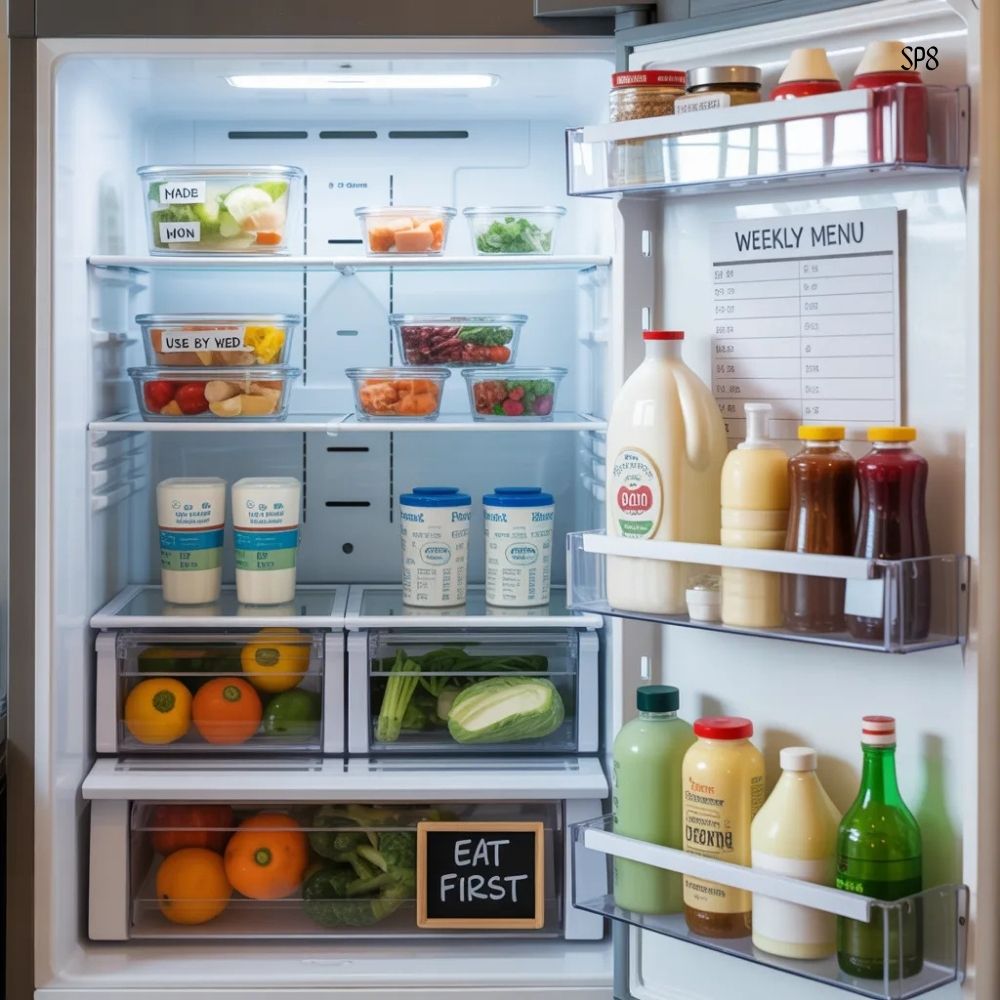
Stand in front of your empty refrigerator and identify where your eyes naturally land. That shelf is premium cognitive real estate. It should now be reserved exclusively for highly perishable items and foods that need to be consumed within the next few days.
Leftovers should be placed directly at eye level. Fresh produce that tends to spoil quickly should be positioned where you cannot miss it. If something needs attention soon, it belongs in that space.
Step 3: Demote Long-Lasting Items
Condiments and other durable products can be moved to lower shelves, drawers, or door compartments. These foods are unlikely to spoil quickly and do not require constant visual reminders. By moving them away from prime visibility, you create space for items that truly need attention.
Step 4: Create an “Eat First” Zone
Designate a small section of your fridge as an “eat first” zone. This does not require labels or new containers. It simply means that any item nearing expiration is placed in one clearly visible area. When you open the fridge, your brain immediately registers which foods require priority.
Why This Method Works From a Behavioral Perspective
The effectiveness of this approach rests on three psychological mechanisms: friction reduction, decision simplification, and loss aversion.
Friction reduction refers to minimizing the effort required to perform a behavior. When leftovers are hidden behind other containers, reheating them involves extra steps. When they are placed directly in front of you, the path of least resistance becomes using them.
Decision simplification reduces cognitive overload. When you open a fridge and see dozens of equally visible options, your brain must process more information before choosing. When only a few high-priority items dominate your visual field, selection becomes easier and faster.
Loss aversion further strengthens this system. Humans are wired to avoid losses more strongly than they seek gains. When you clearly see produce that is close to spoiling, the potential loss becomes salient. That visibility subtly motivates action without requiring conscious budgeting reminders.
Additional Zero-Cost Improvements
While the visibility method alone is powerful, a few complementary adjustments can enhance results without adding expense.
If you already own clear containers, use them for leftovers instead of opaque ones. Transparency increases the likelihood of consumption because it removes visual ambiguity. If you do not own clear containers, there is no need to purchase them. Strategic placement remains the primary driver.
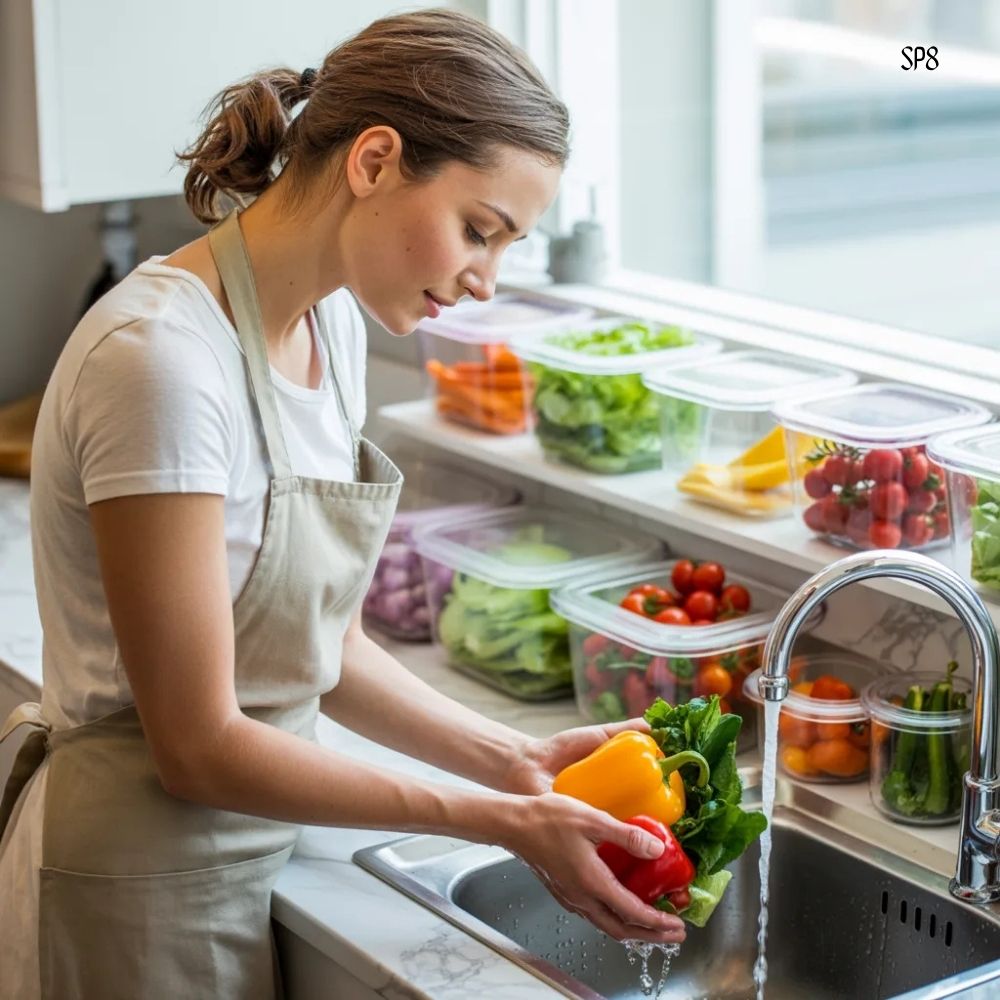
Preparing produce shortly after grocery shopping can also increase usage. Washing and trimming vegetables reduces preparation friction later in the week. When food is ready to eat, it is more likely to be chosen.
Finally, avoid overfilling the refrigerator. Crowded shelves reduce visual clarity and hide items from view. Leaving a small amount of empty space improves visibility and prevents stacking that leads to forgotten food.
The Financial Impact of Reduced Food Waste
The average household discards a measurable amount of food each week, often without tracking it. If even $10 to $20 of groceries are thrown away weekly, the annual total can reach several hundred dollars. Reducing waste by just 25 percent translates into meaningful savings without changing what you buy or how much you eat.
The key distinction here is that the savings do not come from restriction. They come from utilization. By using what you already purchased more effectively, you increase the return on every grocery trip.
A Simple Weekly Maintenance Routine
To maintain the system, perform a brief weekly reset. Spend five minutes scanning your fridge for items that need attention and move them into the “eat first” zone. This small habit prevents clutter from gradually rebuilding and keeps visibility high.
Consistency is more important than perfection. The goal is to preserve awareness, not create a flawlessly organized refrigerator.
Final Thoughts
Food waste rarely announces itself loudly. It accumulates in small, forgettable moments that feel harmless in isolation. Yet over months and years, those moments add up to significant financial leakage.
Reorganizing your refrigerator around visibility does not require new tools, complicated rules, or drastic lifestyle changes. It requires understanding how attention works and placing the right foods where your eyes naturally land.
When the most perishable items become the most visible items, behavior shifts automatically. That is the power of designing for human psychology instead of relying on intention alone.