
A Practical DIY That Supports Smarter Cooking and Sustainable Food Habits
Reusable produce bags are often presented as a lifestyle accessory rather than a functional kitchen tool. They appear in curated shopping photos and sustainability guides, but rarely are they discussed in terms of how they improve everyday cooking systems.
In reality, a simple set of well-designed reusable produce bags can reduce waste, streamline grocery routines, and support more intentional food storage at home.
This is not about aesthetic minimalism. It is about building small systems that reduce friction in your weekly cooking routine. When produce moves efficiently from store to kitchen without unnecessary packaging, everything from storage to prep becomes easier to manage.
Making your own reusable produce bags is one of the simplest DIY projects you can complete, yet it has surprisingly long-term impact on both waste reduction and food organization.
Why Single-Use Produce Bags Create More Problems Than We Notice
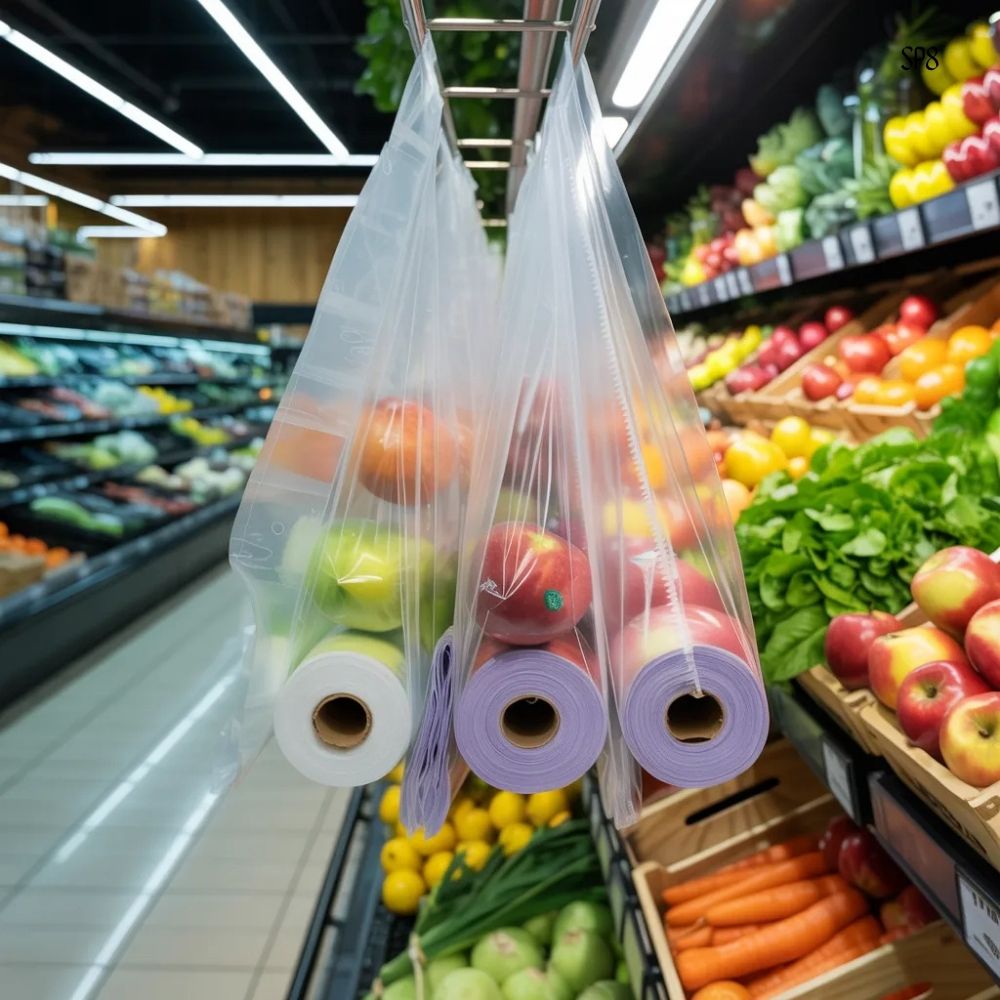
Most grocery stores offer thin plastic produce bags that are used briefly and discarded quickly. These bags are often non-recyclable and contribute to long-term plastic waste. While each bag seems insignificant, the cumulative effect over months and years becomes substantial.
Beyond environmental concerns, single-use produce bags also create clutter in the refrigerator. They trap moisture, accelerate spoilage in some vegetables, and make it harder to see what you have.
When produce remains sealed inside foggy plastic, it becomes easier to forget about it, leading to unnecessary waste. Reusable produce bags shift the focus from convenience at checkout to functionality in the kitchen.
How Reusable Produce Bags Improve Cooking Workflow
At first glance, a produce bag seems unrelated to cooking efficiency. However, once you consider the full journey of ingredients from store to plate, the connection becomes clear. Reusable produce bags encourage:
- Buying only what you need
- Washing and storing produce intentionally
- Reducing moisture buildup
- Improving refrigerator visibility
- Simplifying weekly organization
When vegetables and fruits are stored in breathable fabric instead of sealed plastic, they often stay fresher longer. This reduces the likelihood of wilted greens and moldy herbs by midweek. The result is less waste and more usable ingredients when you begin cooking.
Choosing the Right Fabric for DIY Produce Bags
The key to making reusable produce bags that actually work lies in fabric selection. The material should be lightweight, breathable, washable, and durable. Good options include:
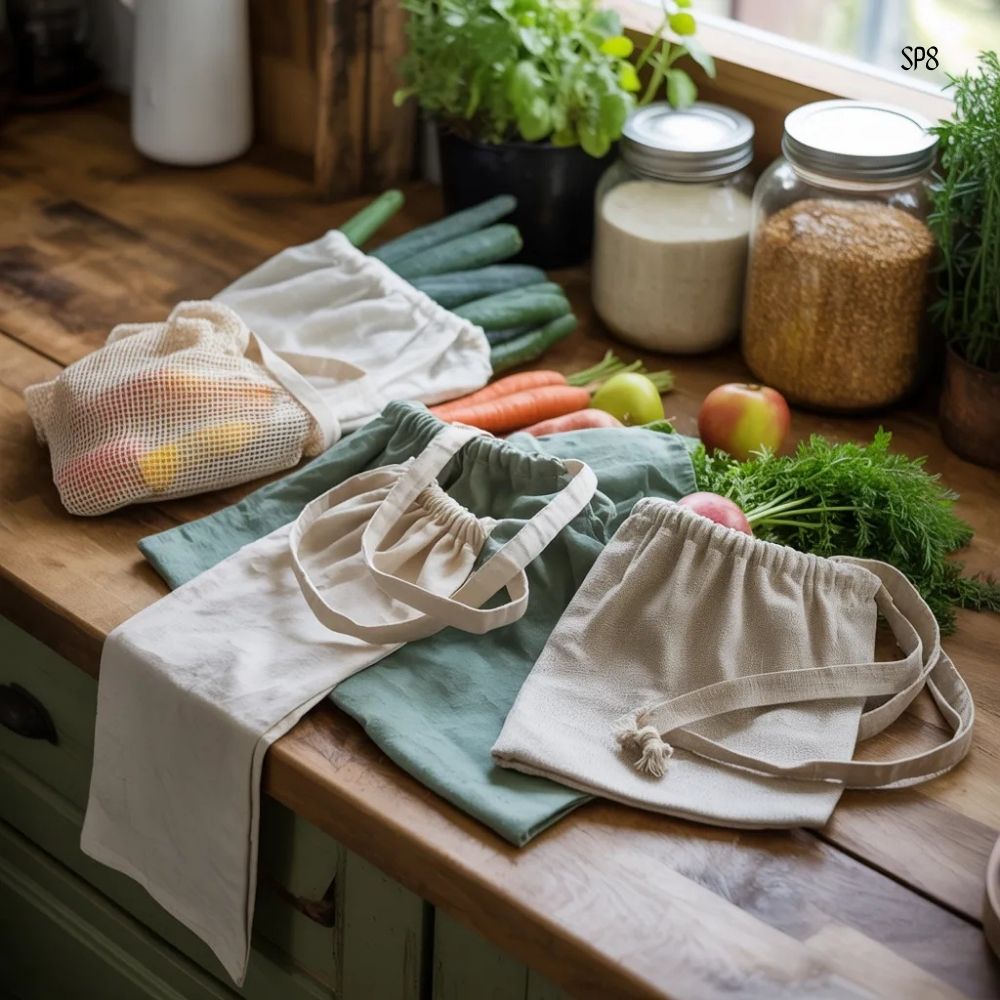
Cotton Muslin
Muslin is inexpensive, breathable, and easy to sew. It allows air circulation while protecting produce from direct refrigerator airflow.
Mesh Fabric
If visibility is important to you, lightweight mesh provides excellent airflow and lets you see contents easily. Mesh is particularly useful for items like apples, onions, and citrus.
Repurposed Cotton Fabric
Old pillowcases, thin cotton sheets, or lightweight curtains can be cut and repurposed. This makes the project even more sustainable and cost-effective. Avoid thick or non-breathable fabrics that trap moisture, as these can accelerate spoilage.
How to Make Simple Drawstring Produce Bags
You do not need advanced sewing skills to create functional produce bags. The design is straightforward and adaptable to different sizes.
Materials Needed
- Lightweight fabric (cotton or mesh)
- Scissors
- Thread
- Sewing machine or needle
- Cord or ribbon for drawstring
Basic Construction Steps
Cut two identical rectangular pieces of fabric to your desired size. For smaller items such as garlic or lemons, smaller rectangles are sufficient. For leafy greens, cut larger pieces.
Place the fabric pieces together with the right sides facing inward. Sew along three edges, leaving the top open. At the top opening, fold down about one inch of fabric and sew a channel for the drawstring. Thread the cord through the channel and secure the ends.
Turn the bag right side out. The result is a breathable, washable produce bag that can be reused weekly. If sewing is not an option, you can also create simple tie-top bags by cutting and hemming fabric edges and tying the top with reusable string.
How to Use Produce Bags Effectively at the Store
When shopping, place loose fruits and vegetables directly into your reusable bags instead of plastic. Many stores allow reusable produce bags as long as they are lightweight and clean.
To make checkout easier, consider weighing the empty bags at home and writing the tare weight on a small tag. This ensures accurate pricing if your store requires it. Keeping produce bags folded inside a larger grocery tote ensures they are always available when needed.
Storage Tips at Home
Once home, avoid storing produce in the bags exactly as purchased. Instead, rinse and dry vegetables appropriately before refrigerating.
For leafy greens, consider removing them from the bag, washing thoroughly, drying completely, and storing them loosely wrapped in a clean cloth inside the produce drawer. The reusable bag is best for transport and short-term storage rather than long-term moisture retention.
Root vegetables such as potatoes and onions store well in breathable cotton bags kept in cool, dark areas outside the refrigerator.
How This DIY Supports Intentional Grocery Habits
Reusable produce bags subtly encourage more thoughtful shopping. When you carry a limited number of bags, you naturally become more selective about quantities. This reduces impulse buying of excess produce that may not get used.
Additionally, the habit of bringing your own bags creates a pause at the beginning of the grocery process. That pause reinforces planning and reduces reactive decisions. Over time, this leads to better alignment between what you buy and what you cook.
The Financial Impact of Reduced Produce Waste
Fresh produce is often one of the most frequently wasted categories in home kitchens. Wilted greens, soft berries, and forgotten herbs accumulate quickly.
By improving airflow, visibility, and intentional handling, reusable produce bags can extend freshness by even a few days. That small extension can make the difference between cooking vegetables on Wednesday and discarding them on Thursday.
Reducing even one or two instances of wasted produce per week compounds into noticeable annual savings.
Common Mistakes to Avoid
One common mistake is using reusable bags without cleaning them regularly. Because they come into contact with soil and moisture, washing them weekly prevents odor and bacterial buildup.
Another mistake is assuming the bags alone preserve freshness. Proper drying and storage techniques still matter. The bags are tools within a broader kitchen system, not standalone solutions. Finally, avoid overloading bags. Air circulation is essential for maintaining freshness.
Final Thoughts
Reusable produce bags are not simply an eco-friendly gesture. They are part of a functional kitchen design that reduces waste, improves ingredient visibility, and supports intentional cooking habits.
When ingredients are handled thoughtfully from the moment you purchase them, they are more likely to be used fully and efficiently. That consistency builds momentum in your cooking routine and reduces the small but frequent waste that strains both budget and environment.
This DIY project is simple, inexpensive, and practical. More importantly, it supports the kind of kitchen system that makes home cooking sustainable over the long term.