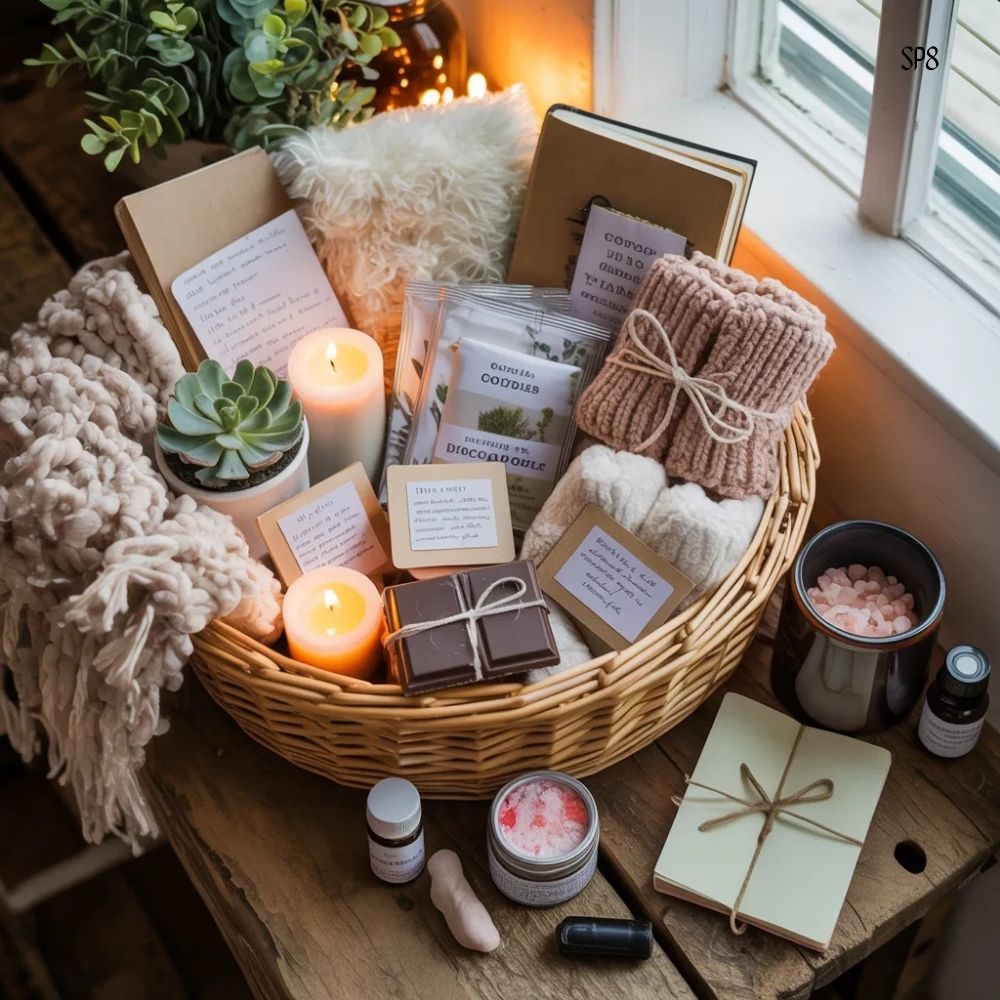
Most gifts aim to impress. A few aim to surprise. Very few aim to regulate someone’s nervous system. The difference between a generic self-care basket and a Comfort Basket built around their stress patterns is attention.
Not surface-level attention, but behavioral awareness. Instead of assembling random candles and chocolates, you build a gift that responds directly to how your partner reacts under pressure.
Some people stress-eat. Some overwork. Some withdraw socially and disappear into quiet isolation. Each pattern requires a different kind of care. When you tailor a Comfort Basket to those patterns, you communicate something more powerful than romance. You communicate observation.
And observation is one of the most underrated expressions of intimacy. This is not about fixing your partner’s stress. It is about anticipating it thoughtfully and responding with structure.
Why Most Comfort Gifts Miss the Mark
Standard comfort gifts tend to follow predictable formulas. A scented candle. A blanket. A sweet snack. A handwritten note. While these items are pleasant, they are not personalized to the way your partner actually experiences stress.
When someone overworks, a scented candle does not solve the problem of an overloaded schedule. When someone stress-eats, a basket filled with sugar may reinforce the very cycle they feel trapped in. When someone isolates emotionally, generic encouragement might feel distant rather than grounding.
A Comfort Basket built around stress patterns works differently. It asks a more useful question: What does this person actually do when they are overwhelmed? The answer becomes the blueprint.
Step One: Identify Their Stress Pattern
Before you assemble anything, pause and observe. When pressure increases, how does your partner respond? There are three common patterns, though many people exhibit a mix.
1. The Stress-Eater
When overwhelmed, this person gravitates toward snacks, especially quick comfort foods. Eating becomes a way to self-soothe or regain control. They may reach for sugar, salty foods, or anything immediately available. This pattern is not about lack of discipline. It is a coping mechanism.
2. The Overworker
Under stress, this person doubles down on productivity. They extend work hours, delay rest, and convince themselves that completion equals relief. They may struggle to step away even when exhaustion is obvious. The stress is externalized into output.
3. The Isolator
When overwhelmed, this person withdraws. Communication decreases. They may avoid conversation, cancel plans, or retreat into quiet spaces.
This is not necessarily rejection; it is often self-protection. Understanding which pattern dominates allows you to build a Comfort Basket that addresses the real behavior.
Designing a Comfort Basket for the Stress-Eater
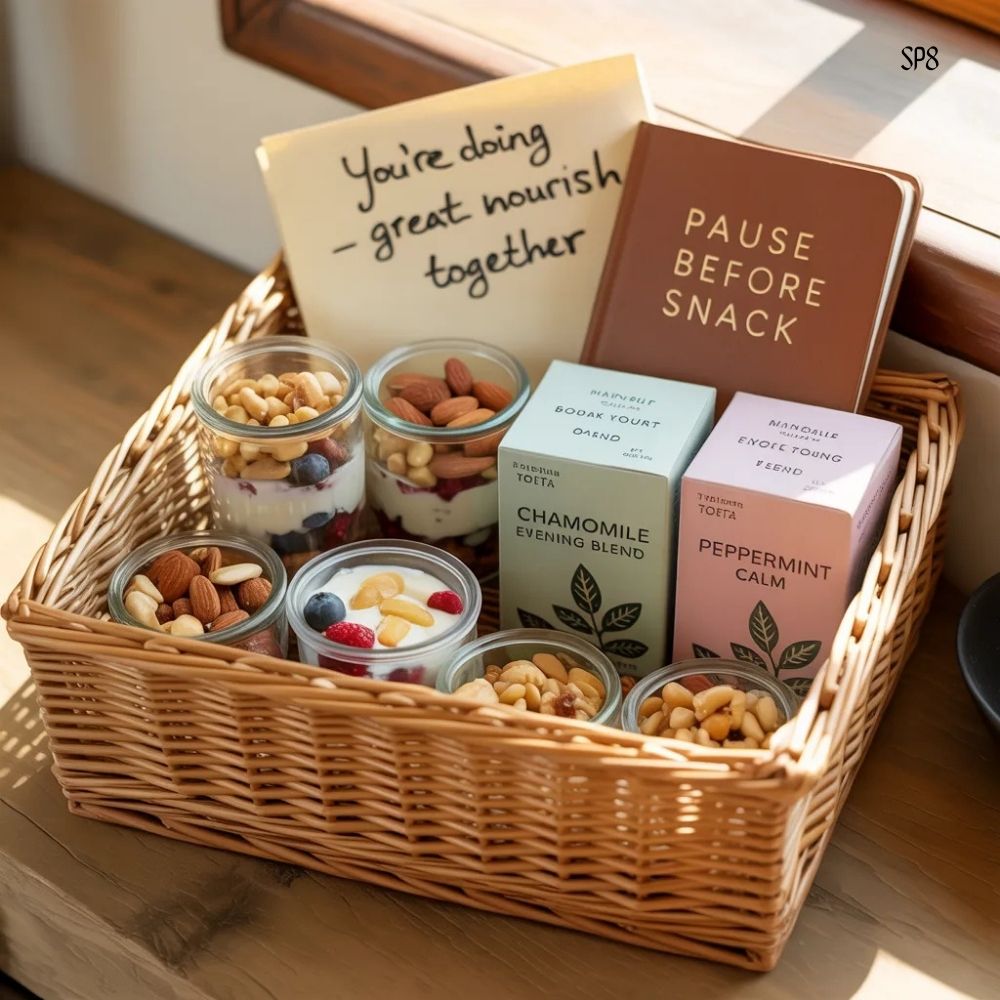
If your partner tends to stress-eat, the goal is not to eliminate comfort. It is to redirect it gently. Instead of filling the basket with indulgent snacks alone, curate a mix of:
- High-protein, satisfying options such as nuts or yogurt-based treats
- Herbal teas that encourage slowing down
- A handwritten note that acknowledges the habit without shaming it
- A small journal labeled “Pause Before Snack”
You might include a note that reads, “This is not about stopping comfort. It is about choosing it intentionally.” The presence of healthy but satisfying food communicates care without judgment. You are not policing behavior. You are offering alternatives.
Designing a Comfort Basket for the Overworker
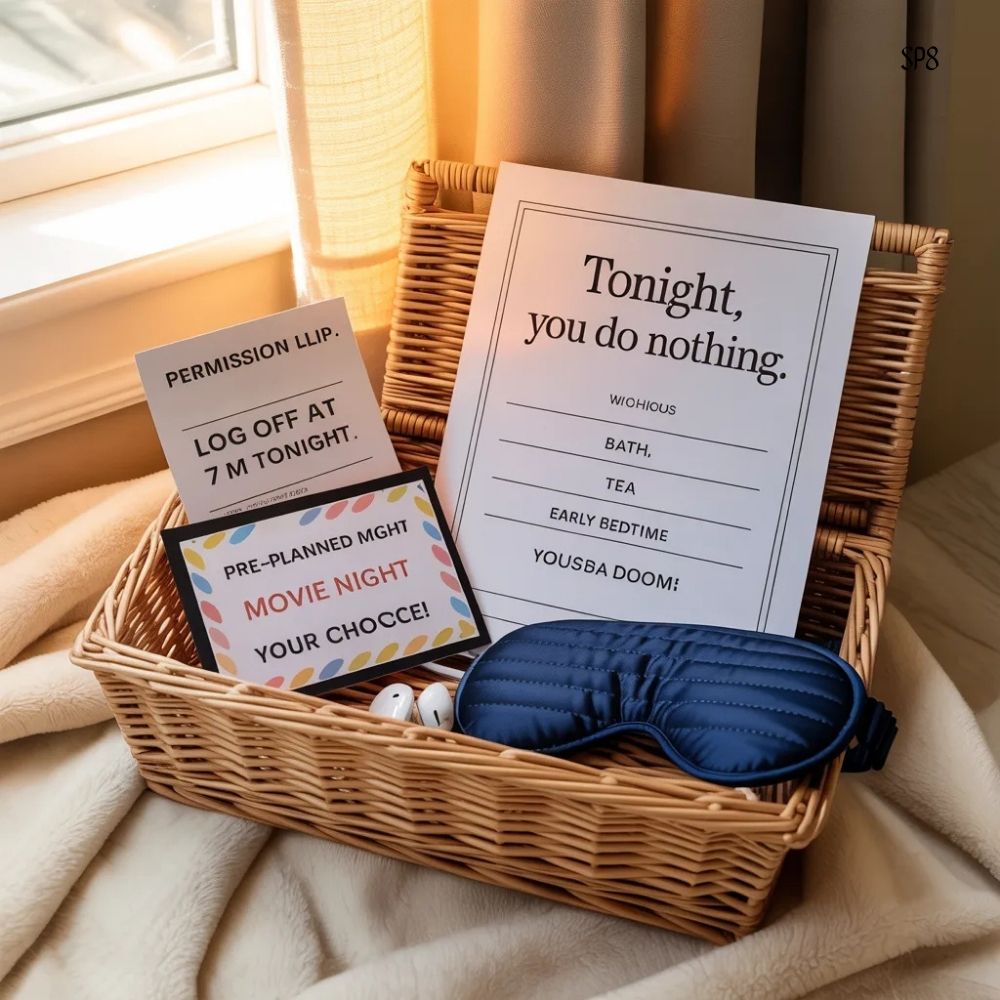
If your partner copes by overworking, the Comfort Basket should interrupt momentum gently. Include items that signal rest:
- A structured “permission slip” to log off at a specific time
- A pre-planned movie night card
- Relaxation tools such as a weighted eye mask or calming playlist
- A simple printed schedule titled “Tonight, You Do Nothing”
The key is framing. The basket is not an accusation of burnout. It is a structured invitation to pause. For example, you might write, “I know your instinct is to solve everything. Tonight your only task is to rest.” The clarity reduces resistance.
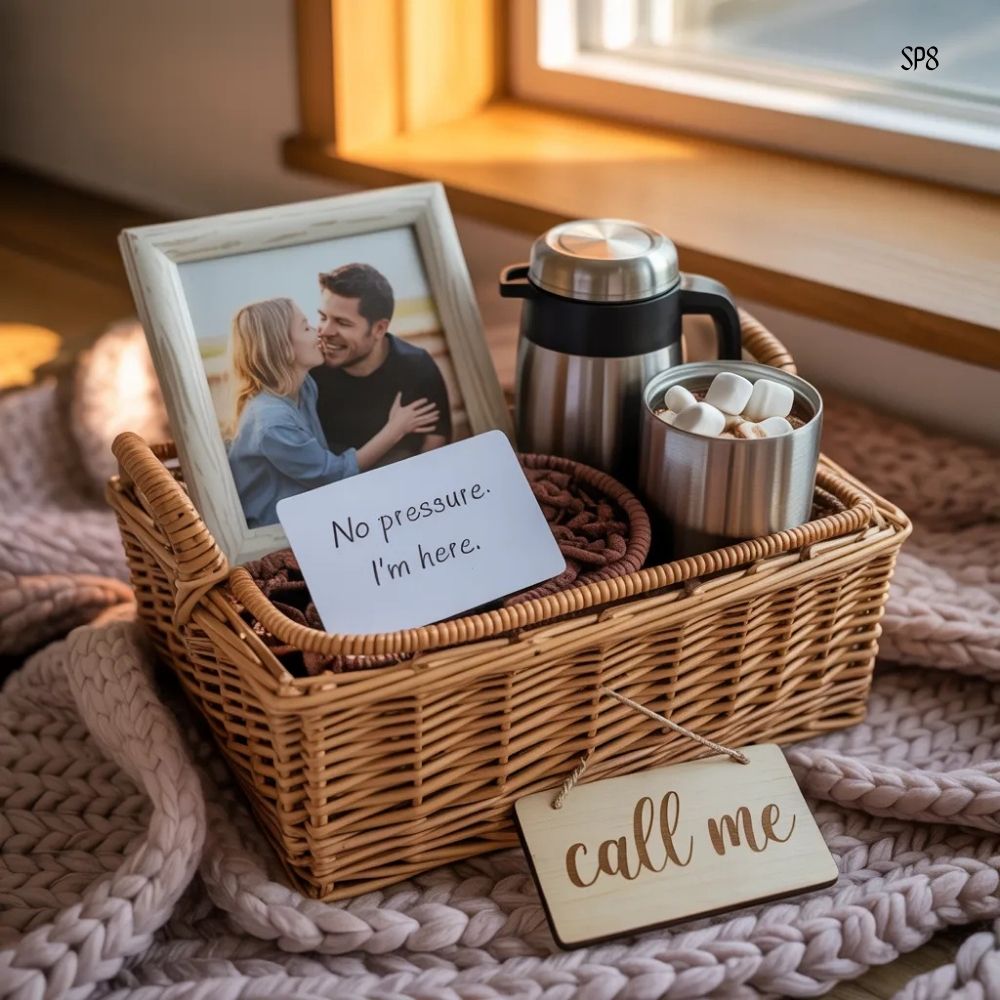
Designing a Comfort Basket for the Isolator
If your partner withdraws under stress, the Comfort Basket should prioritize connection without overwhelming them. Include:
- A small card that says, “No pressure. I’m here.”
- A shared memory photo
- A favorite snack or drink
- A “Call Me” or “Sit With Me” token
The tone should feel safe, not demanding. For example, instead of writing, “Why won’t you talk to me?” you might write, “When you’re ready, I’d love to listen.” The basket becomes an anchor rather than an intrusion.
The Psychology Behind the Comfort Basket
A Comfort Basket built around stress patterns works because it aligns with behavioral reality. It does not attempt to change personality in the moment. It meets your partner where they are.
Behavioral science suggests that interventions are more effective when they are tailored to existing patterns rather than imposed generically. When someone feels seen rather than corrected, they are more likely to accept support.
This gift communicates, “I notice how you cope, and I care enough to respond thoughtfully.” That message builds security.
A Real-Life Scenario
Imagine your partner has had a week filled with deadlines. Historically, they cope by staying up late, skipping meals, and insisting they are fine. Instead of confronting them with concern, you prepare a Comfort Basket that includes:
- A printed checklist titled “Shutdown Routine”
- A small pre-packed dinner container
- A reminder card that says, “The work will still be there tomorrow.”
- A playlist labeled “Evening Reset”
When you hand them the basket, you are not demanding change. You are offering structure. The difference is subtle but powerful.
Avoiding Common Mistakes
One mistake is turning the Comfort Basket into a corrective intervention. If it feels like a lecture disguised as a gift, it will backfire. Another mistake is overloading it with too many items. Clarity works better than excess.
Finally, avoid sarcasm. If your partner isolates, do not include a joke about their disappearance. The tone should remain grounded and warm. The goal is support, not commentary.
Making the Gift Playful Without Losing Depth
While this gift carries emotional weight, it can still include playfulness. You might design the basket like a menu. Label sections “Emergency Snacks,” “Shutdown Tools,” or “Connection Tokens.” Add a playful “Use As Needed” tag.
Humor softens seriousness without undermining intention. The combination of structure and lightness makes the Comfort Basket feel thoughtful rather than heavy.
Why This Gift Strengthens Long-Term Compatibility
Long-term relationships depend on mutual understanding. The more accurately you interpret your partner’s stress signals, the stronger your relational stability becomes.
A Comfort Basket built around stress patterns demonstrates predictive care. You are not reacting to visible breakdown. You are preparing for predictable cycles.
Predictive care builds trust. Trust builds resilience. Resilience sustains connection. This gift works well:
- Before a known stressful season
- During a demanding project
- After noticing recurring burnout patterns
- As part of a holiday or anniversary
It feels especially meaningful when given proactively rather than reactively.
Final Thoughts
A generic gift says, “I thought of you.” A personalized Comfort Basket built around stress patterns says, “I understand you.” Understanding requires attention. Attention requires effort. Effort signals care.
This DIY project is not about aesthetic presentation or dramatic romance. It is about behavioral awareness translated into tangible support.
When your partner opens a basket that reflects how they actually navigate pressure, the message is unmistakable. You are paying attention. And in long-term relationships, being understood is often more comforting than being impressed.