The call came early in the morning — one of those calls that instantly stirs both urgency and hope. Zimbabwe National Parks officials had reported a young female elephant calf caught in a wire snare near Umtshibi Camp.
For those of us who have spent years working in wildlife conservation, the word snare carries a weight heavier than it sounds. It’s just a loop of wire, often left behind by poachers, but it’s a cruel trap that turns the wild into a battlefield between survival and suffering.
We mobilized immediately. The sun was already climbing, painting the bushveld in gold, the kind of beauty that hides how unforgiving the land can be. Our team packed tranquilizers, medical supplies, and cutting tools — the tools of both science and mercy — and set out toward Umtshibi.

The Calf and the Snare
When we arrived near the camp, the air was still, except for the hum of insects and the distant calls of birds. Tracks in the sand told us the story before we saw her: small footprints, deep and uneven, leading toward a nearby tree.
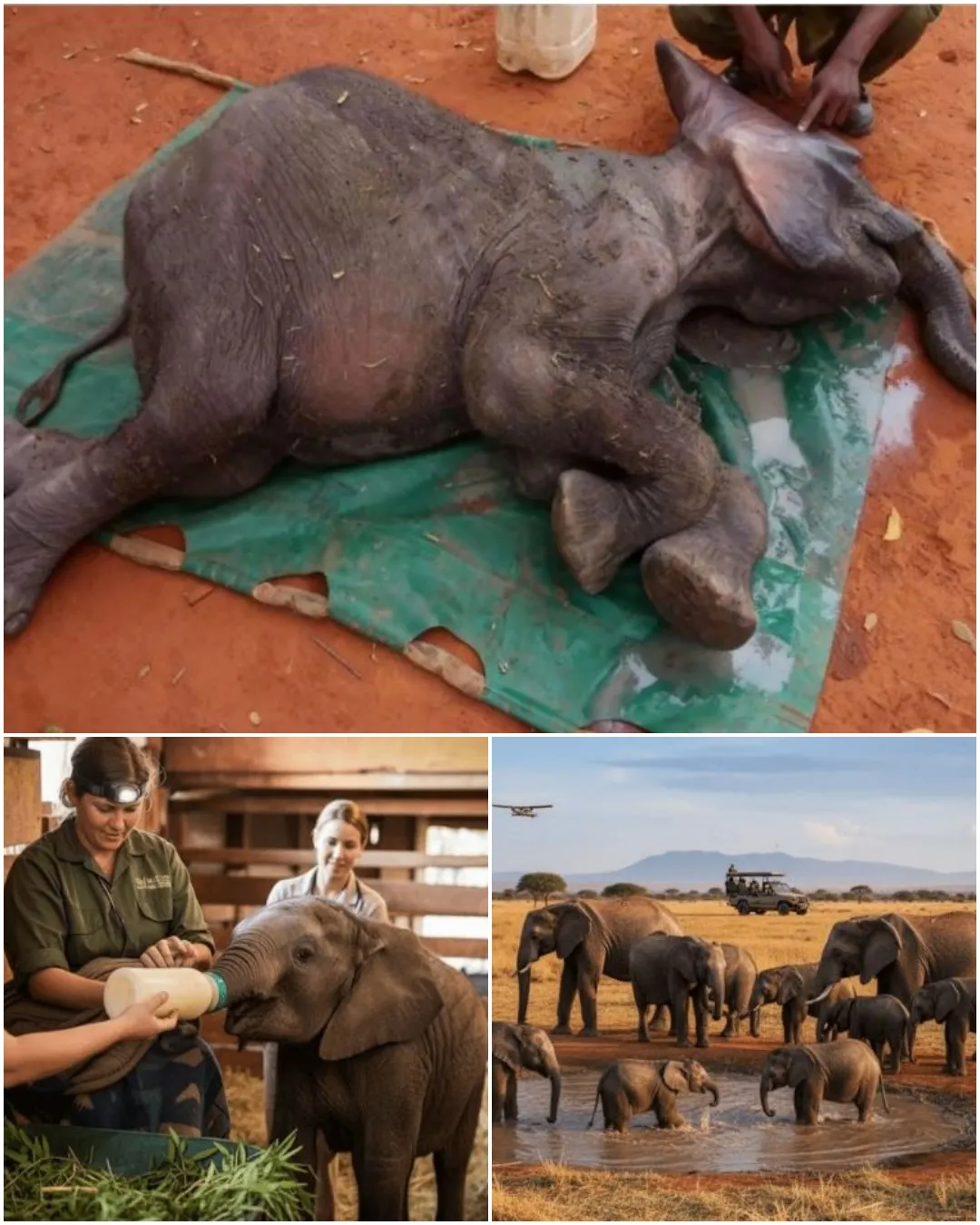
Then, there she was — a young elephant calf, about two years old, standing in distress, her left back foot tangled in a snare that was anchored tightly to a tree trunk. She struggled to move, her small frame trembling as she tried to pull free. Each movement made the wire cut deeper, tightening around her skin.
Her mother hovered a few meters away, pacing anxiously, torn between fear and the instinct to protect. The calf let out low rumbles — cries that pierced the air and our hearts alike.
We knew we had to move quickly, but carefully. The proximity of the mother made the situation delicate. One wrong move could send her charging.
The vet prepared a tranquilizer dart, adjusting the dosage for a calf of her size. We were just seconds away from firing when the unexpected happened — the calf made one last desperate pull and snapped free from the tree.
For a brief, heart-stopping moment, we lost sight of her as she bolted into the bush.
The Chase
There’s a unique kind of silence that follows moments like that — the split second between panic and action. Then came the command: “Follow her!”
We jumped into the vehicle and drove through the scrub, scanning every direction. It didn’t take long to spot her — limping, but still moving, her small figure darting through the trees, the snare still biting into her leg.
The vet raised his dart gun again, waiting for the perfect opening. The calf paused briefly near a clearing — and that was it. The dart flew true, striking her in the shoulder.
Within minutes, she slowed, then staggered, and finally sank gently to her knees.
Her mother appeared again in the distance, watching us with wary eyes. She gave a low rumble — not aggressive, but protective — before retreating a few steps, as if she understood we meant no harm.

The Rescue
We moved in fast but quietly. The vet checked her breathing, steady but rapid. The snare was wrapped tightly around her left hind leg, the wire biting into the skin, smeared with mud and traces of blood.
Using bolt cutters, we began to remove it. The metal resisted at first — the cruel strength of a tool never meant for such a purpose. Bit by bit, the wire loosened until it finally fell away, lifeless in the dirt.
We cleaned the wound with antiseptic, flushed it with water, and applied a healing ointment to prevent infection. The vet took important biological samples — blood and tissue — to monitor her health and gather data for ongoing research on snare-related injuries in young elephants.
As we worked, her mother’s presence lingered at a safe distance. She shifted her weight from foot to foot, occasionally letting out a soft trumpet, calling to her calf. It was a sound that carried both worry and patience — the kind only a mother can make.
We knew we needed to finish quickly and let them reunite.

A Return to Freedom
With the final check complete, the vet administered the reversal drug. We stepped back, watching as the young elephant’s breathing deepened, her eyelids flickering open.
At first, she tried to rise too quickly, her legs trembling. The limb that had been trapped faltered beneath her weight, but she steadied herself with surprising resilience. Within minutes, she stood tall, blinking against the light.
The moment she took her first unsteady steps, her mother responded immediately — trumpeting from the trees, a sound of joy and relief that echoed across the bush.
The calf turned toward the sound, lifted her trunk, and began walking — slow at first, then stronger, each step returning her to the rhythm of freedom.
When they finally reunited, it was quiet — no dramatic rush or display, just gentle touches of trunk against trunk, a reassurance that all was well again.
We stood in silence, watching as the pair moved away through the trees, the sunlight dancing across their backs.
The Aftermath
The ground where the calf had fallen was scarred — churned mud, broken branches, and a discarded wire snare now lying harmless in the dirt. We picked it up, heavy and rusted, and added it to the growing pile of traps collected over the years — silent evidence of the dangers that still haunt the wild.
Each one tells a story: of suffering, yes, but also of survival, compassion, and teamwork.
This rescue, like so many others, was made possible because people cared enough to act. From the Zimbabwe National Parks rangers who first spotted the trapped calf to our field team and vet, every person played a role in changing the course of one small elephant’s life.

Reflections in the Evening Light
By the time we packed up our gear, the sun had begun to set. The Zambezi shimmered in the distance, turning gold and pink. The bush was alive again — birds calling, insects humming, the world resuming its rhythm.
Somewhere out there, the young elephant walked beside her mother, snare-free, the pain replaced by the promise of healing.
There’s no way to know if we’ll see her again. But that’s the beauty of this work — you don’t do it for recognition. You do it because every life saved ripples through the wild, unseen but powerful.
As we drove back toward camp, tired but content, someone in the back of the vehicle said softly, “She’ll remember.”
And maybe she will.
Elephants remember kindness just as deeply as they remember pain.
If we’re lucky, someday we’ll spot her again — stronger, older, part of a herd that thrives because someone once answered a call for help.