The call came just after midday — urgent, tense, and familiar.
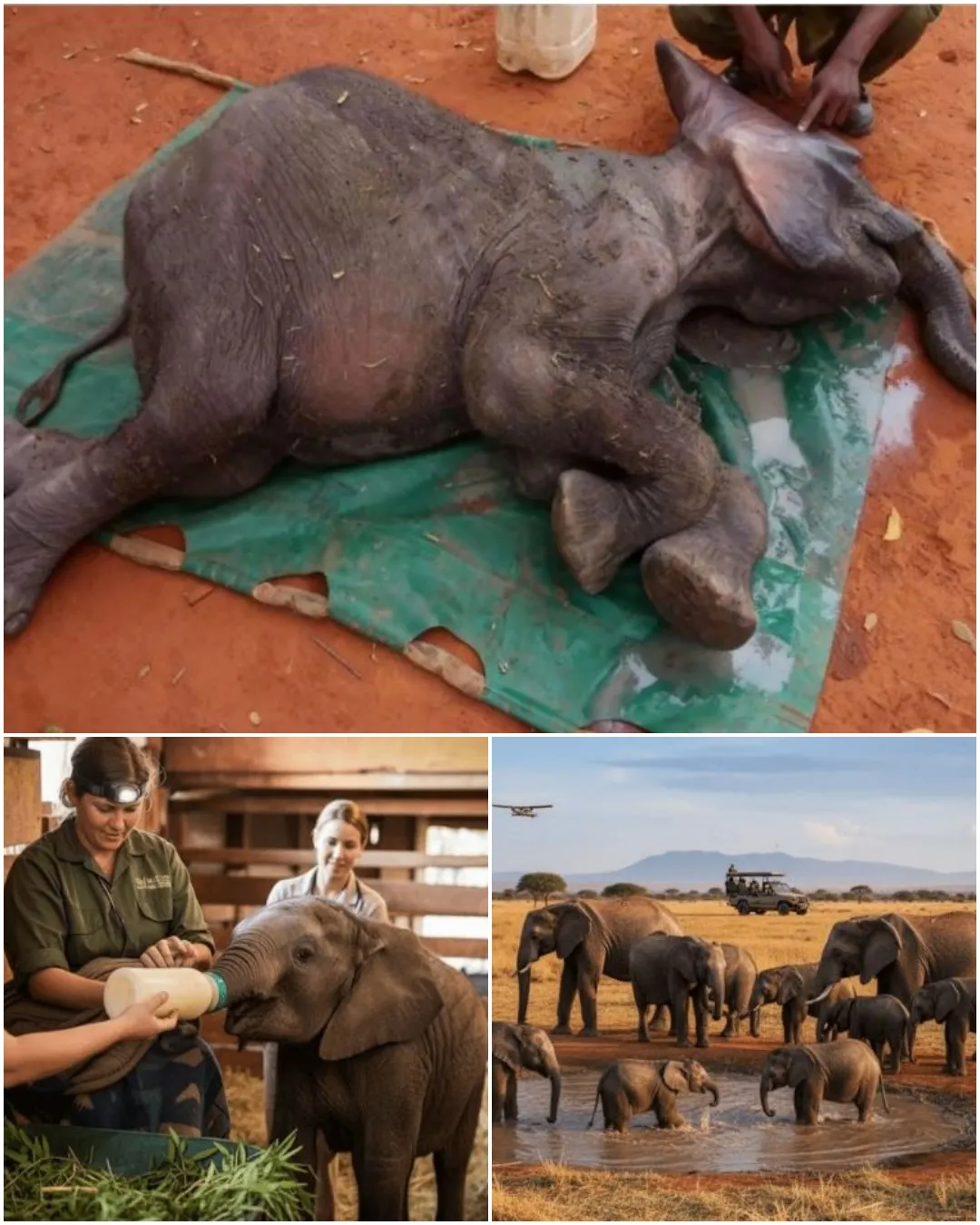
A young elephant, around twelve years old, had been spotted limping near the edge of a game corridor. His right front leg was swollen, the movement stiff and painful.
When rangers looked closer, the truth revealed itself — a thick cable snare had dug deep into his flesh, cutting to the bone and festering with infection.
For those of us who have witnessed the cruel mark of a snare before, it’s a sight that never stops breaking your heart. The pain is slow, silent, and senseless — inflicted by a trap set not for him specifically, but for any life unlucky enough to cross its path.
This was not going to be an easy rescue. But it was one we couldn’t afford to lose.

A Race Against Time
The message came through Zimbabwe National Parks, who immediately coordinated with our field team. Within minutes, we had loaded our equipment — tranquilizer rifles, medical kits, antiseptics, and wire cutters — and set off.
The sun hung heavy over the savannah as we tracked his footprints through the dust. The elephant had been dragging the injured leg, leaving deep, uneven impressions in the earth. He was alone — perhaps his herd had moved on, leaving him behind to recover or perish, depending on fate and the will of those who found him.
Every rescue carries its own rhythm — urgency and patience interwoven. We had to approach carefully. A wounded elephant, even young, can be unpredictable. Pain makes them defensive, fear makes them run.
But when we finally spotted him among the acacia trees, our hearts sank.
The cable snare — a loop of steel wire — was coiled tightly around his leg just above the ankle. The skin around it had split open, raw and swollen. Flies hovered over the wound, and each step sent tremors through his massive body.
Despite the pain, he stood tall, eyes wide but calm, as if trusting that we had come not to harm, but to help.

The Moment of Stillness
The vet prepared the tranquilizer dart. The dosage had to be exact — too little, and he would stay on his feet; too much, and his breathing could slow dangerously.
We waited for the perfect angle, hearts pounding, every second stretching long under the afternoon sun. Then came the quiet thud of the dart hitting its mark.
The young elephant let out a deep rumble, turned once, and began to slow. His knees buckled gently, and within minutes, he settled onto the ground, the dust rising softly around him.
The bush fell silent.
In that stillness, surrounded by the vastness of the wild, we saw both the fragility and strength of life — a creature built for endurance brought down by a strand of wire.
Cutting the Wound Free
We moved in quickly, working with quiet precision. The vet checked his breathing — steady but labored. His massive trunk rested in the grass, twitching slightly with each breath.
The snare was deeply embedded, nearly invisible under layers of dried mud and tissue. Using bolt cutters and pliers, we began the painstaking work of cutting it free. The smell of infection hung heavy in the air.
Bit by bit, the steel gave way. When the final section snapped loose, the cable coiled lifeless on the ground — a cruel piece of man-made metal that had nearly claimed a wild life.

We flushed the wound with antiseptic, applied antibiotic cream, and administered anti-inflammatory injections to ease the swelling and pain. The vet also took blood and tissue samples, vital for monitoring the elephant’s health and tracking diseases spread through snares or injuries.
Every movement of the team was methodical, deliberate. Years of training had turned moments like this into instinct — though the emotion behind it never dulled.
The Awakening
Once the wound was cleaned and treated, the vet prepared to reverse the tranquilizer. This is always the most fragile moment — a blend of anticipation, relief, and fear.
We stepped back, keeping a safe distance as the antidote took effect. His breathing quickened, his trunk began to curl, his ears twitched. Slowly, the giant stirred.
The young elephant pushed against the ground, first with his front legs, then his back, the wounded one trembling but holding. Dust rose around him as he stood — swaying slightly, then steadying himself.
The leg would take time to heal, but he could walk. That was what mattered most.
We watched as he lifted his trunk high, sniffed the air, and took a few tentative steps forward. Then, as if realizing his freedom, he moved faster, disappearing into the mopane trees — a fading shadow against the late afternoon light.
He was free again.

The Aftermath
When silence returned, only the discarded snare remained — twisted, stained, a symbol of both cruelty and resilience.
We collected it, as we always do, adding it to the growing pile of snares removed from the field. Each one represents not just a trap, but a story: of danger avoided, of pain endured, of lives saved.
Our work doesn’t end when the animal walks away. The follow-up begins — monitoring movements, checking for signs of recovery, and continuing to fight the root cause of poaching and illegal trapping.
Because every rescue is just one small victory in a much larger battle for the survival of wildlife.
Reflections in the Wild
As the team packed up and the sun sank low behind the horizon, we sat quietly for a moment. The savannah was awash in gold and crimson, the sound of distant elephants echoing faintly through the air.
Someone broke the silence softly: “He’ll be all right.”
And we believed it.
There was something in the way he had stood — shaky but determined, scarred but alive.
We left the site with tired bodies but full hearts. Out here, victories are measured not in numbers, but in moments like this: a snare removed, a wound healed, a life given back to the wild.
Because in the end, conservation isn’t just about saving animals — it’s about restoring balance, honoring life, and remembering that every act of kindness ripples farther than we can ever see.

Gratitude and Hope
This rescue was possible thanks to the swift collaboration between our field team and Zimbabwe National Parks, whose dedication to wildlife protection remains unwavering. Their vigilance and quick response made all the difference for this young bull’s survival.
As night fell over the bush, the world felt a little more hopeful. One elephant was safe — one heartbeat continued in the wild.
And though the scars on his leg would remain, they would tell a story — not of suffering, but of survival, compassion, and the enduring will of life to rise again.