
A little dog’s love for her feline brother has moved the internet. After the death of her great “partner in crime,” Misia expressed her grief at no longer being able to be with him.
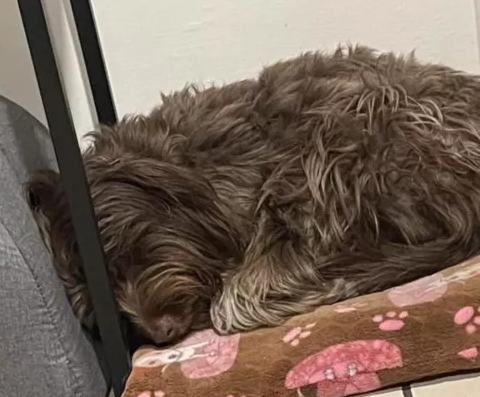
Owner Jessica Jamenson recently shared a photo of her three-year-old dog Misia lying in the spots once frequented by the family’s late cat .
In an interview with Newsweek , Jessica said that they were both very close.
“We adopted Carter the cat when he was just three months old, and when we brought him home, they hit it off immediately. They even groomed each other,” she recalls.
In the post, Jessica stated that her cat had passed away a few weeks ago and, since then, her dog has been sleeping next to her bed and staring at her tower.
“Sometimes she whines while looking at his things. Does she miss him? Or am I just crazy?” she asks.

Jessica told the news site that she believes Misia misses her friend deeply, despite many people claiming that animals are not capable of grieving.
“Some people tell me that this is not possible, because [grief] is a ‘human emotion’ and she is ‘just a dog’ – but I think that is nonsense,” he details.
Do dogs feel grief?
According to the website Patas da Casa, research published by Professor Barbara J. King in Scientific American magazine revealed that dogs understand when someone dies and this can be perceived through their behavioral changes.
Although there is no proof that dogs can truly understand the concept of death, it is clear that they miss their friend when common habits no longer make sense to them, such as a lack of social interaction.
Loss of appetite, increased sleep, stress and anxiety are other symptoms of homesickness.

Other dogs, on the other hand, may be more attached and affectionate to their owners after the loss of a friend. In other words, grief for dogs is also relative.
The death of a pet is already difficult for humans to cope with, let alone for the pet itself. Even more so when it’s a long-term relationship.
In this sense, there are several ways in which canine grief manifests itself through behavioral changes, such as: lack of social interaction, anxiety, stress, loss of appetite, doing their business in the wrong place, excessive attachment to their owners, and vocalization (howling).

Another study led by Frederica Pirrone, an animal behavior specialist at the University of Milan, consulted 426 volunteers who had lost one of their dogs while the other remained alive.
In it, volunteers received a questionnaire, which asked about the behavior and emotions of their surviving dogs.
The results showed that 86% of the dogs exhibited behavioral changes after the loss of their friend. 67% became more needy, 57% less playful, 46% less active, and 35% more fearful.

Furthermore, 35% of the animals started sleeping more, 32% started eating less and 30% started barking or crying more frequently.
The study, published in the journal Scientific Reports , also showed that behavior changes almost always last between two and six months.