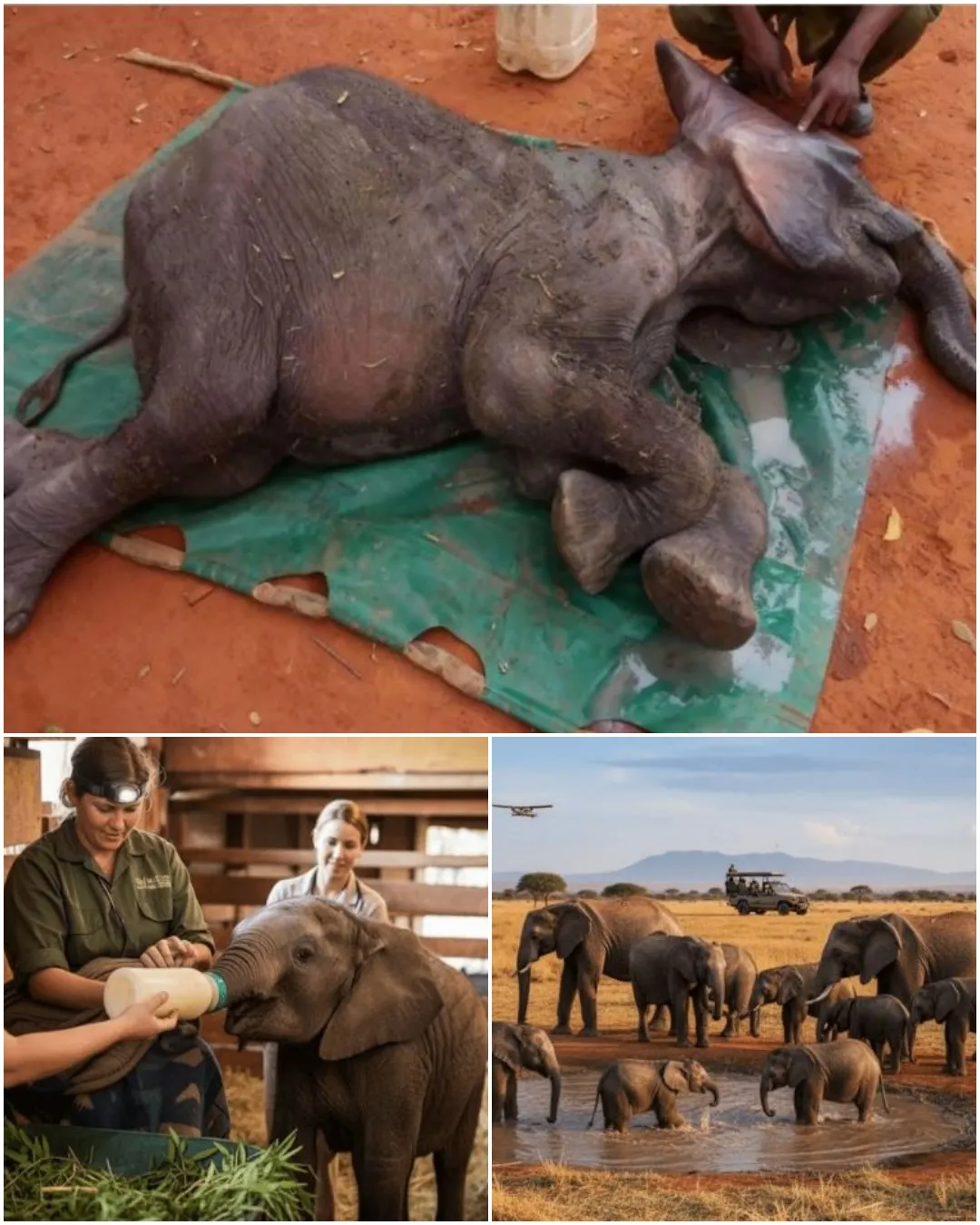
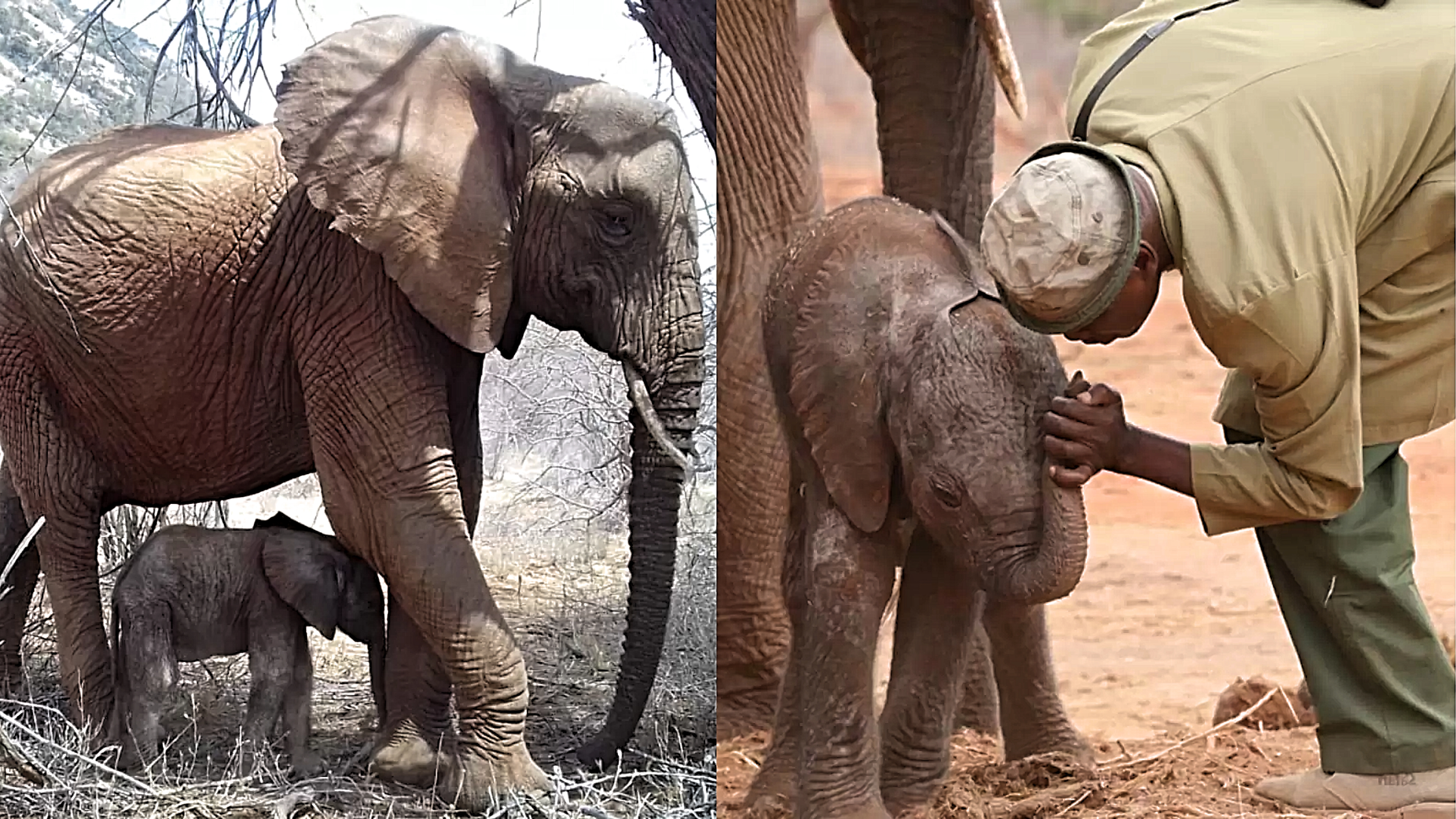
It began over a decade ago, in the dusty plains of Kenya, when rangers from the Sheldrick Wildlife Trust (SWT) discovered a tiny elephant calf standing helplessly beside her dying mother. The baby was barely five months old — confused, fragile, and far too young to survive alone.
They named her Loijuk.
The SWT team gently lifted her into their rescue truck, knowing that this was only the beginning of a long journey. Orphaned elephants are some of the most emotionally complex animals in the world — their bonds to family are deep and lifelong. Losing a mother at such a young age can break their spirit. But the caretakers at Sheldrick Wildlife Trust had seen miracles before, and they were determined to give Loijuk a second chance.
A New Life Among Kind Hands
At the sanctuary, Loijuk found not only food and safety but also love. She was cared for around the clock — bottle-fed with special milk, comforted through the night, and introduced to other orphaned elephants who had lost their families to poaching, drought, or conflict.
For years, she grew under the gentle guidance of her human family and her elephant herd. The caretakers remember her as curious, affectionate, and fiercely intelligent. She loved to nuzzle into her keepers’ arms and follow them through the fields, her trunk always reaching for reassurance.
“She had this spark,” one caretaker said. “Even as a calf, you could see her strength and grace.”
When the time came, Loijuk was slowly reintroduced to the wild. Like many of Sheldrick’s rescued elephants, she was released near Tsavo National Park, where she could roam free — yet she never really disappeared.
The Elephant Who Never Forgot
After returning to the wild, Loijuk did something that stunned her caretakers: she kept coming back.
Month after month, she would reappear at the sanctuary, greeting her old friends with unmistakable affection. She would wrap her trunk around the rangers, rumble softly in recognition, and then wander off again into the savannah.
It was as if she understood exactly where she had come from — and who had given her a second chance at life.
The staff often said she treated the sanctuary like a “safe home base,” returning whenever she needed comfort or companionship. Each visit reminded them that elephants remember kindness — and never forget the ones who showed it.
But in September 2019, Loijuk’s visit was unlike any before.
The Return — With a Surprise
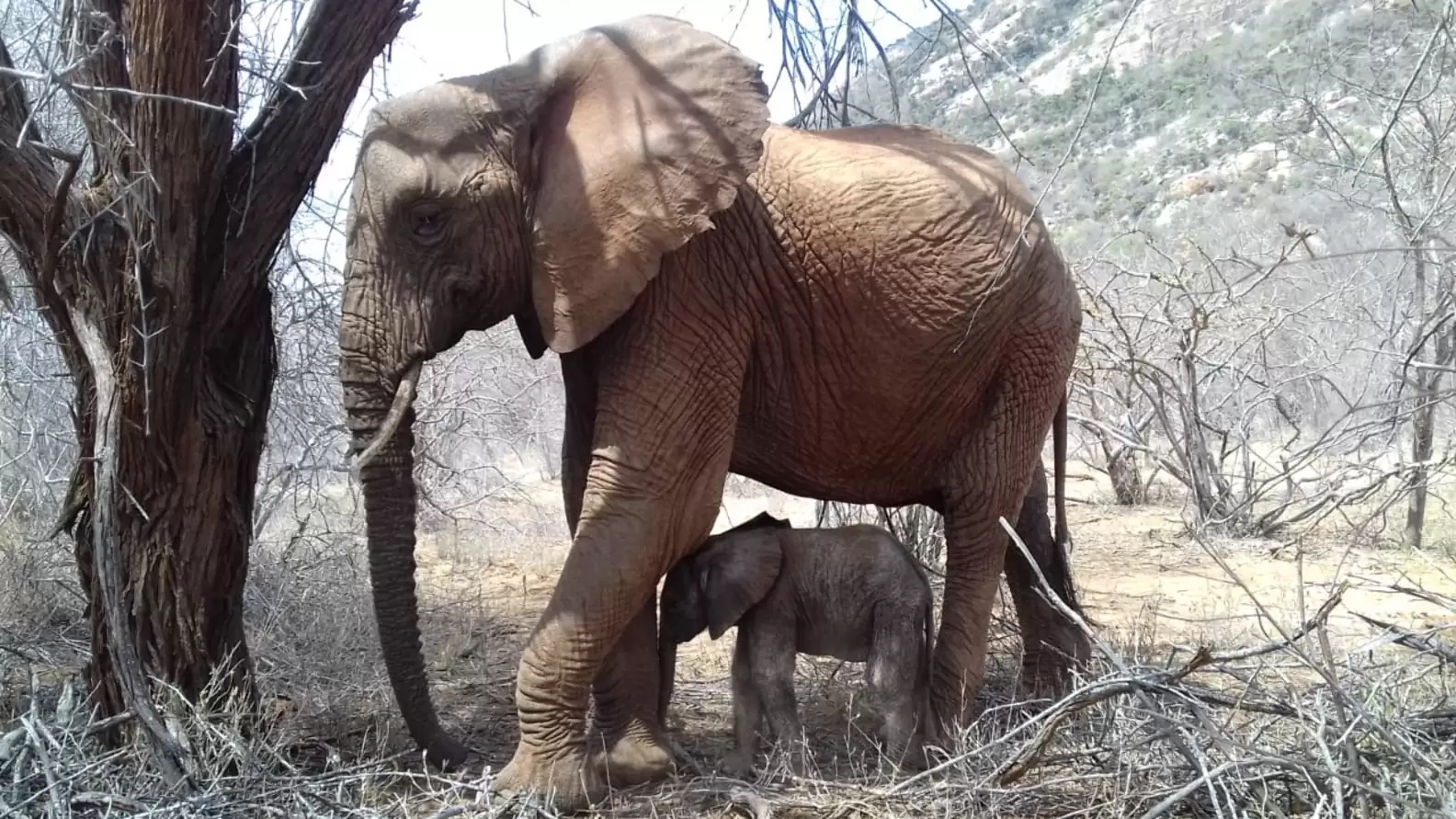
That morning, the SWT team spotted her in the distance — the same calm, majestic figure they had known for years. But this time, she wasn’t alone.
Trailing close beside her was a tiny calf, wobbling on unsteady legs. She couldn’t have been more than a few hours old.
The rangers gasped — Loijuk had become a mother.
The caretakers approached cautiously, watching in awe as the new mother gently nudged her baby forward, as if she wanted to show them something. When they drew closer, Loijuk didn’t retreat. Instead, she waited.
It was a gesture of complete trust — the same trust they had once taught her.
The newborn calf pressed against Loijuk’s legs, blinking up at the humans curiously. The team decided to name her Lili.
“She was born the night before,” said Rob Brandford, SWT’s chief executive. “And the first thing Loijuk did was bring her here — to the people who saved her.”

A Reunion Beyond Words
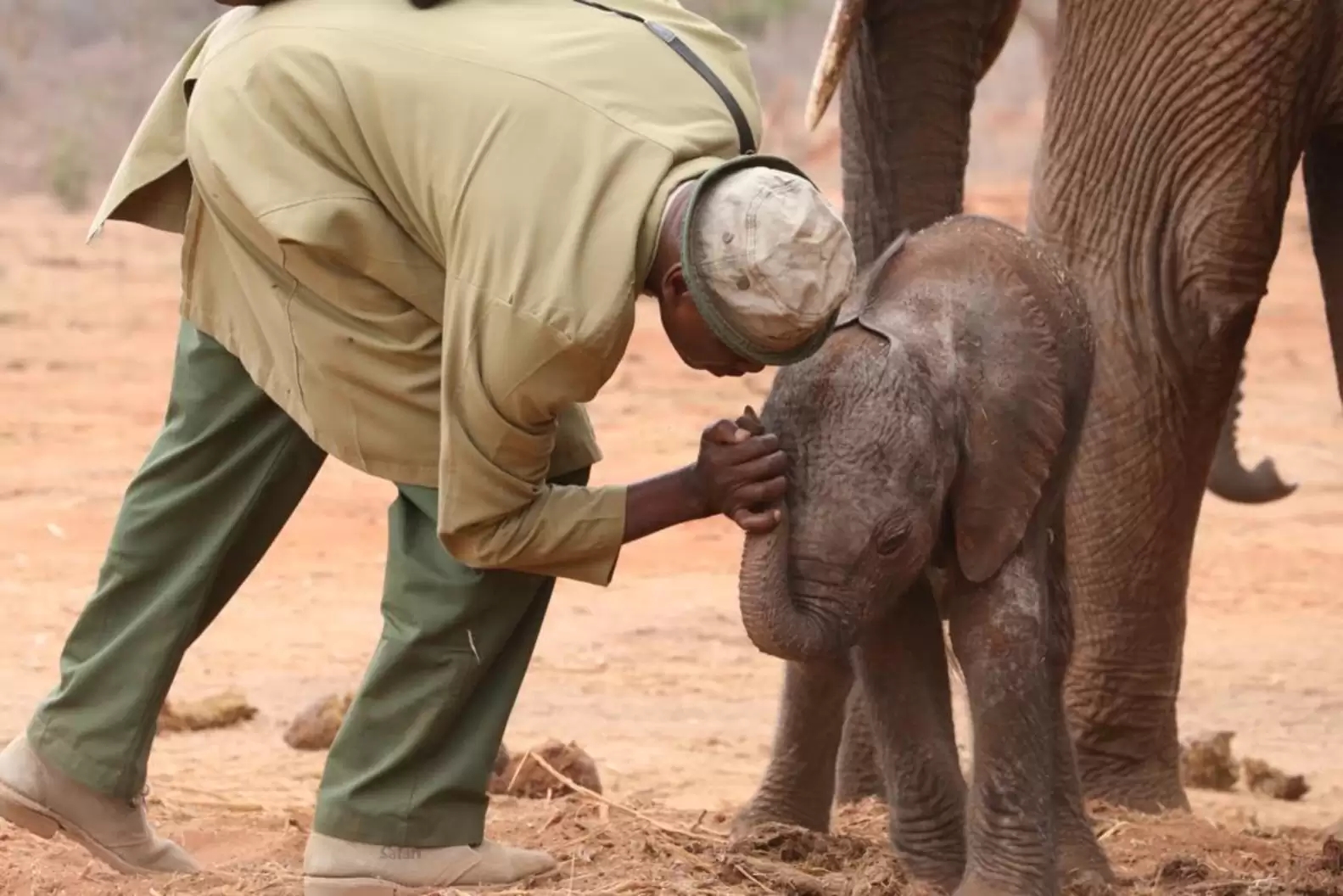
Caretaker Benjamin Kyalo, who had helped raise Loijuk as a calf, was among those present that day. When he stepped closer, the elephant let out a low rumble, one he recognized instantly — a sound of familiarity and calm.
Then, something extraordinary happened: Loijuk encouraged Benjamin to come nearer to her baby.
Slowly, he crouched beside little Lili, reaching out his hand. The newborn sniffed him, pressed her tiny trunk against his leg, and leaned in.
Benjamin smiled through tears. “It was like she remembered,” he said softly. “Loijuk knew we were family — and she wanted her baby to know that too.”
The Circle of Life Restored
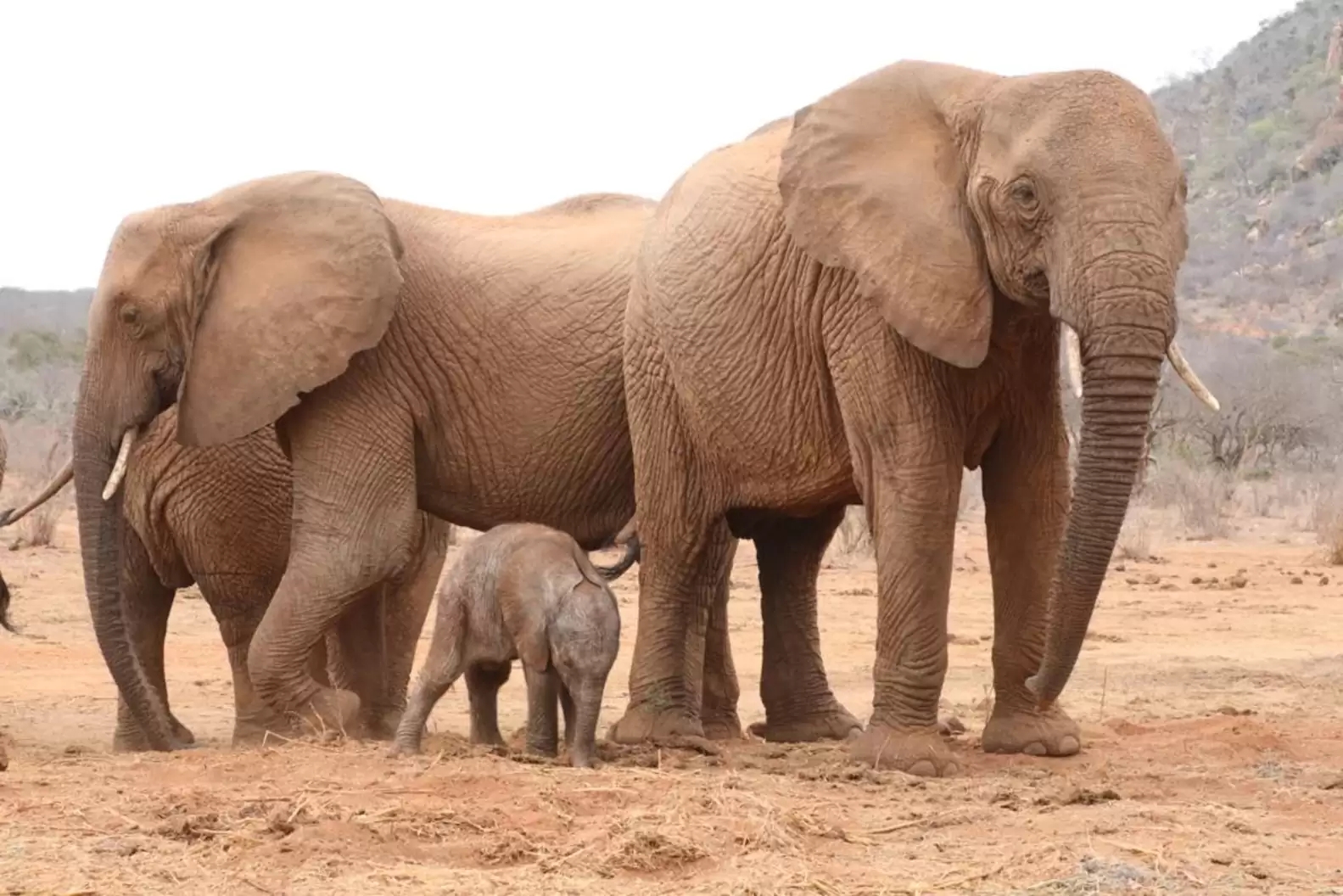
In the wild, elephant calves are raised not just by their mothers but by an entire community of aunts and sisters — a structure known as the matriarchal herd. Loijuk, having once played the role of “babysitter” to other rescued calves, now had her own.
Her little Lili is being watched over by two fellow elephants — Naserian and Ithumbah, both former orphans rescued by SWT. Together, they form a living testament to what compassion can build.
They roam free in the wilderness, but they always know where home is — the sanctuary that once saved their lives.
“These moments remind us why we do what we do,” said Brandford. “When we save one orphaned elephant, we don’t just save a life. We create generations of life.”
More Than Rescue — A Legacy of Love
Today, Loijuk and Lili continue to thrive in the wild. Rangers still see them occasionally near the sanctuary’s watering holes, always healthy, always together.
Loijuk has become a symbol of hope — proof that rescue, rehabilitation, and compassion can rewrite an animal’s destiny.
Her story isn’t just about survival. It’s about memory, gratitude, and the unbreakable bond between humans and the creatures they choose to protect.
Because years after her rescue, Loijuk didn’t forget. She came back — not because she needed help, but because she wanted to share her joy.
She wanted her rescuers to meet her child — the next chapter of a life they had once saved.
And in that moment, surrounded by laughter, tears, and the soft rumble of elephants, everyone understood something deeper:
Love, once given, never disappears. It just returns — sometimes, on four legs, with a baby by its side. 🐘💚