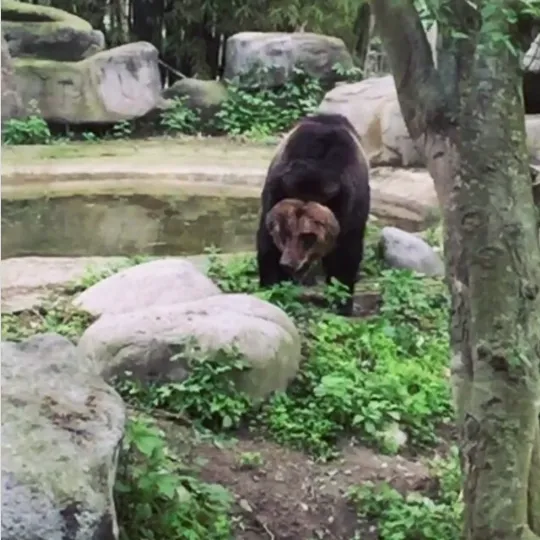
For years, Bear Caesar knew nothing but pain. Trapped in a bile farm in China, she lived in a metal “torture vest” — a cruel device designed to drain bile from her gallbladder for use in traditional medicine. The contraption squeezed her body, pierced her neck to prevent escape, and left her with open wounds that never healed.
Her world was a dark cage, her only crime: being a bear.
In 2004, after years of unimaginable suffering, hope finally came. Animal rights group Animals Asia intervened, rescuing Caesar and dozens of others from the horrors of the bile trade. Severely injured and traumatized, Caesar was freed from the metal vest and given a second chance at life.
Slowly, the broken bear transformed. Under careful care and compassion, Caesar regained her strength and confidence. Her once dull, scarred coat began to shine again. She swam, dug in the soil, and basked in sunlight — discovering, at last, what freedom felt like.
“Caesar’s scars have all but disappeared,” Animals Asia wrote in 2016. “Today she’s an astonishingly beautiful and formidable bear.”
But freedom couldn’t undo the damage inflicted for so many years. The repeated bile extractions had permanently harmed her organs. In her later years, Caesar developed an aggressive tumor — a painful reminder of the abuse she had endured.
Despite the tireless efforts of her caretakers, Caesar passed away just over a decade after her rescue. Her death devastated those who had fought for her, but her legacy endures as a symbol of resilience — and a call to action.
Even today, an estimated 10,000 bears remain imprisoned in bile farms across China and Vietnam. While metal vests like Caesar’s are now banned, cruel practices still persist.
Her story is a haunting reminder that freedom should never come too late — and that compassion, once awakened, must never rest until every cage is empty.