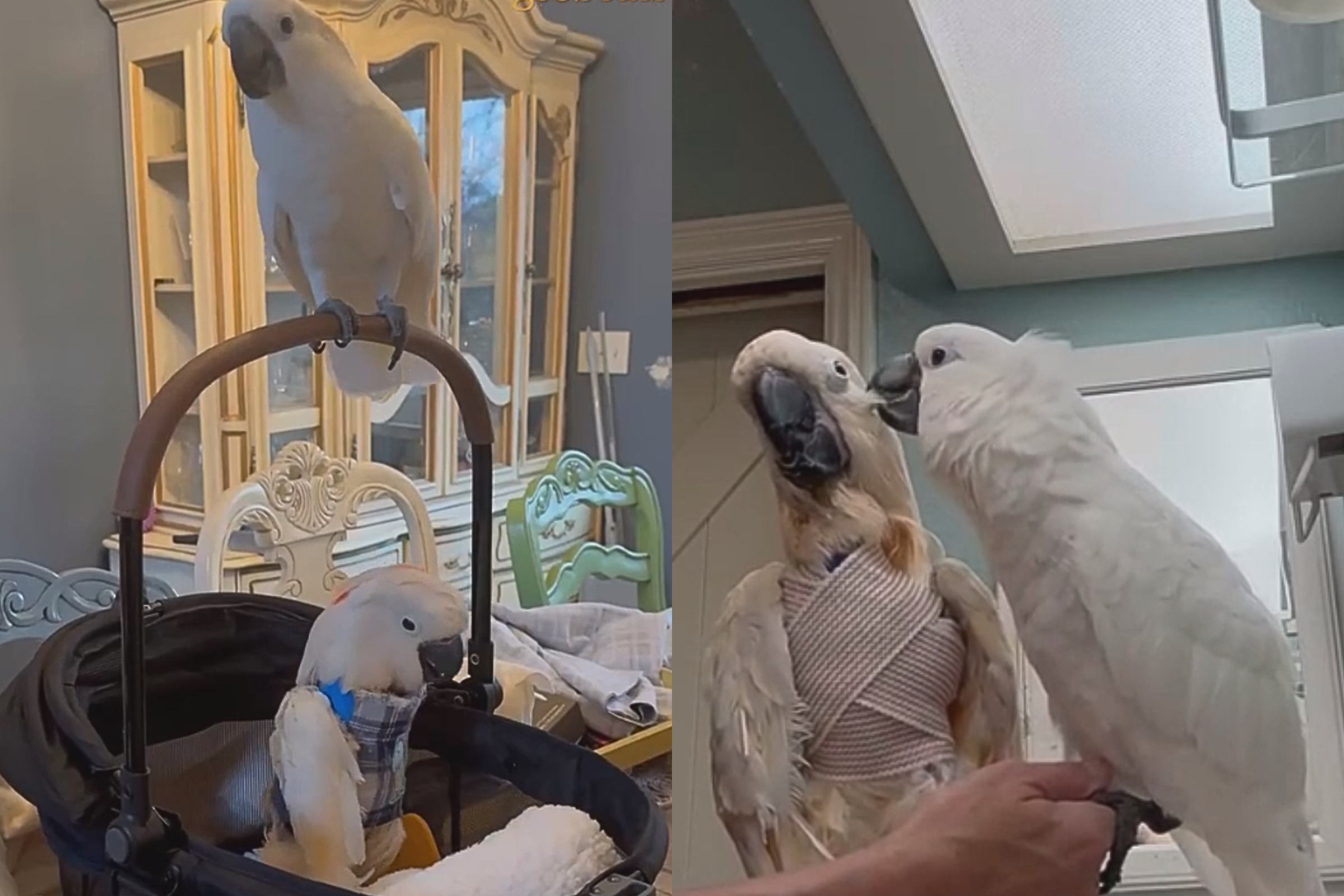
In California, United States, an elderly blind cockatoo named Dino had his life transformed after being taken in by a volunteer and finding in another cockatoo, Magnolia, a ‘nurse’ with wings and a giant heart .
Dino was at least 50 years old when he arrived at the rescue. His owner had passed away, and, unsure of where to go, the bird was left by a person who drove miles to the shelter where the nurse known as BPlus Parrot Mom volunteered.
In addition to his blindness, Dino had heart problems, a chest wound, and only one functional wing and leg. He was in critical condition and required intensive care , which his caretaker was willing to provide.
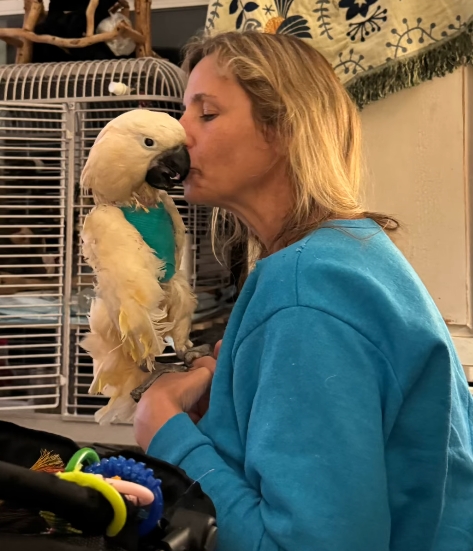
“From that day on, I vowed that he would never feel alone, uncared for, or unloved again,” he told GeoBeats Animals . “What surprised me was that for a bird who had been through so much, he was incredibly sweet.”
But what she didn’t imagine was that Magnolia, her umbrella cockatoo , would immediately realize that the new resident needed help and would take on the role of caregiver .
“They are incredibly intelligent, emotionally intelligent. Magnolia really wanted to take care of him,” he said.
Even without sight, Dino learned to recognize his new friend’s presence. Magnolia, in turn, adjusted her way of interacting so as not to scare him.
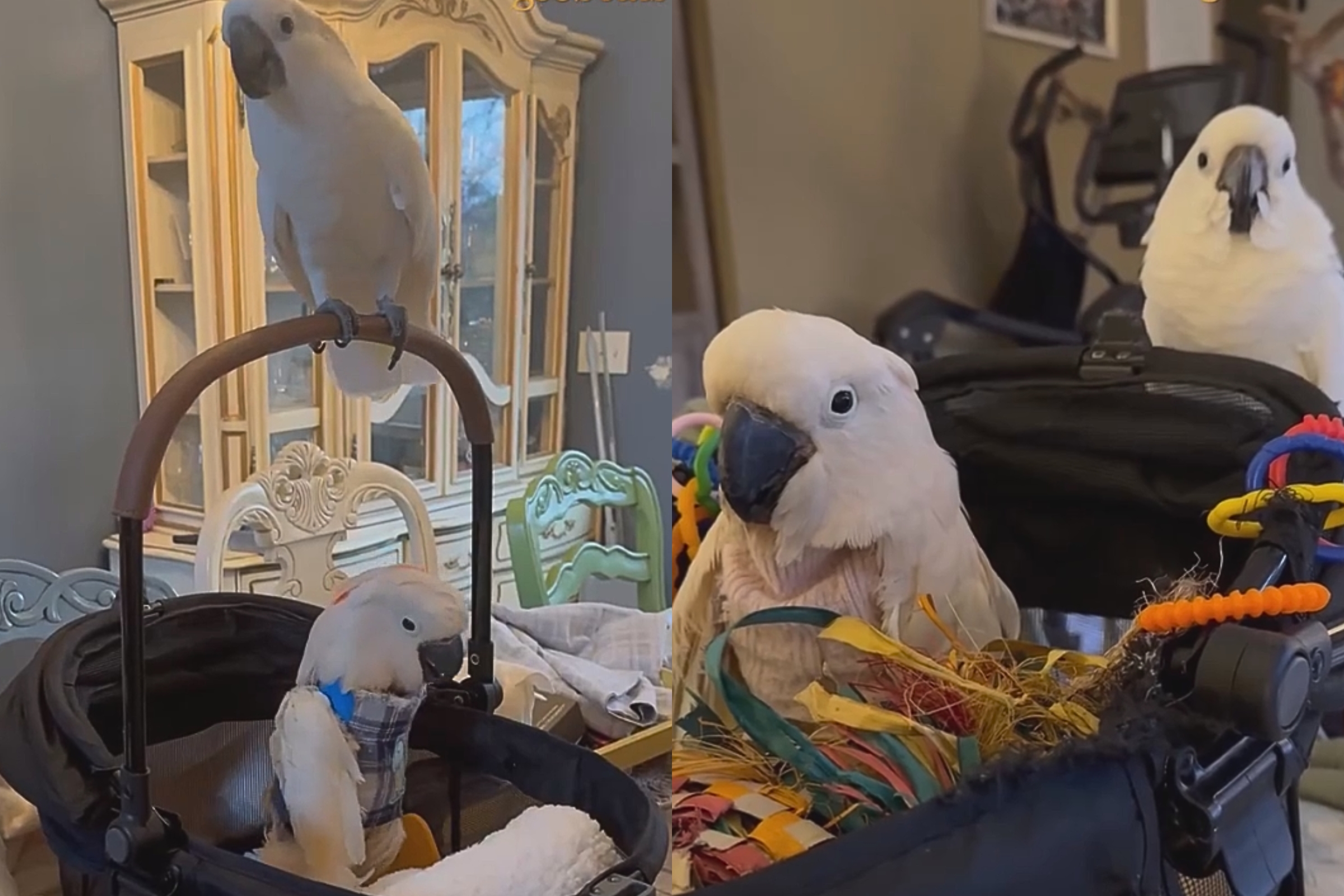
Over time, the two created a relationship of trust and companionship that restored the elderly cockatoo’s joy in life.
“He started acting more like a bird, having fun and becoming more excited and talkative,” said the owner.
‘I’m a good boy’
Dino, who needed constant support, began to accompany his owner everywhere inside a small adapted carrier.
“It was like having a newborn baby. He fell often, so I put the cage next to my bed. When he fell, I would get up and comfort him.”
Every morning, Dino greeted his guardian with a cheerful “good morning” and repeated the phrases he heard often: “I’m a good boy. Everything’s okay. Let’s go.”
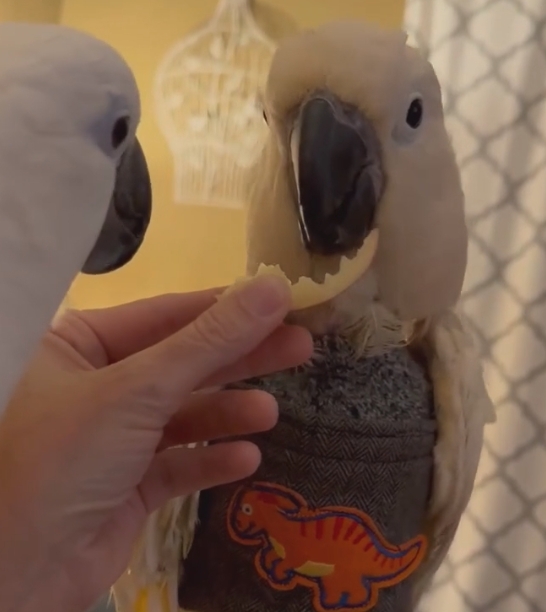
Behind his fragility lay enormous strength. Dino suffered from open wounds caused by self-mutilation, a common behavior in parrots suffering from emotional stress .
Daily dressing care took about two hours.
“I made crooked sweaters to match his crooked wings,” the owner said.
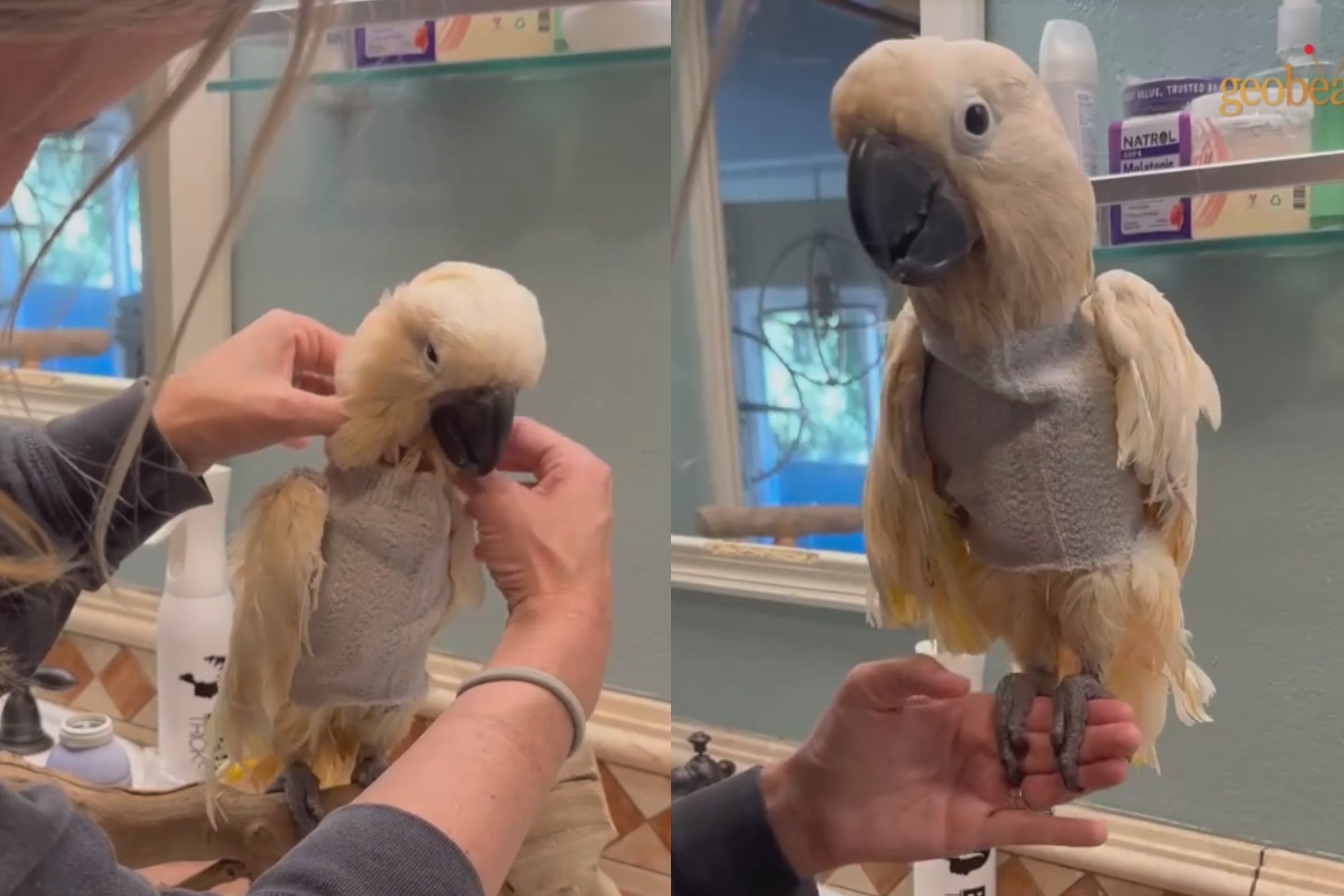
Despite his limitations, Dino flourished . Magnolia never left him alone, standing by his side like a nurse.
For ten months, he lived a routine surrounded by love, comfort and security, until the day his body could take it no longer.
“It was the hardest goodbye, but I’m comforted to know that his last chapter was filled with love and comfort. He knew he was a good boy,” she wrote on social media.
In the comments, followers expressed support and admiration:
“It’s comforting to know that his last days were the best he could have imagined. Love, healing, dignity, and devotion.”
A legacy that continues
After his passing, his owner transformed Dino’s old cage into a symbol of rescue and hope. His father restored the structure, coating it with a new coat of powder in the color of the bird’s coat of arms.
Now, it serves as the “ DinoSoar cage ,” a reminder of where it all began and a shelter for new parrots with special needs .
“Some things are harder to let go of than others. Dino’s cage was one of them,” she wrote. “Now, it continues his legacy—stronger and ready to give other birds the same chance to fly.”
The life and curiosities about cockatoos
According to the San Diego Zoo , cockatoos are exuberant and intelligent birds belonging to the parrot family .
Native to Australia and neighboring islands, they live in tropical forests , eucalyptus groves and open areas.
They are known for their mobile crest , which they raise to express emotions such as alertness, excitement or curiosity.
These birds are highly social and often live in noisy flocks , communicating through loud calls and vocalizations.
The ability to make noise, in fact, is an important adaptation for keeping in touch in dense forests .
Cockatoos are also excellent climbers , thanks to their zygodactyl feet (with two toes facing forward and two facing backward), which allow them to grip objects with precision .
Additionally, some species demonstrate complex behaviors such as tool use , such as the palm cockatoo, which makes sticks to “drum” in hollow tree trunks, a form of territorial communication.
When they live in pairs, cockatoos tend to form lasting and affectionate bonds , sharing tasks such as incubating eggs and caring for their chicks.
Magnolia and Dino seem to have replicated this ancestral instinct for togetherness and protection.
Dino might not see it, but he knew exactly where love was.