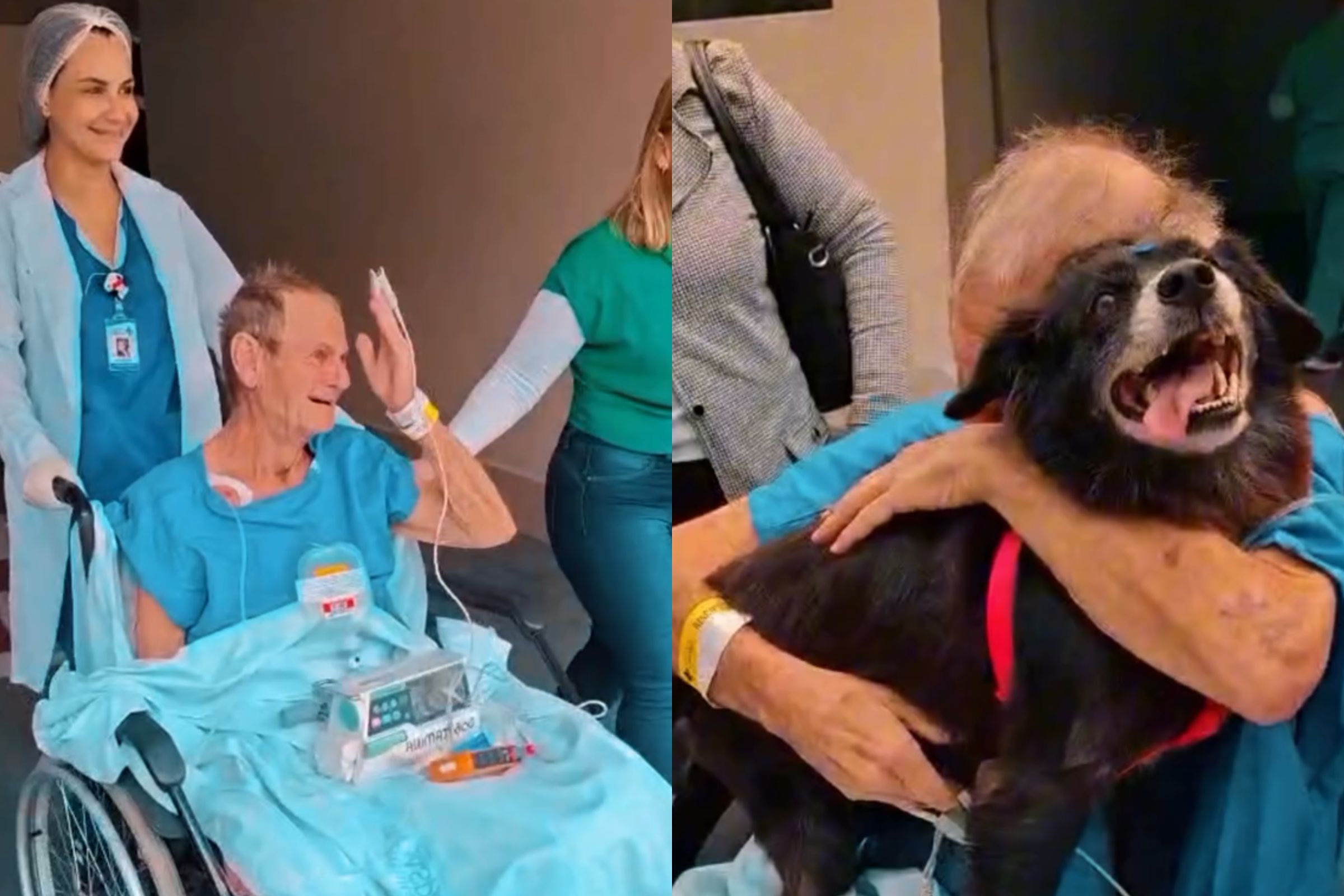
Fifteen days can feel like an eternity when you’re lying in a hospital bed, battling illness and waiting for the simple comfort of home. For 73-year-old Valdir Zabel, those days in the ICU weren’t just long—they were painfully lonely. His body was recovering, but his heart ached for the one presence that had always been by his side: his little dog, Preta.
Preta wasn’t just a pet. She was a constant companion, a friend, and a source of unconditional love. This tiny stray had entered Valdir’s life years ago, bringing warmth, laughter, and the kind of comfort that only animals can offer. She followed him everywhere, curled up beside him when he read, nudged him when he was down, and always greeted him with a wagging tail at the door. Now, for the first time in years, Valdir was separated from her, and he couldn’t stop thinking about her.
“I couldn’t stop talking about my little dog,” he told Joice, his daughter-in-law who had been staying nearby to support him. “I just wanted to go home to see her. I missed her so much… it’s a love that cannot be measured.”
Preta, too, felt the absence of her owner. Those familiar footsteps, the gentle voice calling her name, the shared routine that had structured her days—all of it had vanished. She ate less, walked slowly, and her eyes seemed to hold a quiet sadness. For a dog who thrived on companionship, this separation was more than confusing; it was heartbreaking.
The hospital staff noticed. Psychologists, nurses, and doctors understood that the emotional well-being of both Valdir and Preta was critical to his recovery. Long-term hospitalization is draining not only physically but also mentally, and research shows that patients often benefit immensely from animal-assisted therapy. Interactions with pets can improve mood, reduce stress, lower blood pressure, and even stimulate a faster recovery.
Lucimara, the hospital psychologist, proposed a solution: a carefully planned reunion between Valdir and Preta. The hospital’s infection control team, nurses, and doctors collaborated to ensure that the meeting would be safe for everyone involved. After all, a hospital ICU is not the place for unplanned animal visits, but some moments are worth the extra planning.
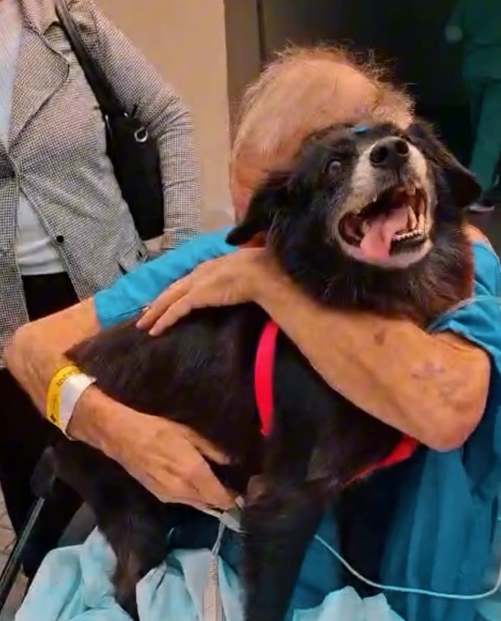
On September 7th, everything was ready. The hospital cleared an external area where Valdir could meet Preta safely. When he saw her waiting, his heart raced. Preta, sensing her human, immediately recognized him. Tail wagging furiously, eyes bright, she sprinted toward him with all the energy and enthusiasm of a dog who had been missing her favorite person.
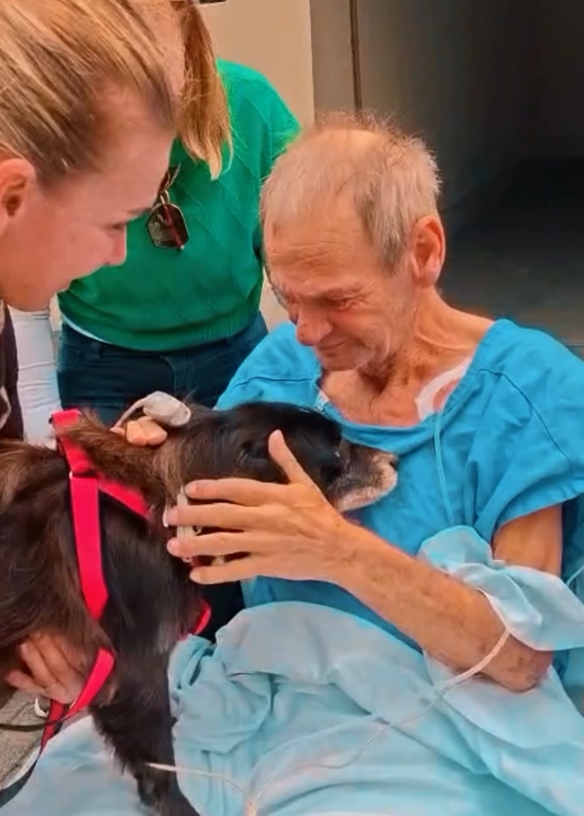
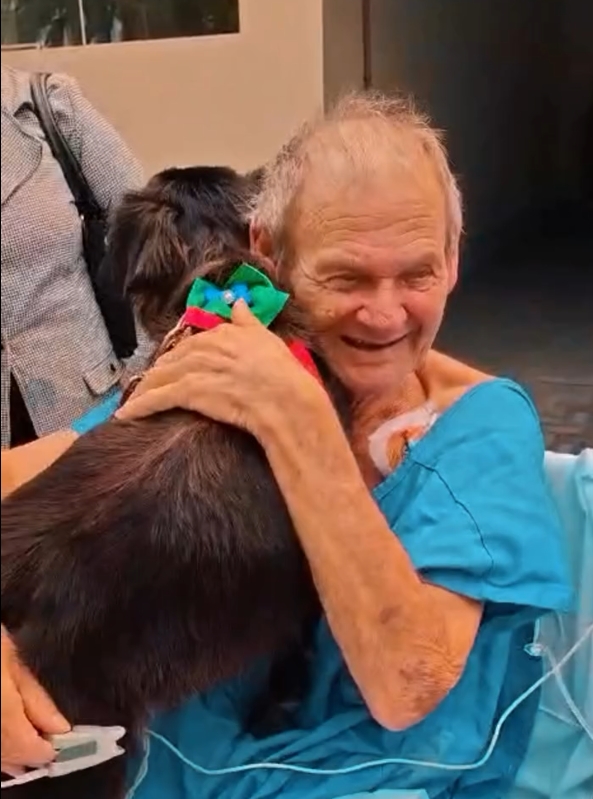
Valdir, overcome with emotion, could not hold back his tears. Years of shared routines, quiet companionship, and small moments of joy came rushing back in an instant. He knelt to embrace Preta, who returned every gesture with affection, pressing against him, licking his hands, and nuzzling his face. It was more than a reunion—it was a release of two hearts that had been aching for the comfort of one another.
The scene was shared on social media, and it resonated with thousands of people. Viewers marveled at the profound emotional bond between Valdir and Preta, a bond that transcended language and circumstance. The story reminded many that the simplest connections—like the one between a person and their pet—can hold immense healing power.
This kind of interaction is not just emotionally moving; it has tangible health benefits. Studies highlight that contact with pets can increase endorphin levels, reduce cortisol, and lower blood pressure. For patients like Valdir, who had endured more than two weeks in an intensive care unit, such emotional support can positively impact physical recovery. Feeling connected, loved, and understood can improve sleep, decrease anxiety, and even encourage patients to follow treatment plans more diligently.
Preta’s visit offered something else too: reassurance. For a patient in the ICU, time can stretch indefinitely, and days often blend together in a haze of medical procedures and medications. Seeing the familiar, loving face of a pet can anchor someone, offering a reminder of home, of normal life, and of the people—and animals—they are fighting to return to. For Valdir, this visit wasn’t just comforting; it was invigorating. It gave him renewed strength to face the rest of his treatment, knowing that a little dog was waiting for him, eager to share life’s small joys once again.
Animal-assisted therapy has been shown to improve communication between patients and medical teams, too. By reducing stress and anxiety, patients are often more receptive to treatment and better able to participate in their own recovery. The reunion of Valdir and Preta exemplified this perfectly. It was not just a private moment of happiness; it was a small intervention that could positively influence his health outcomes.
In that brief time outside the ICU, laughter mingled with tears. Valdir whispered to Preta, telling her everything he had missed about her, and Preta responded with the kind of pure, unfiltered love only animals can give. It was as if the 15 days of separation had never happened, and yet, both knew that this moment was precious precisely because of the time they had spent apart.
For hospital staff, the reunion was a reminder of why their work matters. Beyond medications, procedures, and monitoring vital signs, sometimes the most meaningful care comes from helping patients maintain connections to the life they cherish outside hospital walls. Valdir’s happiness, Preta’s joy, and the bond they shared exemplified the profound impact of human-animal relationships.
After the visit, Valdir returned to his room with a lightness in his heart. He was physically recovering, but now his spirit was stronger, too. The thought of going home, being reunited with Preta on a daily basis, and resuming their life together gave him a motivation that medicine alone could not provide.
The story of Valdir and Preta is a testament to the extraordinary bonds between humans and their pets. It demonstrates that even in the most clinical, sterile environments, love can flourish. It shows that care is not only about treating the body—it is also about nurturing the soul.
As Valdir continues his treatment, he carries with him the memory of that joyful reunion and the knowledge that someone is waiting for him beyond the hospital doors. Preta, now bright-eyed and tail wagging, has been reminded that her human is coming home, ready to resume their shared routines, walks, and quiet companionship.
In a world often focused on the speed of recovery and the technical aspects of healthcare, the story of Valdir and Preta is a reminder that healing is not just about medicine. It’s about love, connection, and the little moments that remind us why we fight: to return to the people, places, and furry friends who make life worth living.