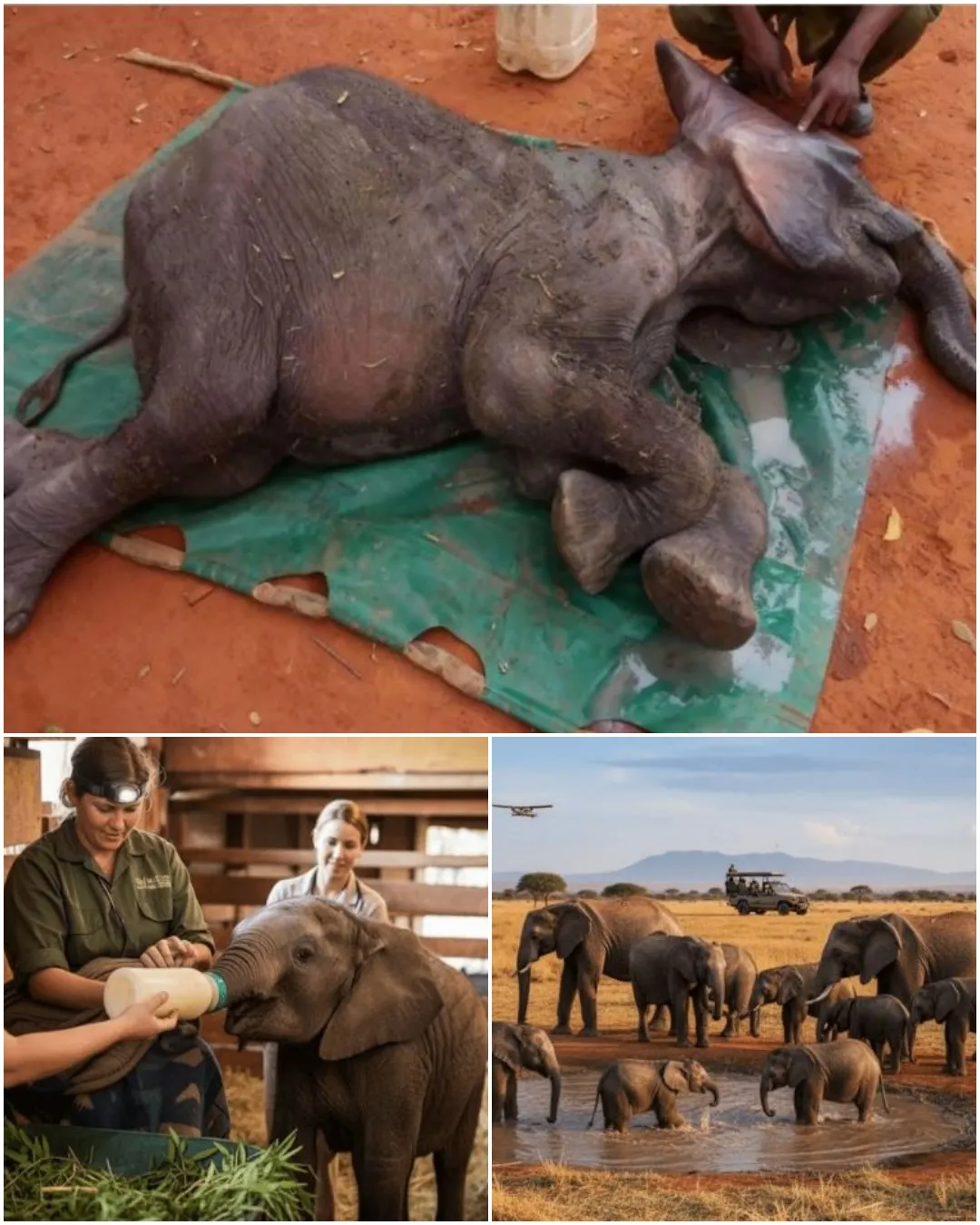
In the heart of northern Kenya, the dry wind carries stories of survival — of people and animals who share the same fragile landscape, both bound by drought, resilience, and hope. Amid the rugged hills of Samburu County, there is a place where miracles happen quietly: the Reteti Elephant Sanctuary.
It’s not a grand place — just simple shelters shaded by acacia trees, surrounded by dusty paths and the soft rumble of young elephants calling for their caretakers. But what’s happening here is nothing short of revolutionary.
Because here, the survival of Africa’s orphaned elephants depends not on imported supplies or high-cost technology — but on something humble, local, and life-giving: goat milk.

A Struggle to Keep the Babies Alive
Reteti was founded in 2016 as Kenya’s first community-owned elephant sanctuary — a safe haven for calves left behind after their mothers were lost to poaching, drought, or human-wildlife conflict.
When a baby elephant arrives, frightened and weak, the staff knows they are racing against time. Newborn calves need milk every few hours, and for years, that meant depending on expensive imported formula flown in from Europe.
“It was the only thing we had,” recalls Dr. Steven Chege, Reteti’s veterinary adviser. “But it was costly and difficult to get. Sometimes, deliveries were delayed for weeks. We lost calves simply because we couldn’t feed them in time.”
Every lost calf was a heartbreak — not only for the team that had worked to save it, but for the community that saw elephants as part of their own story.
So, the sanctuary began searching for alternatives — something that could nourish their fragile charges without depending on supplies from far away.

The Simple Answer Hiding in Plain Sight
The solution came from just beyond the sanctuary fence — from the goats grazing under the Kenyan sun.
“Someone suggested goat milk,” Dr. Chege says, smiling at the memory. “At first, it sounded too simple to be true. But we decided to try.”
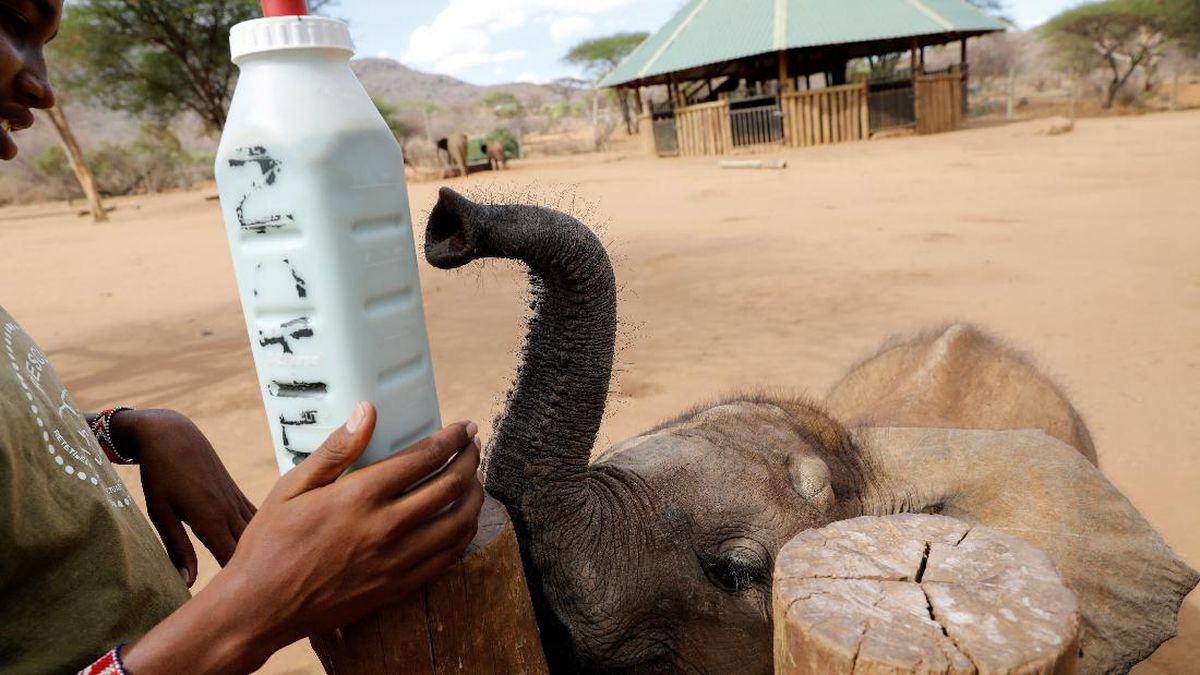
They introduced the milk slowly, mixing it with small amounts of formula to test how the calves would react. To everyone’s surprise, the elephants not only drank it — they loved it.
Within days, their health began to improve.
“It’s rich in protein, low in lactose, and easy for them to digest,” Dr. Chege explains. “It’s natural, nutritious, and it’s working wonders.”
What started as an experiment became a turning point — not only for the elephants, but for the people of Samburu.

The Women Who Became Lifelines
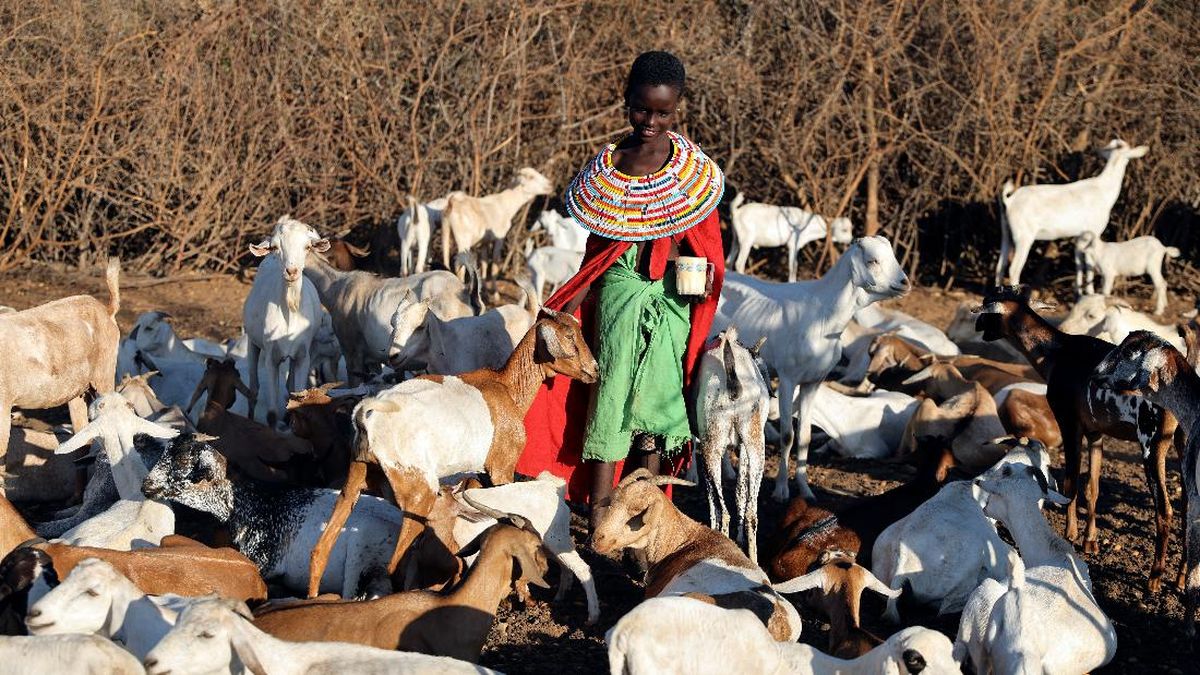
The new feeding plan created an unexpected ripple effect through the nearby villages. Suddenly, local women who kept small herds of goats found themselves with a new opportunity: to supply milk for the sanctuary.
One of them was Liwana Lenakukunyia, a mother of four who had always struggled to make ends meet. Her goats were her pride, but they had never brought in more than a few shillings a day.
Now, Reteti pays her and dozens of other women for their milk — providing steady income that helps them feed their families, send children to school, and build a future rooted in hope rather than hardship.
“The elephants help us — and we help them,” Liwana says, her smile bright against the golden light of dusk. “Before, we only saw elephants as something far away. Now, they are part of us.”
A Partnership Between Species
At feeding time, the sanctuary comes alive.
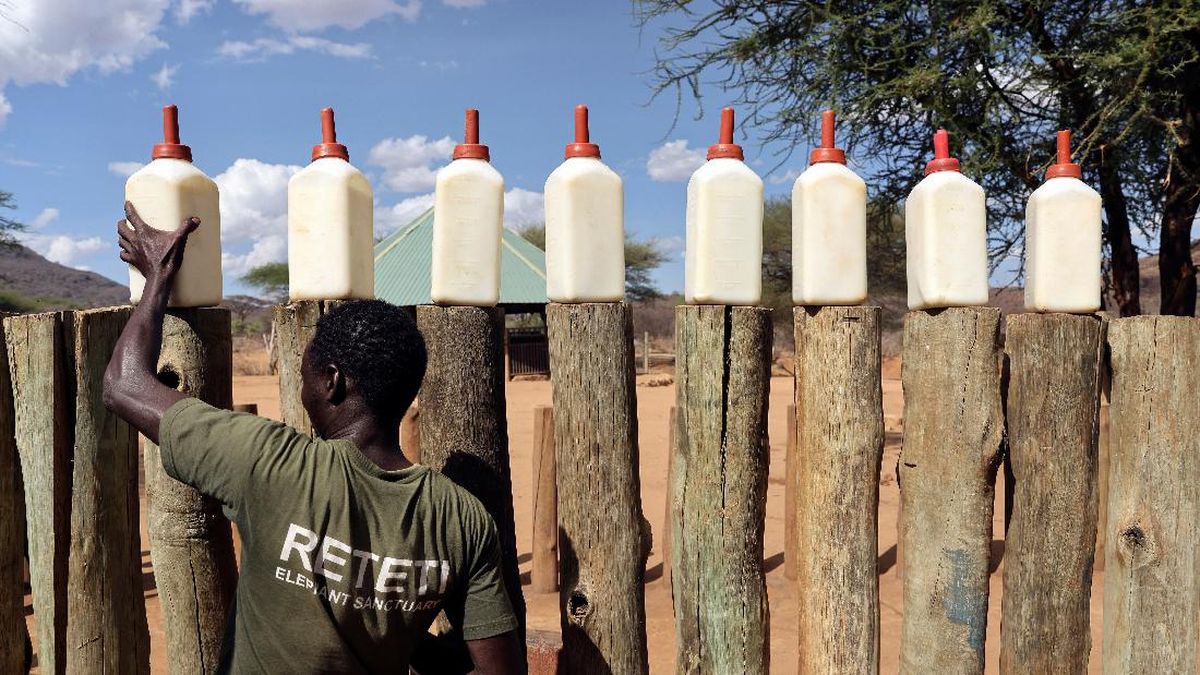
Rows of bottles are lined up along the wooden fence, each one filled with fresh, frothy goat milk. The orphaned calves shuffle impatiently, their trunks reaching, curling, searching for their keepers’ hands.
When the bottles are finally lifted, a symphony of sound fills the air — the rhythmic slurping of trunks, the low hum of contentment, the laughter of the caretakers who know each calf by name.
There’s Naramat, whose mother was killed by poachers when she was just a week old. Shaba, rescued after falling into a deep well. And Kelele, the mischievous one, who always insists on stealing an extra bottle.
Watching them drink, it’s impossible not to feel a sense of awe. These elephants, once fragile and frightened, are thriving — growing stronger with each gulp of milk that connects two worlds: human and wild.
Healing More Than Just Elephants
The success of Reteti’s goat milk program has gone far beyond the sanctuary’s gates. It has strengthened trust between conservationists and local herders, transforming how people view wildlife.
For generations, elephants and humans in northern Kenya have competed for scarce water and grazing land, often leading to conflict. But Reteti is rewriting that story.
“When people see that elephants are helping their families survive,” says Dr. Chege, “they start protecting them, not fearing them.”
This new partnership — built on compassion, respect, and a few liters of milk — has become a model for other sanctuaries across Africa. It’s a reminder that conservation doesn’t have to come from outside; it can start right at home.
The Power of Simple Ideas
It’s easy to think that saving wildlife requires complicated solutions — advanced equipment, big funding, endless bureaucracy. But Reteti’s story shows that sometimes, all it takes is a shift in perspective.
Goat milk was something the community already had in abundance. What they needed was the courage to try something new — and the belief that their knowledge mattered.
Now, the elephants are thriving. The women are earning. And the bond between people and wildlife is growing stronger each day.
“Every morning, I bring my milk,” Liwana says. “And every evening, I hear the elephants drinking. I feel proud — because that sound means they are alive.”
Hope in Every Drop
As the sun dips low over the Samburu hills, the keepers gather for one last feeding. The air cools, the sky turns pink, and the elephants crowd together — trunks brushing, tails flicking, eyes half-closed in comfort.
It’s a sight that fills the heart with quiet joy.
Once, these babies were orphans — symbols of loss. Now, they are survivors, growing stronger each day thanks to a simple act of care.
And it’s not just the elephants who have been saved. The people of this land — women like Liwana, men like the herders who share their wells with wildlife — have found purpose and pride in protecting the creatures they once feared.
The sanctuary’s motto says it best:
“When you save an elephant, you save a community.”
At Reteti, that truth lives in every feeding, every rescued calf, and every bottle of milk poured with love.
A Lesson for the World
In a time when so many global problems feel too big to fix, Reteti’s story reminds us that solutions don’t always come from far away. Sometimes, they’re right in front of us — small, local, and full of heart.
A few goats.
A few caring hands.
A few baby elephants learning how to live again.
Together, they’ve built something extraordinary — a bridge between people and nature, between survival and compassion.
And every evening, as the sound of slurping trunks fills the air, it serves as a gentle, beautiful reminder:
Even the simplest ideas can change the world.