Bonsai: The Little Bulldog Who Taught the World How to Stand Tall
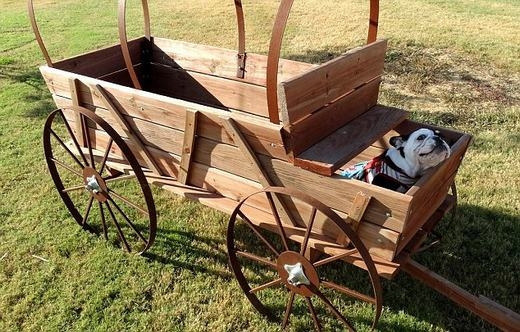
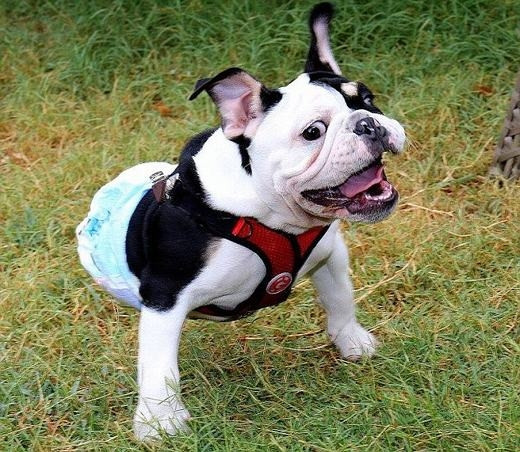
In a small home in Fort Worth, Texas, the sound of tiny paws echoes against the wooden floor — light, quick, determined. They belong to Bonsai, a six-month-old English Bulldog who, despite losing both hind legs, has become a symbol of resilience that’s touched hearts all over the world.
From the moment he was born, Bonsai’s life was marked by impossibility.
He entered the world with a rare and devastating congenital condition known as caudal regression syndrome, a disorder that affects the development of the lower spine and pelvis. For Bonsai, it meant being born without a pelvis and with two atrophied hind legs that could never support his body.
Most would have given up on him.
But Bonsai didn’t know how to give up.

A Diagnosis No One Had Seen Before
His owner, Elizabeth Hart, still remembers the moment the vet delivered the diagnosis — a mixture of disbelief and heartbreak.
“The vet told me this is something that’s happened in humans, but has never been recorded in animals,” Elizabeth recalls.
“Bonsai might be the first case in the world.”
When she first brought him home, Bonsai was impossibly small, with a round face and soft white fur marked by tan patches. To anyone else, he looked too fragile to survive. But Elizabeth saw something different in his eyes — a spark, a quiet defiance, a will to live that no medical chart could measure.
Even as a newborn, Bonsai would try to crawl, dragging his tiny body across the blanket to reach her hand. His tail — or what little of it he had — would wag weakly. His breath came fast, his heartbeat faster. And each day, he grew stronger.
Still, Elizabeth knew the road ahead would be long and painful.
Bonsai’s malformed legs could not be saved.
When he was just a few weeks old, he underwent a double amputation, losing both hind legs to prevent further infection and pain. For most creatures, that would have been the end.
For Bonsai, it was only the beginning.

Learning to Live Without Fear
After the surgery, Elizabeth expected him to struggle. She prepared for tears, restlessness, and days spent lying still. But the morning after, Bonsai did something no one expected — he smiled.
Yes, smiled.
With his tiny tongue poking out and his front paws trembling slightly, he looked up at Elizabeth as if to say, “Is that all you’ve got?” And then, slowly, clumsily, he pushed himself forward — walking on his two front legs.
“Even after everything, he still wanted to play,” Elizabeth said.
“He was running, jumping, and chasing toys, as if he never lost anything at all.”
What began as a heartbreaking story quickly turned into one of inspiration. Videos of Bonsai learning to move, wobbling but joyful, spread across the internet. His story went viral — not because people pitied him, but because they admired him.
Bonsai wasn’t surviving.
He was thriving.
A Smile That Traveled the World
Within weeks, Bonsai had gained thousands of followers online. His photos — his big puppy eyes, his bright grin, his determined little hops — began appearing everywhere. People wrote letters to Elizabeth from across the world, thanking her for sharing him, for reminding them what courage looked like.
One mother from Italy wrote that her daughter, who used a wheelchair, started calling herself “Bonsai Girl.”
A soldier recovering from an injury said that seeing the dog’s videos gave him hope to walk again.
Children sent drawings of Bonsai with superhero capes and golden crowns.
Somehow, this tiny dog had become a mirror for human resilience — a reminder that the body can break, but the spirit doesn’t have to.
“He hasn’t let his illness affect his love of life,” Elizabeth wrote on her YouCaring fundraising page.
“Bonsai has come such a long way. We are so proud of his strength and fighting spirit.”
The Power of Love (and Little Wheels)
Today, Bonsai moves faster than ever. Elizabeth and her family raised funds for a custom set of rear wheels, allowing him to roll freely across the house and the yard. When the wheels first arrived, he approached them cautiously, sniffing and circling them with suspicion.
But as soon as they were strapped on, something clicked. He darted forward — a blur of motion, ears flopping, tail wagging.
Elizabeth laughed through tears as he zoomed across the living room, bumping into furniture and barking happily at his own reflection.
“Now,” she said, “he runs like he’s been waiting his whole life to do it.”

Bonsai doesn’t just live — he lives big.
He greets everyone with enthusiasm, his stubby front legs moving like pistons, his whole body wiggling when he’s excited. He loves car rides, soft blankets, and belly rubs. He plays with the family’s other dogs, undeterred by his size or mobility. And somehow, in his own clumsy way, he always finds a way to join in.
A Message Beyond the Fur
Elizabeth never set out to make Bonsai famous. But through him, she’s discovered a deeper purpose — to show the world that difference is not a weakness.
“Bonsai is special,” she said in an interview.
“We want people to see his will to live and to understand that animals — and people — born with disabilities can still make a difference in the lives of others.”
She speaks softly when she says it, but the conviction in her voice is unshakable. Because she’s seen it firsthand — how love, patience, and compassion can transform what seems like tragedy into triumph.
And Bonsai?
He’s the living proof.
More Than a Dog
At six months old, Bonsai weighs less than most bulldogs his age, but his heart could fill a stadium.
He’s brought hope to children in hospitals, inspired animal advocates, and even sparked discussions in veterinary circles about caudal regression syndrome in animals. Researchers now refer to him as “the world’s first known canine case” of the disorder — a tiny pioneer with an enormous legacy.
But for Elizabeth, he’s just her boy.
The little fighter who greets every morning with joy and every challenge with grace.
When she watches him resting now, head on his paws, eyes fluttering in sleep, she can’t help but smile. She once thought he wouldn’t make it a week. Now, she can’t imagine her life without him.
“He’s taught me that happiness isn’t about what we have,” she says softly.
“It’s about what we choose to give.”
A Legacy on Four Wheels
Bonsai continues to grow stronger each day, rolling through life with unstoppable energy and an unbreakable spirit. His story is a reminder that strength isn’t measured by how fast we run, but by how fiercely we rise after we fall.
He may never walk like other dogs, but he doesn’t need to.
Because Bonsai has already taught the world how to stand tall — on two legs, on wheels, and on faith.