In October 2019, deep in the heart of Mana Pools National Park in northern Zimbabwe, the land was cracked, parched, and unforgiving. It was the peak of the dry season — what locals call
“suicide month.” The mercury soared to 45°C (113°F), and the Zambezi Valley shimmered under a haze of heat. For the wild animals of Mana, this was the season of endurance — a desperate wait for the rains that could mean the difference between life and death.
That was when photographer Jens Cullmann, on one of his annual photographic expeditions, stumbled upon a haunting sight he would never forget.
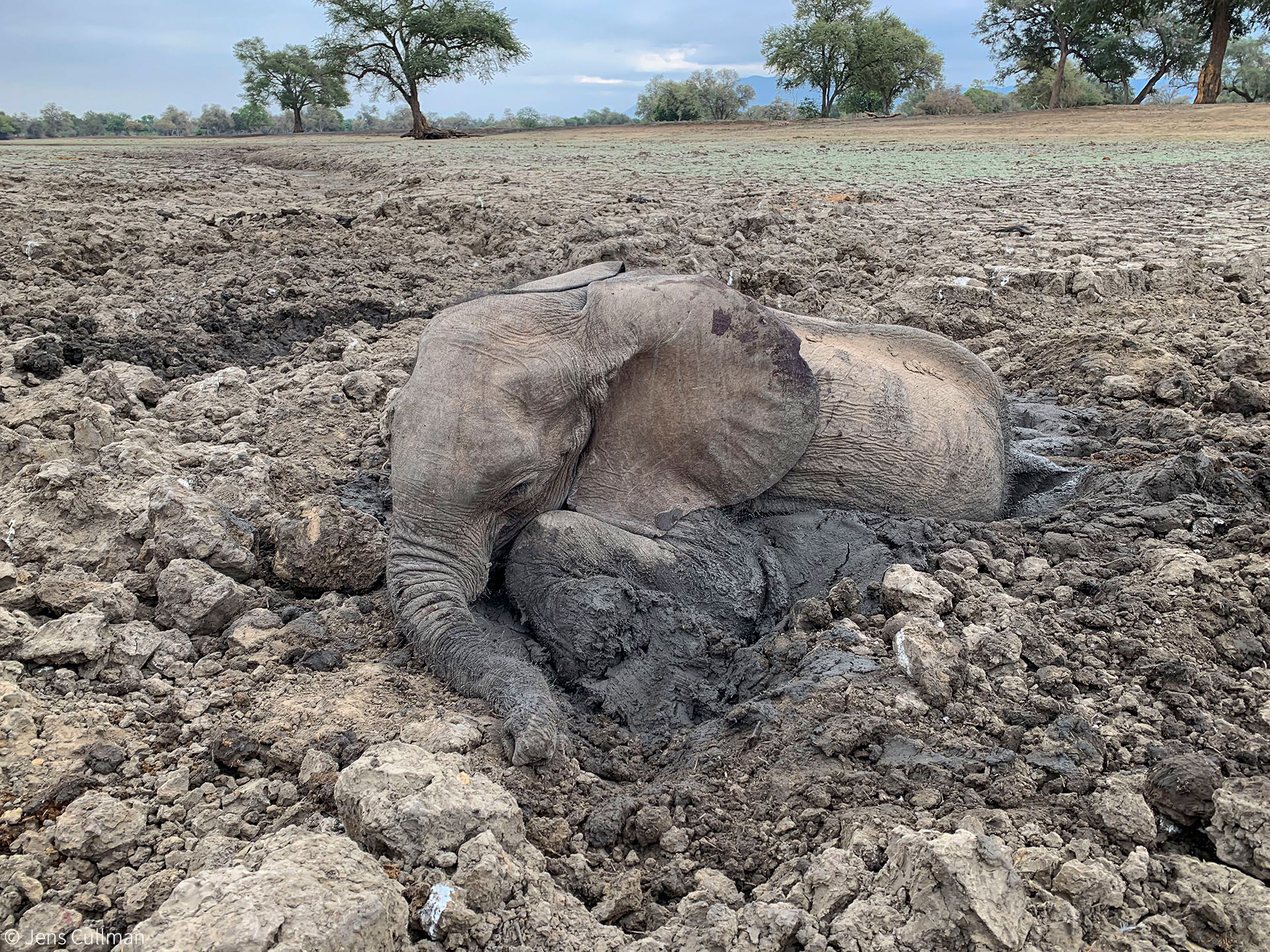
As he walked through the brittle brush toward a rapidly drying pool, Jens spotted movement in the distance. What he saw froze him in place: an
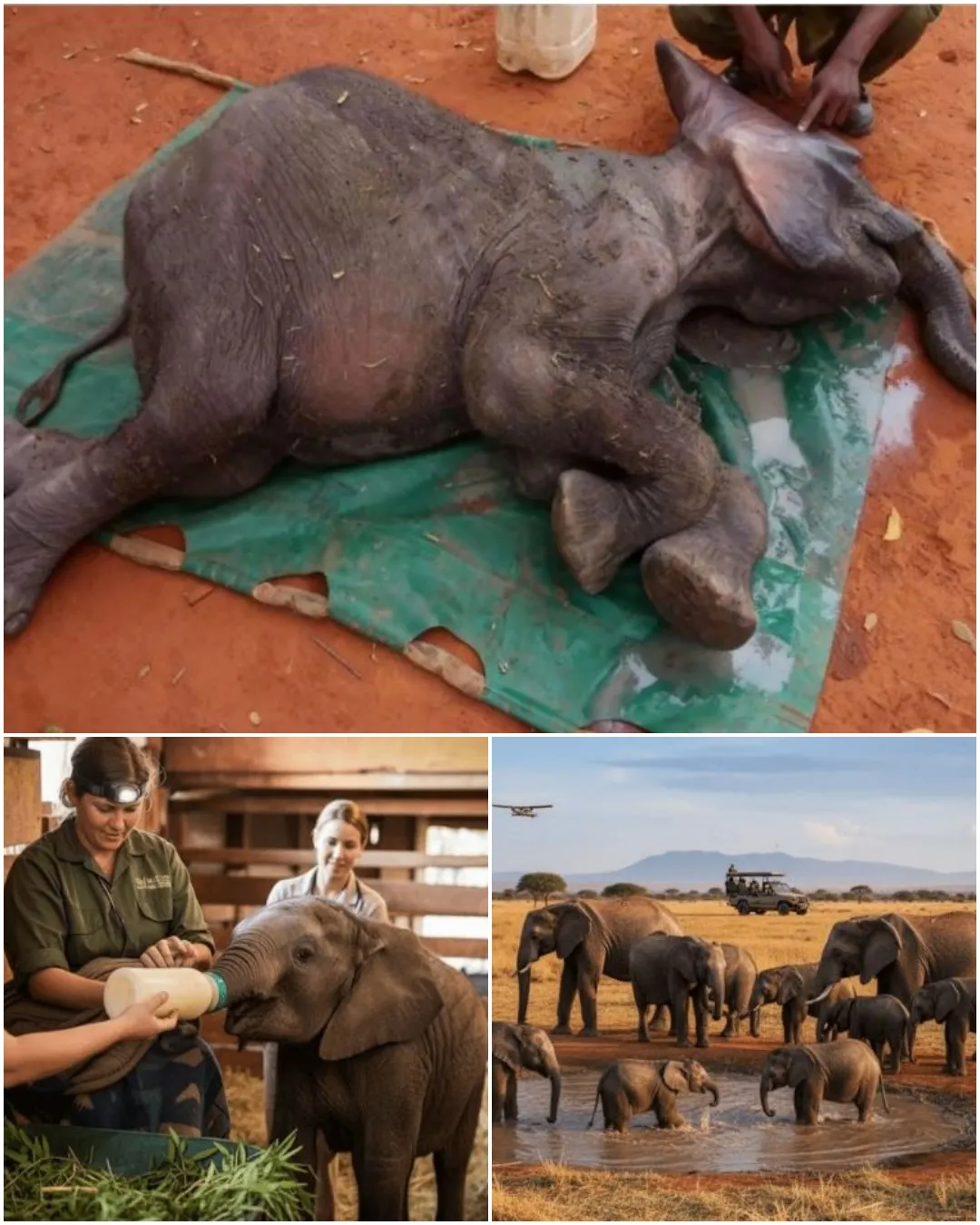
elephant cow and two calves, their massive bodies sunken deep into the thick, black mud. They had wandered too far into the pool, driven by thirst, only to find themselves trapped. Each attempt to move dragged them deeper into the clinging mire. Exhausted, dehydrated, and weakening by the minute, they were collapsing in slow motion.
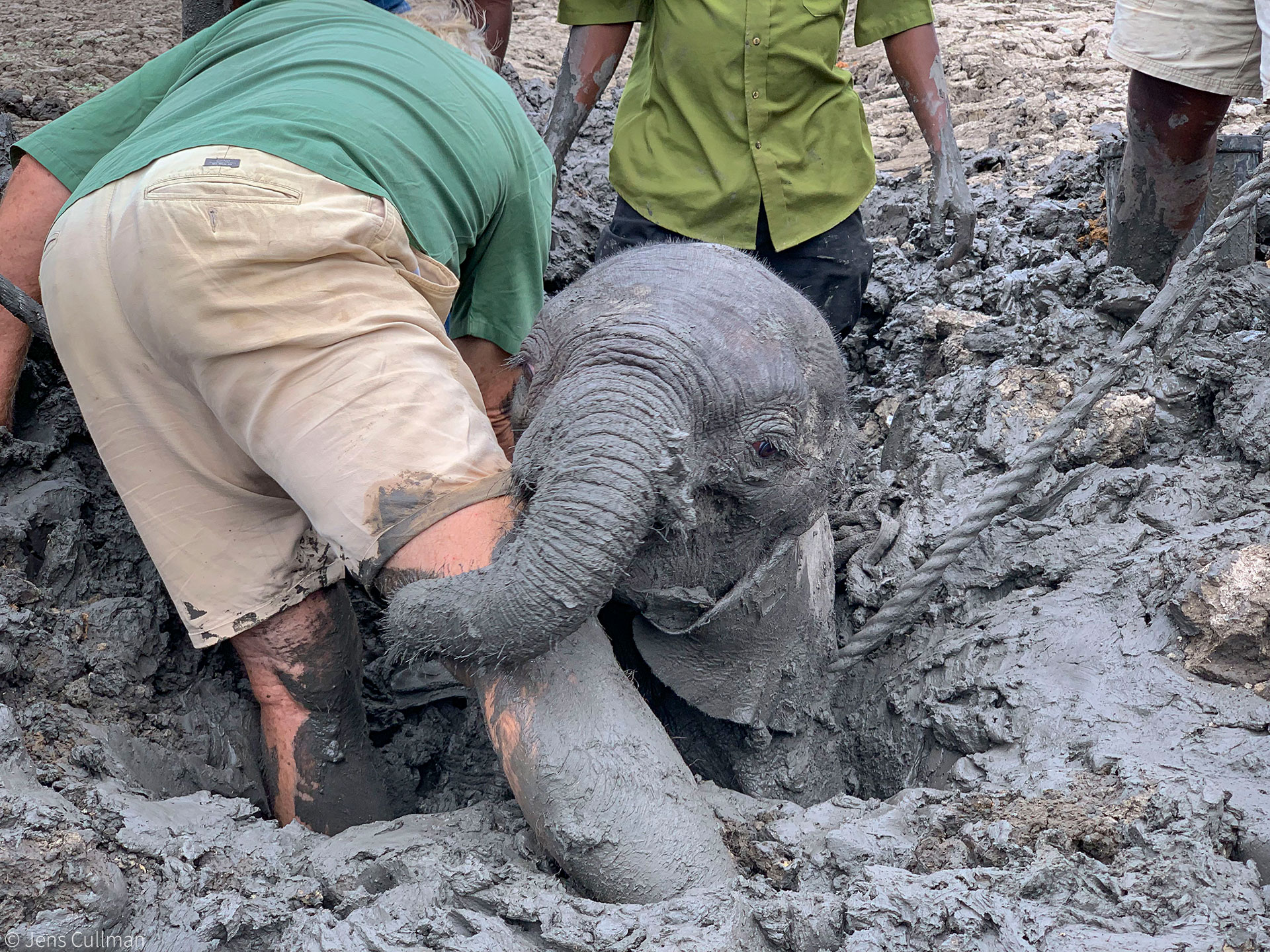
“Their eyes said everything,” Jens later recounted. “They were completely spent — terrified, but too weak to fight.”
Realizing their situation was dire, Jens sprinted back to the park reception
to raise the alarm. In this remote wilderness, rescue operations are often a race against time. Every hour under that scorching sun could mean the difference between life and death.
By a remarkable stroke of luck, rescue crews from IFAW Africa (International Fund for Animal Welfare) and Wild is Life were already in the park, preparing to assist another distressed elephant. When they heard Jens’s report, they immediately mobilized a team to the scene. They were soon joined by
Czech visitors, local lodge staff, and rangers from ZimParks (Zimbabwe Parks and Wildlife Management Authority) — a spontaneous coalition of humans united by compassion and urgency.
When they arrived, the situation was grim.
Both calves bore visible injuries — bite wounds on their trunks and ears, likely inflicted by opportunistic hyenas during the night. One calf’s tail had been bitten clean off
. The mother, lying motionless in the mud nearby, was barely alive. Her labored breathing echoed faintly across the dry pool bed.
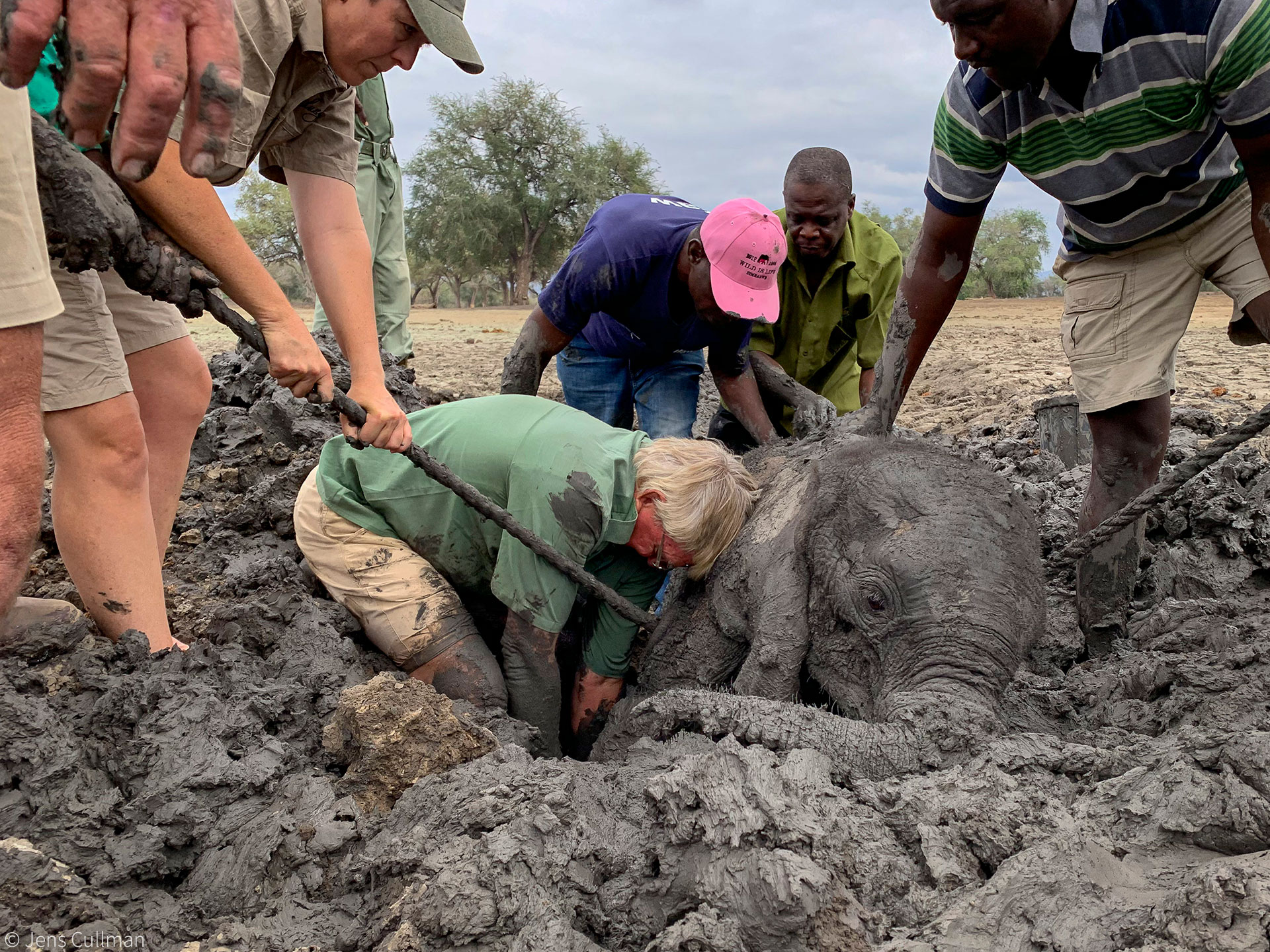
Rescuers worked tirelessly under the punishing heat. Using ropes, straps, and sheer determination, they began the arduous task of freeing the young elephants first. The mud was treacherous — thick and gripping like cement — and each movement required calculated precision to avoid further exhausting the already fragile animals.
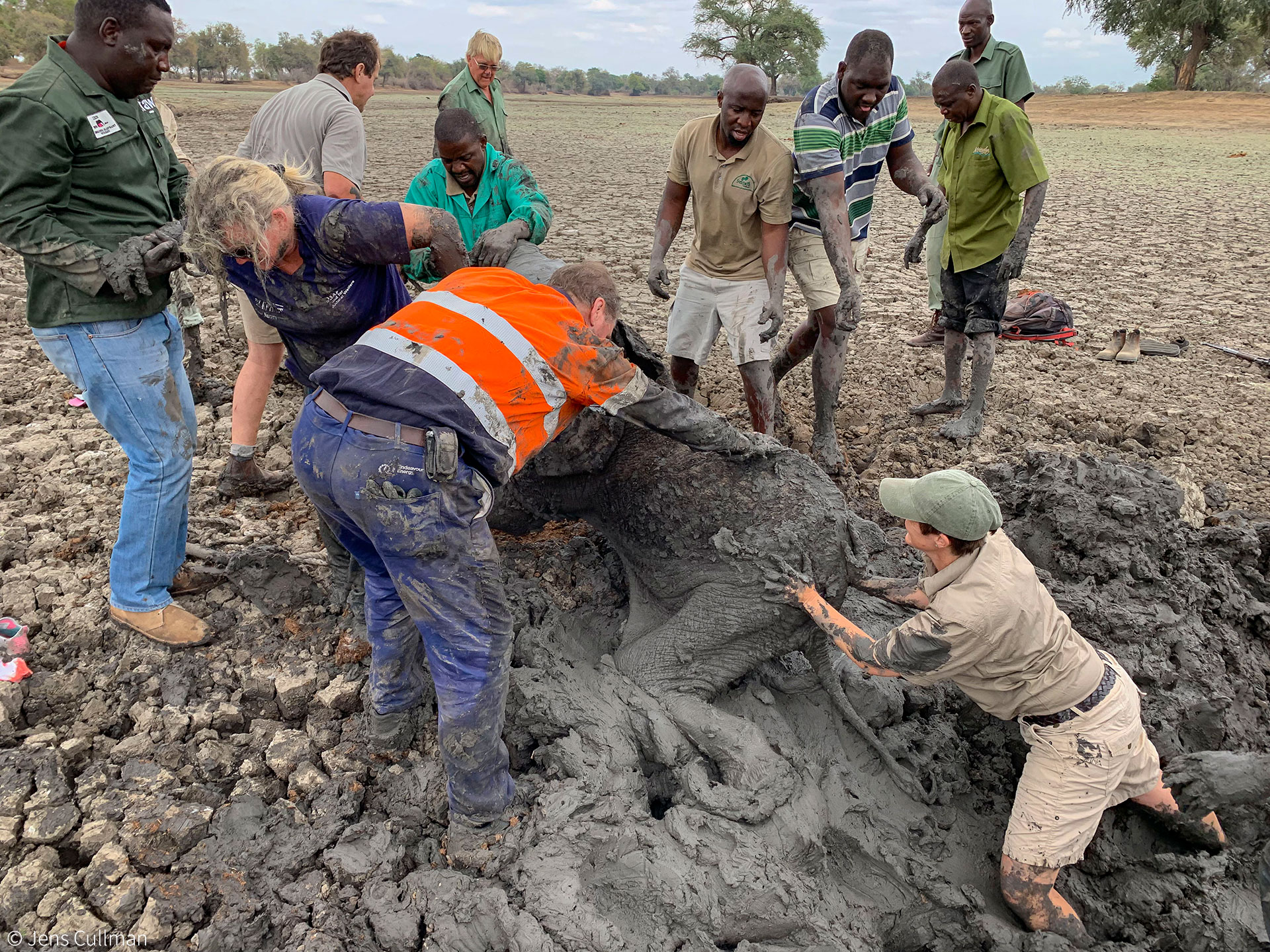
“It was blistering hot,” one rescuer recalled. “The sun was relentless, and every time we thought we were making progress, the mud pulled harder.”
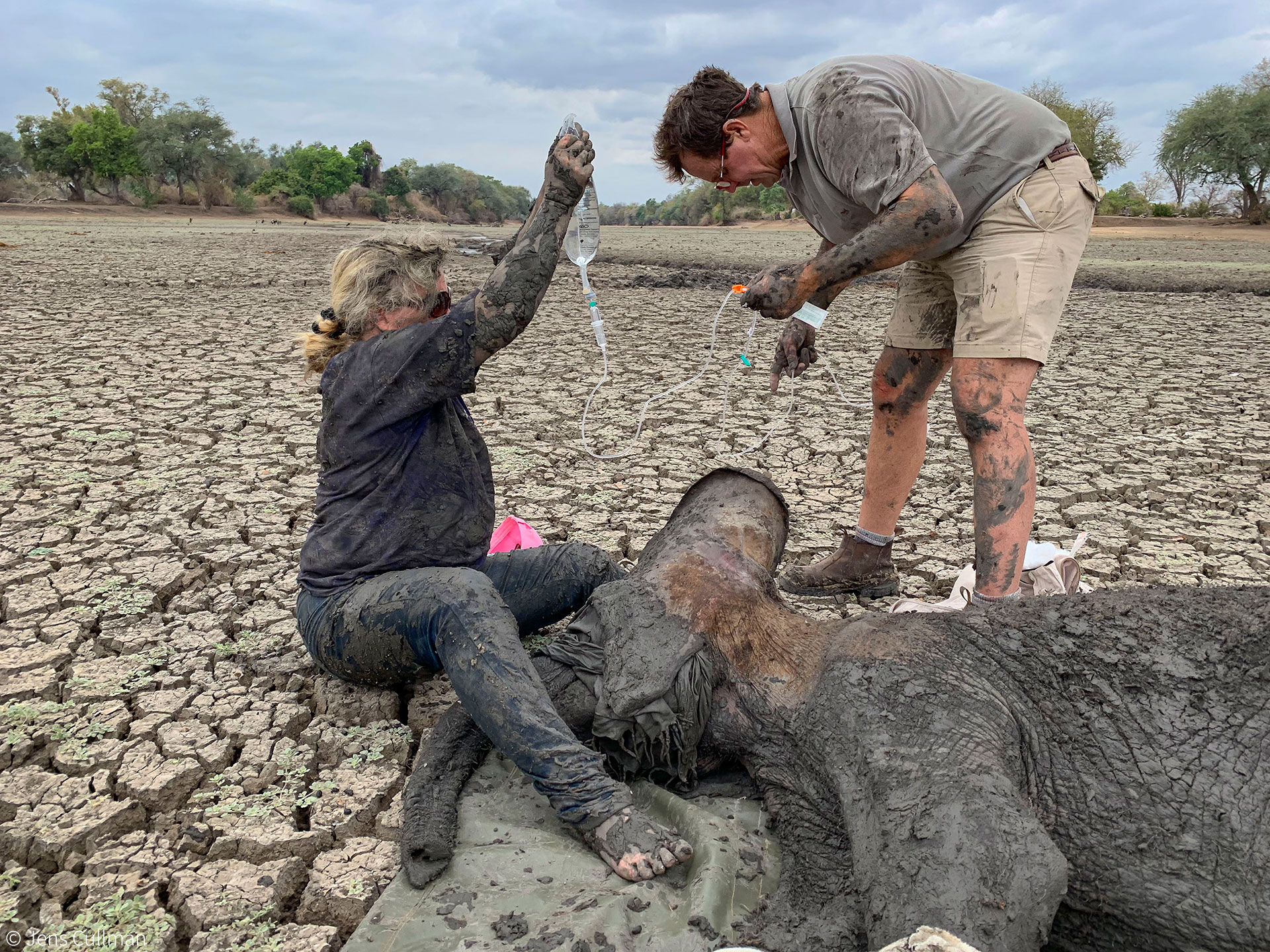
For hours, the team fought against time and terrain. Buckets of water were poured over the calves to keep them cool while veterinarians monitored their vital signs. Slowly, inch by inch, the first baby was freed — trembling and disoriented, but alive. Moments later, cheers erupted when the second calf finally broke free from the deadly suction of the mud.
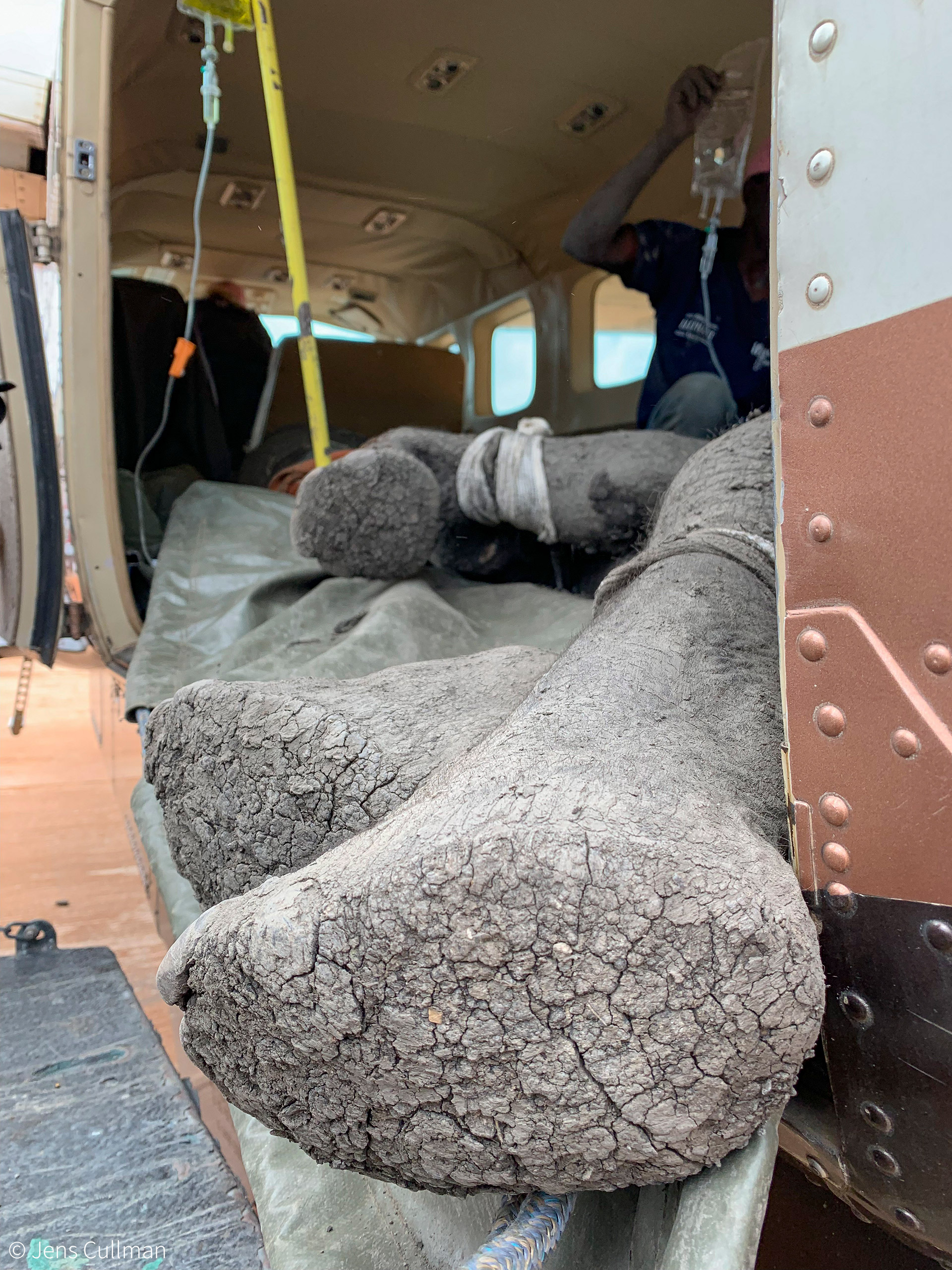
The rescuers wasted no time. Fluids were administered to counter dehydration, and temporary shade was created using tarps and branches. As the calves regained strength, plans were made for immediate evacuation.
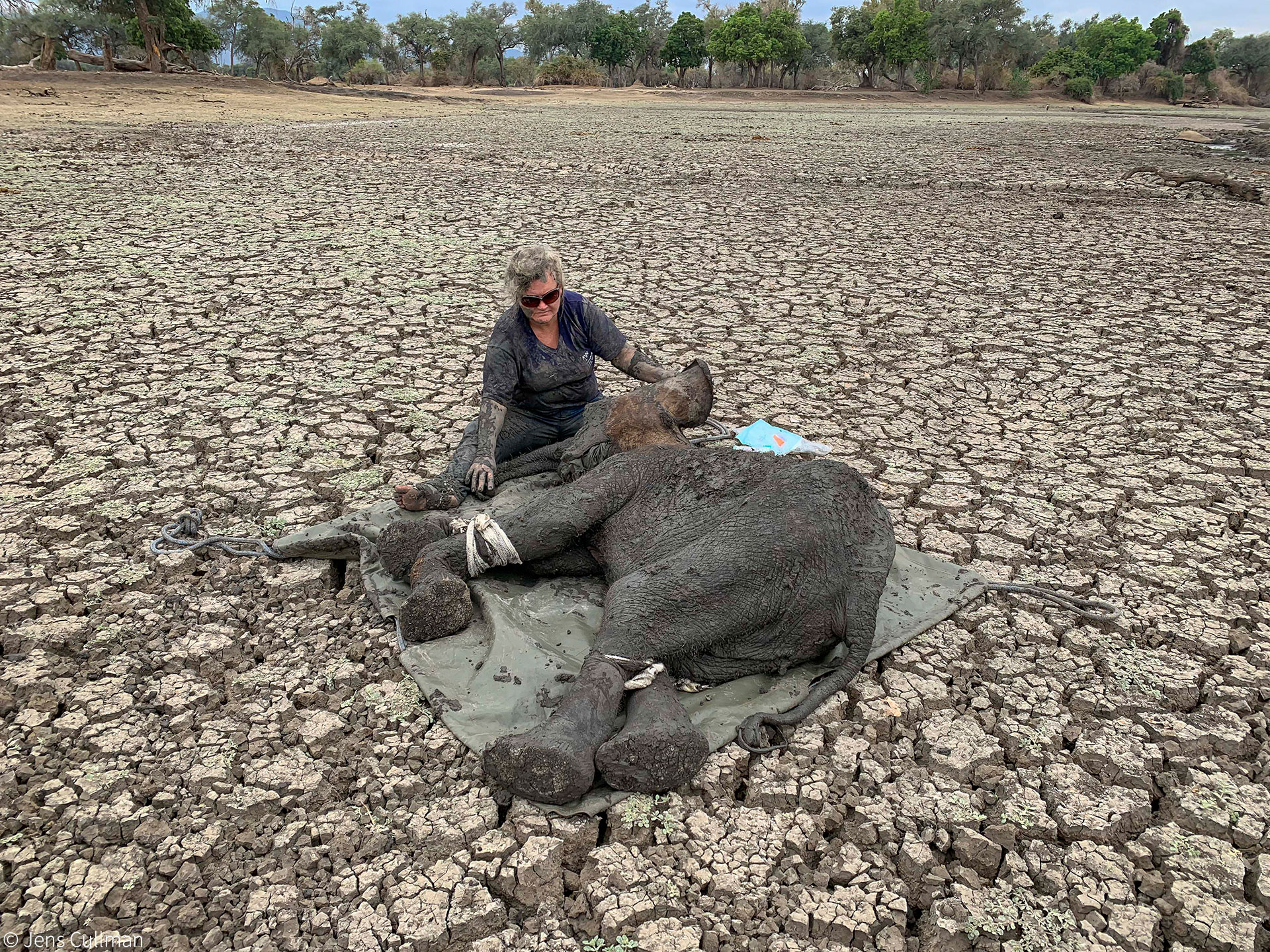
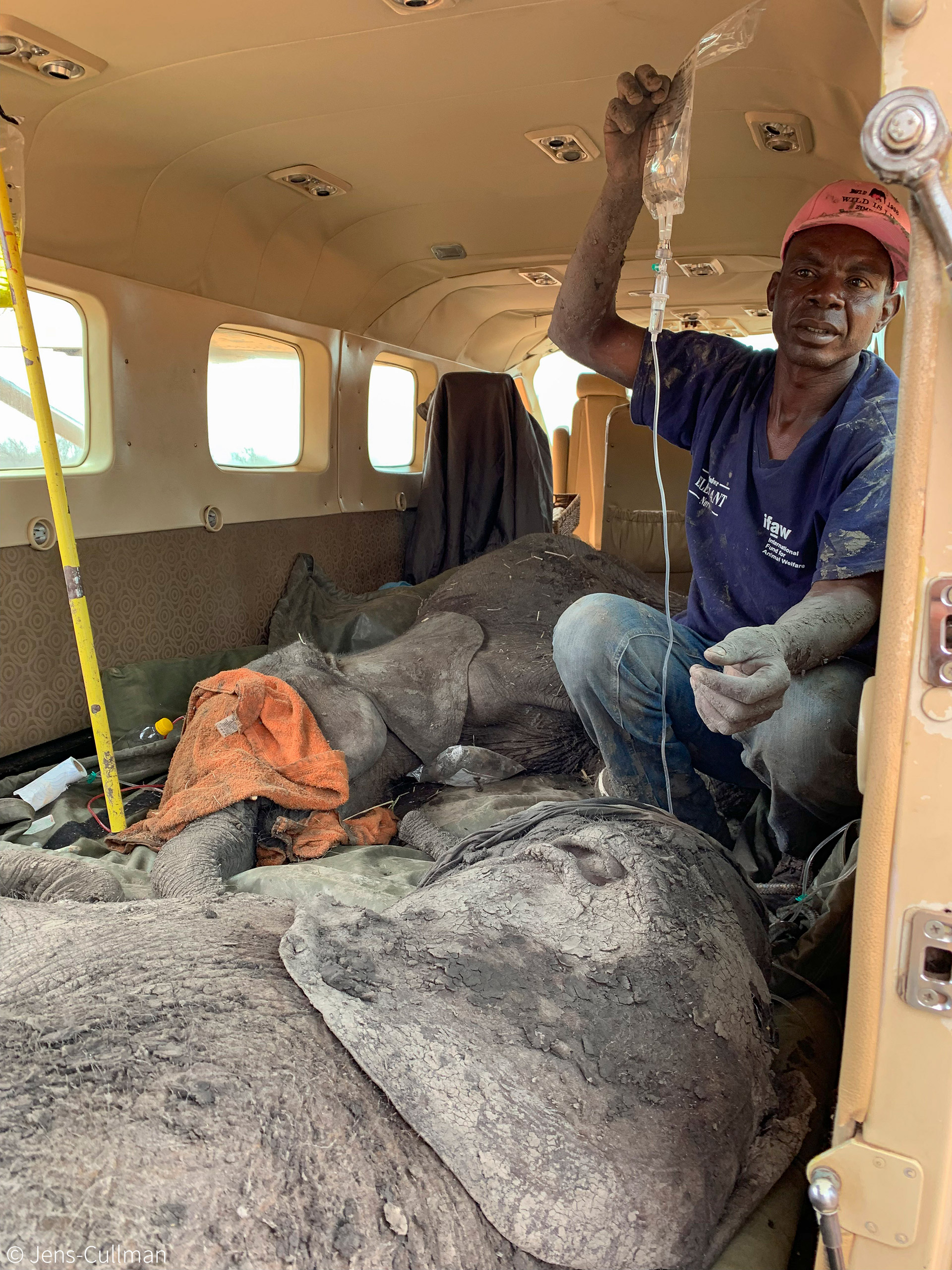
Within hours, they were carefully transported to an airstrip, where a small aircraft — funded by IFAW Africa — awaited to fly them to a rehabilitation center operated by
Wild is Life near Harare. There, the calves would receive round-the-clock care, medical treatment, and, eventually, the chance to live among other orphaned elephants.
Their journey toward recovery had just begun.
Tragically, the adult elephant cow, believed to be the mother of one of the calves, did not survive. Though rescuers managed to pull her from the mud, the ordeal had been too much. Severely dehydrated and weakened beyond recovery, she passed away shortly after extraction. Her story, as Jens promised, would later be told — a sobering reminder of the toll drought takes on Africa’s most majestic animals.
Even in loss, however, there was triumph. The successful rescue of the two calves represented a rare moment of hope in a landscape too often defined by suffering.
“This rescue wouldn’t have been possible without extraordinary teamwork,” Jens emphasized. He credited
ZimParks, Wild is Life’s Dr. Mark Lombard, Cathrine Jennings, January Gweshe, as well as Steven Bolnick, Dave McFarland, and Garth Prichard, all of whom played vital roles.
It was, he said, “a shining example of what can happen when humans choose compassion over indifference.”
At the rehabilitation center, the two baby elephants joined others with similar stories — orphans of drought, victims of poaching, or survivors of human-wildlife conflict. Their new caretakers became their family, feeding them milk every few hours, comforting them through the long, restless nights, and gradually helping them learn to trust again.
In the months that followed, they grew stronger. They played together in muddy pools — safe this time — and learned to use their trunks to pick up branches, mimic older elephants, and interact socially.
The ultimate goal, as always, is reintroduction into the wild. When they are old enough to join a herd, these calves will be released into protected areas where they can live as elephants are meant to — free.
But their story continues to resonate far beyond the banks of Mana Pools.
The rescue highlighted not only the heroism of those involved but also the escalating threat of climate change and drought to Africa’s ecosystems. As weather patterns shift, dry seasons grow longer and more severe, leaving waterholes to evaporate faster and animals to take greater risks in search of life-sustaining water.
“Scenes like this will become more common,” conservationists warn. “Without intervention, entire populations could be lost to heat and thirst.”
Mana Pools, a UNESCO World Heritage Site, has long been celebrated for its beauty — ancient trees, shimmering floodplains, and herds of elephants silhouetted against sunset. But beneath that beauty lies fragility. Each year, the drought deepens, the pools shrink faster, and the balance of survival grows more delicate.
What happened in October 2019 was both a tragedy and a testament — a glimpse into the harsh realities of nature, but also a reminder of humanity’s power to make a difference.
When Jens Cullmann captured his now-famous photographs of the rescue, he did more than document an event — he captured a story of resilience, loss, and compassion. The image of the calves em