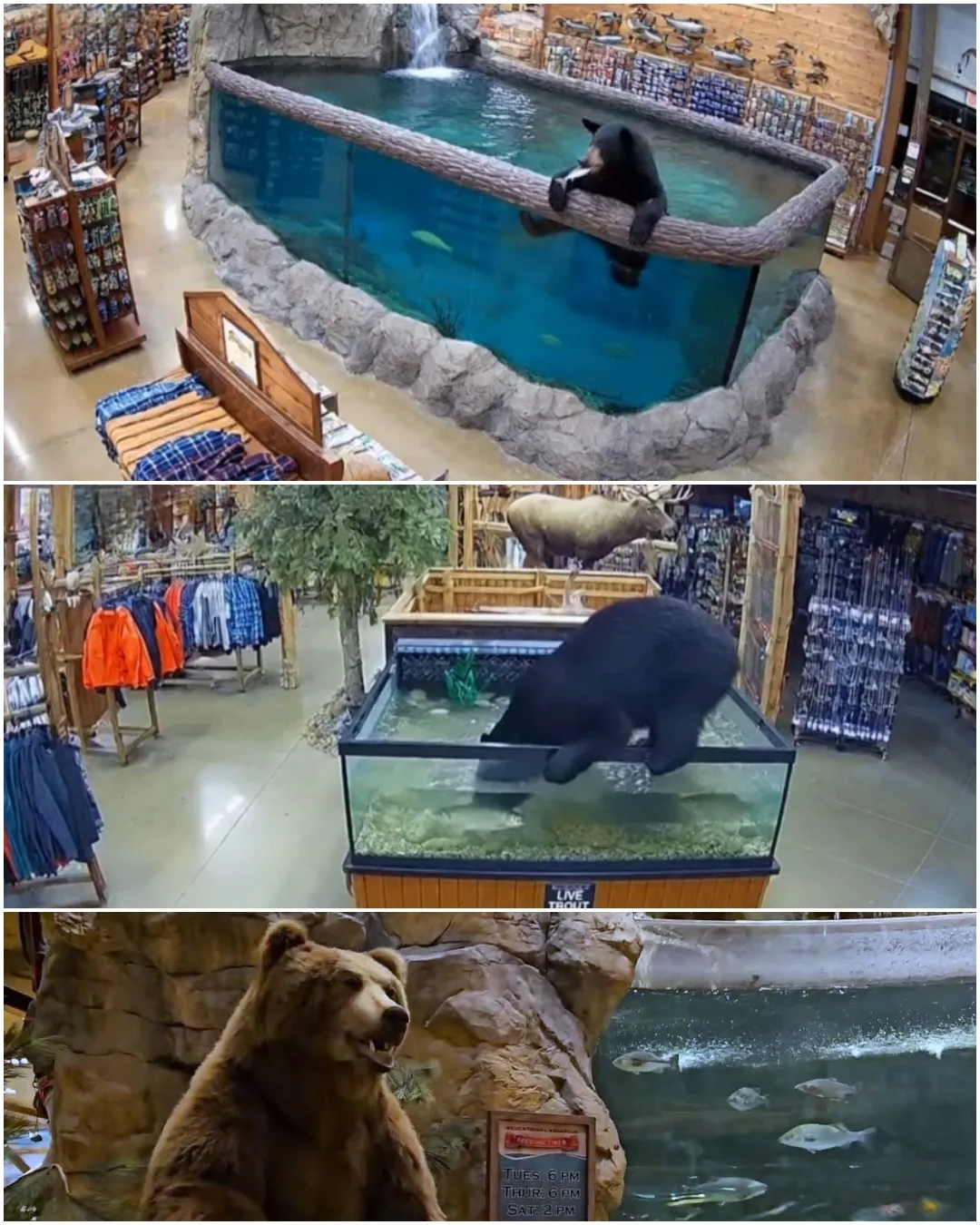
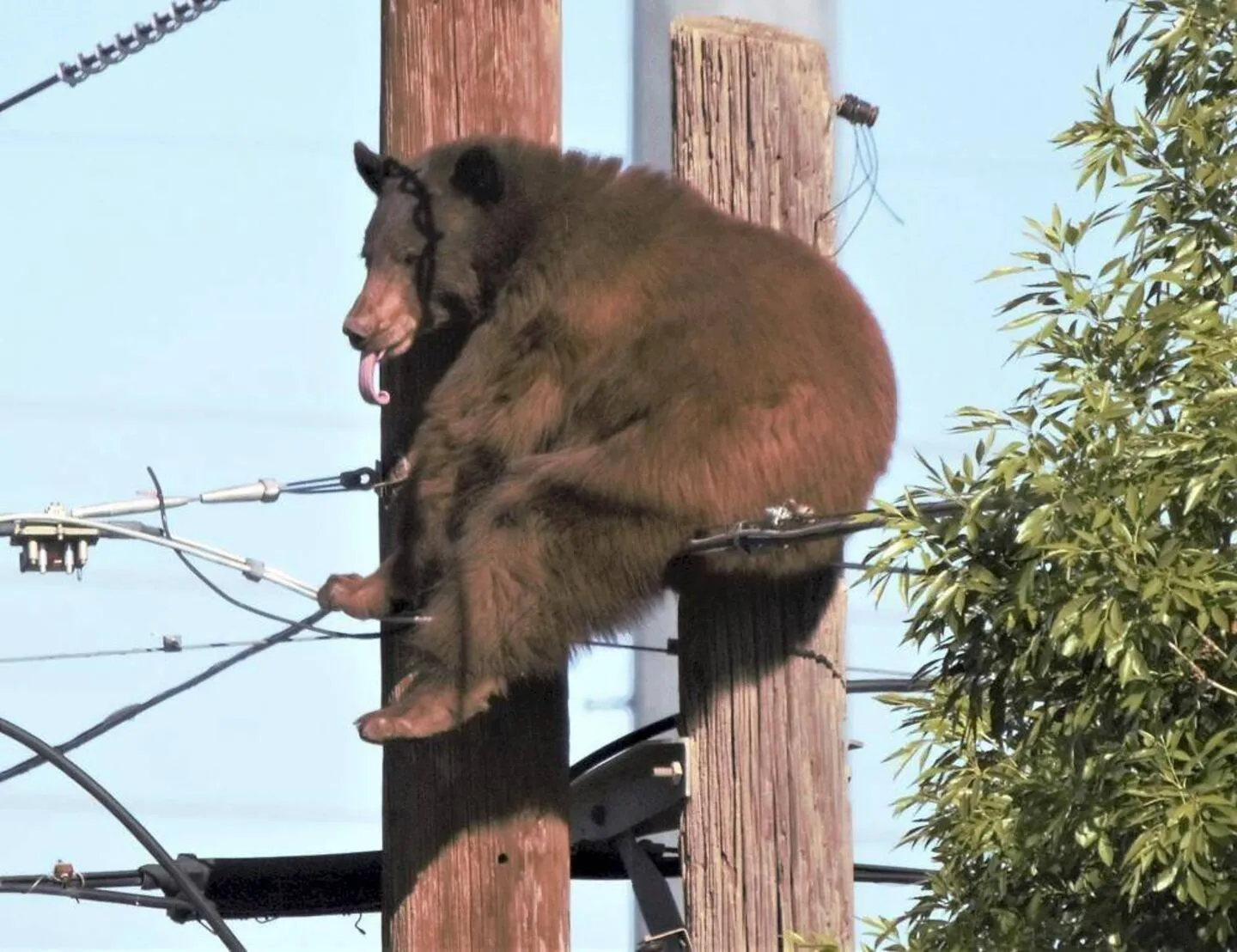
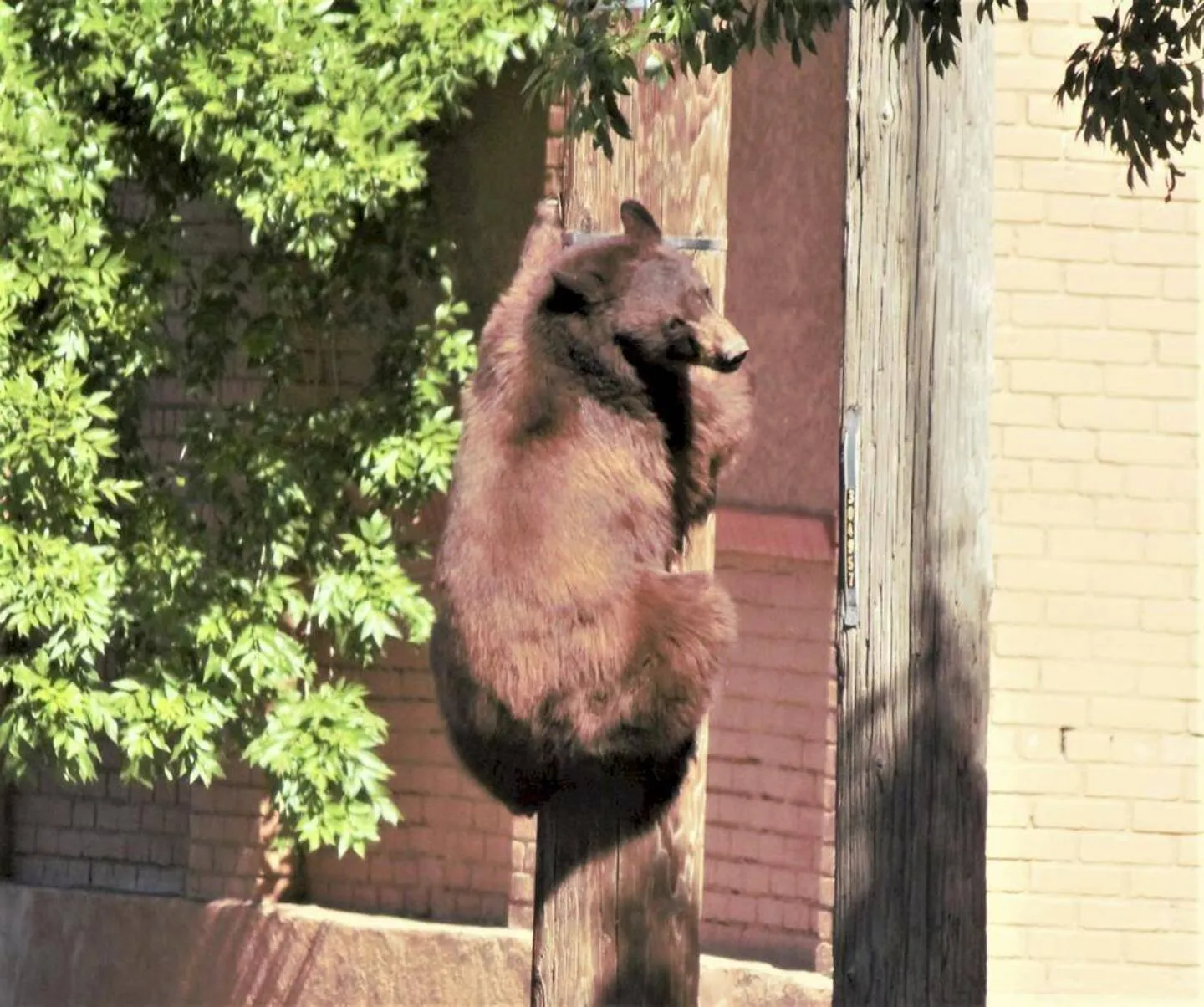
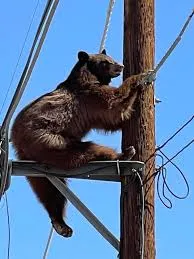
It was an ordinary afternoon when onlookers in a quiet desert town froze in fear. A young brown bear, no more than a few years old, had found its way up a 40-foot power pole. It clung to the metal structure, dangerously close to live electrical wires. Panic spread quickly among the crowd. The bear, frightened and uncertain, seemed unable to climb down, and the live wires posed a deadly risk.
Onlookers, helpless and frozen, could only watch, fearing that the young bear’s life might end in an instant. But in the midst of the panic, help was on its way.
Werner Neubauer, an experienced utility worker, and his apprentice Efren Gallego were dispatched to the scene. For Werner, this wasn’t just another job; it was a moment that required more than just technical skill. It required patience, empathy, and above all, calmness in the face of danger.
It was an ordinary afternoon when onlookers in a quiet desert town froze in fear. A young brown bear, no more than a few years old, had found its way up a 40-foot power pole. It clung to the metal structure, dangerously close to live electrical wires. Panic spread quickly among the crowd. The bear, frightened and uncertain, seemed unable to climb down, and the live wires posed a deadly risk.
Onlookers, helpless and frozen, could only watch, fearing that the young bear’s life might end in an instant. But in the midst of the panic, help was on its way.
Werner Neubauer, an experienced utility worker, and his apprentice Efren Gallego were dispatched to the scene. For Werner, this wasn’t just another job; it was a moment that required more than just technical skill. It required patience, empathy, and above all, calmness in the face of danger.
The first step was critical. As Werner arrived, he quickly assessed the situation. The power was still live, and the risk of electrocution was high. Without hesitation, he ordered Efren to cut the power to the pole. The hum of electricity in the air ceased, and the area was suddenly safe for the rescuers to approach the bear.
“Step one was to eliminate the immediate danger,” Werner said later, his voice calm but firm. “Once we cut the power, we had time, but it had to be handled carefully. One wrong move could make everything worse.”
With the power safely cut, Werner rose in the bucket truck, his heart racing, but his movements deliberate. The bear, panicked and disoriented, was clinging to the pole with its claws. Its large brown eyes reflected fear and confusion. As Werner slowly ascended, he began speaking softly to the bear, trying to calm it down.
“Hey there, little one, it’s okay,” Werner whispered, trying to reach the animal in a way that wouldn’t startle it further. “I’m here to help you.”
The bear seemed to respond to his voice, its body tense but listening. At one point, as Werner reached out to guide it gently, the bear did something surprising. It covered its eyes with its paws, as if it could somehow hide from the danger. The act, though small, showed the bear’s vulnerability. It wasn’t just a wild animal in trouble; it was a scared, confused creature caught in a terrifying situation.
For what felt like an eternity, Werner patiently coaxed the bear, inch by inch, paw by paw. The bear’s movements were slow, hesitant, but with each small step, it moved closer to safety. The minutes felt like hours, but Werner remained focused. He could feel the weight of responsibility, but he never wavered.
“I just kept thinking, ‘We have to get it down safely,’” Werner recalled. “One wrong move, and we’d risk everything. But you can’t rush an animal in that state. You have to show them trust.”
As the bear’s paws finally touched the platform of the bucket, it took a few cautious steps toward the edge. Werner made sure to keep his hands steady, ensuring there was nothing sudden to frighten it further. The bear hesitated for a moment, then took a few more steps down, finally reaching the ground.
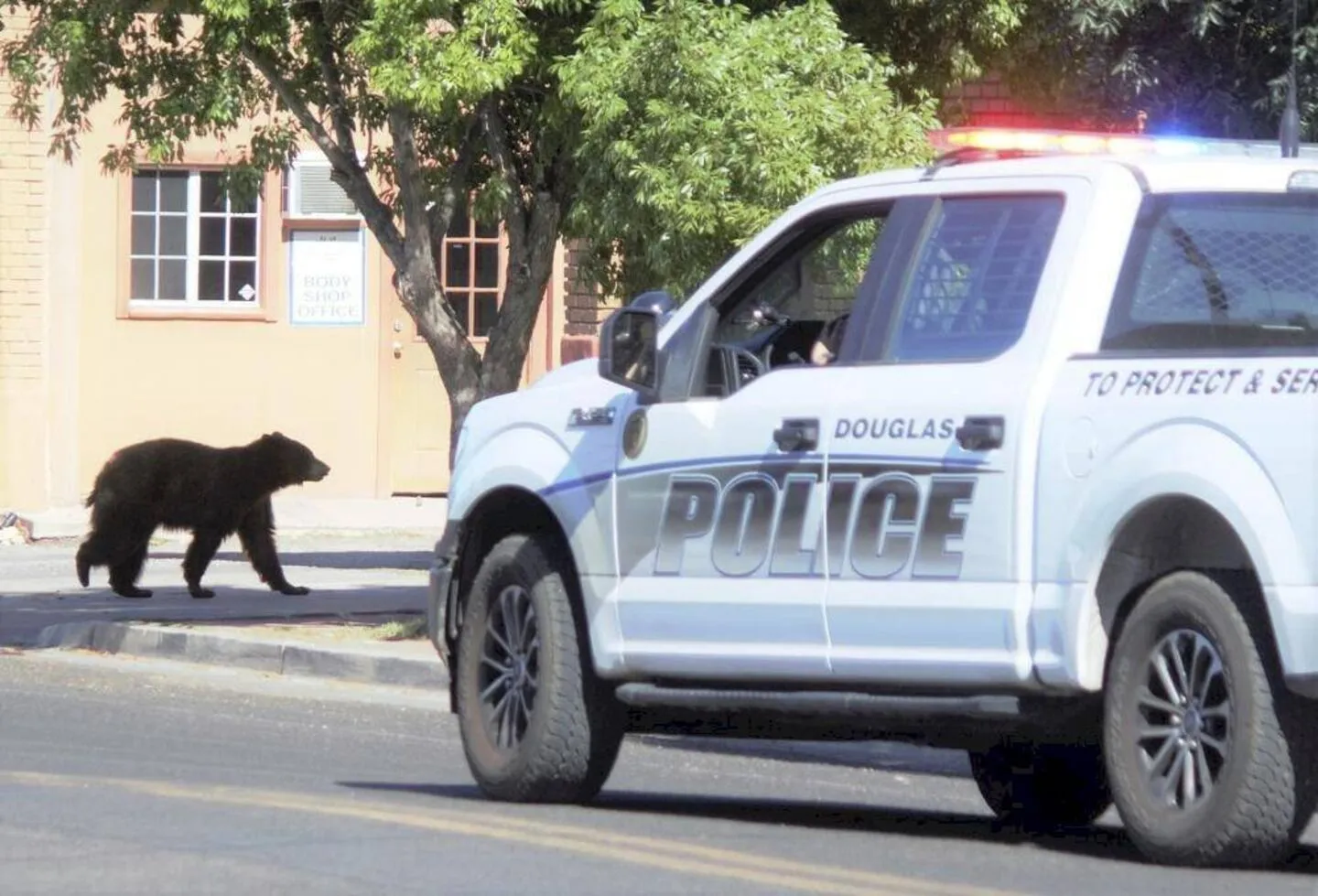
When the bear’s feet touched the desert soil, it paused, perhaps taking in its freedom. Then, as if relieved from the weight of the world, the young bear dashed into the wilderness, disappearing into the desert. It was free, unharmed, and alive — thanks to Werner’s steady hand and the quiet bravery of both him and Efren.
As Werner climbed down from the bucket truck, exhausted but relieved, Efren stood beside him. They exchanged a look, a shared moment of understanding. They hadn’t saved the bear for the praise or recognition; they had done it because it was the right thing to do. And in that simple act of courage, Werner and Efren had experienced something far more profound than any medal or accolade — they had witnessed the power of empathy.
“Some people think heroism is loud,” Efren reflected later. “But it’s not. Sometimes, it’s just a calm voice and a steady hand.”
The rescue of the bear didn’t make headlines or garner widespread attention, but for Werner and Efren, it was a story of quiet heroism that would stay with them forever. They didn’t seek fame or applause, but rather the simple satisfaction of knowing they had made a difference in the world, one small life at a time.
As for the bear, it disappeared into the wild, its journey far from over. But for those who had witnessed the rescue, the memory of that day remained — a reminder that sometimes, the greatest acts of courage are the ones we perform quietly, without fanfare, simply because they’re the right thing to do.
The rescue that day wasn’t about the bear alone. It was about the bond between humans and animals, the willingness to show compassion when it’s needed most, and the profound impact that a simple act of kindness can have.
Sometimes, heroism isn’t about rushing into danger with a loud declaration. It’s about patience, care, and the quiet strength to make the world a better place, one small step at a time.
The first step was critical. As Werner arrived, he quickly assessed the situation. The power was still live, and the risk of electrocution was high. Without hesitation, he ordered Efren to cut the power to the pole. The hum of electricity in the air ceased, and the area was suddenly safe for the rescuers to approach the bear.
“Step one was to eliminate the immediate danger,” Werner said later, his voice calm but firm. “Once we cut the power, we had time, but it had to be handled carefully. One wrong move could make everything worse.”
With the power safely cut, Werner rose in the bucket truck, his heart racing, but his movements deliberate. The bear, panicked and disoriented, was clinging to the pole with its claws. Its large brown eyes reflected fear and confusion. As Werner slowly ascended, he began speaking softly to the bear, trying to calm it down.
“Hey there, little one, it’s okay,” Werner whispered, trying to reach the animal in a way that wouldn’t startle it further. “I’m here to help you.”
The bear seemed to respond to his voice, its body tense but listening. At one point, as Werner reached out to guide it gently, the bear did something surprising. It covered its eyes with its paws, as if it could somehow hide from the danger. The act, though small, showed the bear’s vulnerability. It wasn’t just a wild animal in trouble; it was a scared, confused creature caught in a terrifying situation.
For what felt like an eternity, Werner patiently coaxed the bear, inch by inch, paw by paw. The bear’s movements were slow, hesitant, but with each small step, it moved closer to safety. The minutes felt like hours, but Werner remained focused. He could feel the weight of responsibility, but he never wavered.
“I just kept thinking, ‘We have to get it down safely,’” Werner recalled. “One wrong move, and we’d risk everything. But you can’t rush an animal in that state. You have to show them trust.”
As the bear’s paws finally touched the platform of the bucket, it took a few cautious steps toward the edge. Werner made sure to keep his hands steady, ensuring there was nothing sudden to frighten it further. The bear hesitated for a moment, then took a few more steps down, finally reaching the ground.
When the bear’s feet touched the desert soil, it paused, perhaps taking in its freedom. Then, as if relieved from the weight of the world, the young bear dashed into the wilderness, disappearing into the desert. It was free, unharmed, and alive — thanks to Werner’s steady hand and the quiet bravery of both him and Efren.
As Werner climbed down from the bucket truck, exhausted but relieved, Efren stood beside him. They exchanged a look, a shared moment of understanding. They hadn’t saved the bear for the praise or recognition; they had done it because it was the right thing to do. And in that simple act of courage, Werner and Efren had experienced something far more profound than any medal or accolade — they had witnessed the power of empathy.
“Some people think heroism is loud,” Efren reflected later. “But it’s not. Sometimes, it’s just a calm voice and a steady hand.”
The rescue of the bear didn’t make headlines or garner widespread attention, but for Werner and Efren, it was a story of quiet heroism that would stay with them forever. They didn’t seek fame or applause, but rather the simple satisfaction of knowing they had made a difference in the world, one small life at a time.
As for the bear, it disappeared into the wild, its journey far from over. But for those who had witnessed the rescue, the memory of that day remained — a reminder that sometimes, the greatest acts of courage are the ones we perform quietly, without fanfare, simply because they’re the right thing to do.
The rescue that day wasn’t about the bear alone. It was about the bond between humans and animals, the willingness to show compassion when it’s needed most, and the profound impact that a simple act of kindness can have.
Sometimes, heroism isn’t about rushing into danger with a loud declaration. It’s about patience, care, and the quiet strength to make the world a better place, one small step at a time.