It was late afternoon when my phone rang — a message from a woman inside a fancy gated community. Her voice trembled. “There’s a dead dog under a tree,” she said. “But when I got closer… she moved.”
That was all I needed to hear. I grabbed a crate and a trap, threw them into the car, and raced out the door.

As I pulled up to the place, everything looked pristine — green lawns, tall palm trees, silence. But under one of those trees, I saw her. A small, motionless shape. For a moment, my heart sank — I was sure I was too late.
Then I saw her chest rise, just barely.
I whispered softly, “Hey, sweet girl.” Her eyes flickered open. A faint wag of her tail — slow, weak, but there.

I stepped closer, and that’s when I saw them. Hundreds — no, thousands — of ticks covering her. They crawled over her face, her neck, her ears. When I lifted one ear, I almost dropped to my knees. The skin underneath was alive with movement. The parasites were draining her dry.
She was dying in front of me — not from hunger, not from injury, but from thousands of tiny mouths stealing her life one drop at a time.
A Desperate Rescue
She was too weak to walk, so I ran to get the crate. I lifted her carefully, trying not to hurt her fragile body. As I drove, I could feel ticks crawling up my arms, down my legs, across my hair. It was a living nightmare.
I started calling every vet clinic I could. “Please,” I begged, “I found a dog — she’s dying from tick infestation.”
But one after another, they refused. “We can’t bring her inside. She’ll contaminate the clinic.”

Each rejection cut deeper. I could feel my voice breaking as I made the next call. By the fifth clinic, I was sobbing. “She’s still alive,” I said. “She’s still wagging her tail. Please.”
Finally, one vet said, “Bring her to the parking lot. We’ll draw blood, but she can’t come inside. You’ll have to clean her yourself first.”
I hung up and drove straight to the refuge, still crying. My car was crawling with ticks, and the smell of blood and infection filled the air.

The Longest Night
In the bathroom, I filled the tub with warm water and laid her down gently. “It’s okay, baby,” I whispered. “We’ll get through this.”
Then I began.
One by one, I pulled the ticks off her body — from her neck, her legs, her belly, her ears. They clung to her skin, swollen and gray. My hands trembled. Every few seconds, another drop of blood hit the water. It didn’t take long before the tub looked like a crime scene — red water, floating ticks, the smell of iron and infection thick in the air.

For five hours, I worked nonstop. My fingers went numb, cramped, burning. The little dog stood there silently, never flinching, her eyes locked on mine. She seemed to understand that I was trying to save her.
When I finally finished, my arms and clothes were covered in blood. The bathroom looked destroyed. But she was clean. She was free.
Her breathing was shallow, but steady. Her gums were white. Her tongue had turned blue. She needed blood — fast.

Borrowed Blood
At the clinic, I begged the vet to help her. I even brought one of my healthy rescue dogs to donate blood. “Take whatever she needs,” I said.
The transfusion began. Her small body trembled. She was barely conscious. The vet looked at me grimly. “She’s severely anemic,” he said. “And she’s got heartworm. She might not make it through the night.”
But Tikka — that’s what I named her — wasn’t ready to give up.

Over the next few days, she fought with everything she had. Three blood transfusions. Fluids. Antibiotics. Then, a setback — a severe allergic reaction that made her body swell. She was moved to another clinic for emergency care.
I visited her every day, holding her paw, whispering the same words over and over: “You’re safe now. You’re strong. You’re loved.”
Each day she breathed was a small miracle.
The Road Back
Weeks turned into months. Slowly, her strength returned. Her coat began to shine again. Her eyes brightened. The sad, frail dog who had once been mistaken for dead was alive — truly alive.
When the day finally came for her to leave for the U.S., I couldn’t stop the tears. She had survived the impossible. My partners at Second Chance Rescue NYC Dogs took her in, giving her the love and care she still needed.
There, a woman named Re Kleinbard met her — and fell in love instantly. “It has to be her,” she said. “No other dog. Just her.”
Tikka finally had what she had been waiting for all along: a family.
Full Circle
A year later, I was in New York myself, recovering from my own trauma — an attack by a dog that left me partially disabled. My days were filled with pain and therapy. Then, one morning, my phone buzzed.
It was Tikka’s mom.
“She’s here,” she said. “We’re at the park. Do you want to see her?”

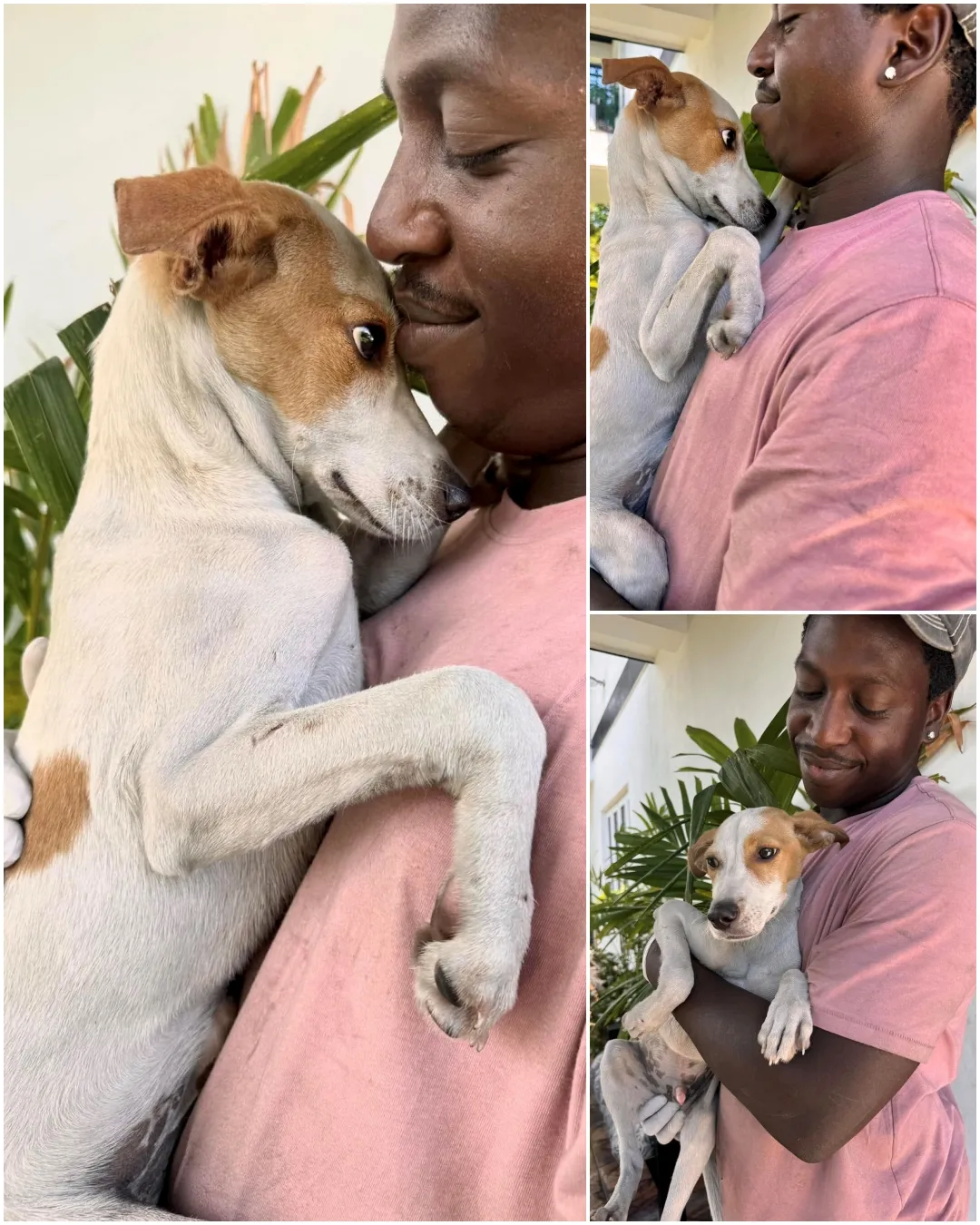
When I saw her again, my breath caught in my throat. The same little dog who once lay dying under a tree was now bounding toward me, tail wagging, her fur golden in the sunlight. She jumped into my lap and nuzzled my face. I held her and cried — not from sadness, but from gratitude.
She was whole. She was loved. She had made it.
The Ones We Don’t See
To this day, no one knows how Tikka ended up there — in that rich neighborhood, alone, covered in ticks, slowly dying. Maybe she had once been someone’s pet. Maybe she’d wandered in, hoping for help.
What breaks my heart most is knowing she must have wagged her tail at everyone who passed, hoping someone would notice her. But no one did.

No one — until that one woman stopped to look closer.
It’s easy to think miracles come from heaven. But sometimes, they come from a simple act of noticing.
Gratitude
Thank you, Second Chance Rescue NYC Dogs, for stepping in when I couldn’t do it alone.
Thank you, Re Kleinbard, for choosing her — for seeing her beauty even when life had been cruel.
You could have picked any dog. But you picked Tikka.
It had to be her. ❤️