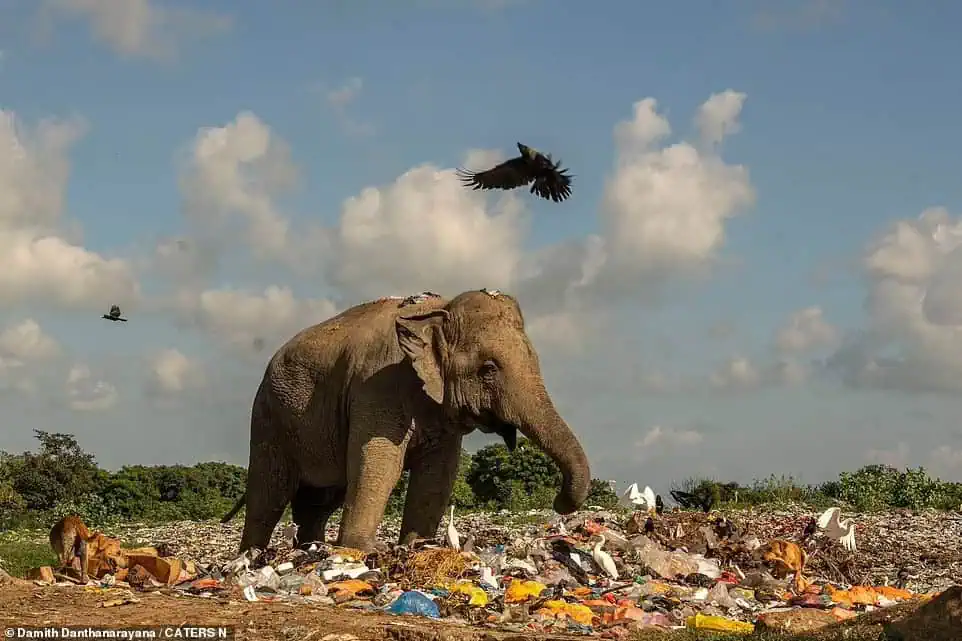
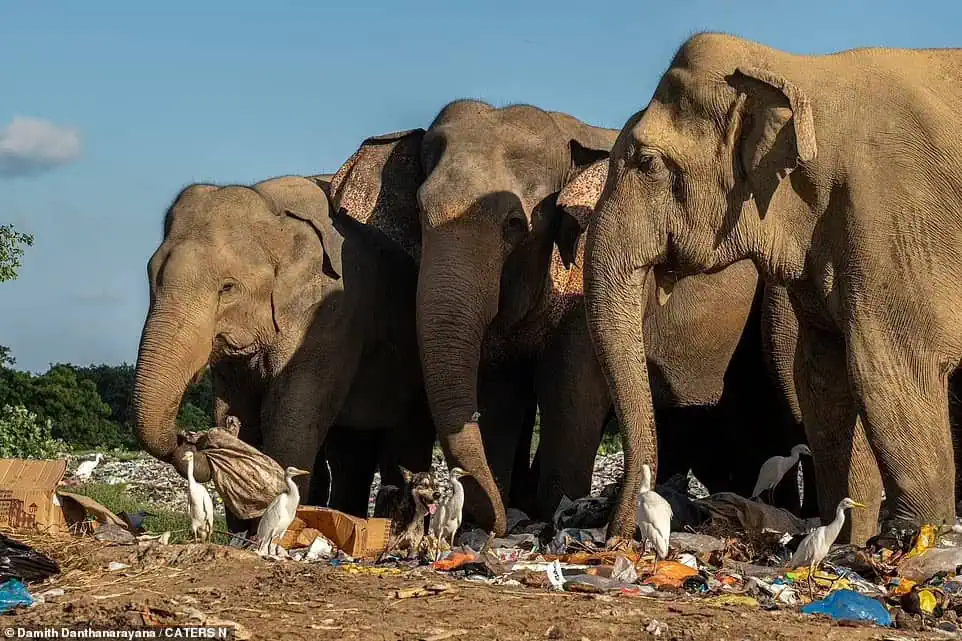
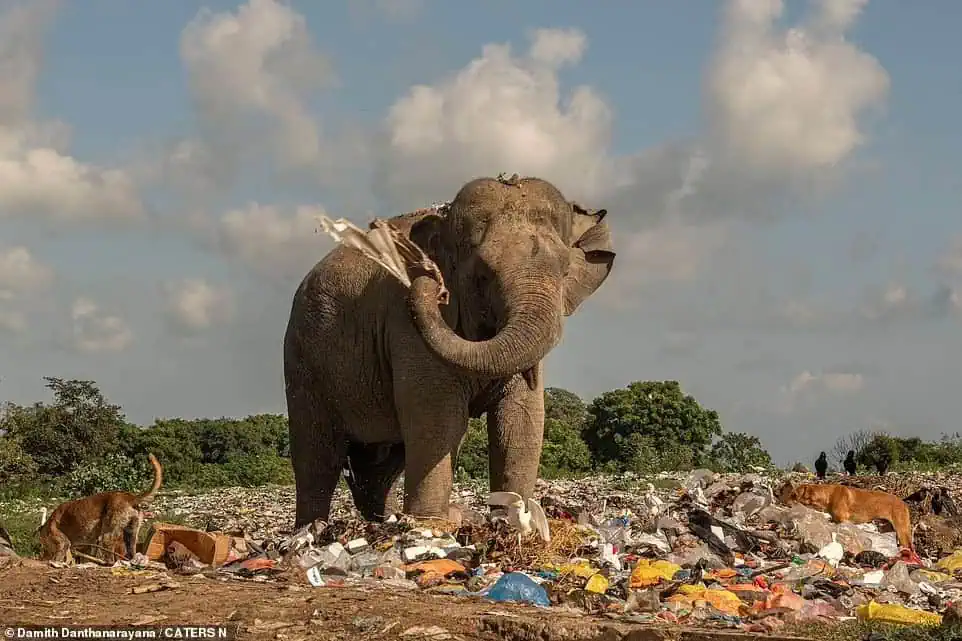
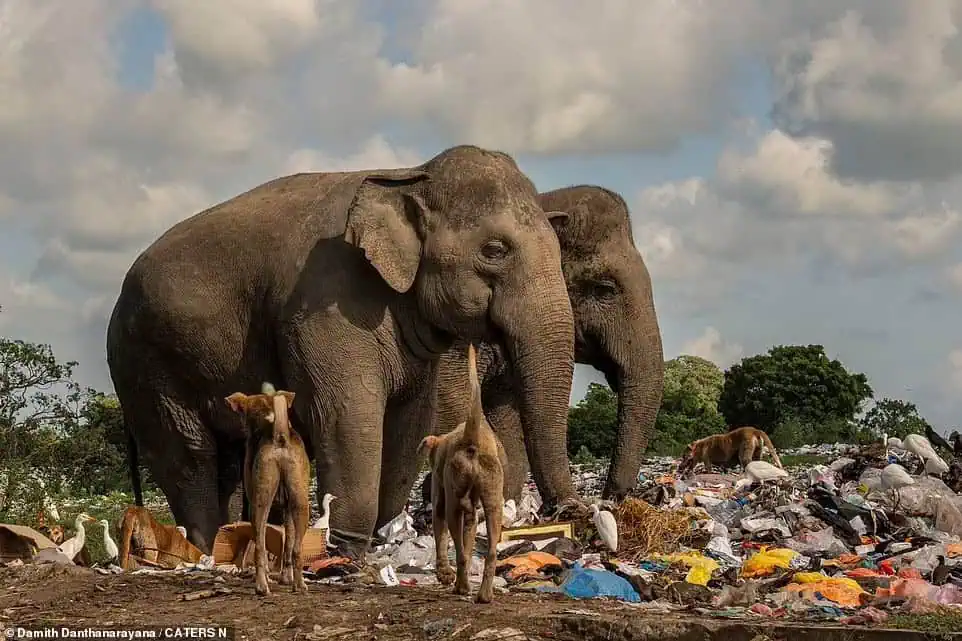
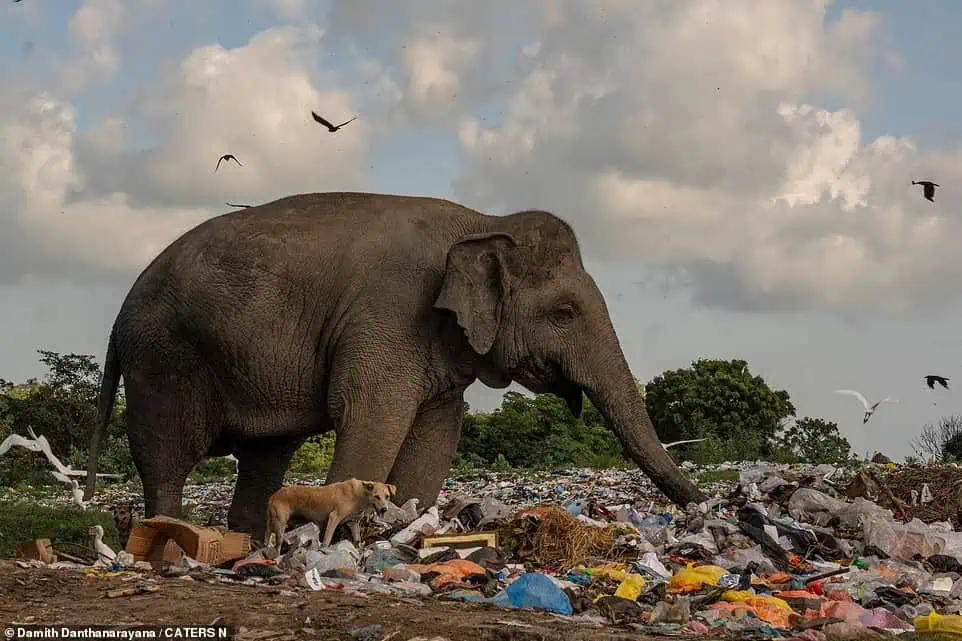
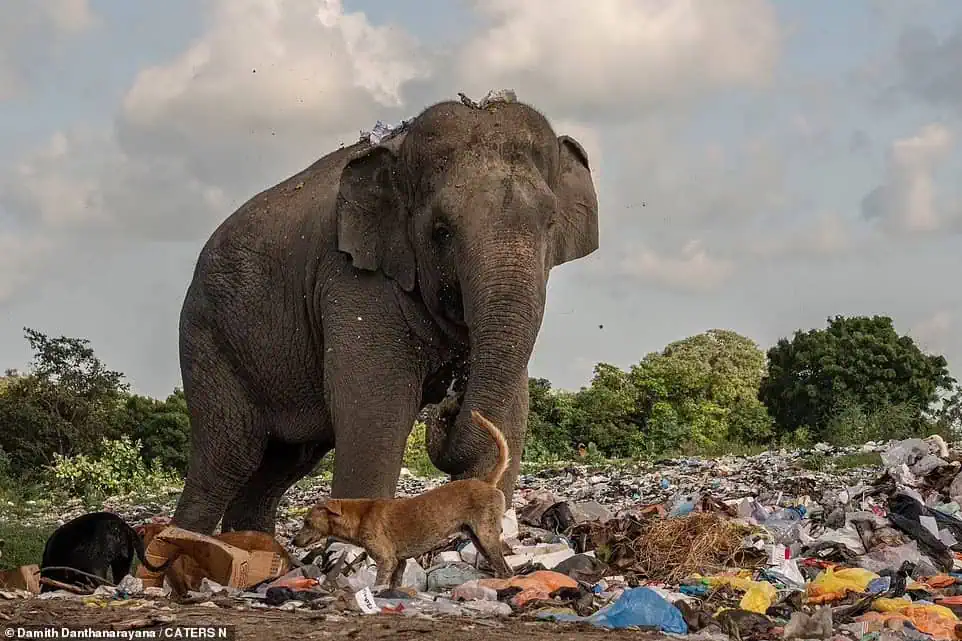
The sun dipped low over the dusty horizon of Ampara, in Sri Lanka’s Eastern Province. A faint wind stirred the stench of decay that rose from the sprawling landfill below — a mountain of human waste stretching as far as the eye could see. Amid the plastic bags, broken glass, and rotting food, shapes began to move.
Not humans, but elephants — majestic giants of the wild — scavenging for food among the garbage heaps.
This heartbreaking scene was captured by photographer Damith Danthanarayana, whose images reveal a grim truth: Sri Lanka’s wild elephants, symbols of grace and wisdom, are now being forced to feed on trash to survive.
Once Kings of the Forest
For centuries, elephants have roamed freely across Sri Lanka’s lush jungles and grasslands. They are sacred in Buddhism, revered as symbols of strength, patience, and compassion. In temples and festivals, they are adorned with gold and silk, celebrated as living embodiments of peace.
But the world these elephants once knew is vanishing.
As forests shrink and farmlands expand, elephants find themselves with nowhere to go. Each year, thousands of acres of natural habitat are cleared for crops, roads, and human settlements. Water sources dry up. Fruit trees disappear.
And so, desperate and hungry, the elephants wander closer to human towns — and into garbage dumps.
A Scene of Desperation
When Damith arrived at the landfill, the sight that greeted him was both haunting and unforgettable.
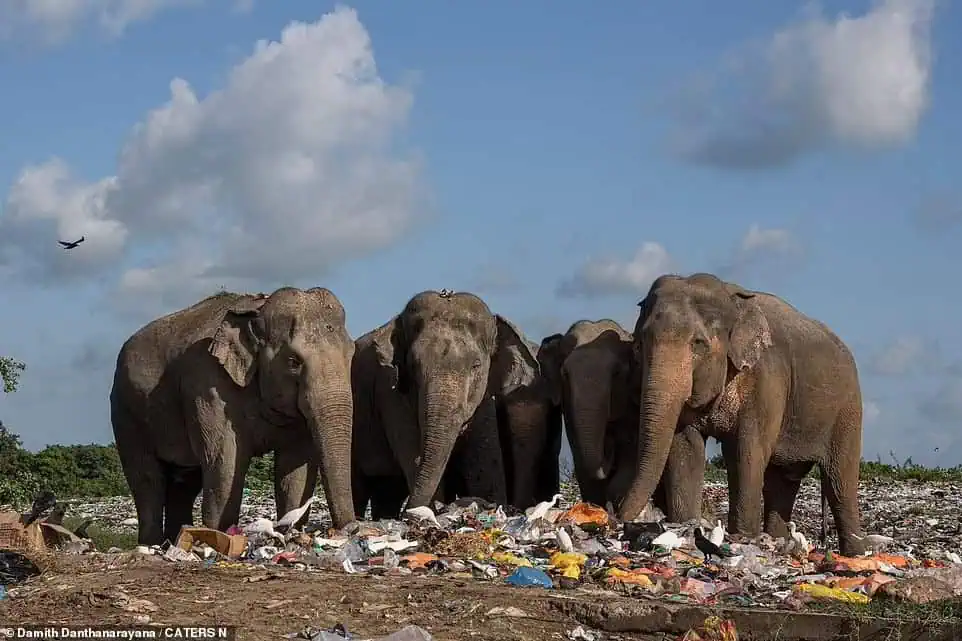
“Dozens of elephants were walking through the trash,” he recalled. “They were searching, sniffing, and using their trunks to lift plastic bags and bottles, hoping to find food inside.”
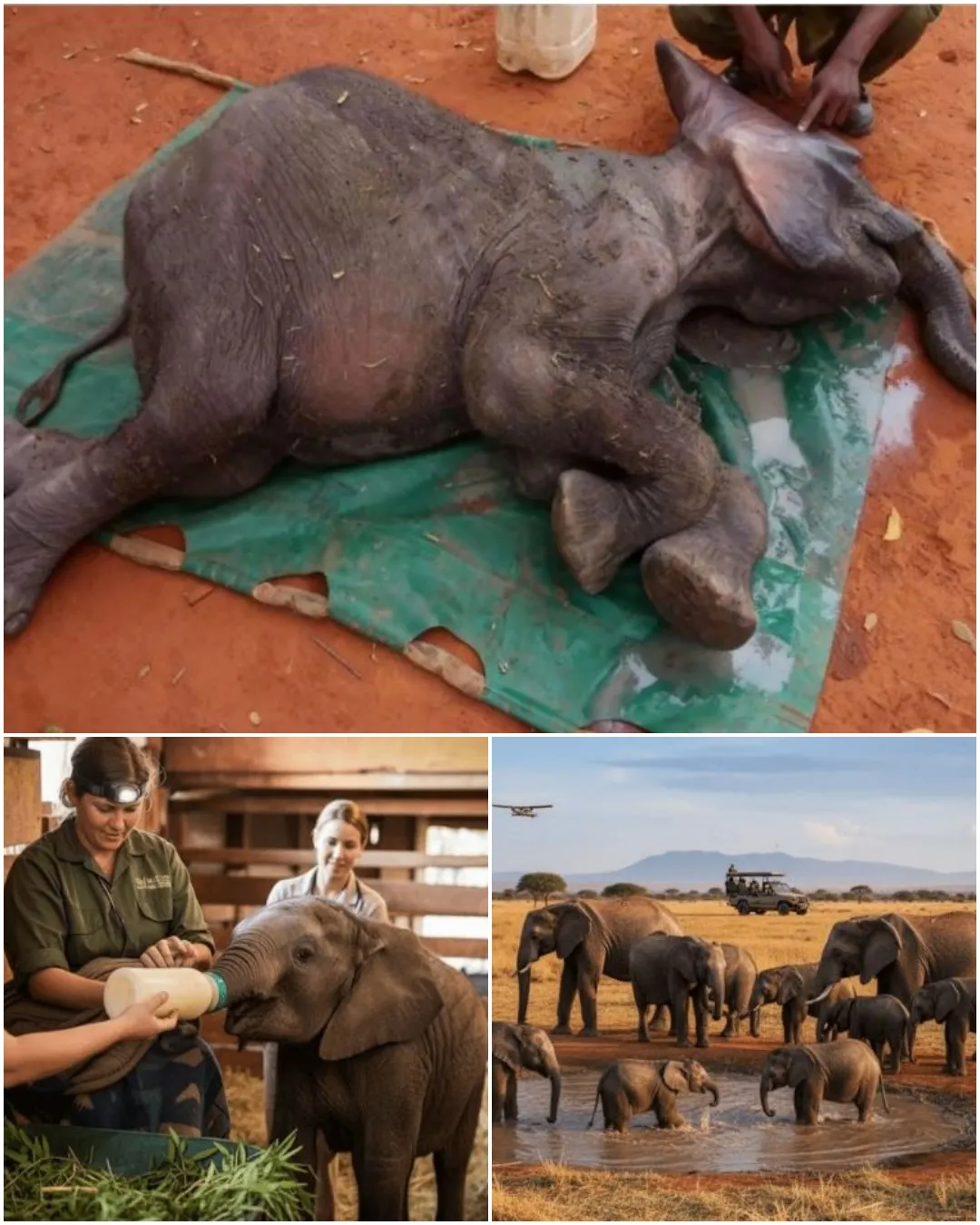
Among them was a young elephant, limping and bleeding from a wound. Locals explained that it had likely stepped on a piece of metal — or worse, been injured by a homemade explosive, commonly called a hakka patas bomb. Farmers sometimes use these crude devices — packed with gunpowder inside fruit — to keep elephants away from their crops.
“When I saw that injured calf,” Damith said quietly, “it broke my heart. These animals are suffering because of us.”
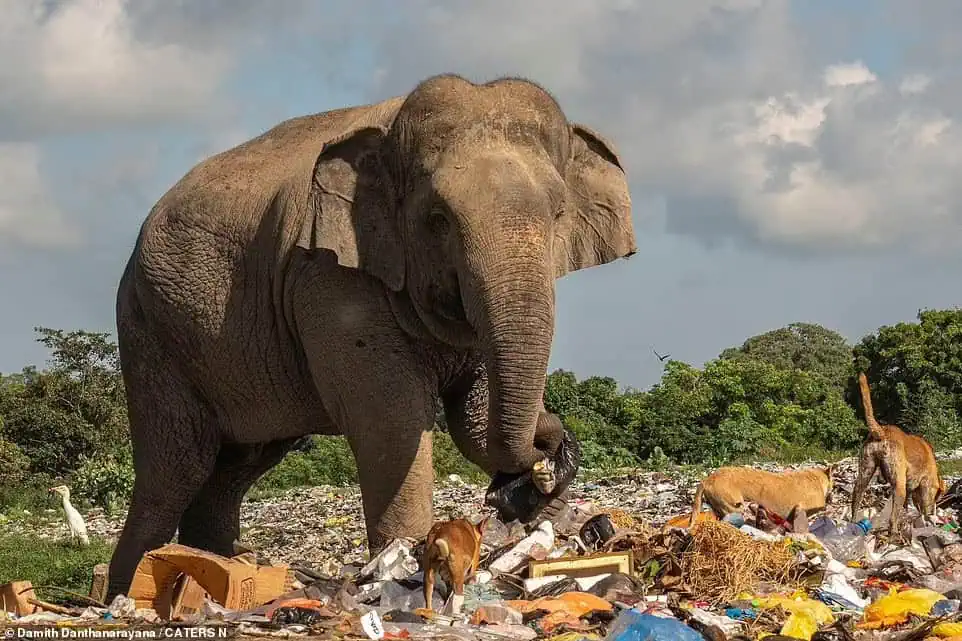
The photographer’s images show elephants swallowing plastic wrappers, tangled in wires, surrounded by a toxic sea of human waste. Many of them have swollen bellies — not from abundance, but from the undigested plastic filling their stomachs.
Veterinarians warn that such waste can block their intestines, cause infections, or even lead to death.
A Growing Crisis
Sri Lanka’s wild elephant population — estimated at around 7,000 — is one of the largest in Asia. Yet, it is also among the most threatened.
The Department of Wildlife Conservation reports that nearly 400 elephants and 120 people die each year in human-elephant conflicts. Most of these tragedies occur in farming regions where elephants trample crops or break into homes in search of food.
In retaliation, farmers sometimes shoot, poison, or set traps for the animals.
This crisis is not new. In 2017, the Sri Lankan government attempted to tackle the problem by banning open garbage dumps near wildlife sanctuaries and erecting electric fences around known elephant feeding sites. But the fences were often poorly maintained, and elephants — intelligent and determined — learned how to bypass them.
Now, as landfills continue to grow unchecked, so does the suffering.
The Clash Between Humans and Giants
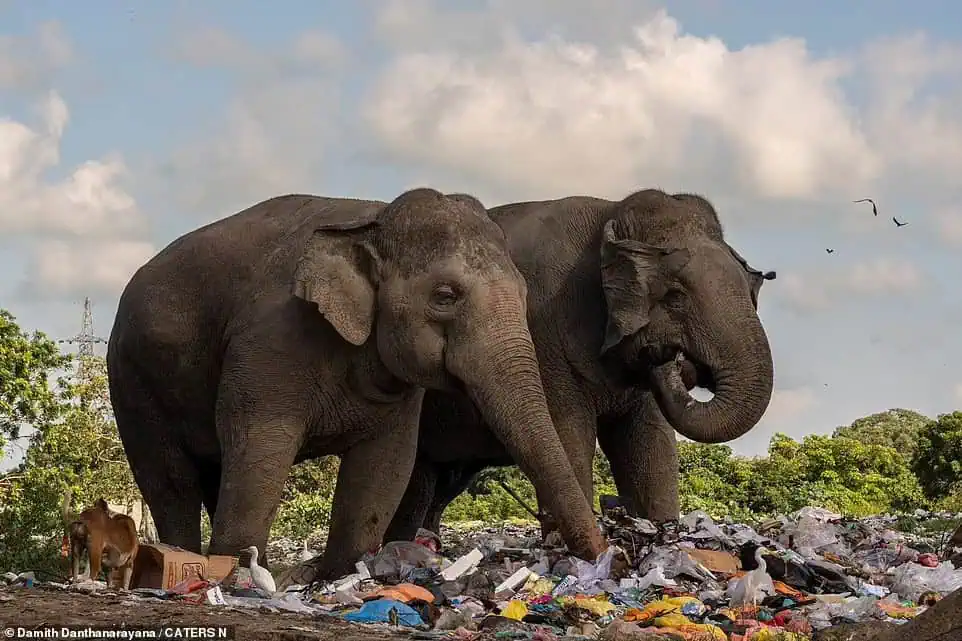
In rural communities, the relationship between humans and elephants has become increasingly strained.
For farmers, elephants represent loss — of crops, of income, and sometimes of life. For conservationists, they represent the soul of Sri Lanka’s wilderness — one that is slowly being crushed under the weight of urbanization.
A farmer from Ampara told local reporters, “We love elephants, but we also need to survive. They destroy our fields at night. What are we supposed to do?”
It’s a question with no easy answer.
Experts suggest that habitat destruction is at the root of the problem. As development pushes further into the wild, elephants have fewer options. Their migratory paths — used for centuries — are now cut off by highways and villages.
With their natural food sources gone, garbage becomes their last resort.
A Sacred Animal in Peril
In Sri Lanka’s culture and religion, elephants hold an honored place. They are featured in temple carvings, folklore, and processions like the Kandy Esala Perahera, where ornately decorated elephants carry sacred relics through the streets.
To see these same animals digging through waste is nothing short of tragic.
“Elephants are sacred in Buddhism,” Damith reflected. “To see them feeding on plastic is like seeing a god starving.”
The Call for Change
Environmentalists and animal welfare organizations have long been urging the government to implement stronger measures — not just to keep elephants out of landfills, but to address the root causes.
Better waste management systems, stricter regulations on land use, and the creation of wildlife corridors could help reduce conflicts.
“Electric fences and bans are not enough,” said Dr. Prithiviraj Fernando, a leading elephant conservationist in Sri Lanka. “We need holistic planning that allows humans and elephants to coexist.”
He explained that elephants are not invaders — they are simply following ancient routes in search of food. When those routes lead to garbage dumps, the real problem lies in how humans have reshaped the land.
Hope Through Awareness
Damith’s photographs quickly spread online, sparking outrage and sorrow around the world. Thousands shared the images, calling for immediate action to save Sri Lanka’s elephants.
“It’s painful, but awareness is the first step,” Damith said. “People need to see what’s happening. These elephants don’t belong in landfills. They belong in forests.”
In response to growing pressure, local authorities have promised to review waste disposal practices and consider relocating elephants to safer areas. However, progress remains slow.
The Last Giants
As night fell over the Ampara landfill, the elephants continued to move among the heaps of trash. Their silhouettes, outlined against the fading light, seemed ghostly — reminders of a wild world slowly disappearing.
One calf lifted a plastic bag in its trunk, sniffed it, then dropped it again. Its mother stood nearby, watching the horizon where the forest used to be.
The scene was both beautiful and unbearably sad — a portrait of survival in a world that has forgotten how to coexist.
“These are not just animals,” Damith said. “They are part of our history, our culture, our soul. If we lose them, we lose a part of ourselves.”
A Future Worth Fighting For
Sri Lanka’s elephants are resilient — they have endured centuries of change, from colonization to modernization. But their greatest test lies ahead.
If real action isn’t taken soon — to protect their habitats, reform waste systems, and reduce human conflict — the island’s sacred giants may vanish forever.
Until then, the haunting image remains: an elephant standing among plastic bags, searching for food that will only bring pain.
A symbol of beauty — trapped in our waste.
💔 To support elephant conservation in Sri Lanka, visit the Wildlife and Nature Protection Society or donate to local sanctuaries working to protect these gentle giants.