AITAH for letting my chronically late wife miss an event she was looking forward to by not rushing her, because I wanted her to face consequences?
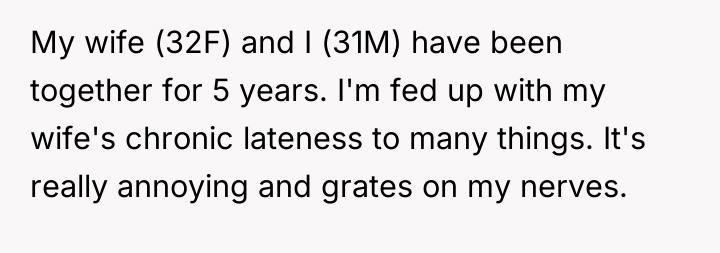
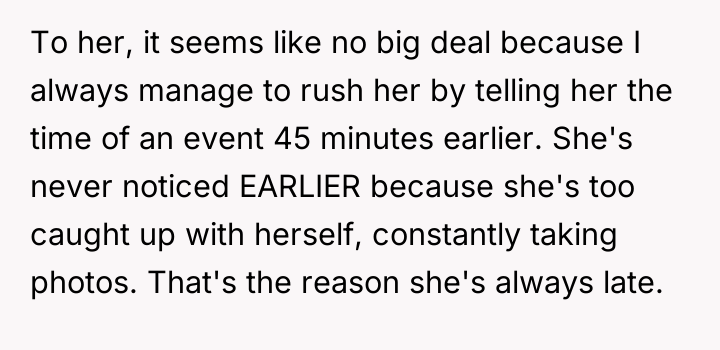
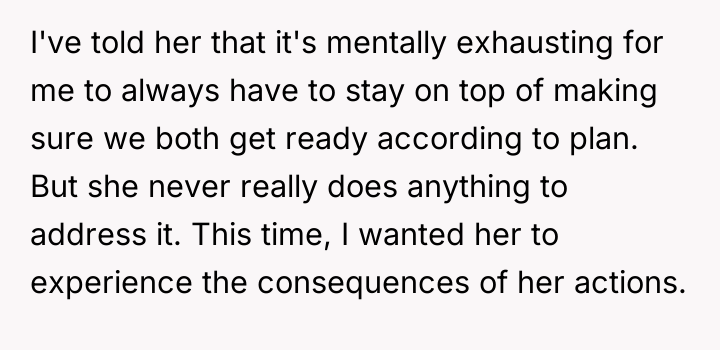
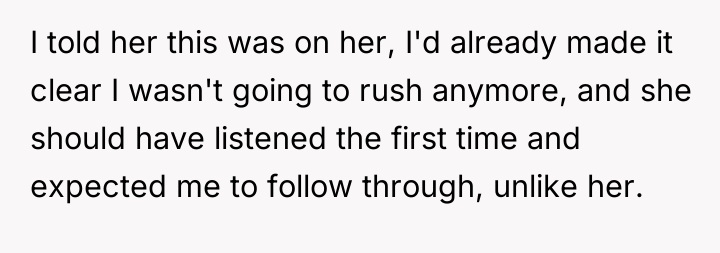
A 31-year-old man (OP) has been experiencing ongoing frustration with his 32-year-old wife's chronic lateness, which he attributes to her focus on taking photos for her content creator aspirations. After previous conversations failed to change her behavior, OP decided to stop giving her a false, earlier time estimate for events to force her to face the consequences of her tardiness.
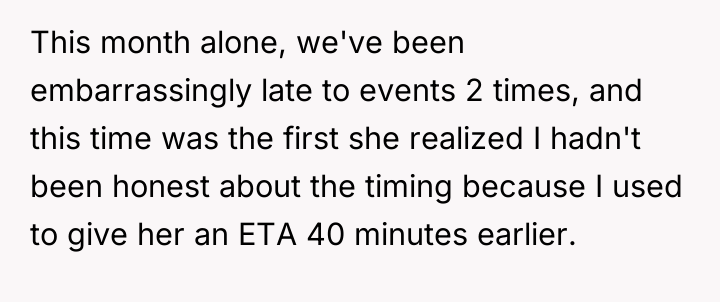
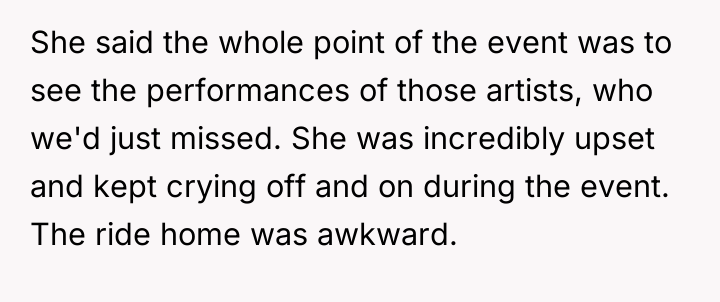
The core conflict came to a head on the wife's birthday when OP did not use his usual 40-minute buffer time when telling her the start time for an event featuring her favorite performers. When they arrived late, causing them to miss the opening acts, the wife became very upset, crying and accusing OP of deliberately punishing her. OP is now questioning if his action—allowing her to miss the performance—was justified, given the repeated failure on her part to respect scheduled times.



Subscribe to Our Newsletter
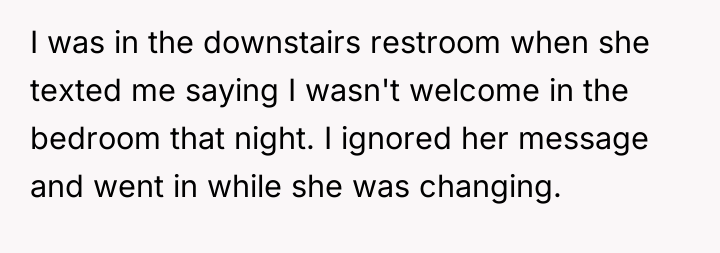
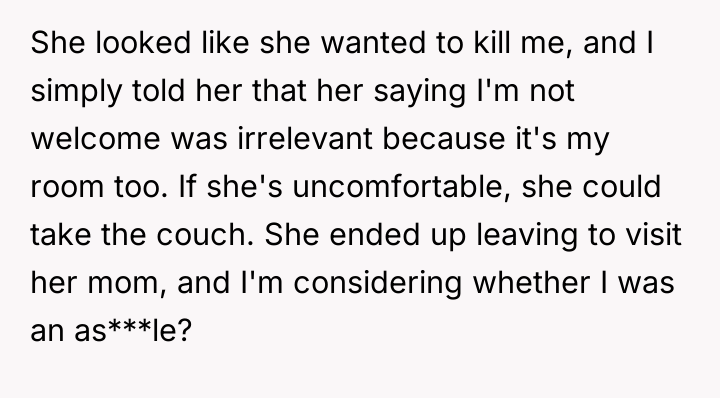
According to Dr. Finley Ward, a specialist in interpersonal conflict resolution, noted for stating, "True behavioral change often requires experiencing the natural, unmitigated consequences of one's actions, but the delivery method dictates whether the outcome is learning or resentment." OP's behavior can be analyzed through the lens of boundary setting. His repeated use of a time buffer suggests he was engaging in high levels of 'emotional labor' and management, attempting to compensate for his wife’s lack of planning. When this compensation failed, OP enacted a punitive response rather than an assertive one. While his frustration is understandable—chronic lateness demonstrates a lack of respect for shared time—intentionally allowing a partner to miss something deeply important to them, even as a lesson, crosses into punitive territory. The wife's reaction suggests she perceived this as malicious rather than educational, especially given the context of her birthday. The escalation to the bedroom confrontation further complicated matters, as OP dismissed her feeling of being unwelcome, reinforcing a dynamic where his needs for adherence supersede her emotional needs for respect in the shared space. A more constructive path would have involved OP firmly stating, 'I will no longer lie about the time; I expect you to be ready by X time, and if you are not, we will leave without you,' and then following through on leaving at the true time, rather than engineering a scenario where they arrive late to punish her for her own delay.
AFTER THIS STORY DROPPED, REDDIT WENT INTO MELTDOWN MODE – CHECK OUT WHAT PEOPLE SAID.:
What started as a simple post quickly turned into a wildfire of opinions, with users chiming in from all sides.
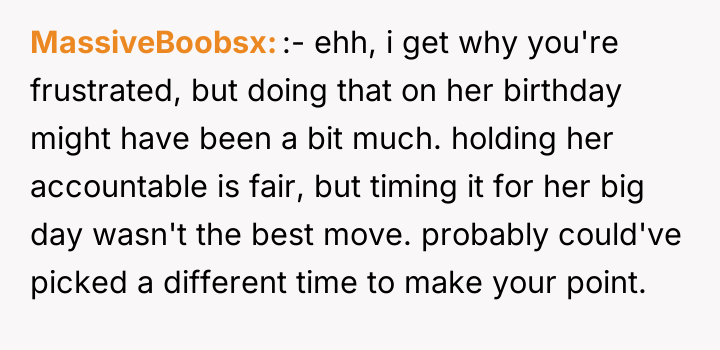

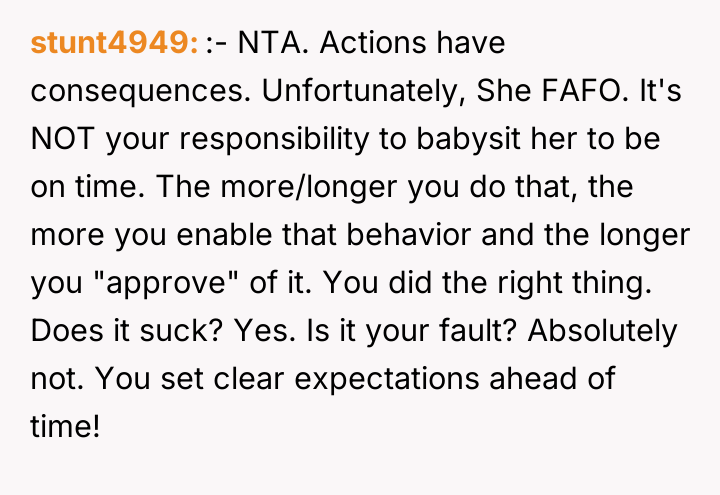



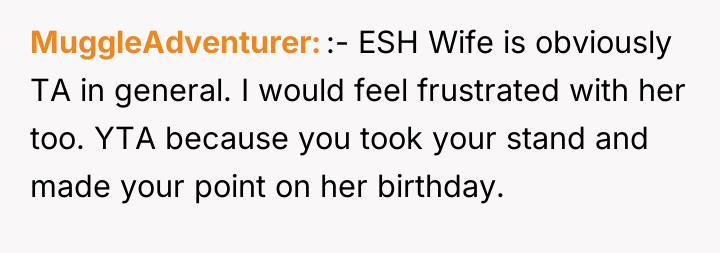
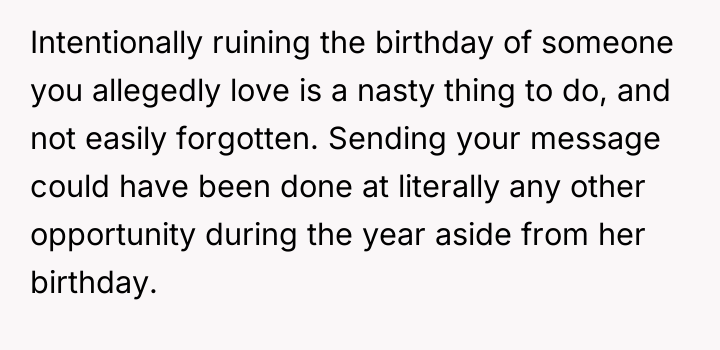
The central issue pits OP's exhaustion from constantly managing his wife's lateness against the emotional impact of his deliberate action on her birthday. OP clearly communicated his intention to stop enabling her behavior by requiring her to take adult responsibility, but his execution resulted in significant distress for his wife, leading to an immediate and severe reaction where she demanded space and expressed feeling betrayed.
The debate centers on whether OP was justified in using a significant personal event, the wife's birthday, as a final lesson in accountability, or if this constituted emotional manipulation and ruined a special occasion. Readers must weigh the necessity of enforcing boundaries against the importance of protecting a partner during a celebration.