AITA for refusing to lie to my mother's husband about how I met my husband?
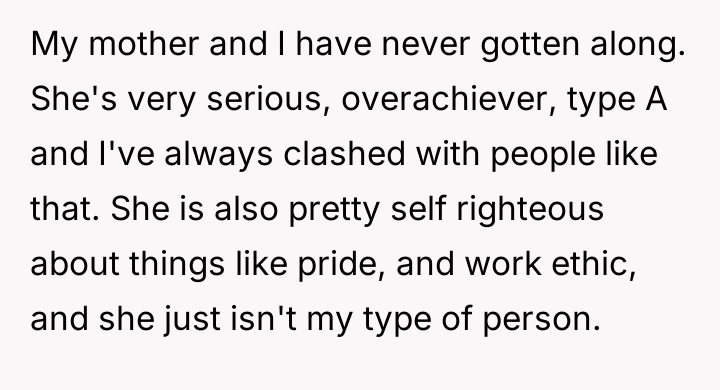
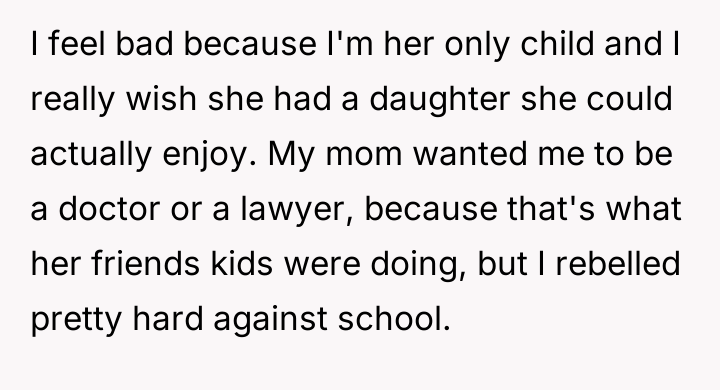
A chasm carved by unspoken words and clashing values stretches between a mother and her only child, where love is tangled in disappointment and unmet expectations. She longs for a connection that feels forever out of reach, while her daughter carves a path defiantly different—one painted with rebellion, survival, and the pursuit of a life unbound by judgment.
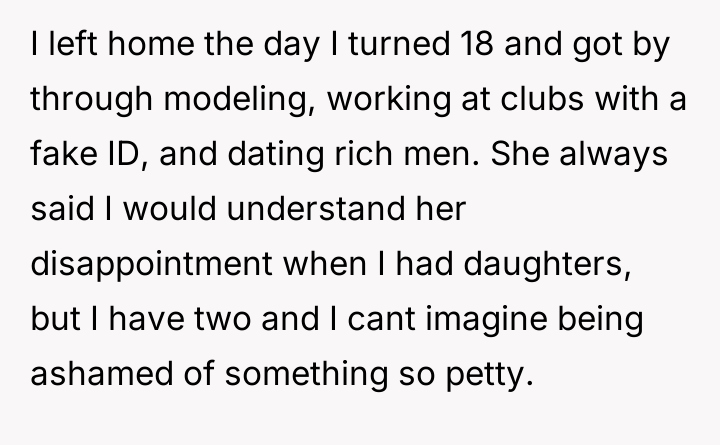
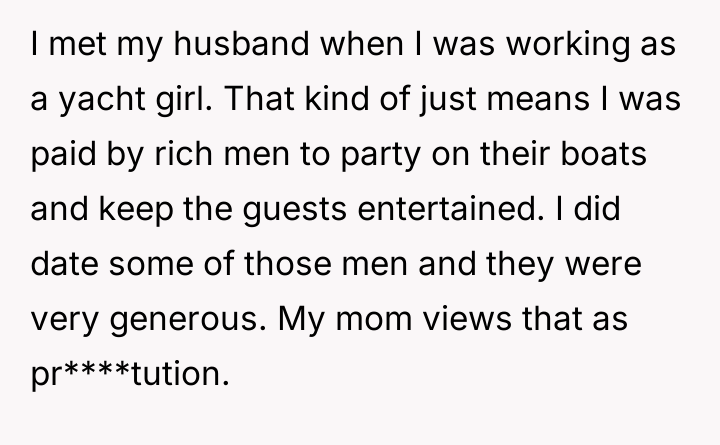
In the glow of yacht parties and fleeting romances, a daughter builds a world her mother cannot understand, challenging the rigid ideals of pride and success. Yet, beneath the surface of resentment and misunderstanding, there lies a silent hope—that the next generation might bridge the divide, breaking free from the shadows of shame and finding acceptance where there once was only discord.


Subscribe to Our Newsletter
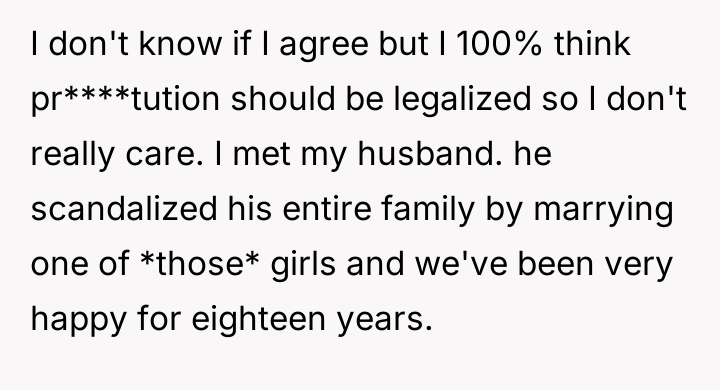
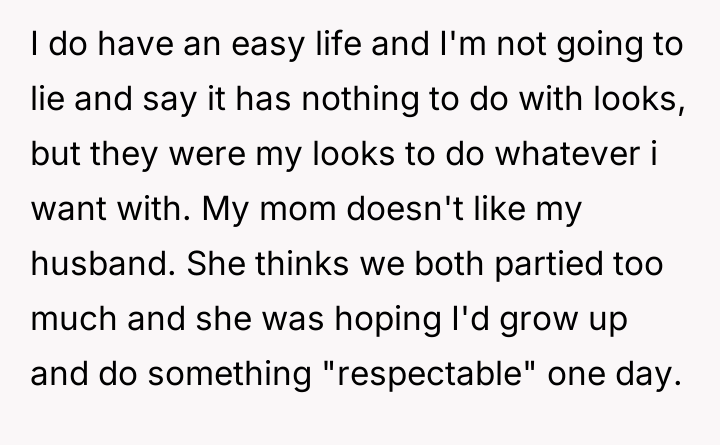
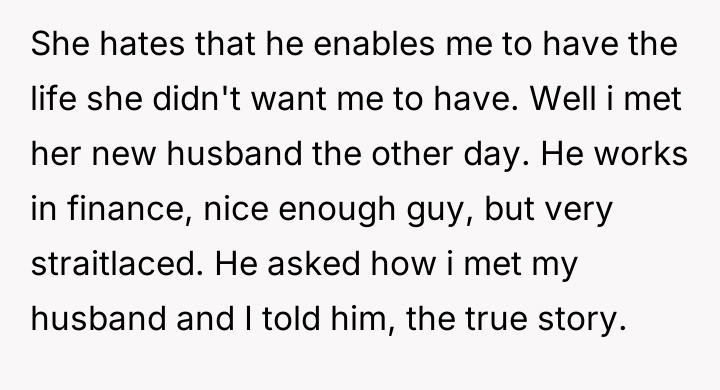
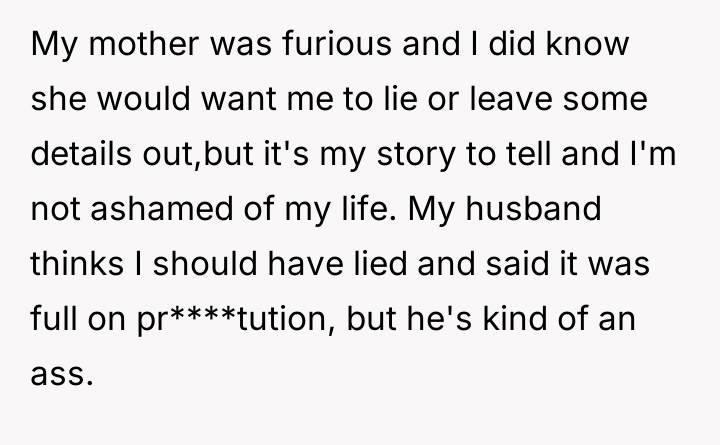
As renowned researcher Dr. Brené Brown explains, “Boundaries are the distance at which I can love you and me simultaneously.” This situation highlights a severe failure in establishing healthy emotional boundaries, not just between the mother and daughter, but also regarding the narrative of the daughter's past. The OP displays high emotional congruence; she is living a life aligned with her internal values (self-determination, honesty) despite the life choices being unconventional (modeling, yacht work, marrying a man who accepted that past). Her mother, conversely, operates from a place of external validation, tying self-worth and pride to societal benchmarks (doctor, lawyer, respectable marriage). When the OP recounted her story truthfully to her mother's new husband, she prioritized her authenticity over her mother's desire for social shielding. This created a conflict where the mother felt betrayed, experiencing a loss of control over the family image, which manifested as emotional distress (crying). The husband's suggestion to lie, suggesting full prostitution, further complicates the dynamic, indicating a possible underlying insecurity or a desire to shield the OP from judgment by embracing the worst label. The OP's decision to tell the truth was an appropriate exercise of autonomy regarding her own history. However, the execution could have been handled with more consideration for the immediate emotional safety of the environment. A constructive recommendation would be for the OP to communicate her boundary: 'This is my history, and I will not lie about it, but I understand this truth is hard for you.' She should then limit further discussion on the topic to prevent repeatedly reopening old wounds.
HERE’S HOW REDDIT BLEW UP AFTER HEARING THIS – PEOPLE COULDN’T BELIEVE IT.:
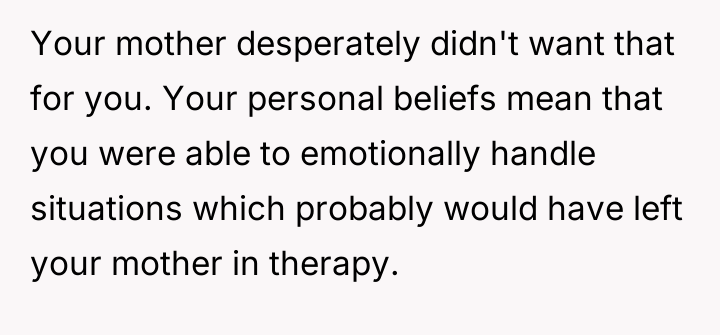
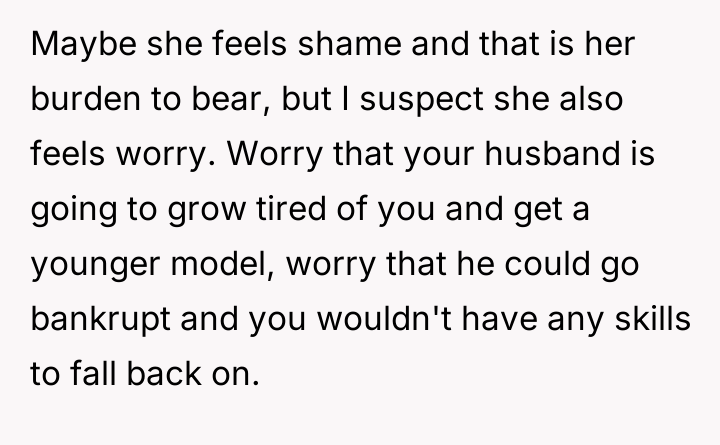
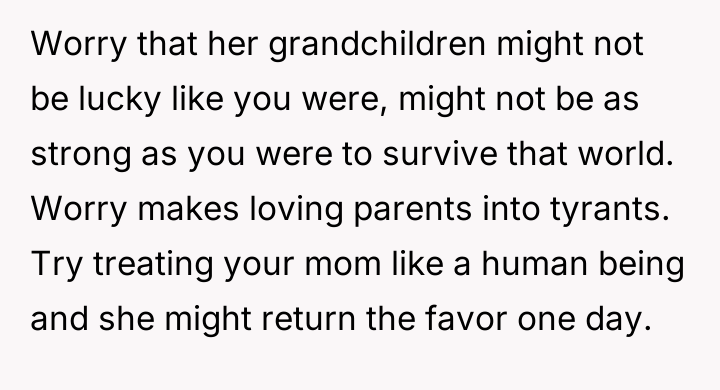
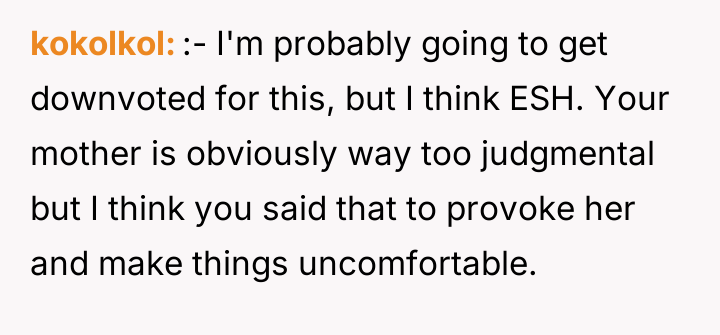
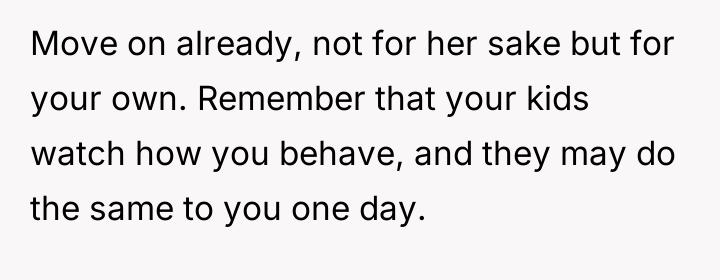
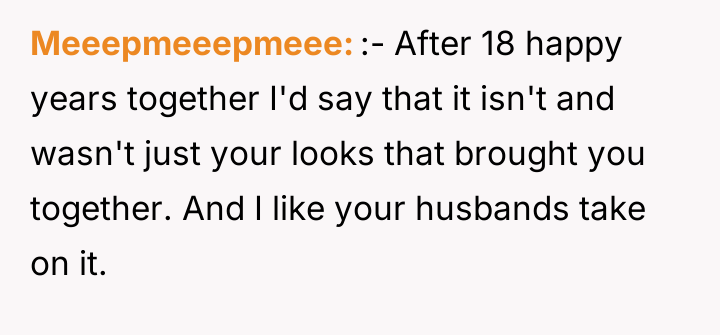
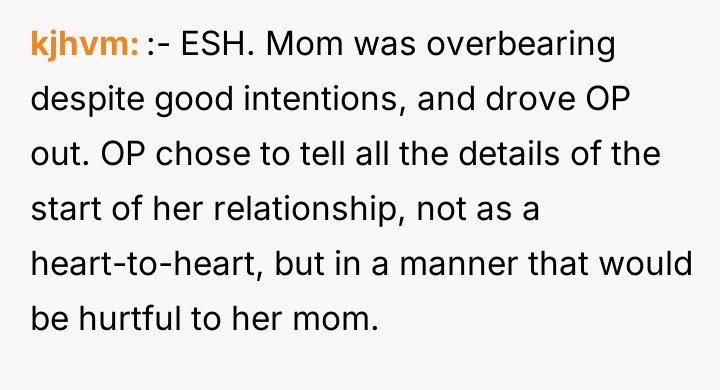
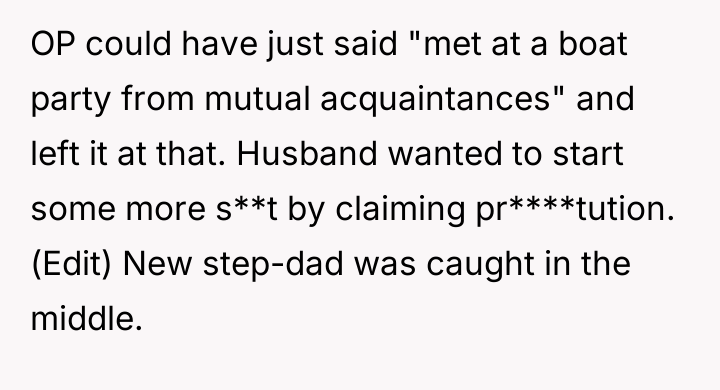
Support, sarcasm, and strong words — the replies covered it all. This one definitely got people talking.
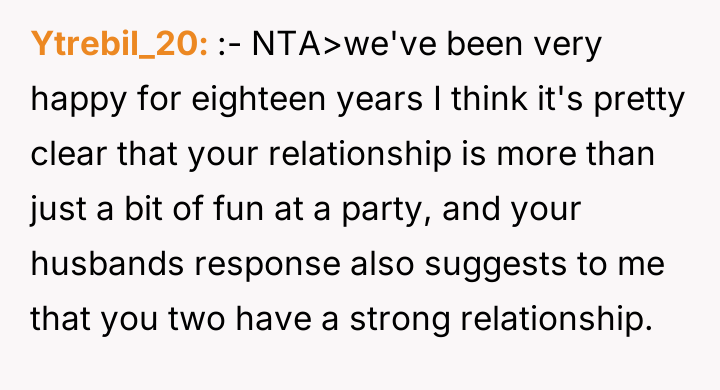
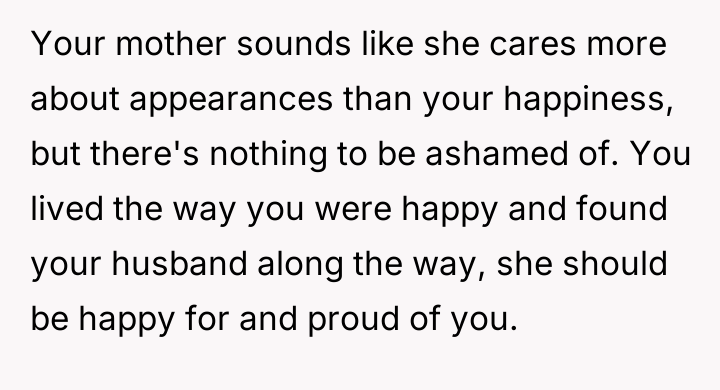
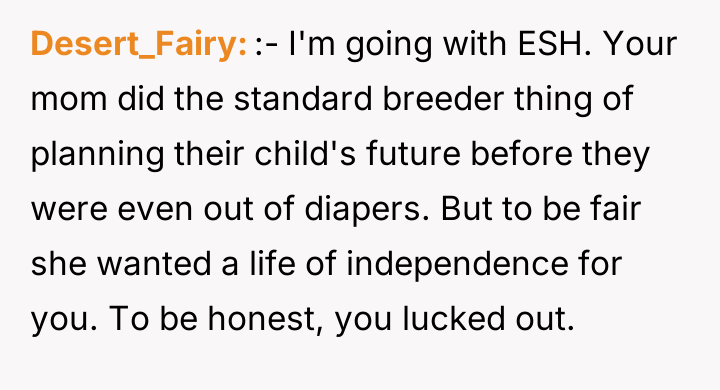
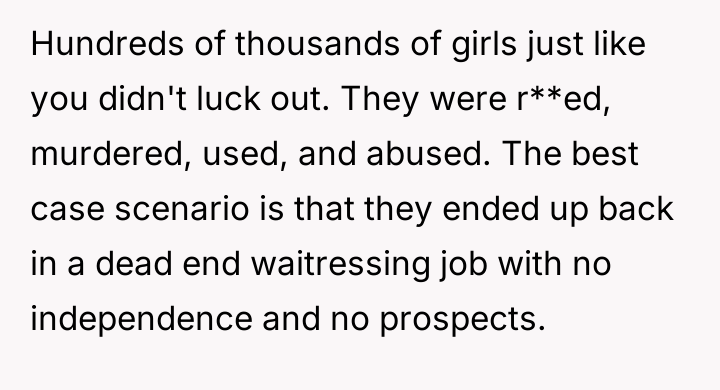
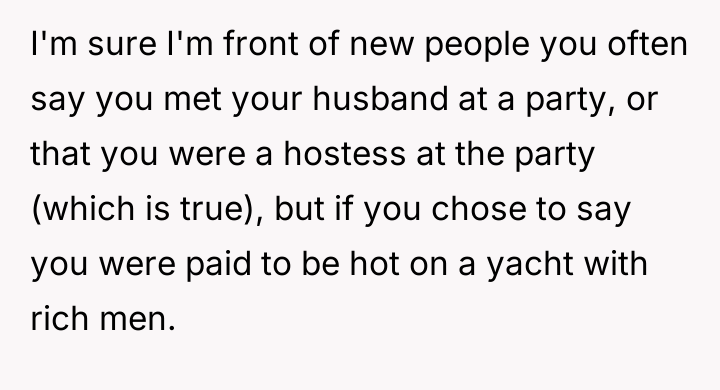
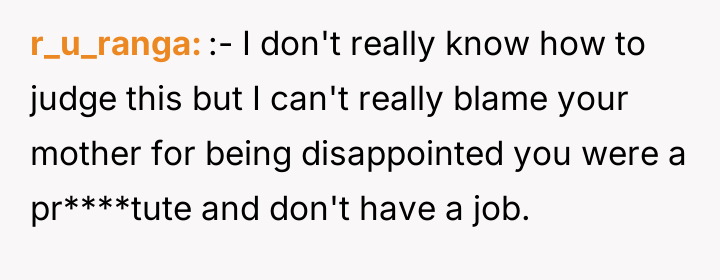
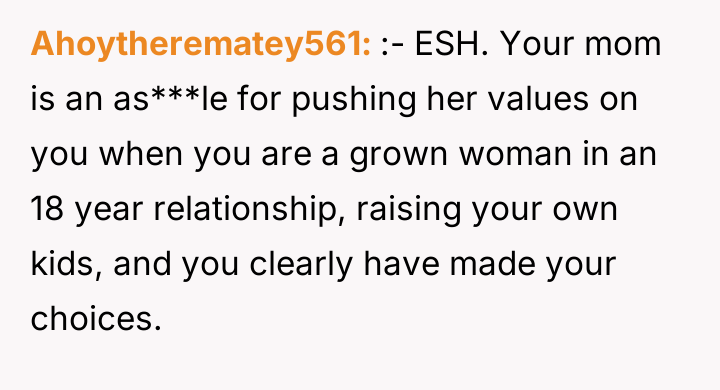
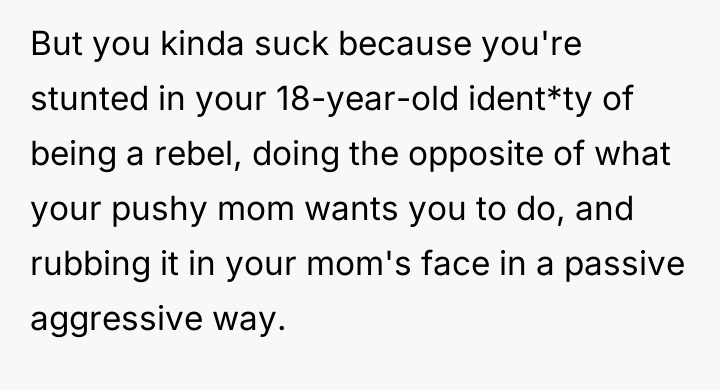
The original poster (OP) faces a deep, long-standing conflict with her mother rooted in vastly different life values and expectations regarding career, morality, and personal history. While the OP stands firm in her right to tell her own story honestly, this honesty directly conflicts with her mother's deep-seated need for appearances and a specific type of respectable life narrative.
Given the irreversible clash between the OP's commitment to truthfulness and her mother's desire to maintain a facade of conventional success, the central question remains: Is the obligation to preserve a relationship more important than the absolute right to personal honesty, especially when that honesty causes significant distress to a parent?