UPDATE Am I the as***le for cutting up and altering my wedding dress into a functional dress insetad of giving it to my sister who can't afford it?
In the fragile aftermath of a wedding, a simple dress became the epicenter of a deep familial rift. What was meant to be a cherished heirloom transformed into a symbol of misunderstanding and unspoken expectations, tearing at the bonds between two sisters.
Despite attempts at reconciliation and the silent hope for clarity, walls of silence and avoidance only deepened the wound. The pain of unvoiced desires and broken communication left one sister grappling with confusion and the other retreating into distance, their shared past overshadowed by a dress that neither could truly claim.






Subscribe to Our Newsletter
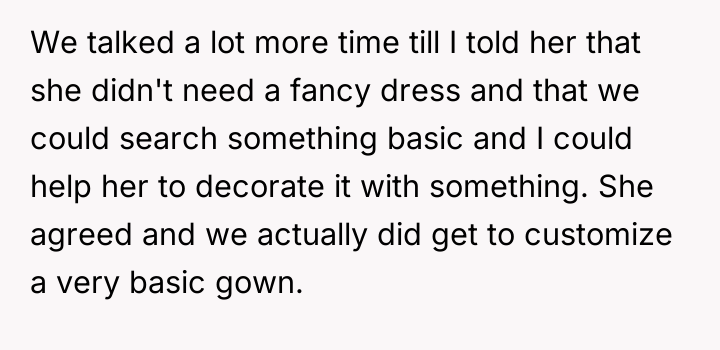
As renowned researcher Dr. Brené Brown explains, “Boundaries are the distance at which I can love you and me simultaneously.” This quote directly applies to the dynamic presented, where the OP needed to establish a boundary regarding her property (the dress) while navigating a highly charged emotional situation involving family expectations. The OP initially acted appropriately by holding firm on the fact that the dress was hers, especially since the sister never formally requested it, indicating a breakdown in communication rooted in entitlement or assumption on the sister's part. The sister's subsequent behavior—blocking the number, avoidance, and then an explosive confrontation—suggests she was projecting significant internal struggles onto an external object. Her later admission points toward issues of social comparison, financial stress, and feelings of failure as an adult and mother. These are classic manifestations of shame, where individuals externalize their pain by blaming others or demanding what others possess. The OP’s actions were appropriate in defending her boundary, but her decision to ultimately engage and then offer significant help (a customized basic gown) demonstrates high emotional intelligence and a commitment to the relationship over 'winning' the argument. A constructive recommendation for the future would be for the OP to encourage the sister to seek support for the underlying issues of self-worth, rather than solely solving the tangible problem (the dress). Maintaining open communication about expectations before major life events is key to preventing recurrence.
HERE’S HOW REDDIT BLEW UP AFTER HEARING THIS – PEOPLE COULDN’T BELIEVE IT.:
This one sparked a storm. The comments range from brutally honest to surprisingly supportive — and everything in between.

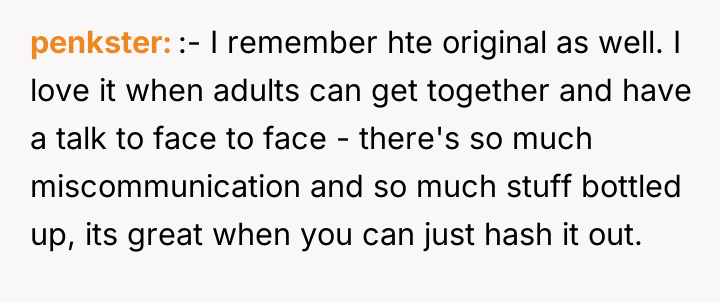
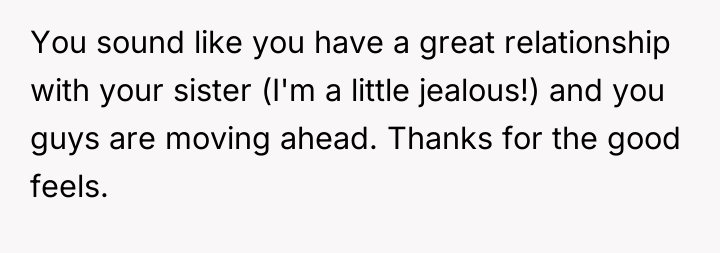

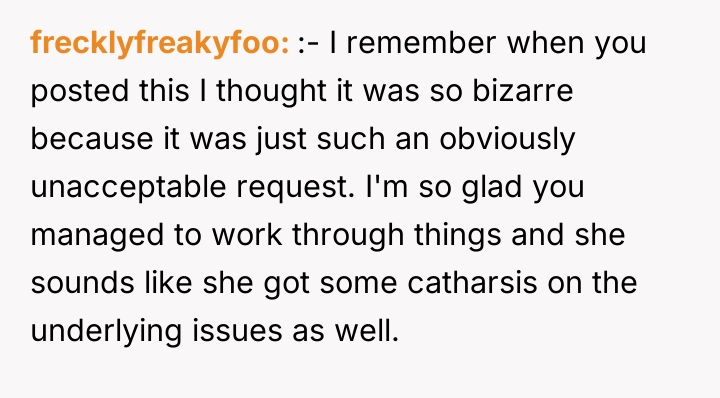

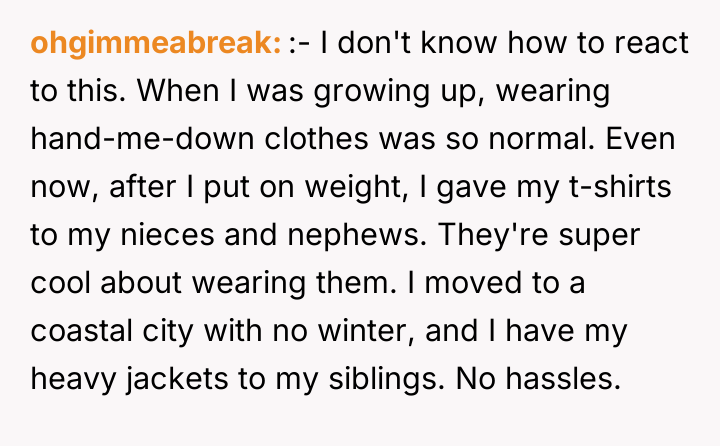



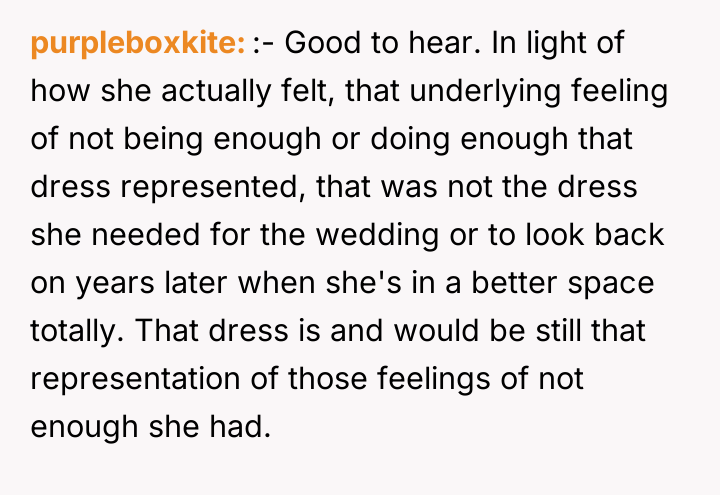


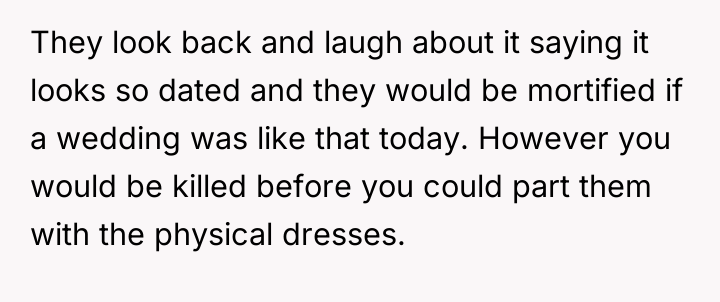


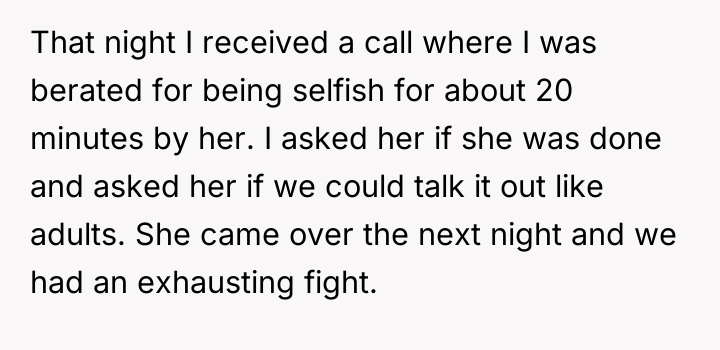
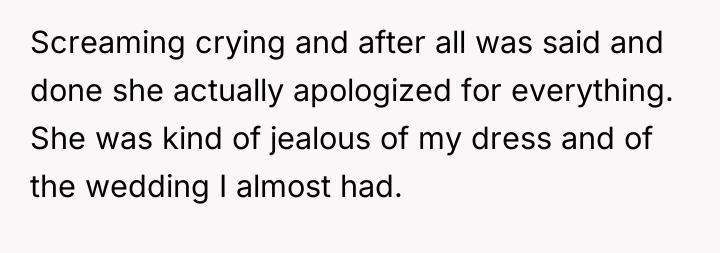
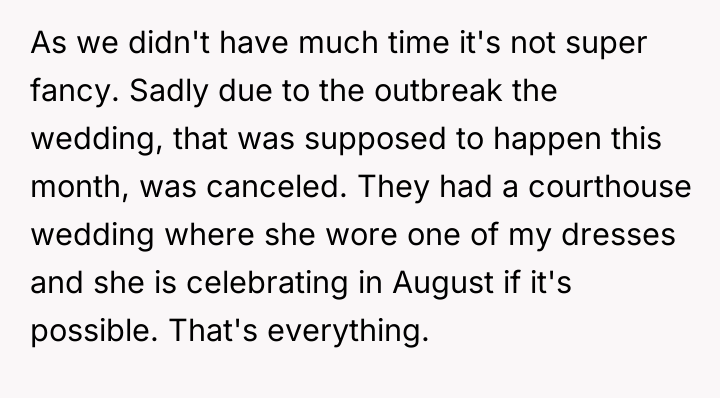
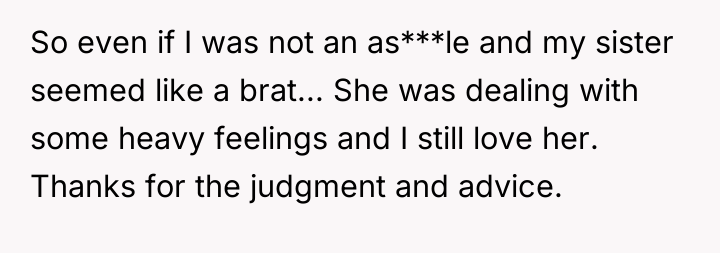
The original poster (OP) found herself in a difficult situation where her sister expressed anger over the OP's wedding dress, which the sister had presumed would be given to her. Despite the sister's initial harsh reaction and avoidance, the conflict was eventually resolved through a difficult conversation where the sister confessed deep-seated feelings of jealousy and inadequacy regarding her own financial status and perceived life achievements.
Given the sister's underlying emotional distress that drove her behavior, was the OP justified in her initial firm stance regarding the dress, or should she have approached the sister's presumptions with more immediate empathy, and is the shared solution truly resolving the deeper issues of comparison and self-worth?