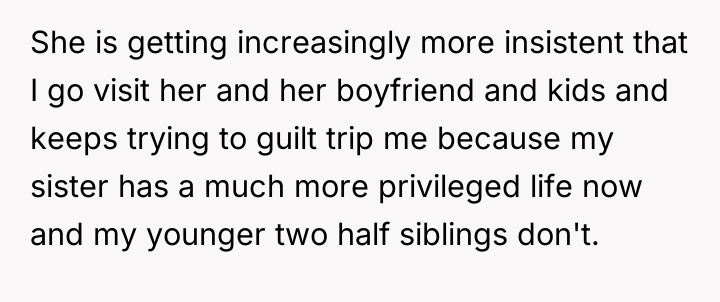
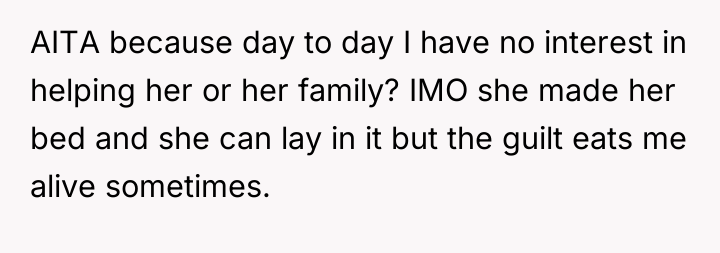
AITA for ignoring my mom asking me to get involved with her new family after I got rich?
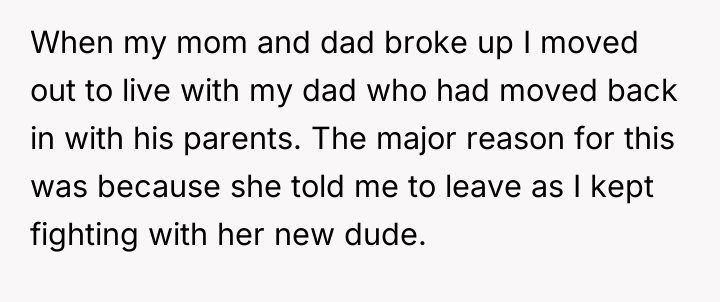
At seventeen, everything shattered. His mother’s sudden departure and swift new relationship tore the family apart, leaving him caught in a storm of betrayal and silence. The unspoken truths haunted him, as his mother denied the pain she caused, and he was forced to leave the home he once knew, carrying a wound that refused to heal.
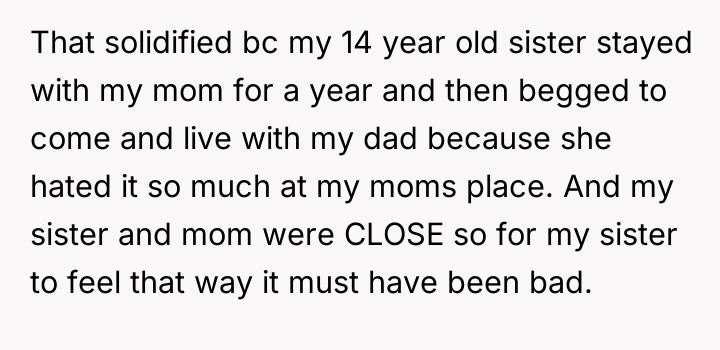
Years later, the scars remain raw. The fractured bonds and the quiet suffering of his sister, who escaped the same torment, deepen the ache of abandonment and unresolved anger. His heart is heavy with a grief that forgiveness cannot touch, a testament to a family broken beyond repair.







Subscribe to Our Newsletter
As renowned family therapist Dr. Harriet Lerner explains, “The first step toward change is awareness. The second step is acceptance. The third step is letting go of the need to change other people.” The core issue here involves unresolved trauma from parental abandonment and the subsequent struggle for establishing personal boundaries. The mother’s decision to force the 17-year-old OP out, combined with the perceived lack of remorse, created a profound breach of trust that the OP has not been able to bridge, despite professional success. The OP’s current wealth and success, ironically, provide the perfect platform for the mother to exert financial and emotional pressure, framing the OP’s success as a resource that must now benefit her new family unit. This is a classic example of boundary violation where one party (the mother) attempts to manage the guilt or needs of another (herself/her younger children) by demanding resources or emotional labor from the injured party (the OP). The OP’s desire to protect their current supportive family structure (father, grandparents) from the toxicity of the past relationship is appropriate. While the mother frames the issue around the 'innocent' younger siblings, the OP is not obligated to sacrifice their own emotional well-being to compensate for the choices their mother made. A constructive recommendation would involve setting firm, non-negotiable boundaries regarding contact and financial interaction with the mother's family. The OP could perhaps offer limited, structured support directed *only* toward the younger siblings' education or welfare, channeled through a neutral third party, thereby addressing the guilt without re-engaging in the damaging relationship dynamic with the mother.
THE COMMENTS SECTION WENT WILD – REDDIT HAD *A LOT* TO SAY ABOUT THIS ONE.:
The crowd poured into the comments, bringing a blend of heated opinions, solid advice, and a few reality checks along the way.

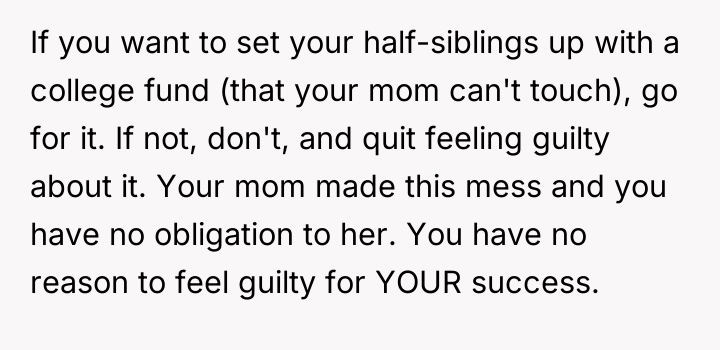
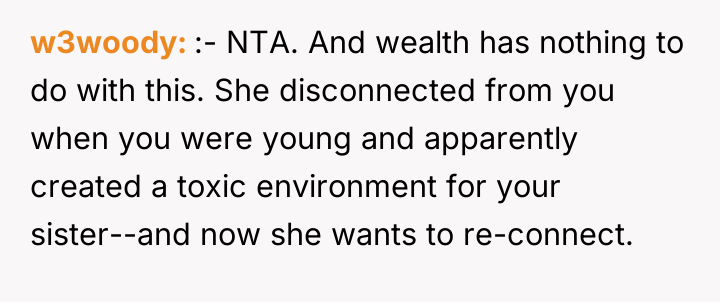


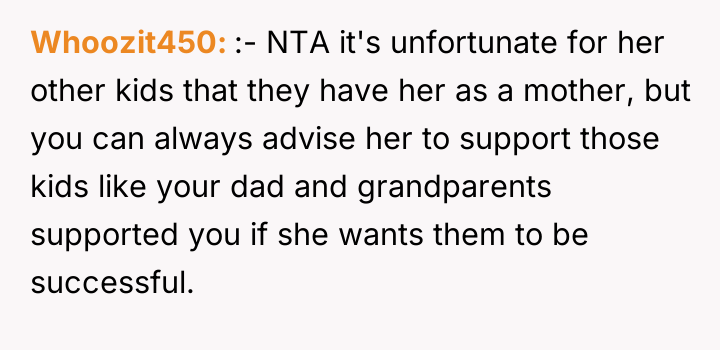
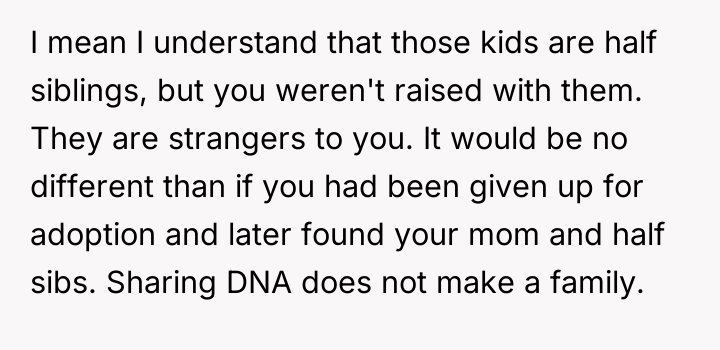
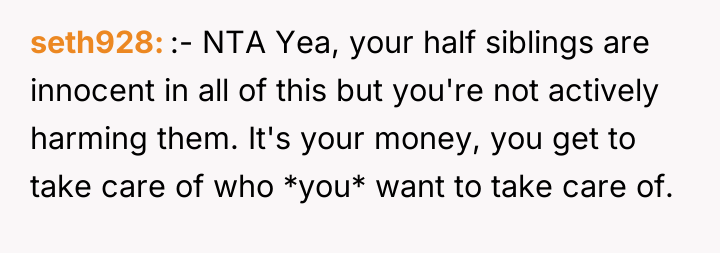
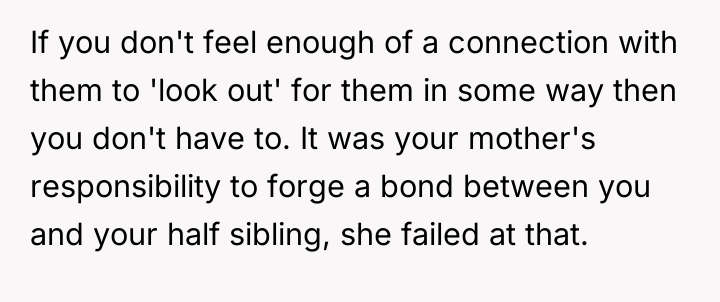


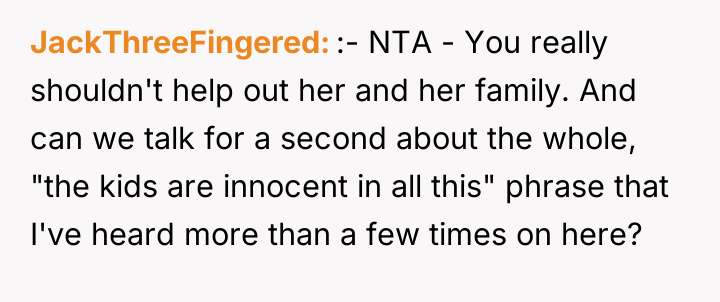
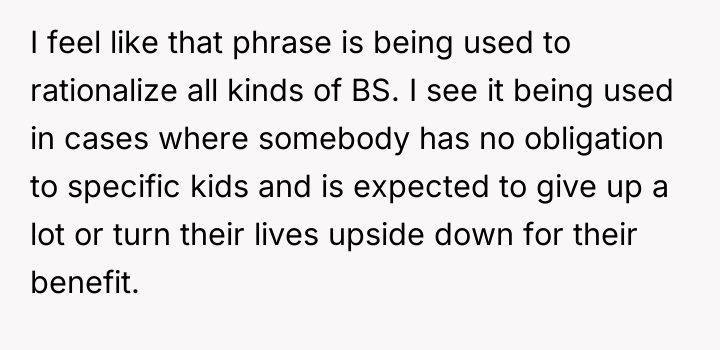
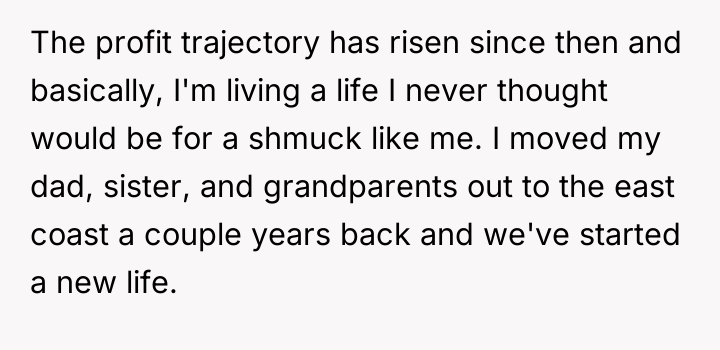
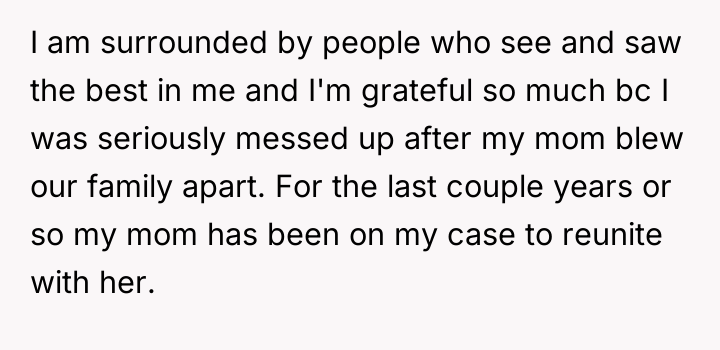
The original poster (OP) is struggling with deep, unresolved anger and unforgiveness stemming from their mother's decision to abruptly end the marriage and force the OP out of the home. While the OP has successfully built a financially secure life with the supportive side of the family, the mother continues to pressure the OP, using guilt related to the younger half-siblings as leverage to demand involvement.
Is the OP justified in maintaining strict emotional and physical distance from their mother and her current family due to past betrayal, or does the perceived innocence of the younger siblings create a moral obligation for the OP to provide support? Where does the responsibility for emotional healing lie when past actions continually influence present demands?