AITA for getting my interviewer fired?
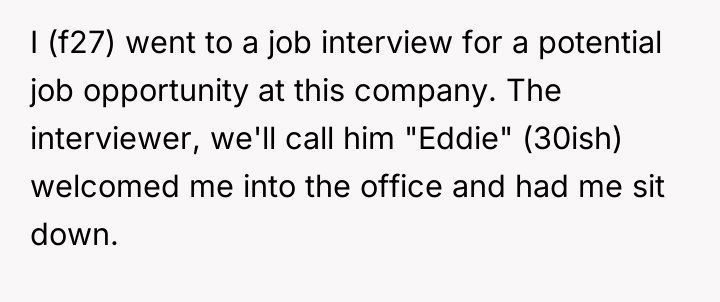
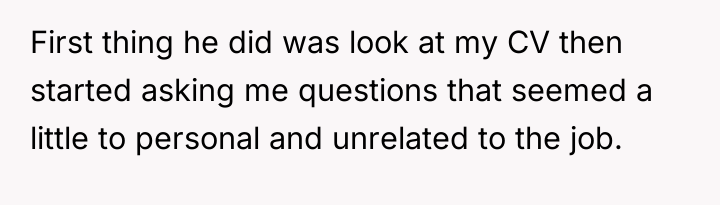
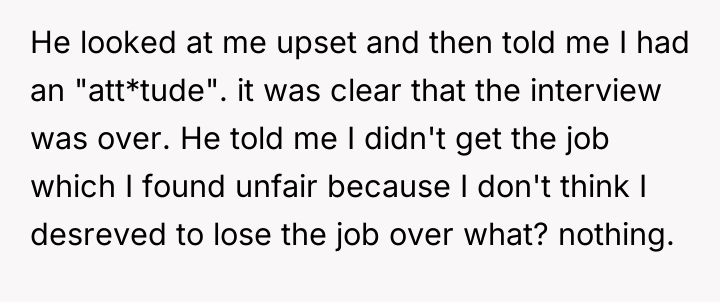
She walked into the interview room with hope and determination, ready to prove her worth. But as the questions turned personal and invasive, her initial confidence began to crack, replaced by a growing sense of discomfort and injustice.
When she stood her ground against the inappropriate probing, the air shifted—her polite defiance was met not with respect, but with dismissal. The job slipped through her fingers, not because of her skills, but because she refused to be silenced or disrespected.

Subscribe to Our Newsletter
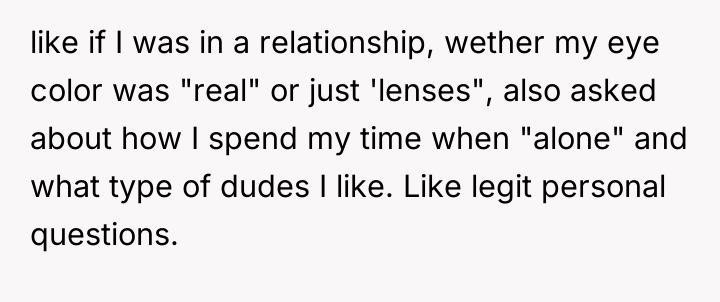
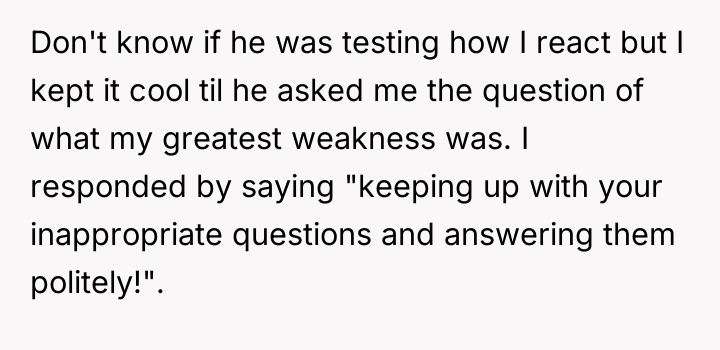
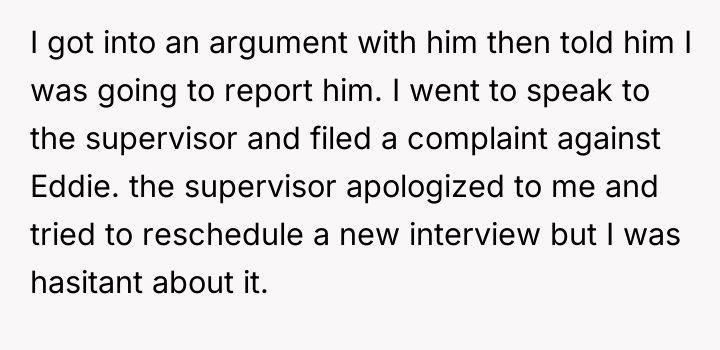
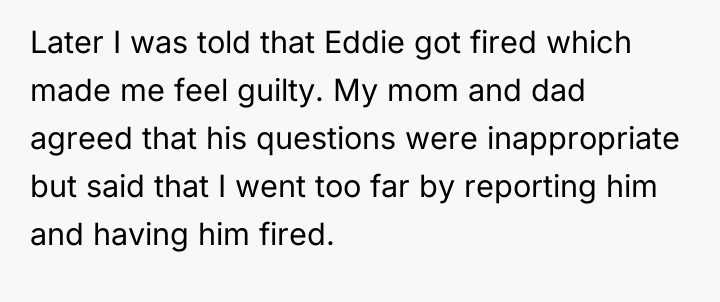
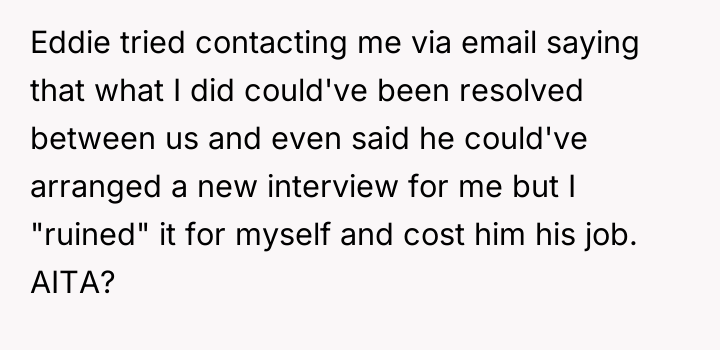
As renowned organizational psychologist Dr. Beverly Kaye explains, “The interview process is a two-way street; it’s a mutual assessment of fit, not an interrogation designed to gauge personal characteristics irrelevant to the role.” The interviewer, Eddie, clearly violated standard professional and ethical hiring practices by asking questions related to the candidate’s relationship status, physical appearance ('eye color'), and personal life ('how I spend time when alone'). These inquiries are illegal in many jurisdictions because they invite bias and discrimination unrelated to job performance. The OP's initial response, calling out the inappropriate nature of the questions when prompted for a 'weakness,' was a clear and assertive defense of professional boundaries. The ensuing termination of Eddie suggests that the employer likely recognized a significant liability and breach of conduct. The OP's decision to report the behavior, though it resulted in severe consequences for Eddie, was an appropriate action for protecting professional standards and ensuring accountability. While guilt is a natural emotional response when witnessing someone else's downfall, the OP should not accept responsibility for Eddie's unemployment; his termination was a direct result of his own unprofessional and discriminatory actions during the formal hiring process.
THE COMMENTS SECTION WENT WILD – REDDIT HAD *A LOT* TO SAY ABOUT THIS ONE.:
The thread exploded with reactions. Whether agreeing or disagreeing, everyone had something to say — and they said it loud.
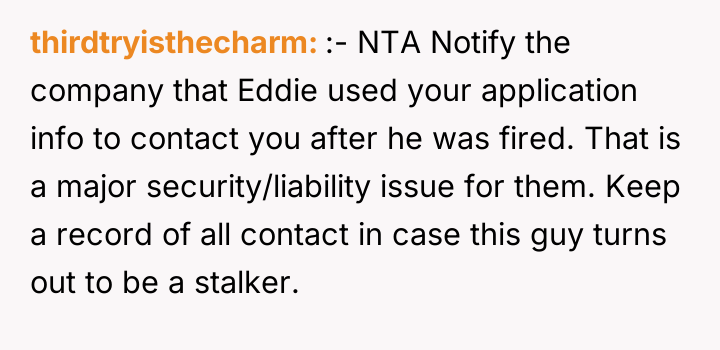
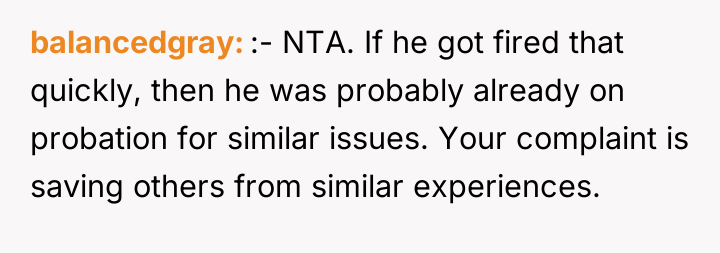
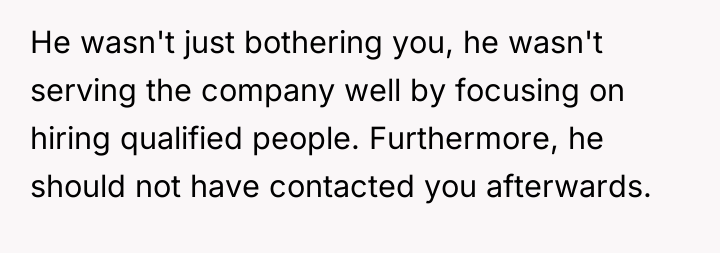
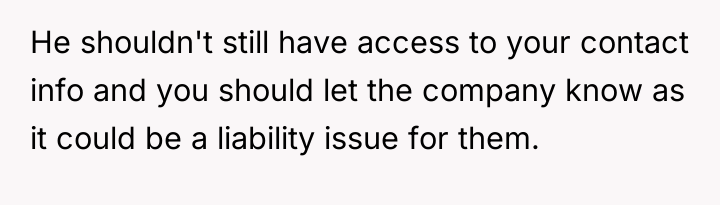
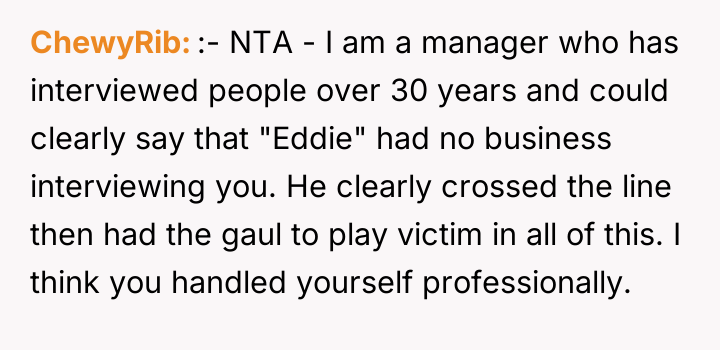
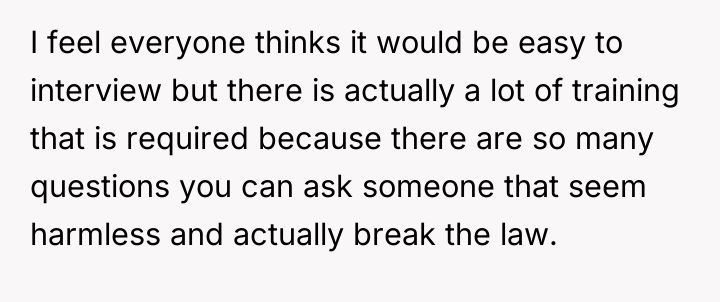
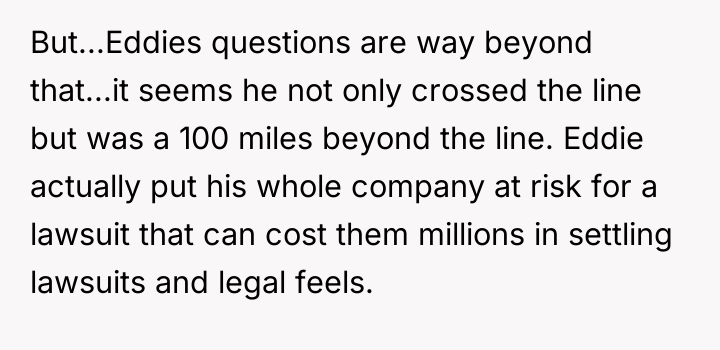
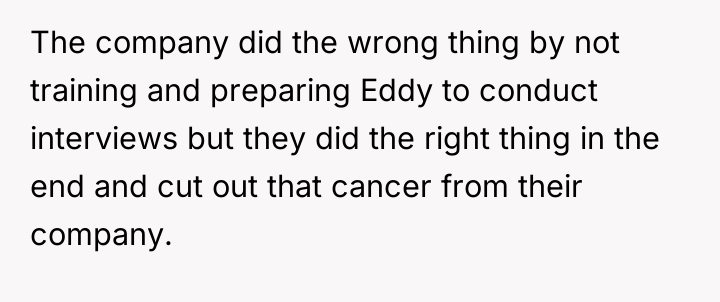
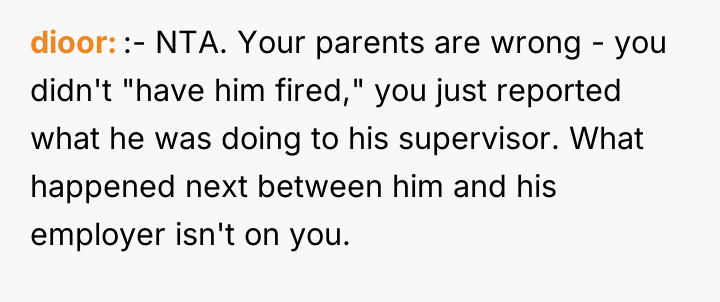
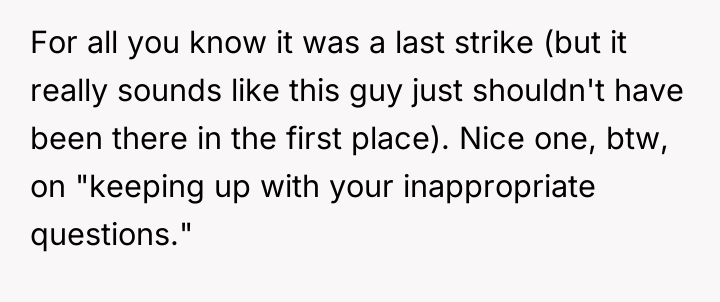
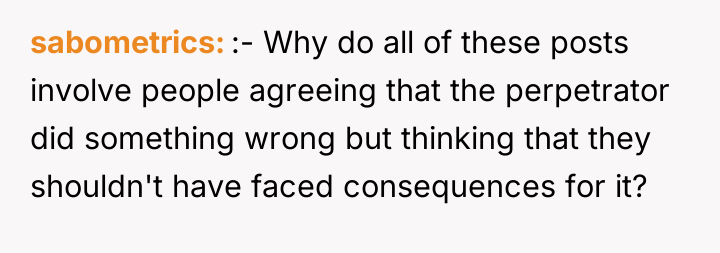
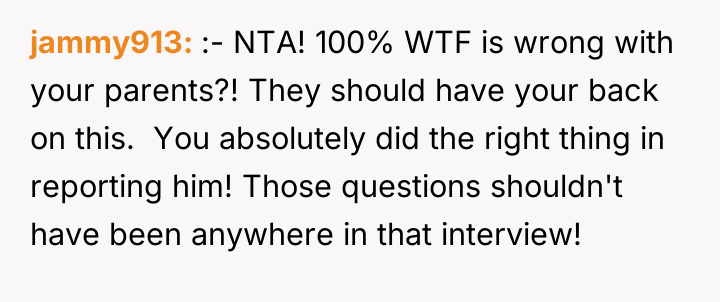
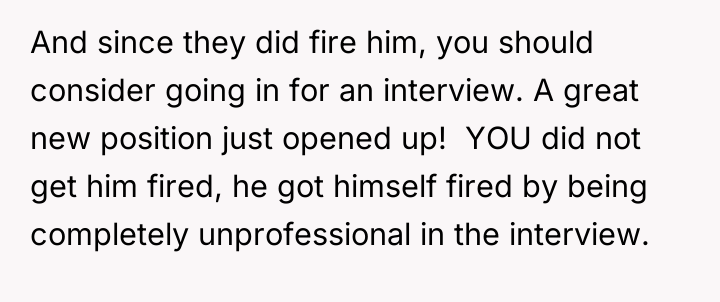
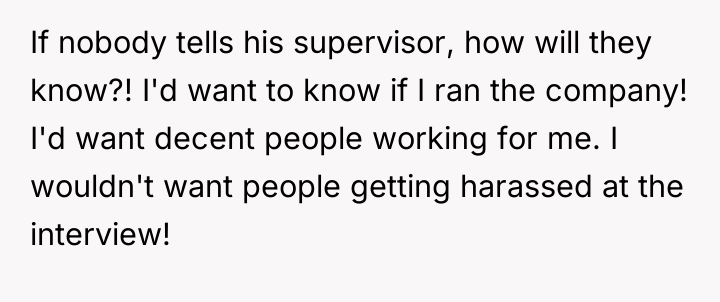
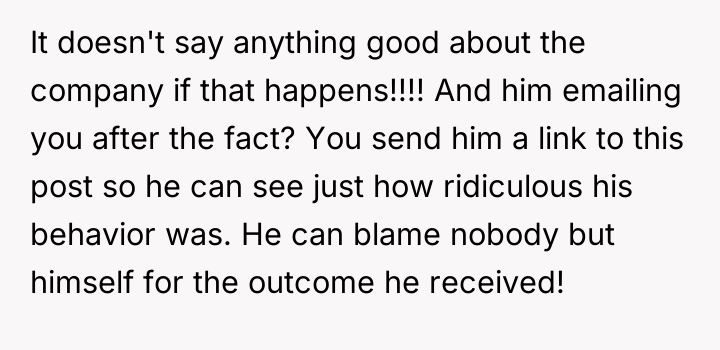
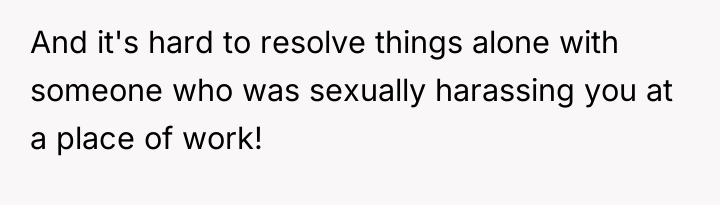
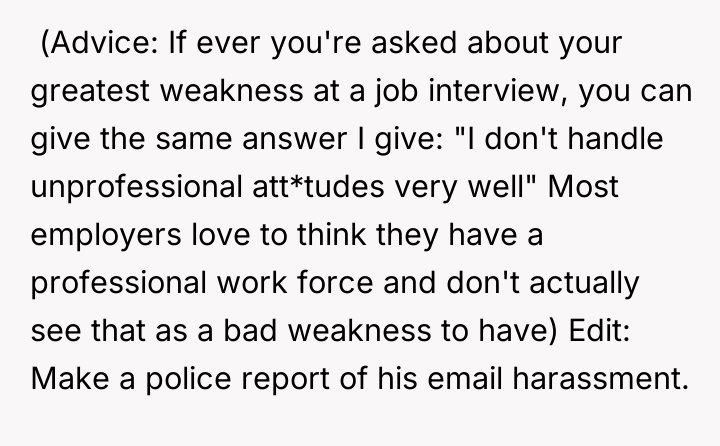
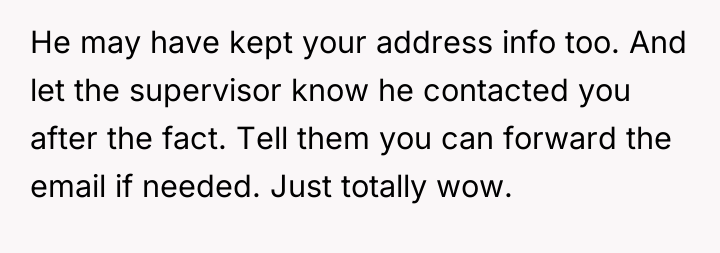
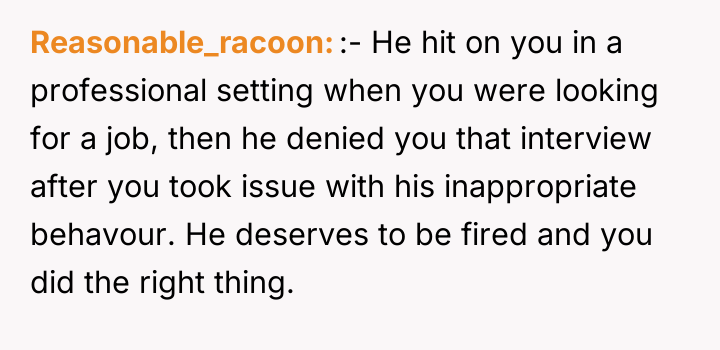
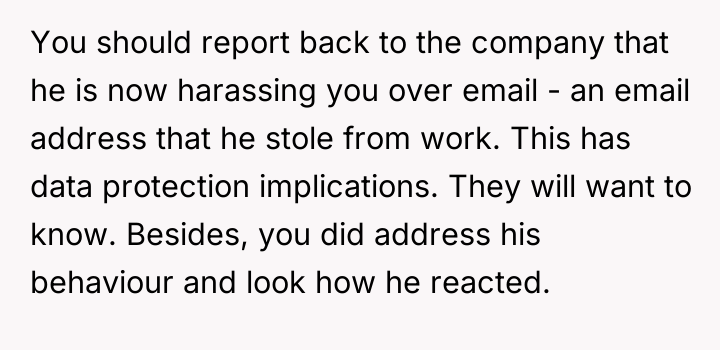
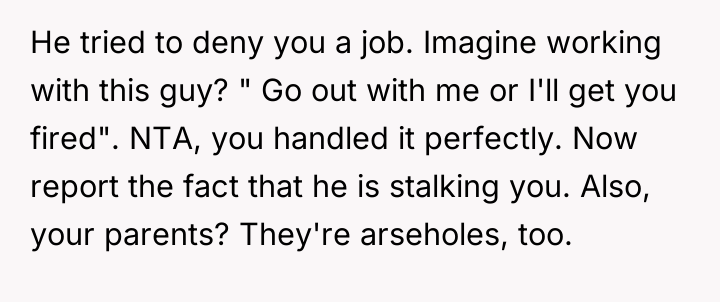
The original poster felt deeply wronged by highly inappropriate, personal questioning during a job interview, leading to a confrontation and the subsequent firing of the interviewer. While the OP stood up for professional boundaries, they are now experiencing guilt due to the severe professional consequences faced by the interviewer, despite their parents' agreement that the initial behavior was wrong.
Was the OP justified in escalating the complaint to the point of causing the interviewer to lose his job, or should they have accepted the supervisor's offer to reschedule the interview and addressed the conflict more privately, as suggested by their parents?