AITA for refusing to stay home with the kids while my husband attends my brother's wedding?
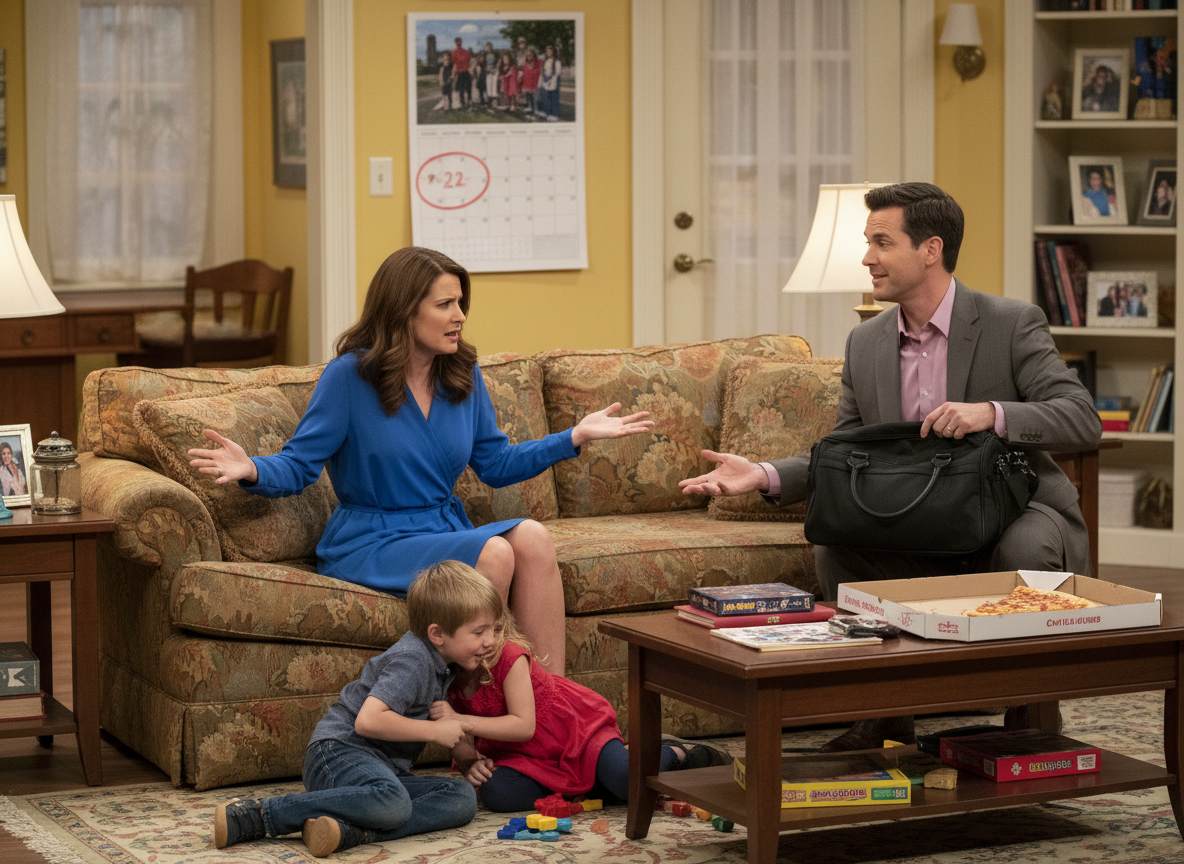
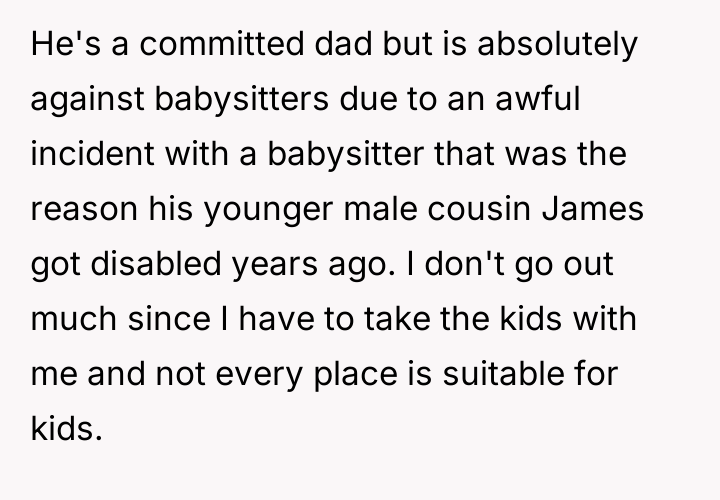
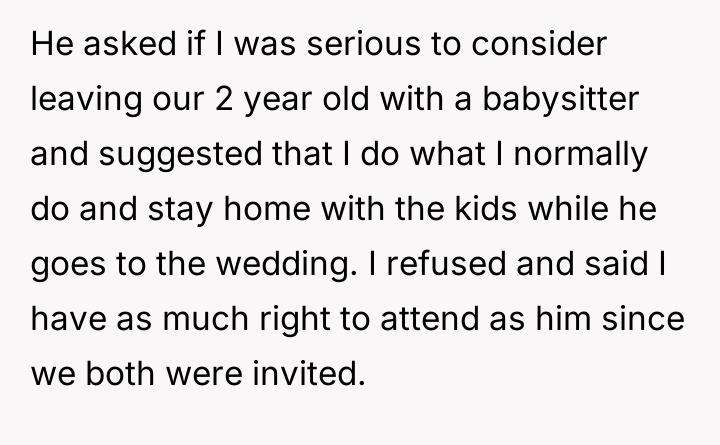
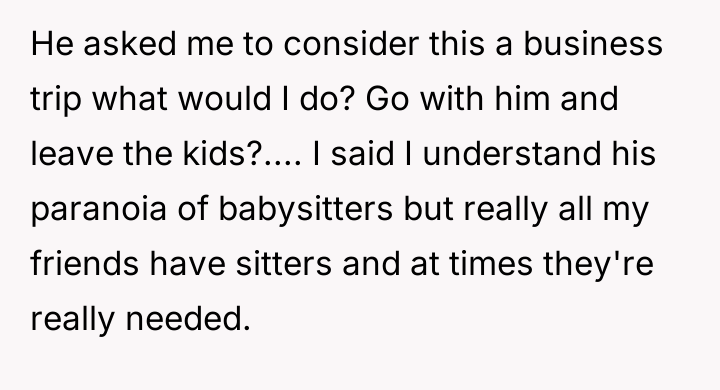
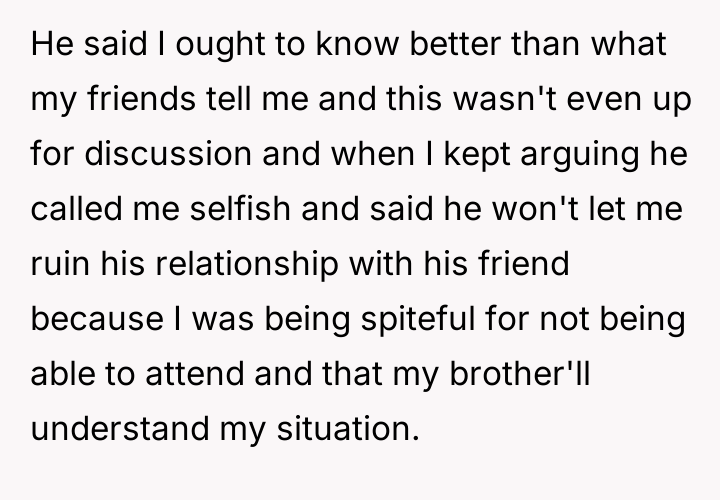
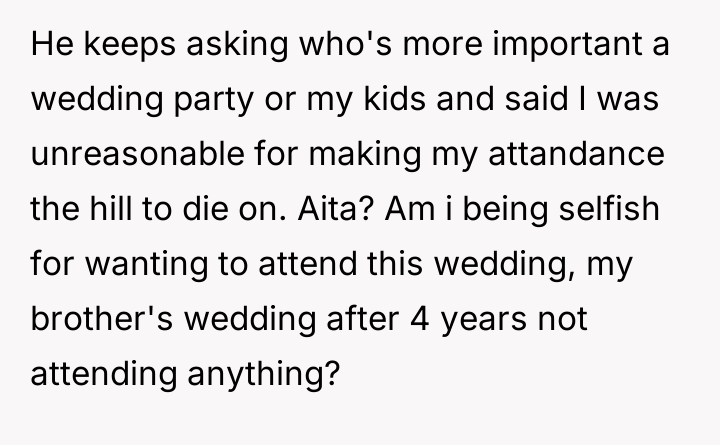
She is a devoted mother, tethered to the daily demands of raising three young children, her world revolving around their needs and safety. Her husband, a steadfast and loving father, carries the weight of a painful past that fuels his deep fear of babysitters, a fear born from a tragic family incident that left their cousin disabled. This shared history binds them, but also confines her, as the rare chance to step away and embrace a moment for herself is shadowed by his unwavering opposition.
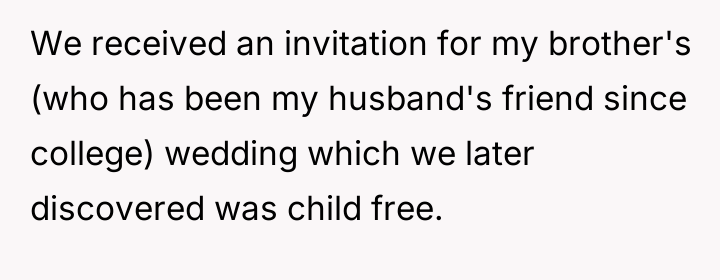
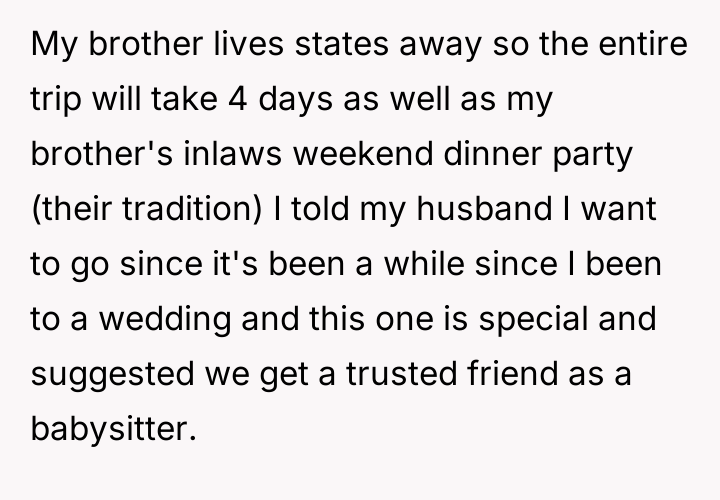
When a distant invitation to a child-free wedding arrives—a rare glimpse of celebration and escape—hope flickers within her. Yet, the joy is tempered by the reality of their unyielding boundaries and the long journey ahead. Her desire to attend clashes with her husband’s protective instincts, leaving her caught between the yearning for personal freedom and the harsh limits imposed by love and trauma.

Subscribe to Our Newsletter
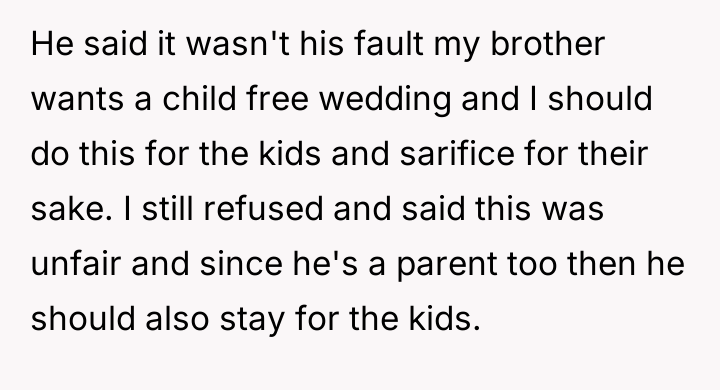
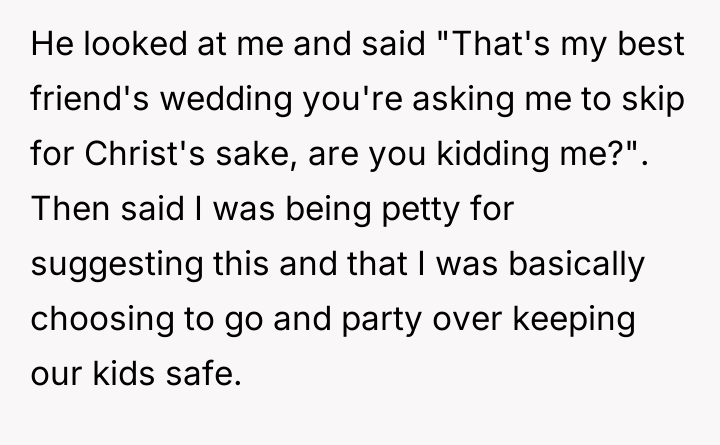
As renowned family therapist and researcher Dr. John Gottman explains, “The key to a healthy relationship is not avoiding conflict, but learning how to handle conflict in a way that strengthens the relationship.” The core issue here is the imbalance of sacrifice and the communication breakdown stemming from unresolved past trauma. The husband is projecting a past tragedy onto the current, safe situation involving trusted friends or vetted sitters, using this fear as an unbreakable boundary that unfairly dismisses the wife’s needs. By framing the situation as the OP choosing to 'party over keeping kids safe,' he is employing emotional manipulation, shifting the focus from finding a solution to assigning blame. While the husband's underlying fear is valid given his history, his demand that the OP makes the entire sacrifice (staying home) is inappropriate, especially since he implies he expects to go. This dynamic creates a power imbalance where one partner's specific anxiety dictates the other partner's social life and autonomy. The OP was appropriate in refusing to automatically accept the burden of staying home, as both parents share the responsibility for childcare, even during social events. The constructive path forward requires structured negotiation, not ultimatum. The OP and husband must address the trauma separately, perhaps with professional support, to differentiate past risk from present reality. For this specific event, a viable compromise should have been mandatory: either they both hire a highly vetted, bonded, and insured sitter for a few days (if possible, an older relative they both trust implicitly), or, if the husband absolutely refuses to leave the child with anyone, he must also forfeit his attendance, maintaining equal sacrifice.
AFTER THIS STORY DROPPED, REDDIT WENT INTO MELTDOWN MODE – CHECK OUT WHAT PEOPLE SAID.:
This one sparked a storm. The comments range from brutally honest to surprisingly supportive — and everything in between.
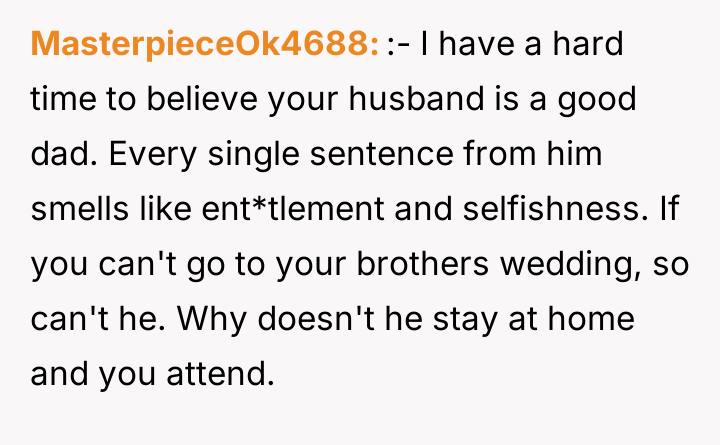
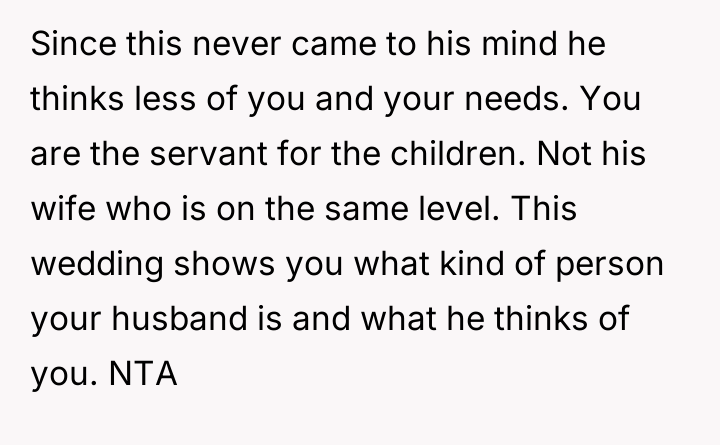
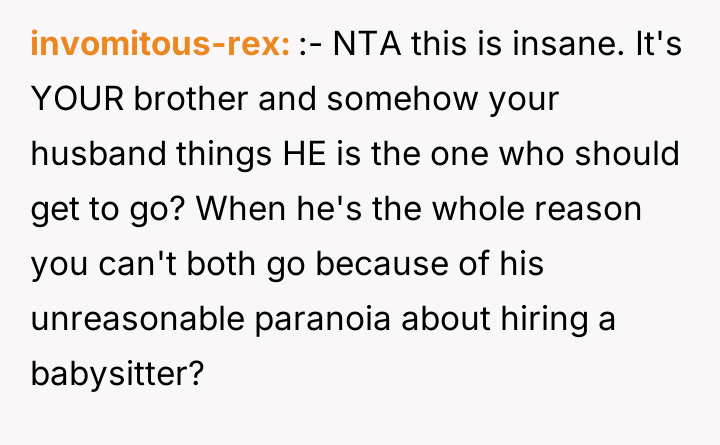
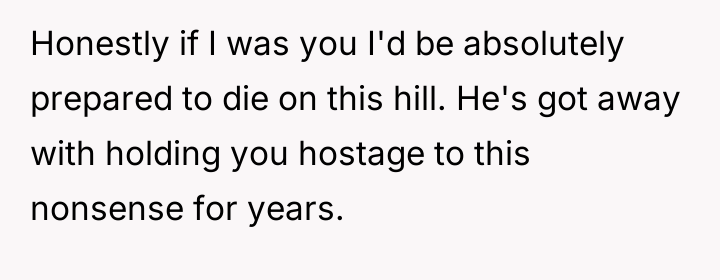
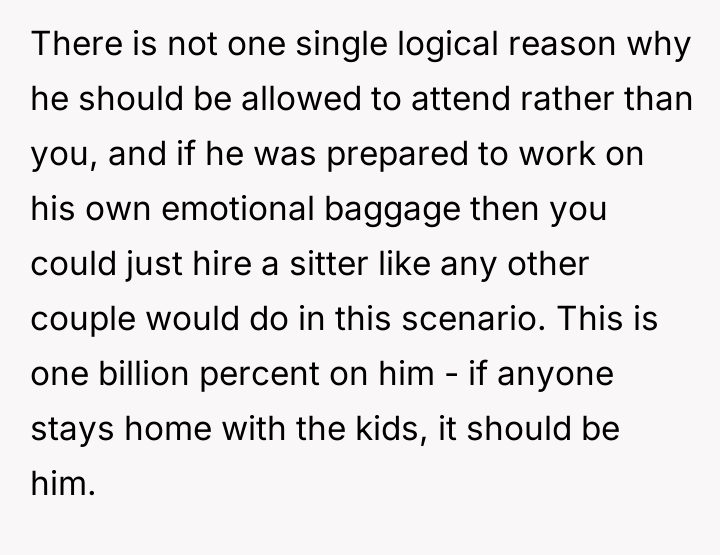
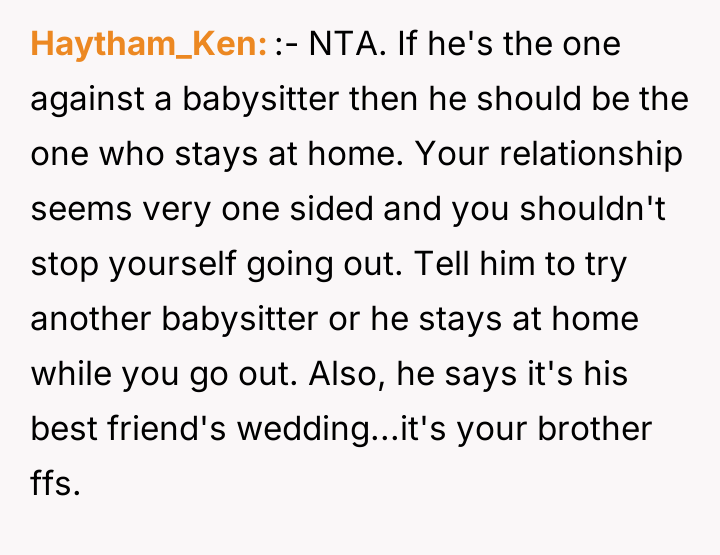
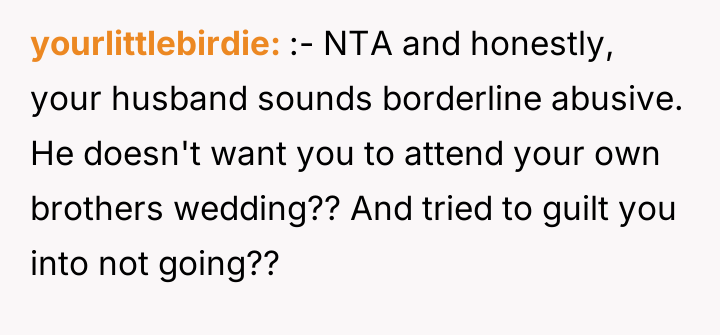

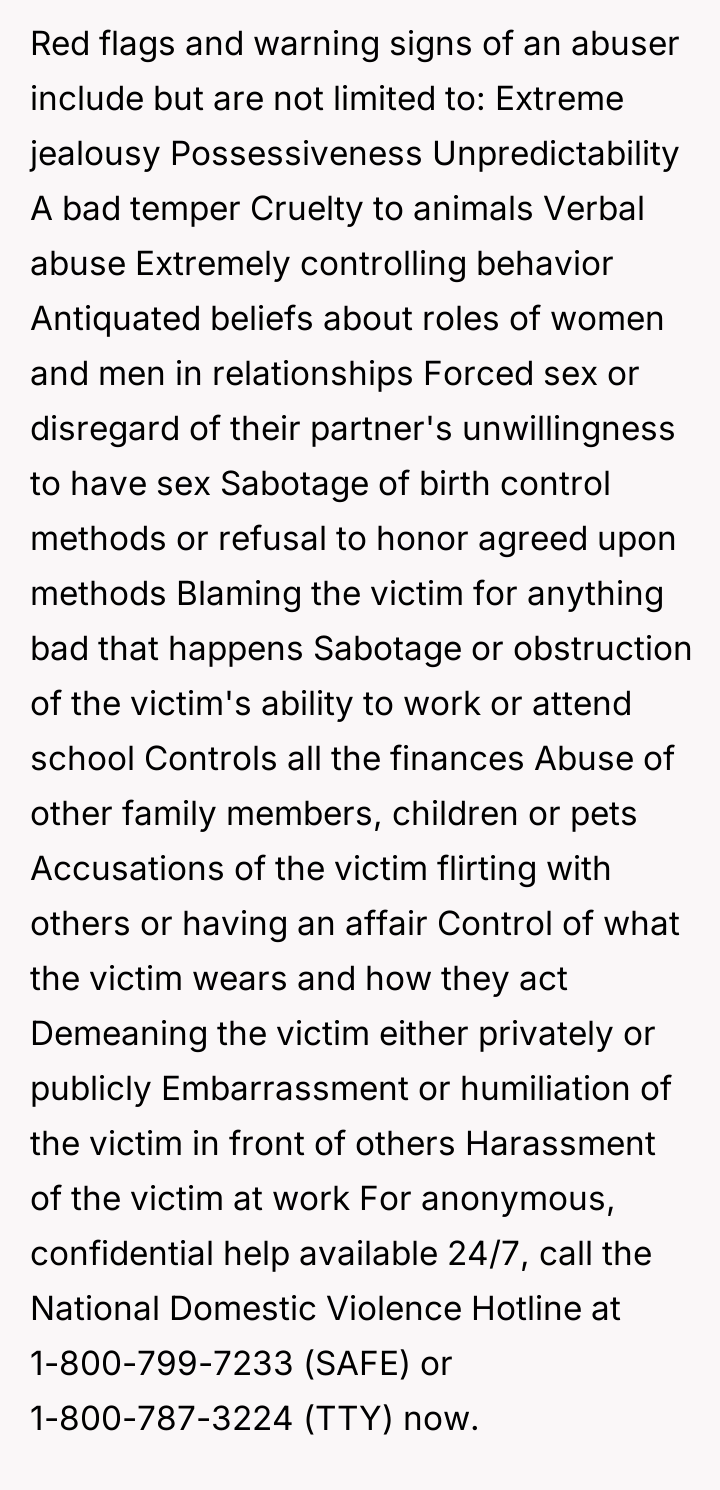
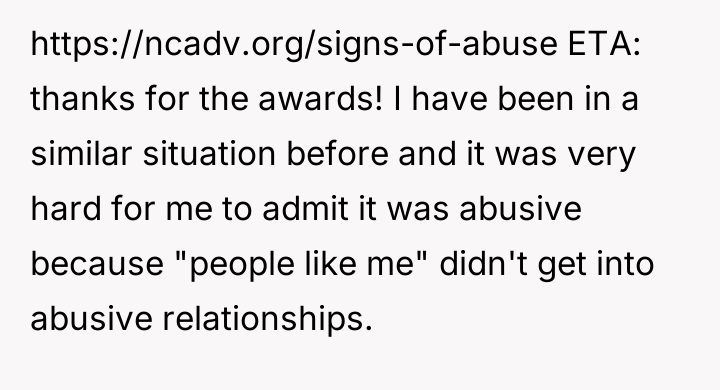
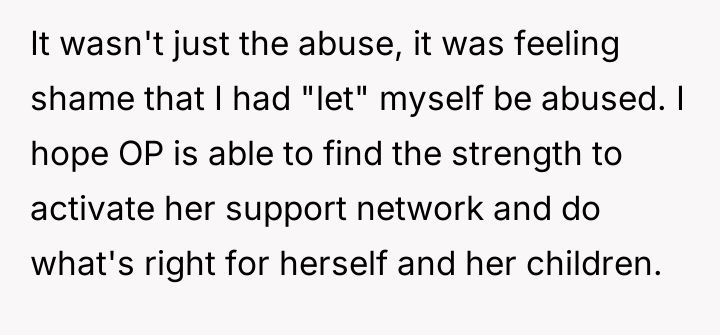
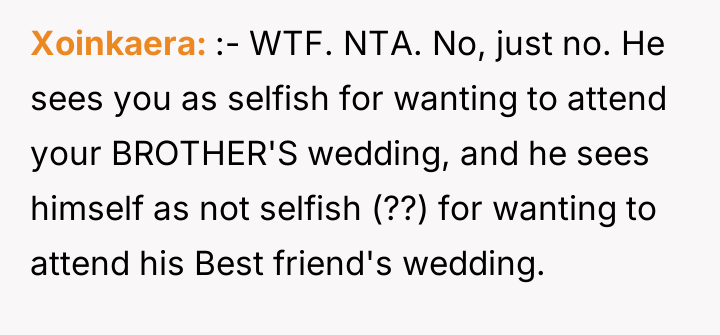
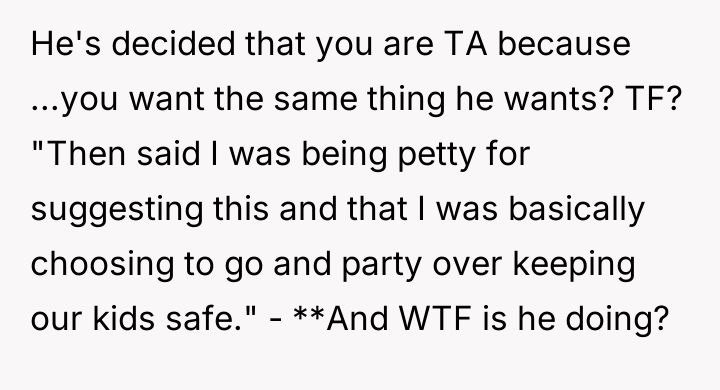
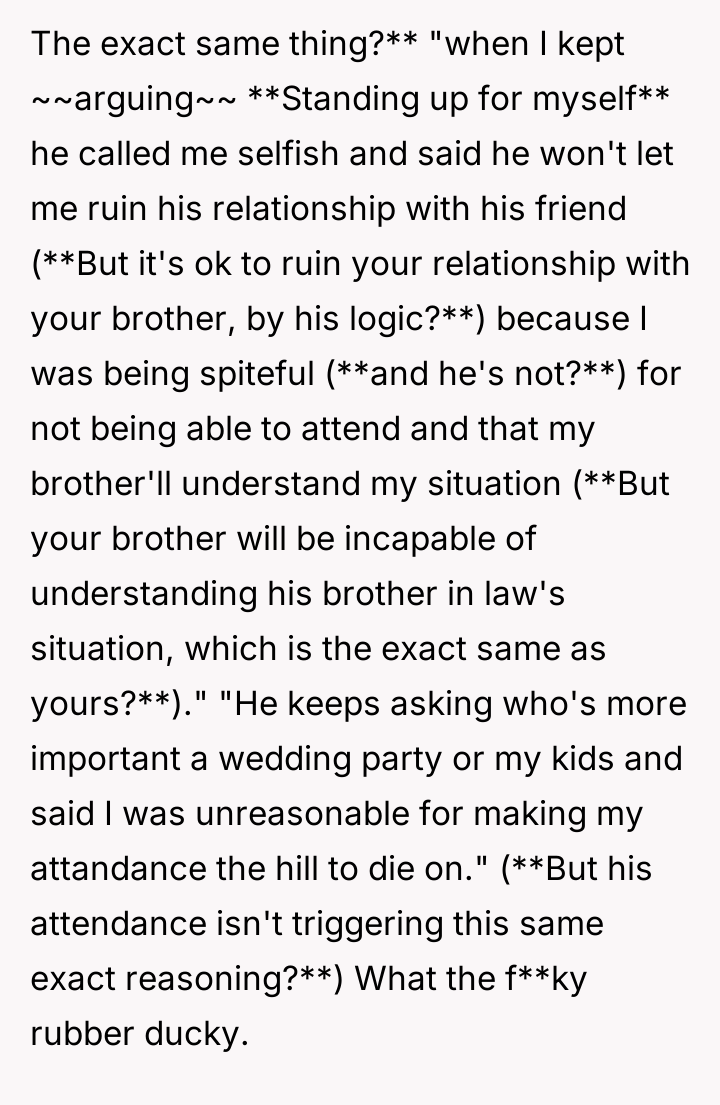
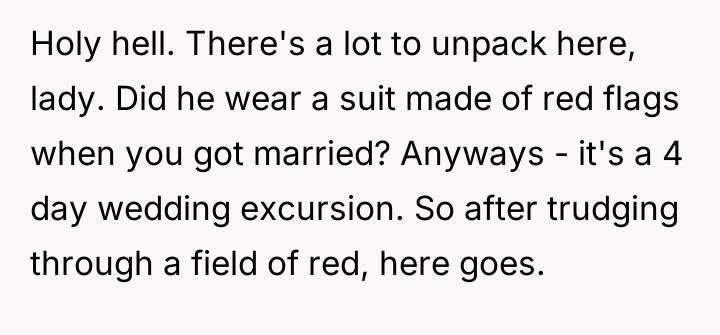
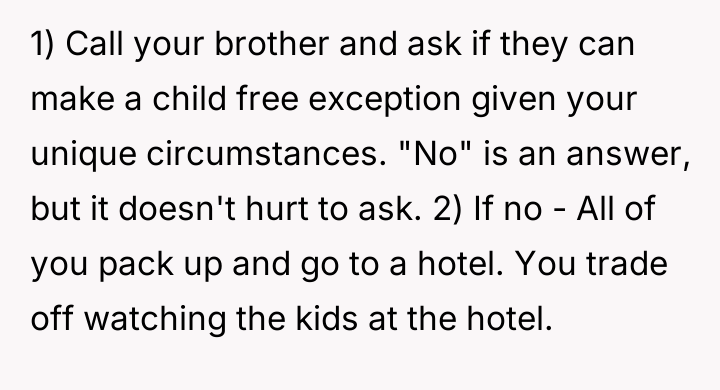
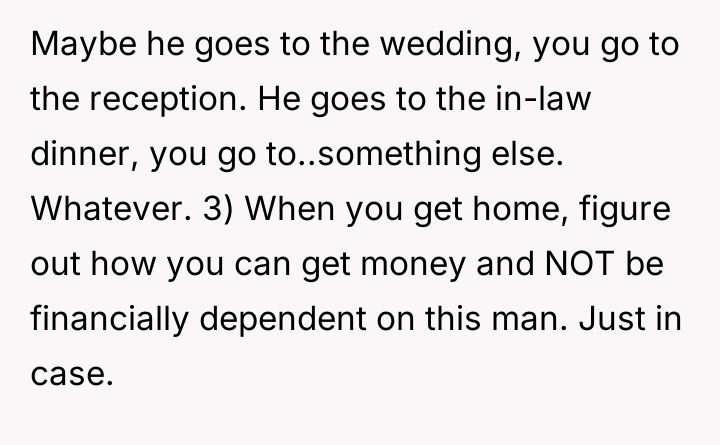
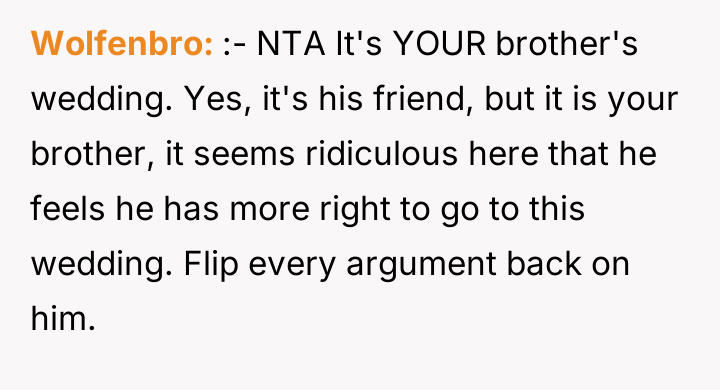
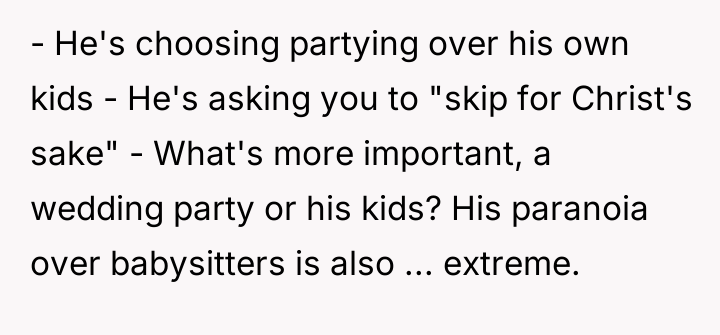
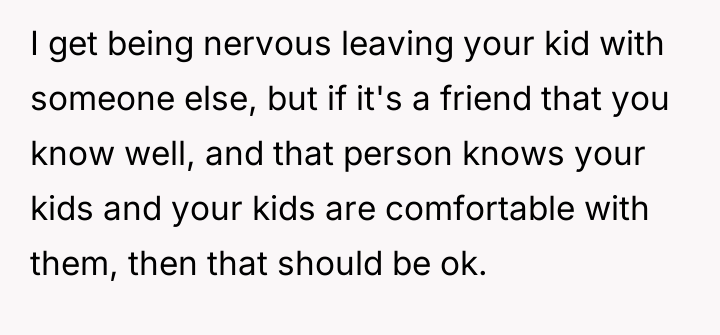
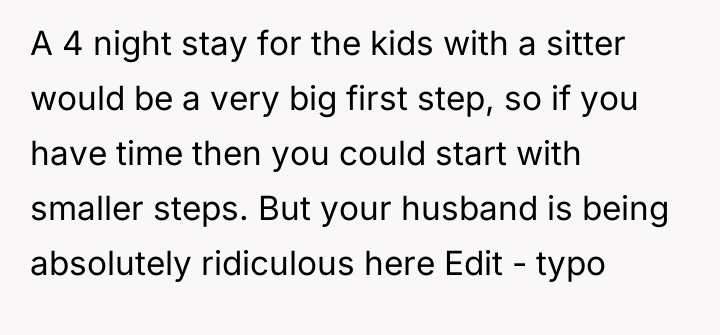
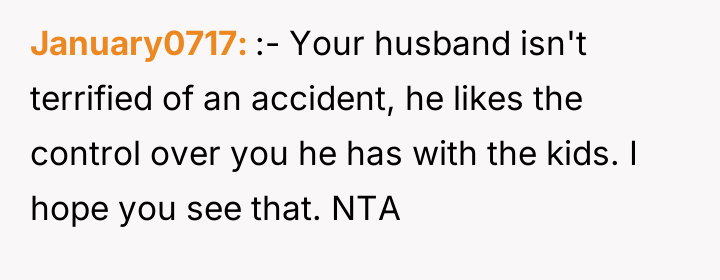
The original poster (OP) is in a difficult position, caught between her deep desire to attend her brother's important, child-free wedding and her husband's absolute refusal to use a babysitter due to a past trauma involving a cousin. The central conflict revolves around the OP asserting her right to personal time and social participation versus the husband prioritizing his perceived parental duty and fear over her needs.
Does the husband have the right to veto the OP's attendance at a significant family event based solely on his personal, unresolved trauma regarding childcare providers, or does the OP have an equal right, as a co-parent and invitee, to attend, necessitating a compromise on childcare arrangements?