AITA for telling my estranged sister and our parents that she and her kids are not my problem?
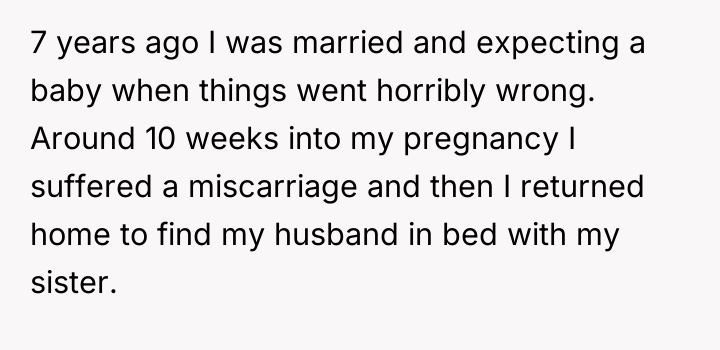
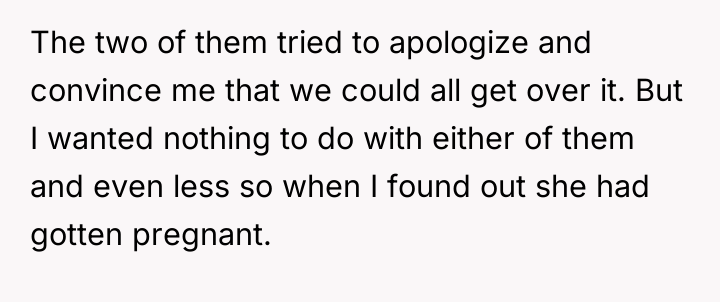
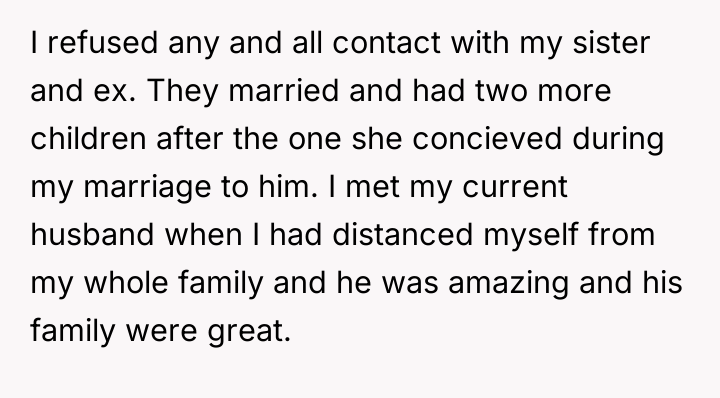
Seven years ago, her world shattered in the most unimaginable way. Just ten weeks into her pregnancy, she suffered a devastating miscarriage, only to return home and find her husband entwined in betrayal with her own sister. The raw pain of loss was eclipsed by the cruelest of betrayals, leaving her drowning in heartbreak and a resolve to sever ties with the two who had shattered her trust.
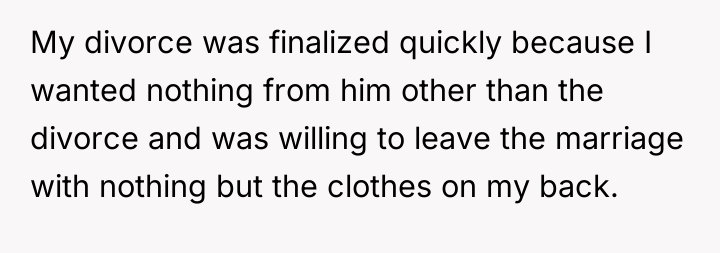
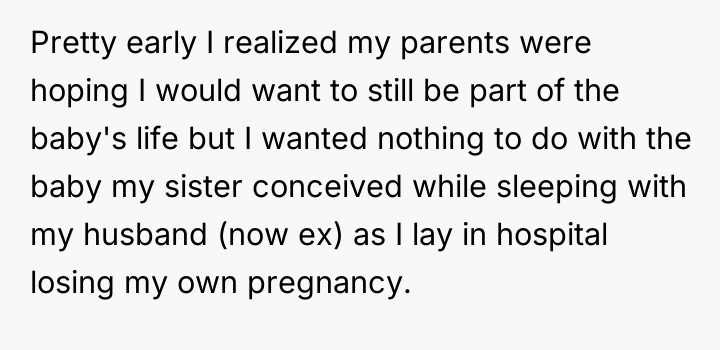
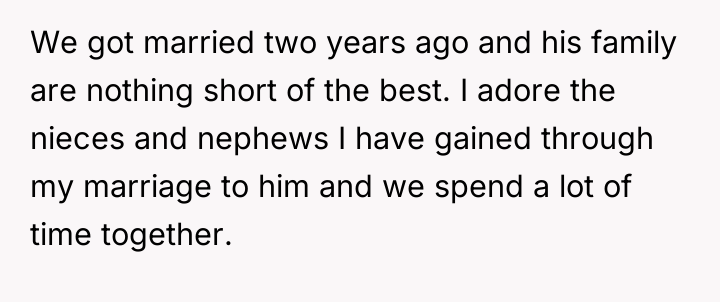
In the aftermath, she chose a path of fierce independence and self-preservation, walking away from a marriage stained with deceit with nothing but her dignity intact. Despite family hopes for reconciliation, she shut the door on the life intertwined with her sister and ex-husband, refusing to be tethered to a past marred by pain. It was only with distance that she found the space to heal and eventually open her heart to a new chapter with someone who valued her worth.


Subscribe to Our Newsletter
As renowned relationship expert Dr. Henry Cloud explains, “Boundaries are about what is acceptable or not acceptable for you. It is about knowing what your limits are and having the courage to state them.” This situation is a clear illustration of deeply violated personal boundaries that have been repeatedly tested over seven years. The OP's motivation stems from a catastrophic trauma—the discovery of infidelity immediately following a miscarriage—which resulted in a complete dissolution of trust in both her husband and her sister. Her decision to leave with nothing and maintain zero contact was an act of radical self-preservation. The current demands from her parents and sister are an attempt to impose emotional labor on the OP, expecting her to manage the fallout of her sister’s recent tragedy (the stillbirth and her partner's infidelity) by erasing the preceding seven years of harm. The parents' argument that the sister's current suffering justifies forgiveness ignores the concept of earned reconciliation; suffering does not automatically negate past actions. The OP's actions in refusing contact are appropriate for protecting her established emotional well-being and new family dynamic. A constructive recommendation for handling future interactions with her parents would involve setting firm, non-negotiable communication boundaries regarding the sister. For instance, she could state clearly: "I support your right to support my sister, but I will not discuss her situation or my relationship with her. I am not available for reconciliation at this time because the initial harm has not been addressed." This allows her to preserve her relationship with her parents while maintaining control over her personal emotional exposure.
AFTER THIS STORY DROPPED, REDDIT WENT INTO MELTDOWN MODE – CHECK OUT WHAT PEOPLE SAID.:
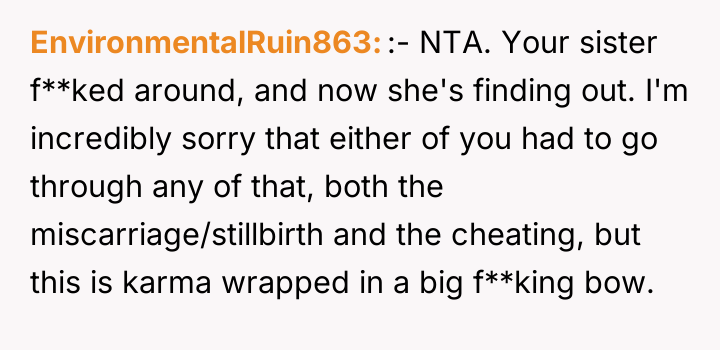
It didn’t take long before the comment section turned into a battleground of strong opinions and even stronger emotions.
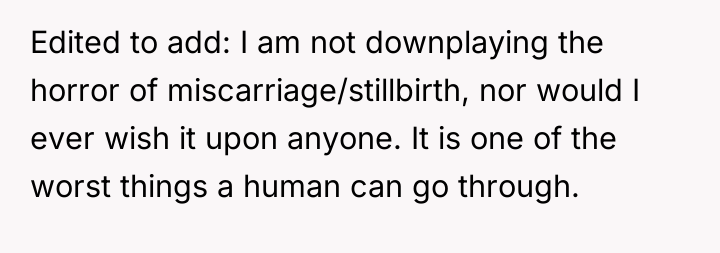


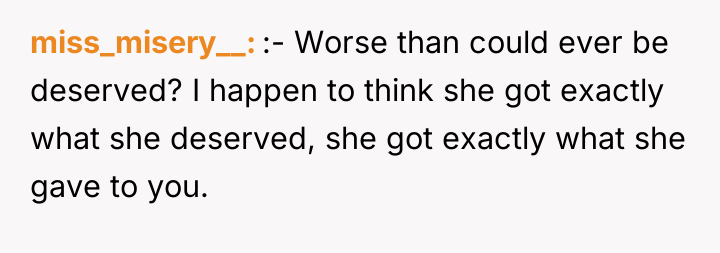

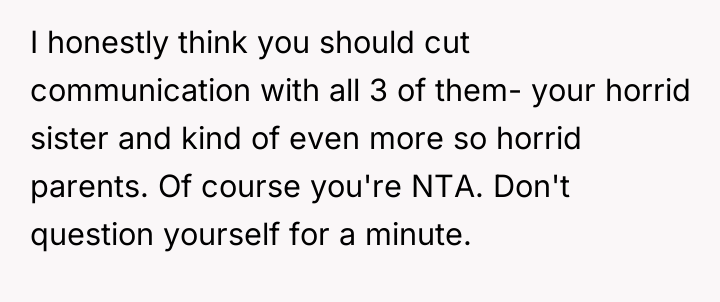
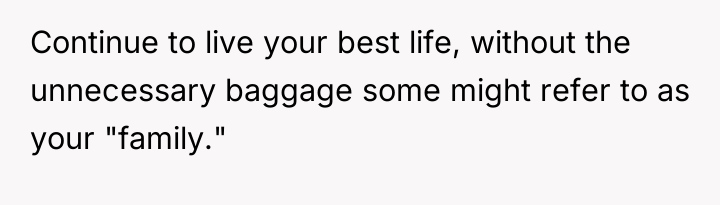

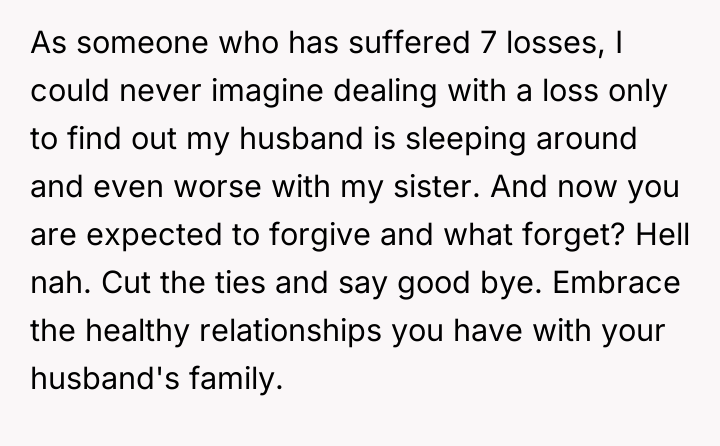





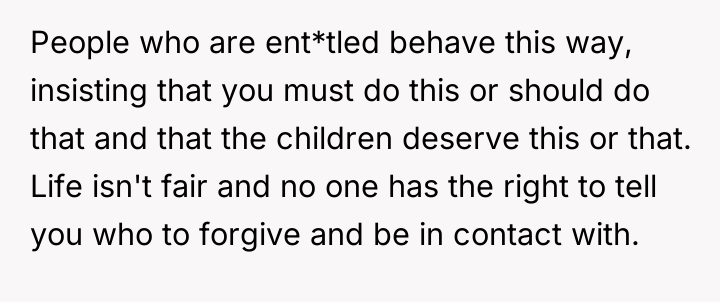


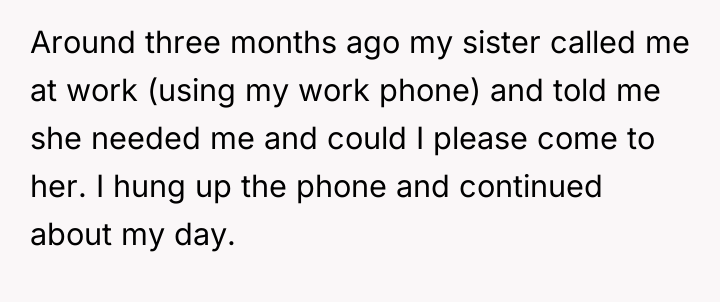
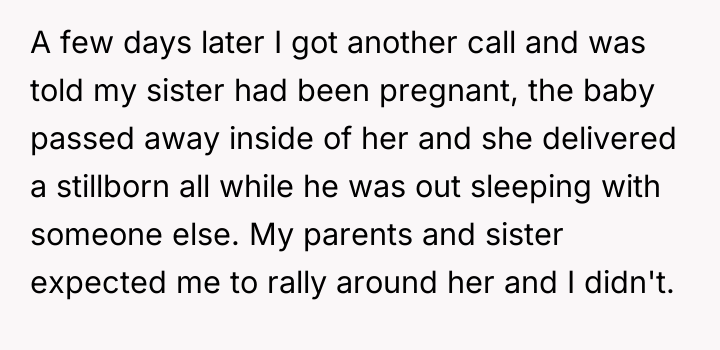
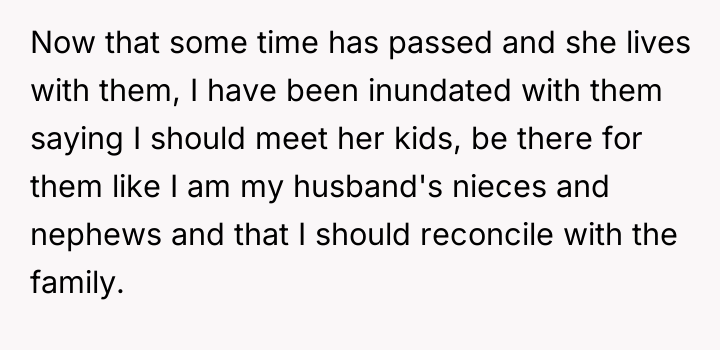
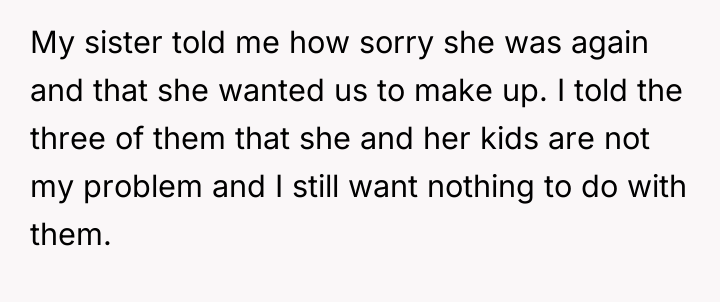
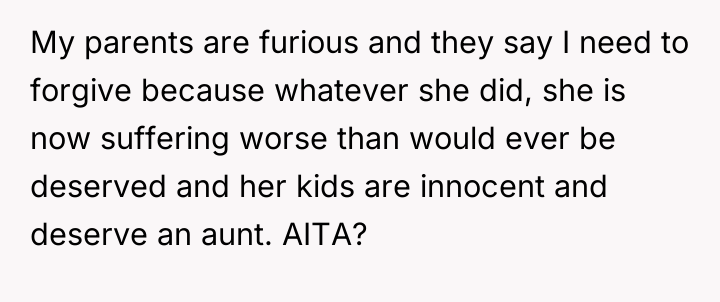
The original poster (OP) experienced a profound betrayal seven years ago involving her husband and sister, which led to the immediate end of her marriage and a complete severing of ties with her family of origin. Currently, the central conflict revolves around the OP's refusal to offer support or reconciliation to her sister following a recent stillbirth, an expectation strongly enforced by her parents who argue that suffering warrants forgiveness and that innocent nieces and nephews deserve an aunt.
Given the extreme nature of the original offense and the OP's establishment of a new, positive family unit, the debate centers on whether the OP is obligated to prioritize her family's current emotional needs and perceived moral duty to forgive over her own long-term emotional safety and boundaries. Should the OP maintain her distance from her sister and her children, or does the recent tragedy create a moral imperative to reconnect with the sister and her existing family?