UPDATE: AITA for not wanting to get rid of my gang tattoos for the sake of my daughter?
Haunted by the weight of his past, he hesitated to let go of the gang that once defined him. Each tattoo etched on his skin was a painful reminder, yet a part of his ident*ty he struggled to erase. When he finally took the brave step to cover them with Mia’s art, it was more than just ink over old wounds—it was a fragile act of healing, a silent plea for transformation.
With every brushstroke, those scars began to shift from symbols of pain to expressions of beauty and hope. Supported by Mia’s mother and fueled by his own resolve, he embarked on a journey of reclaiming himself. What started as a simple suggestion grew into a cathartic process, turning a painful past into a new story of resilience and redemption.



Subscribe to Our Newsletter
As renowned researcher Dr. Brené Brown explains, “Boundaries are the distance at which I can love you and me simultaneously.” This situation directly addresses the negotiation of personal boundaries, self-expression, and relational accommodation. The OP’s initial reluctance to remove or alter the tattoos likely stemmed from a deep attachment to the identity or memories associated with those markings, viewing them as non-negotiable aspects of self. However, accommodating the feelings of Mia and her family—who were clearly distressed by the gang-related symbols—required the OP to engage in significant emotional labor and self-modification. The pivot point here is the successful compromise: instead of complete erasure, the OP integrated Mia’s art over the existing tattoos. This action demonstrates high relational intelligence, valuing the current relationship enough to alter a permanent personal feature, while still honoring the underlying history by keeping the tattoos as a canvas for new meaning. The OP’s decision to use the existing tattoos as a base for new designs was an excellent, constructive strategy. This allowed for symbolic transformation rather than mere destruction, fulfilling both the need for relational acceptance and the internal need for personal continuity. For future situations involving deeply personal expression clashing with a partner's comfort level, the OP should prioritize open communication about the meaning of the symbols first, but the current resolution—finding a collaborative artistic solution—is highly recommended as it preserves connection while facilitating personal growth.
THE COMMENTS SECTION WENT WILD – REDDIT HAD *A LOT* TO SAY ABOUT THIS ONE.:
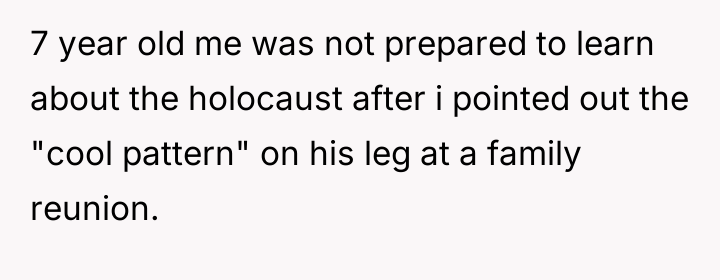
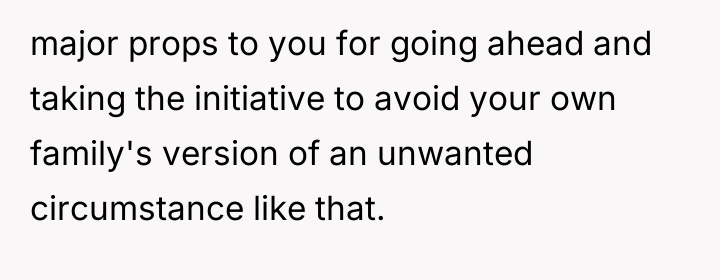
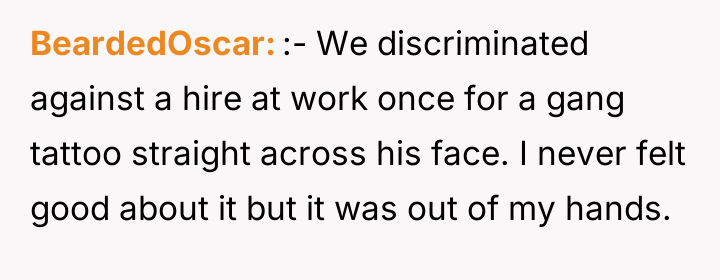
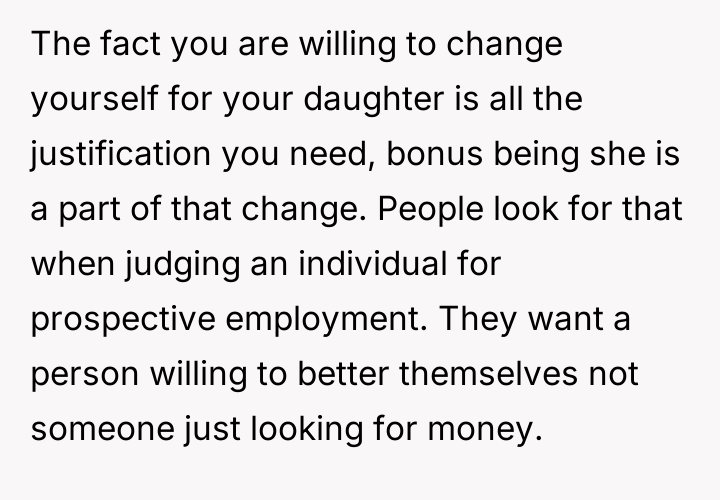
The internet jumped in fast, delivering everything from kind advice to cold truth. It’s a mix of empathy, outrage, and no-nonsense takes.
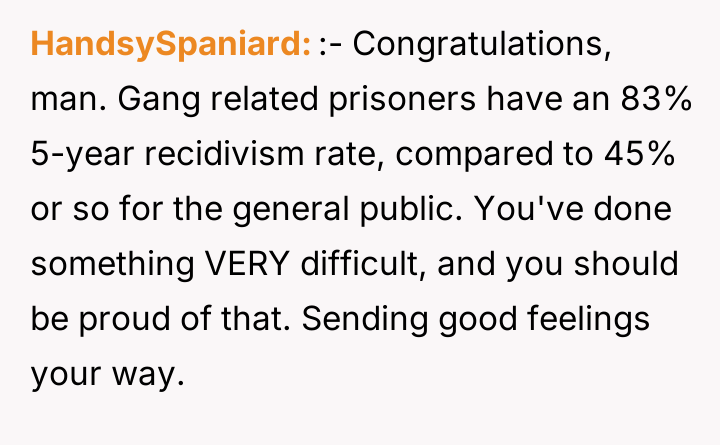
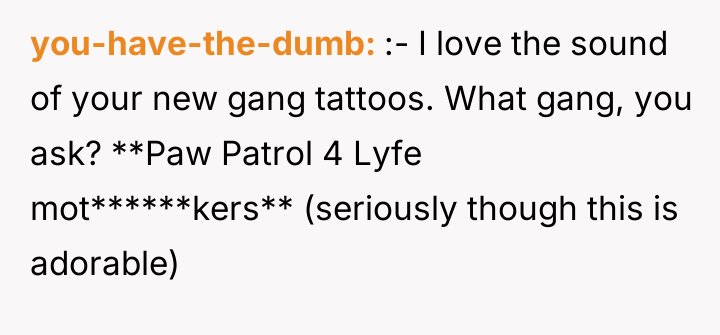
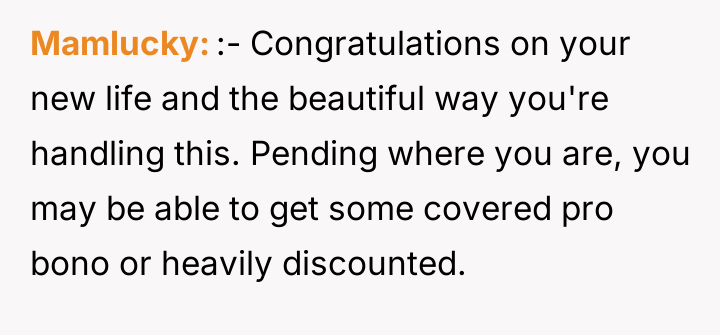
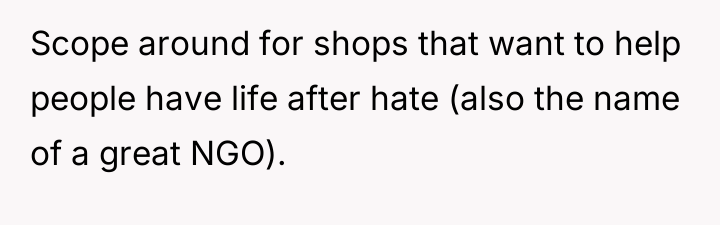
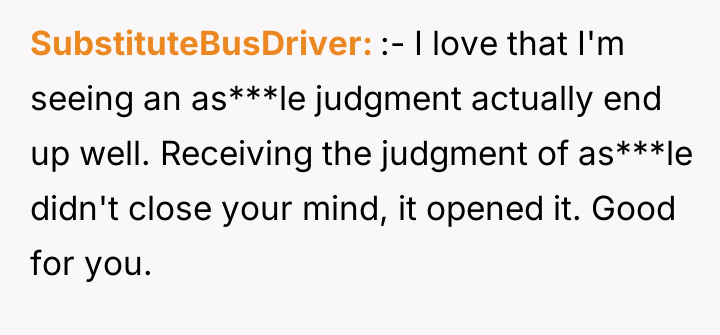
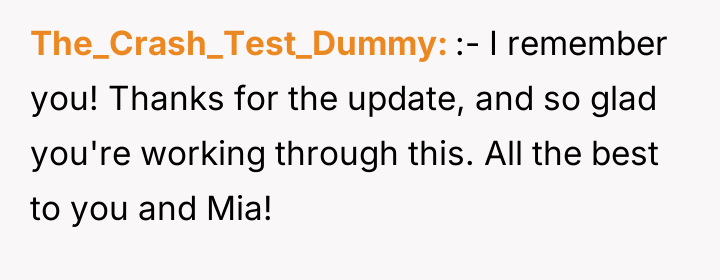
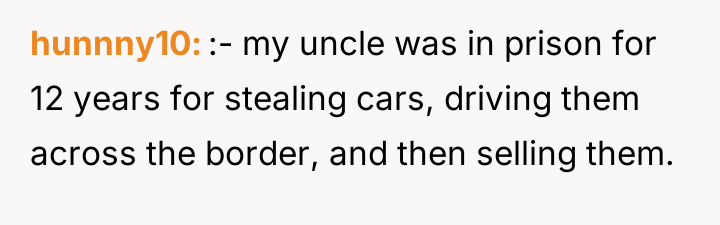
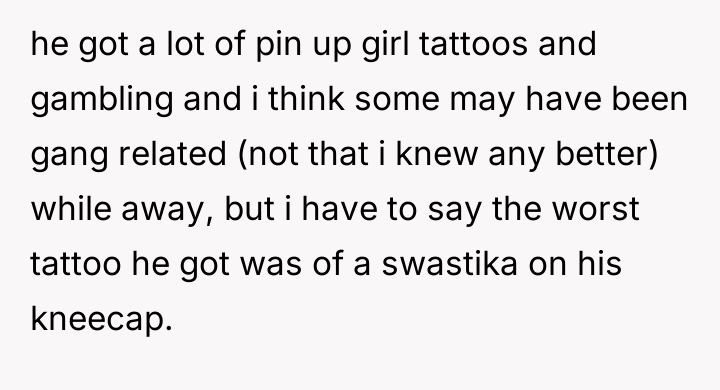
The original poster (OP) has successfully navigated a difficult personal situation by incorporating feedback and making significant changes to their body art, leading to a cathartic and positive experience. The central conflict involved reconciling past affiliations, represented by old tattoos, with current relationships and personal identity, particularly concerning Mia and her family.
Given that the OP found the modifications beautiful and felt the experience was cathartic, was the initial resistance to removing the tattoos understandable, or should the desire to maintain personal autonomy always outweigh external relationship pressures regarding one's own body?