AITA for taking the cake I baked for my fiance's birthday and going home?
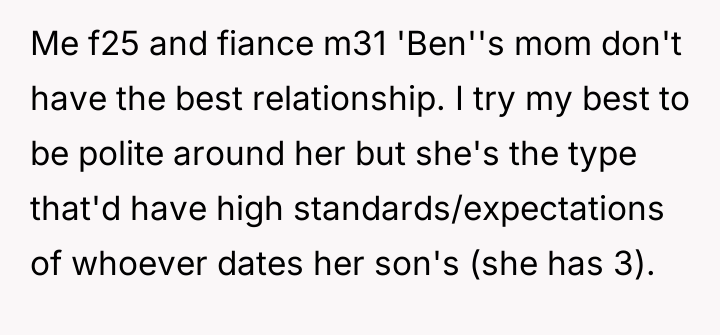
She had always felt the weight of judgment from Ben’s mother, whose cold remarks about her appearance cut deeper than words. Despite her efforts to stay polite and accept the criticism as a twisted form of care, the sting of those comments lingered, leaving her to question her worth in the eyes of the woman who was supposed to welcome her into the family.
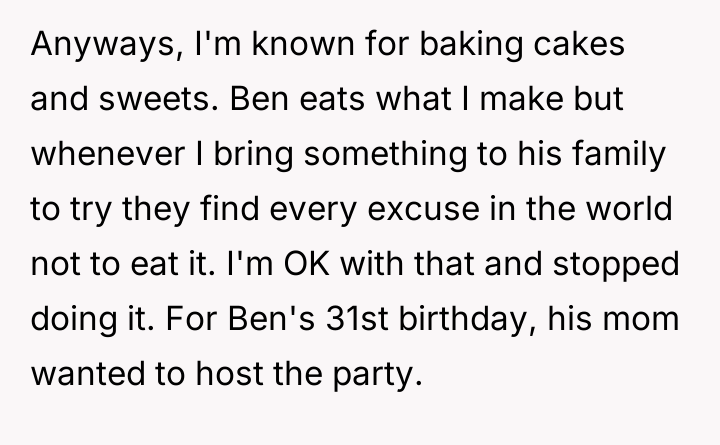
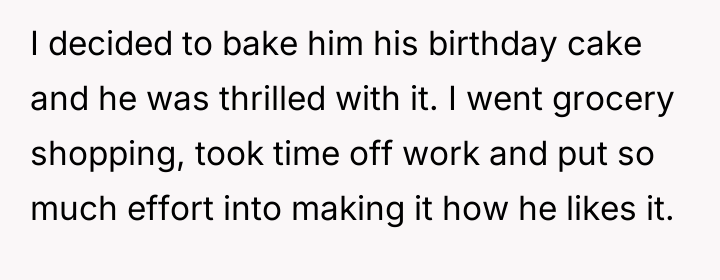
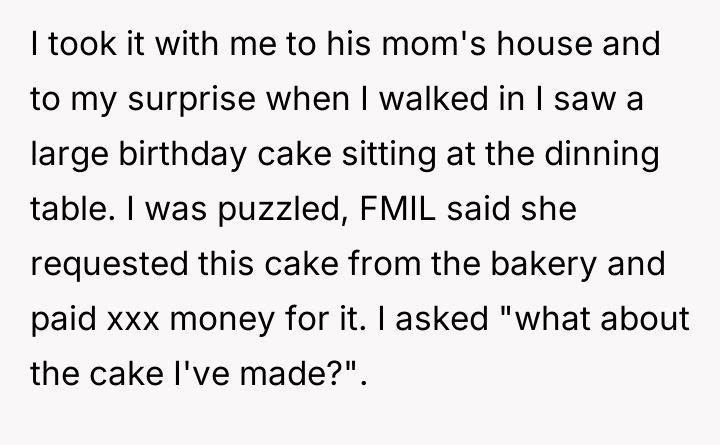
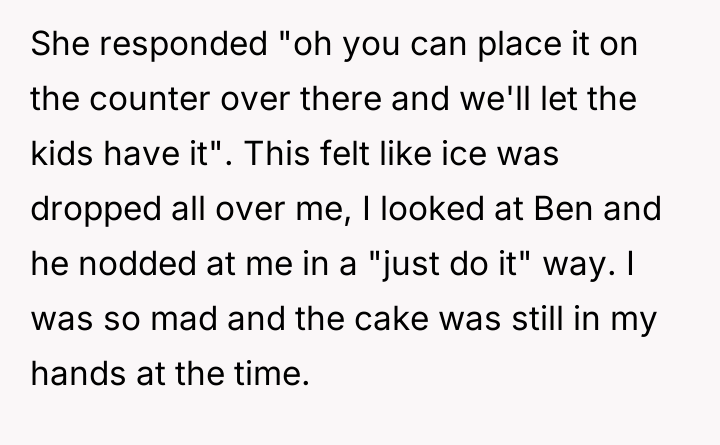
Yet, she poured her heart into the one thing she knew best—baking. For Ben’s 31st birthday, she crafted a cake filled with love and hope, believing it might bridge the distance. But walking into his mother’s home, the sight that greeted her shattered that fragile hope, exposing the quiet cruelty that had been waiting all along.


Subscribe to Our Newsletter
As renowned family therapist Dr. Harriet Lerner explains, 'When we try to change other people, we almost always fail. When we change ourselves, we change the dynamic.' This situation perfectly illustrates the failure to establish necessary relational boundaries, exacerbated by the fiancé's refusal to support the OP against his mother's habitual critical behavior.
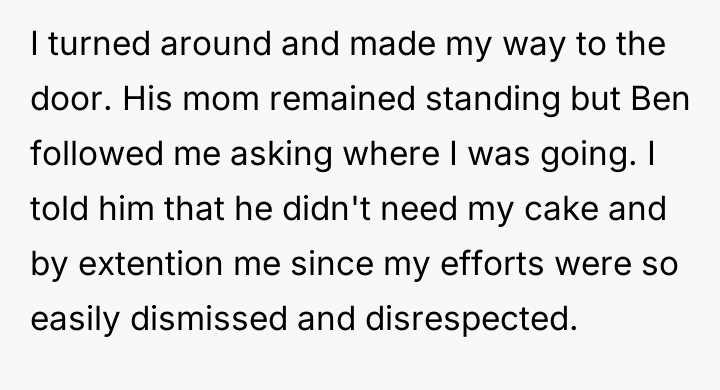
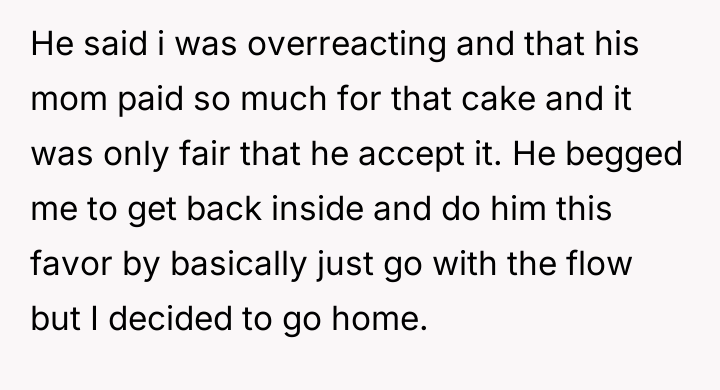
The fiancé, Ben, appears to be employing a common coping mechanism often referred to as 'placating' or 'fawning' in response to his mother's high standards. By telling the OP to 'have a thick skin' and later prioritizing the store-bought cake (which his mother paid for) over the OP's emotional labor, he signals that maintaining harmony with his mother is more important than validating his fiancée's feelings. The FMIL's actions—dismissing the homemade cake after previous criticisms regarding the OP's appearance—suggest a pattern of undermining the OP's worth, likely rooted in her own need for control over her son's life choices. The OP's decision to leave, while emotionally driven, was a drastic boundary enforcement—a final act when previous, quieter boundaries (like stopping the baking contributions) were ignored.
The OP was appropriate in asserting that her efforts were disrespected; however, walking out with the cake escalated the situation unnecessarily. A more constructive approach would have been to calmly state, 'Since my cake is not welcome at the celebration, I will take it home,' and then leave without further argument. For future situations, the OP and Ben must agree on shared boundaries regarding how his mother's comments and actions will be managed as a united front, rather than expecting the OP to absorb disrespect alone.
HERE’S HOW REDDIT BLEW UP AFTER HEARING THIS – PEOPLE COULDN’T BELIEVE IT.:
The community had thoughts — lots of them. From tough love to thoughtful advice, the comment section didn’t disappoint.
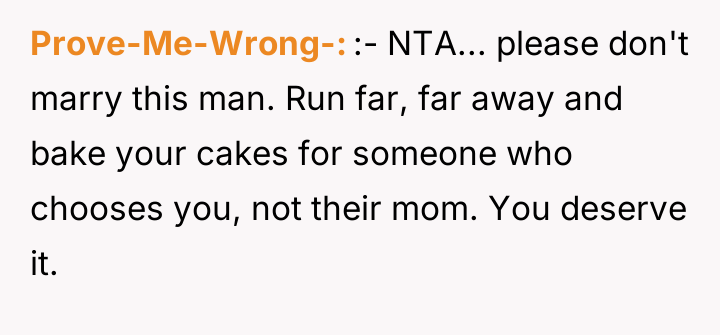
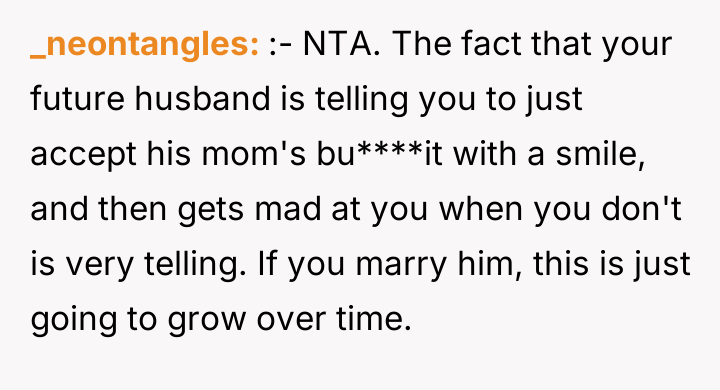
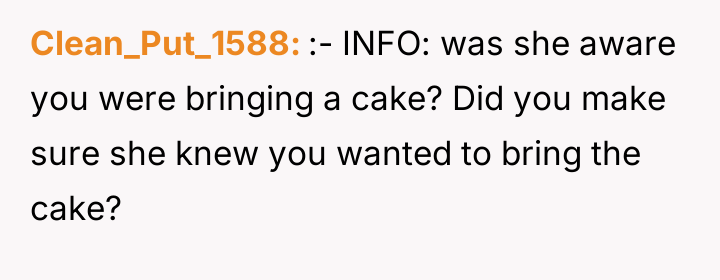


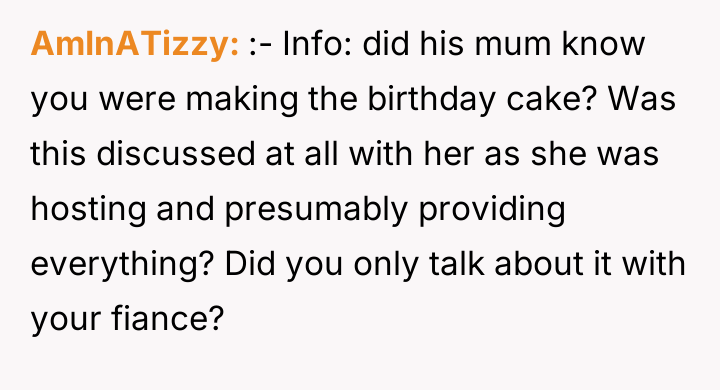
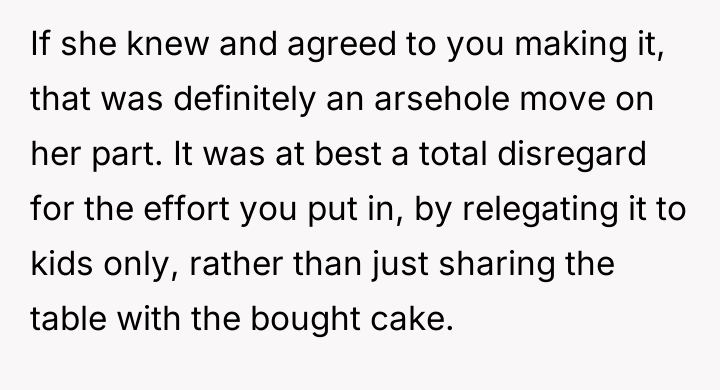


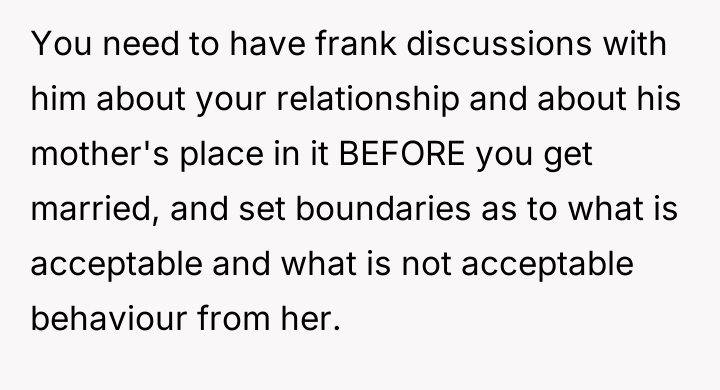

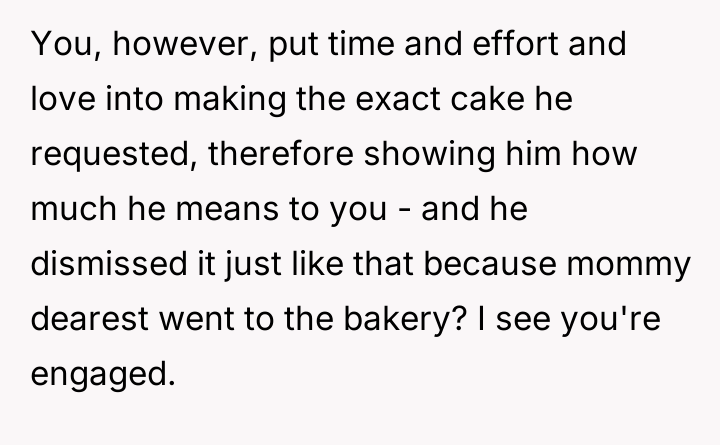
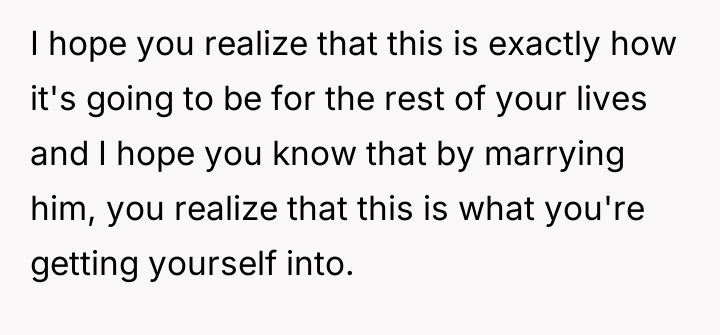
The original poster (OP) felt deeply hurt and disrespected when the elaborate, homemade birthday cake she created for her fiancé was publicly dismissed by her future mother-in-law (FMIL) in favor of a store-bought cake. The central conflict lies between the OP's need for her efforts and feelings to be acknowledged and validated, versus the fiancé's insistence that she comply with his mother's wishes to maintain superficial peace and avoid conflict.
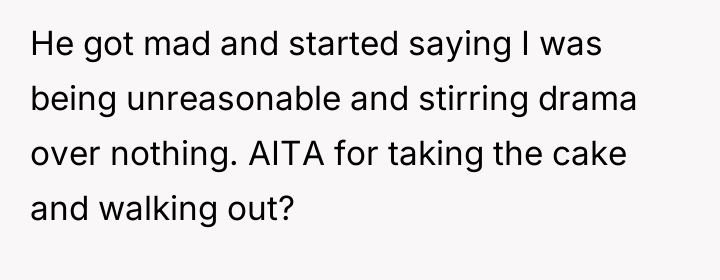
Was the OP justified in walking out with the cake to protect her emotional investment against such a clear act of dismissal, or did her action undermine her relationship by reacting too strongly to a perceived slight orchestrated by her fiancé's family? The core question is where the line should be drawn between respecting family dynamics and defending one's personal worth and contribution.