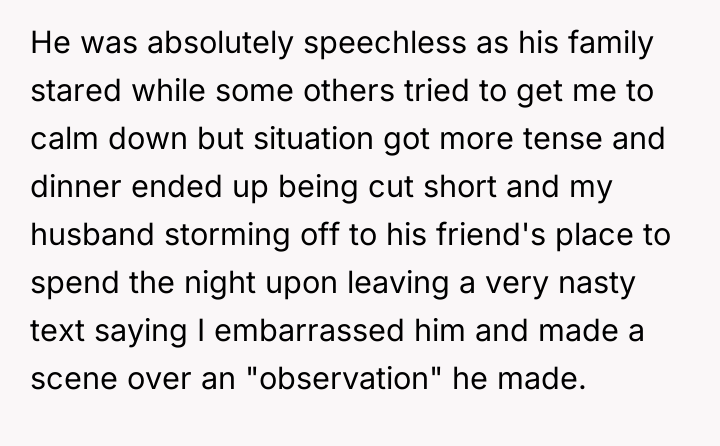
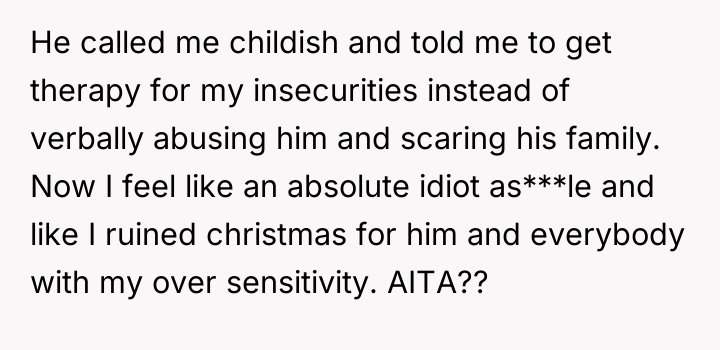
AITA for getting up from my chair in the middle of christmas dinner and shouting "SHUT THE F**K UP ABOUT MY BODYYYYY" in response to my husband's observation?
After months of enduring her husband’s subtle, cutting remarks about her post-pregnancy body, she felt the weight of his disdain crushing her spirit. Each “observation” was a silent wound, a reminder that the man she loved no longer saw her as beautiful or worthy. The emotional toll was unbearable, especially as his hurtful comments began to spill over in front of friends and family, stripping away her dignity piece by piece.
At a Christmas dinner meant for celebration, the final straw broke her. When her husband publicly criticized her waist in front of everyone, something inside her snapped. Fueled by years of silent pain and frustration, she exploded, demanding an end to the torment. Her raw, powerful outburst shattered the silence, exposing the deep hurt that had been festering beneath the surface for far too long.


Subscribe to Our Newsletter
As renowned researcher Dr. Brené Brown explains, “Boundaries are the distance at which I can love you and me simultaneously.” In this situation, the OP failed to establish a clear boundary regarding comments about her body after childbirth, attempting to 'ignore' the remarks for months. This inaction allowed the husband's behavior to escalate from private comments to public critiques, demonstrating a breakdown in self-advocacy and boundary enforcement within the marriage.
The husband's motivation appears rooted in either a misguided attempt at humor, genuine insecurity projected outward, or a subtle power dynamic where he feels entitled to comment on his wife's physical appearance. Regardless of intent, calling body comments 'observations' after months of repetition minimizes the emotional labor they inflict. The OP's final reaction, while understandable given the sustained provocation, shifted the focus from his inappropriate behavior to her volatile response, allowing him to deflect responsibility by labeling her reaction as 'childish' and a matter of 'insecurities.'
The OP's explosive reaction was disproportionate to the immediate trigger but was a predictable result of long-term emotional suppression. To handle this better in the future, the OP should schedule a calm, private conversation (not during a dinner or holiday) to clearly state the boundary: any future comments on her body will result in immediate removal from the situation. This establishes a firm, non-negotiable boundary that addresses the behavior directly without public confrontation.
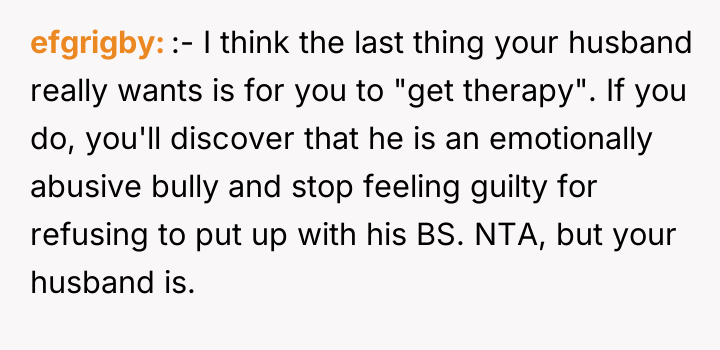
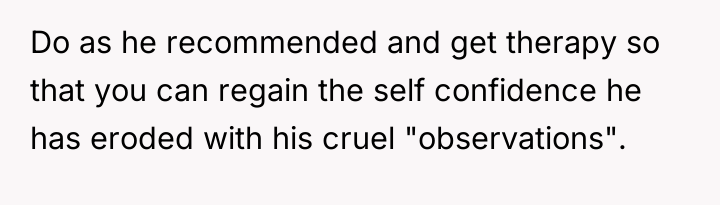
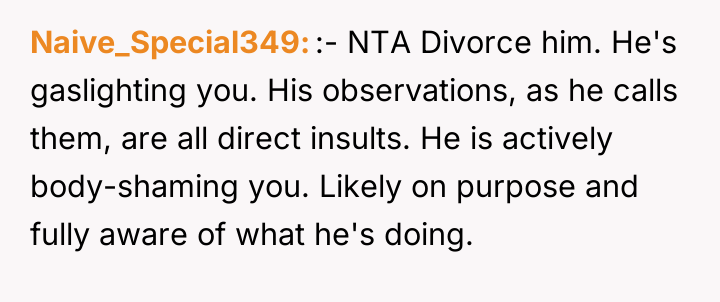
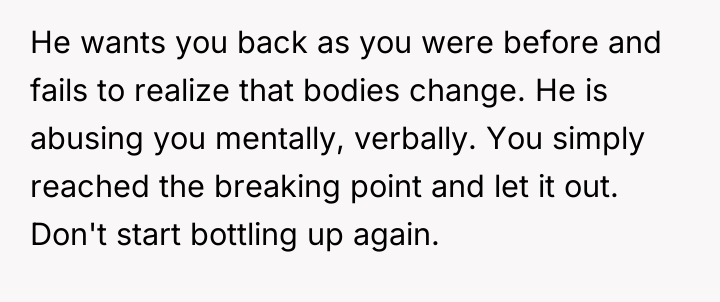
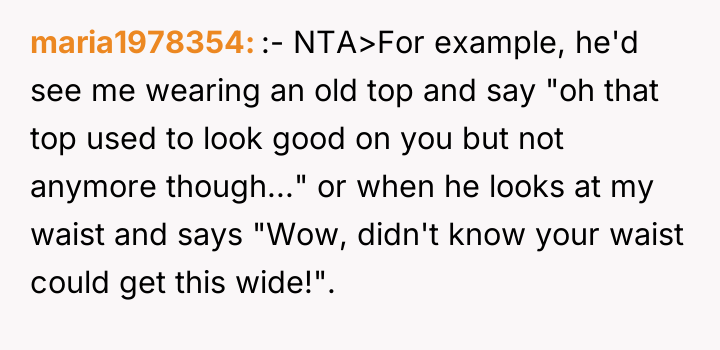
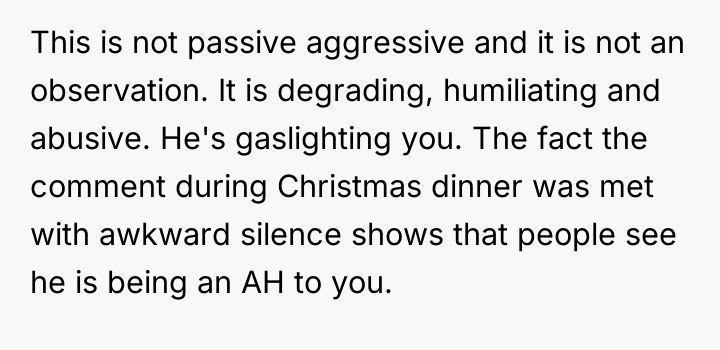
THIS STORY SHOOK THE INTERNET – AND REDDITORS DIDN’T HOLD BACK.:
What started as a simple post quickly turned into a wildfire of opinions, with users chiming in from all sides.

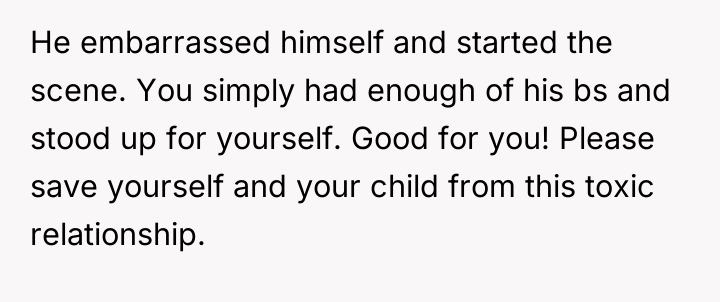

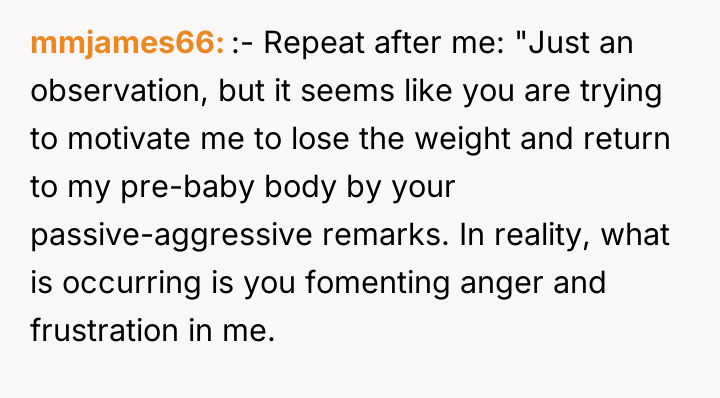
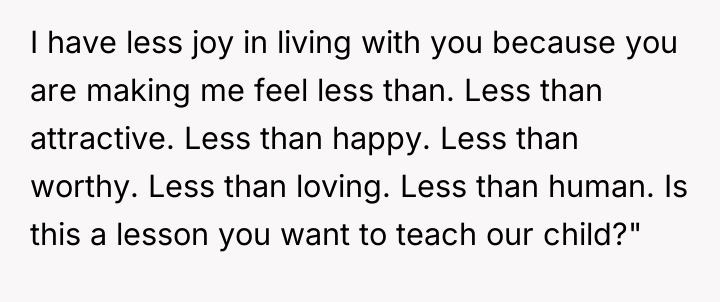
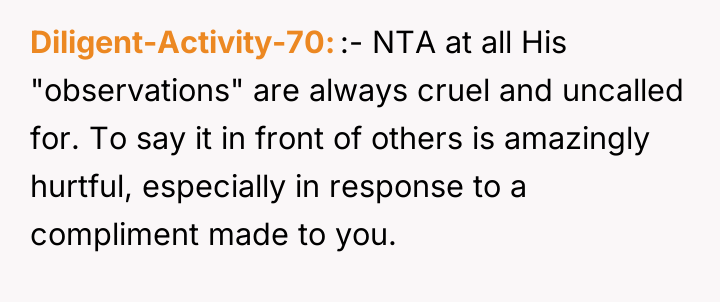
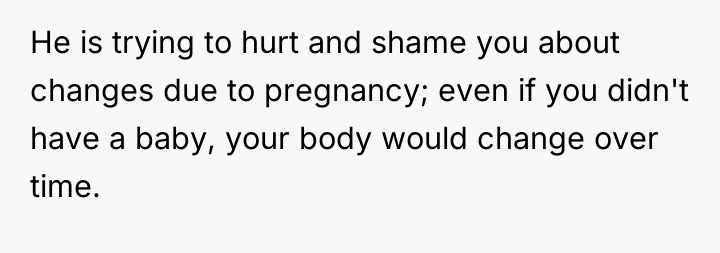
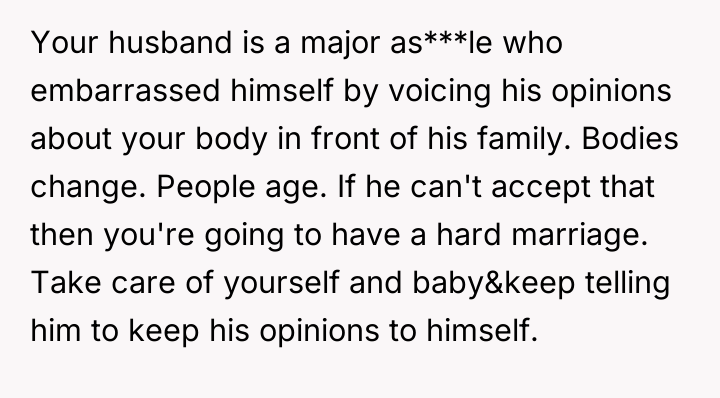
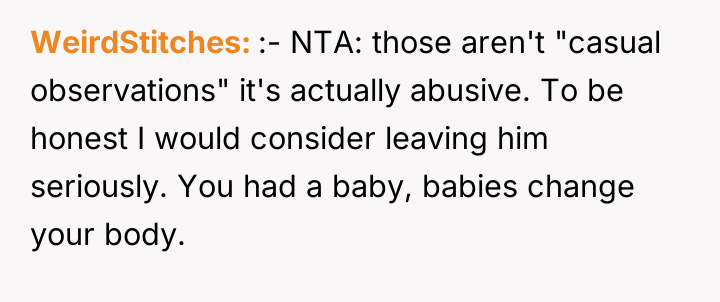
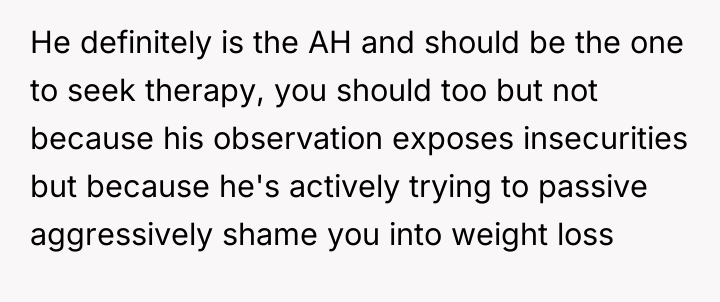
The original poster (OP) reached a breaking point due to sustained, passive-aggressive comments about her post-partum body from her husband, culminating in public humiliation at a family event. Her reaction was an explosive outburst of anger, which she now regrets, feeling she overreacted and ruined the holiday gathering.
The core issue is whether the husband's persistent 'observations' constitute emotional abuse justifying the OP's extreme reaction, or if the OP was inappropriately sensitive and should have managed the conflict privately without causing a major public scene at a family dinner. Where does personal sensitivity end and unacceptable continuous criticism begin?