Update: AITAH For Not Giving My Girlfriend My Social Security Number So She Can Run A Background Check On Me
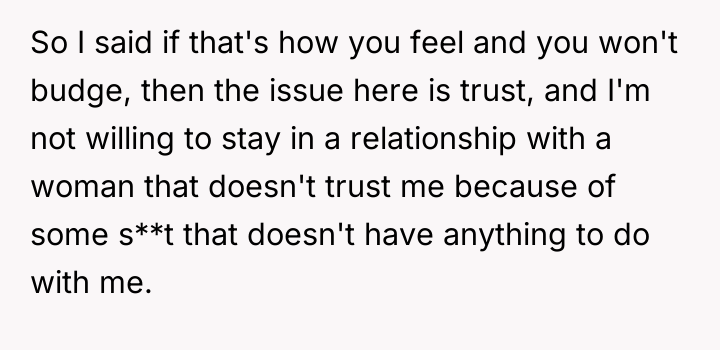
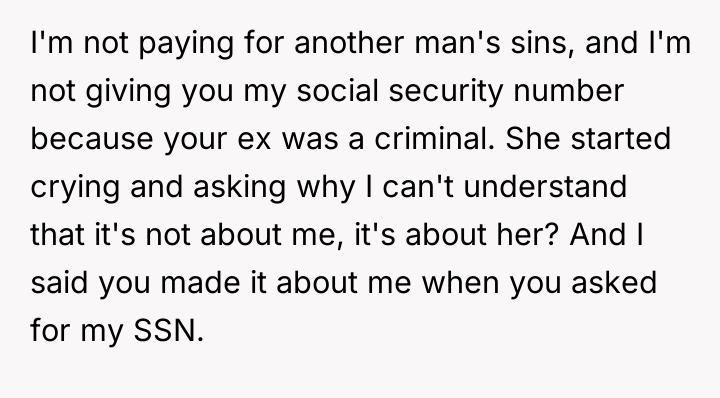
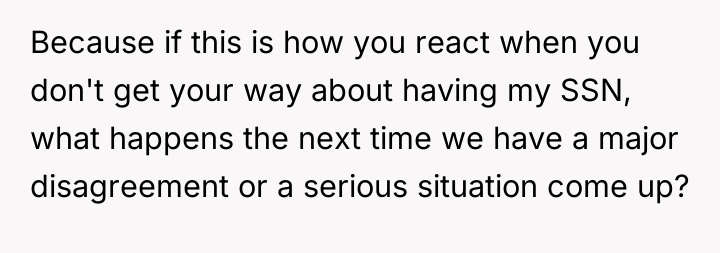
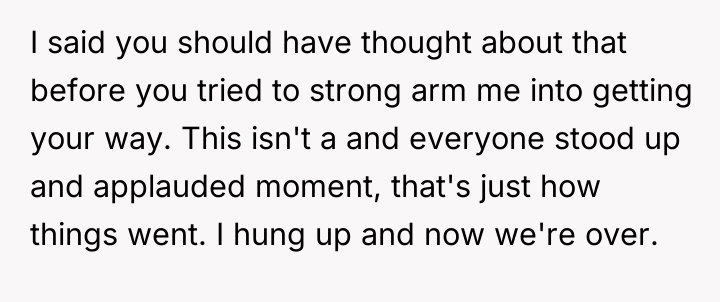
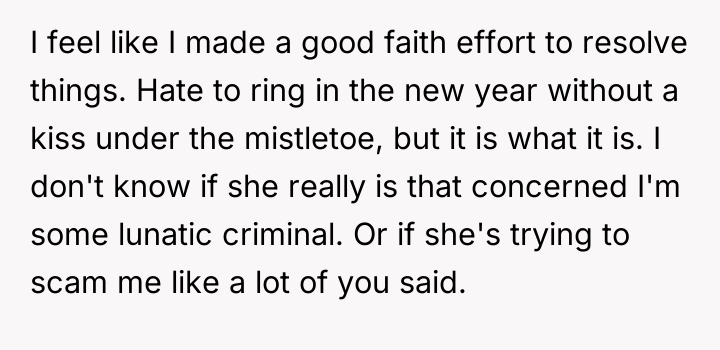
The original poster (OP) attempted to salvage a relationship by reaching out to his partner on New Year's Eve after receiving conflicting advice online. The core conflict revolved around the partner's demand for the OP's Social Security Number (SSN) to ensure her safety, which the OP firmly refused to provide due to privacy and legality concerns.
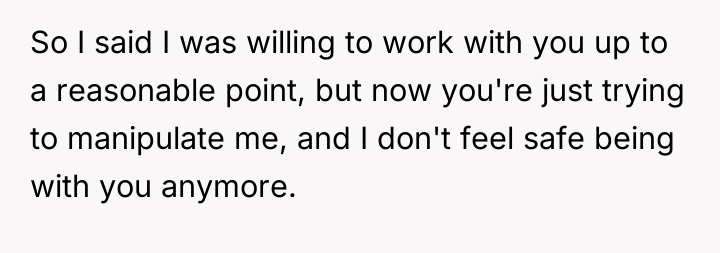
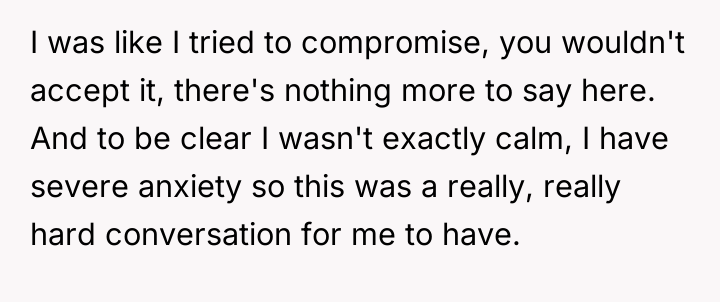
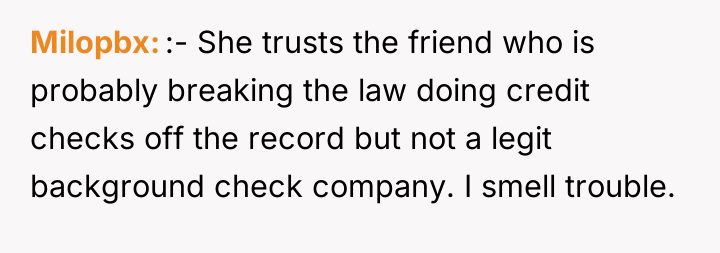
The OP countered by offering to pay for a legitimate, third-party background check using other verifiable information, but the partner rejected this compromise. She insisted on using a background check performed by a trusted friend instead of an official service. This impasse led to an argument about trust, resulting in the OP ending the relationship. The central question for the OP was whether he had done enough to reconcile the situation before the final breakup.





Subscribe to Our Newsletter
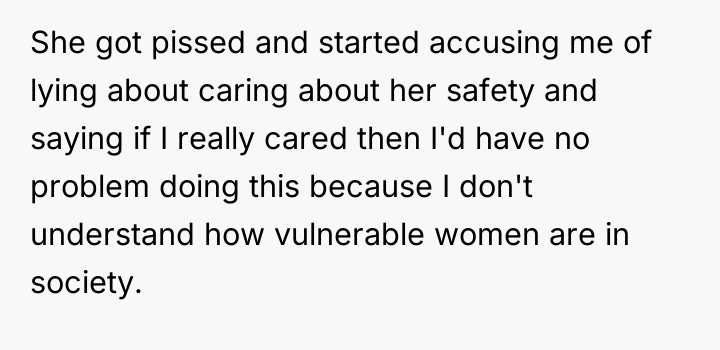
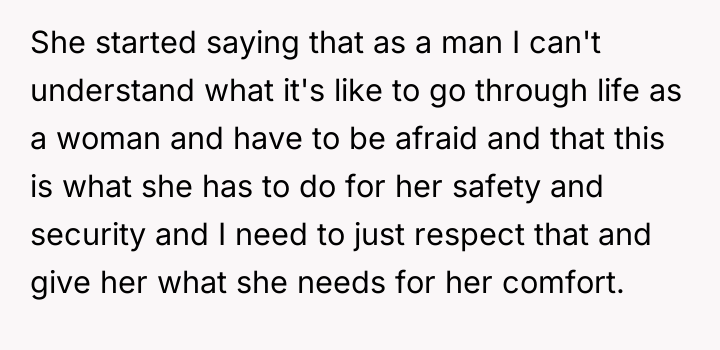
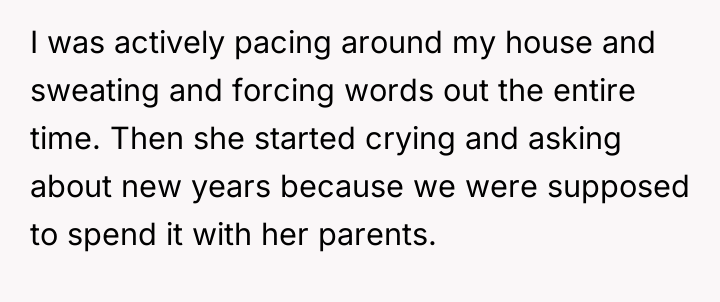
According to Dr. Sloane James, a specialist in interpersonal boundary setting, "True intimacy requires mutual respect for established boundaries; when one party demands access to deeply personal identifiers against the other's stated ethical or legal objections, the relationship transitions from partnership to coercive control." The OP demonstrated a reasonable attempt at conflict resolution by offering a concrete, verifiable alternative (paying for a professional background check) while upholding a critical personal boundary (not releasing the SSN). The partner's insistence on an unverified check done by a friend suggests the request was less about verifiable safety and more about establishing dominance or testing absolute compliance. The partner's subsequent use of emotional appeals (crying) and appeals to social vulnerability to pressure the OP into compliance are classic signs of manipulation rather than authentic vulnerability. The OP's decision to terminate the relationship after the ultimatum was firm, though difficult, especially given his anxiety. This action, while painful, reflects a necessary defense against establishing a pattern where his boundaries can be eroded through emotional pressure. A healthy path forward involves acknowledging that the foundational trust required for a relationship was broken by the non-negotiable demand itself, regardless of who was 'right' about the initial threat assessment.
HERE’S HOW REDDIT BLEW UP AFTER HEARING THIS – PEOPLE COULDN’T BELIEVE IT.:
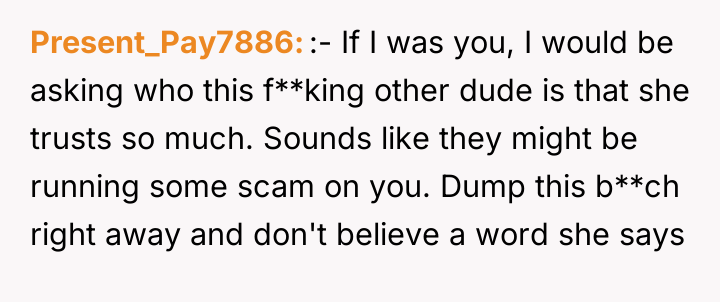
It didn’t take long before the comment section turned into a battleground of strong opinions and even stronger emotions.
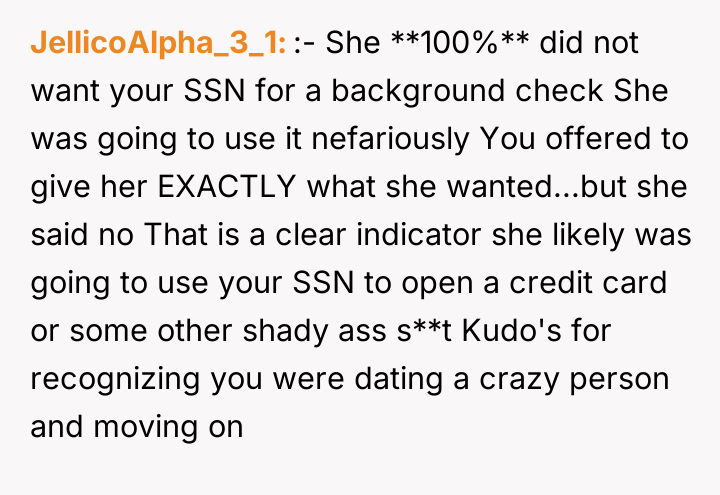
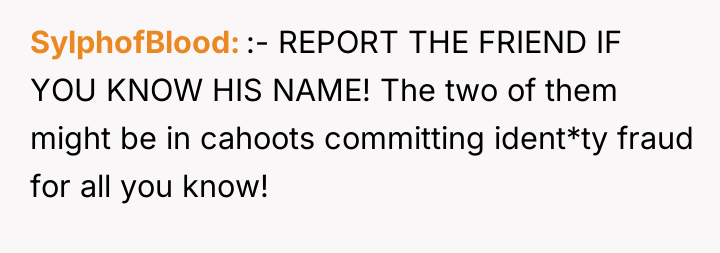
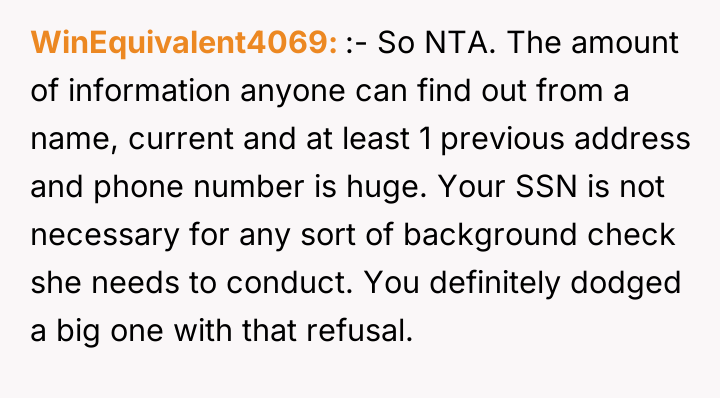
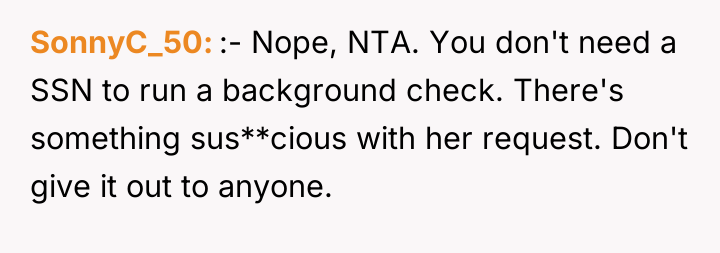
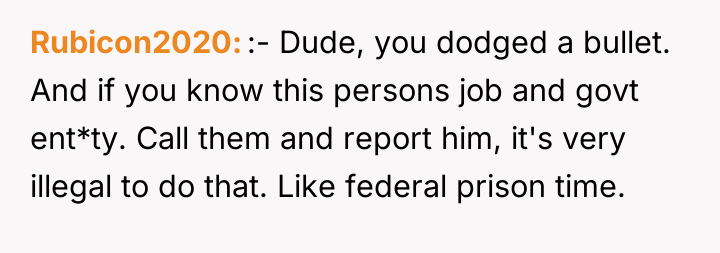
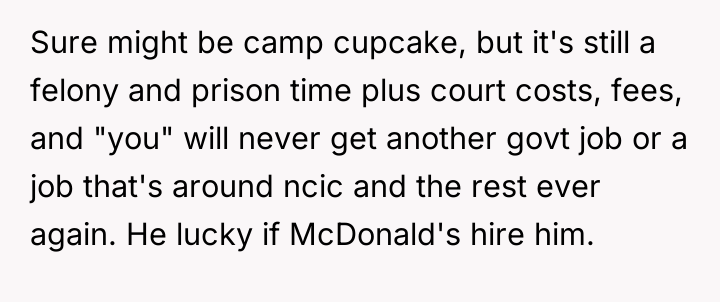
The OP experienced significant emotional distress while trying to navigate his partner's non-negotiable demand for his SSN, which he viewed as an extreme breach of privacy and trust. The conflict ultimately highlighted a fundamental disagreement: the OP prioritized personal boundaries and legal limits, while the partner prioritized her personal sense of security above the OP's stated compromises.
The situation ended with the relationship being terminated just before New Year's, leaving the OP questioning the partner's true motives—whether genuine fear or manipulative testing. The debate centers on where a person's obligation to ensure their partner's comfort ends, versus when a partner's request becomes an unreasonable demand that invalidates the relationship foundation.