AITA for getting my daughter a hotel room entirely for herself after her stepsisters made her sleep on the floor?
Grief hung heavy in the air as a family tried to navigate the painful aftermath of a beloved father's passing. What should have been a time of unity and support instead revealed deep fractures, as silent tensions boiled beneath the surface, threatening to tear them further apart.
In the quiet of the night, a daughter's tears shattered the fragile peace, exposing a cruel divide where kindness should have reigned. Amidst the sorrow, a father's fierce love ignited, determined to shield his child from hurt—no matter the cost.




Subscribe to Our Newsletter
As renowned family therapist Virginia Satir once stated, “People tend to create the same problems in different relationships because they carry the same unmet needs into each one.” In this scenario, the core issue revolves around boundary setting and perceived equity within a blended family structure, particularly under stress. The stepsisters' demand for the OP's daughter to sleep on the floor, despite ample space on the bed, suggests an attempt to establish dominance or enforce an unexplained negative dynamic, possibly projecting their own grief or discomfort. The OP's reaction—immediately removing his daughter and booking her a separate room—was an assertive act of protecting his child from perceived mistreatment. However, this rapid escalation bypassed potential direct communication or mediation among the adults, leading the stepmother to feel disrespected and financially slighted, interpreting the move as overt favoritism. While the OP acted decisively to protect his daughter's well-being, the immediate isolation of his daughter, rather than attempting to find a temporary negotiated solution within the shared space (even if unfavorable to the stepsisters), escalated the conflict into a financial and relational dispute with the stepmother. The OP's action, while emotionally understandable given the circumstances, was arguably an overcorrection that prioritized immediate removal over long-term relationship management. Moving forward, in complex family dynamics, it is crucial to address boundary violations directly but with advanced planning. A better approach might have been to firmly state that the daughter would not sleep on the floor, insist on a fair sharing arrangement (e.g., everyone gets equal floor/bed space, or the OP intervenes to force equitable sharing), and only resort to separate accommodations if safety or dignity remained severely compromised after attempting mediation.
AFTER THIS STORY DROPPED, REDDIT WENT INTO MELTDOWN MODE – CHECK OUT WHAT PEOPLE SAID.:
It didn’t take long before the comment section turned into a battleground of strong opinions and even stronger emotions.
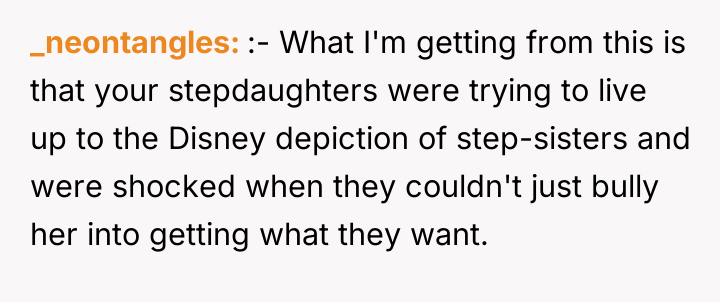

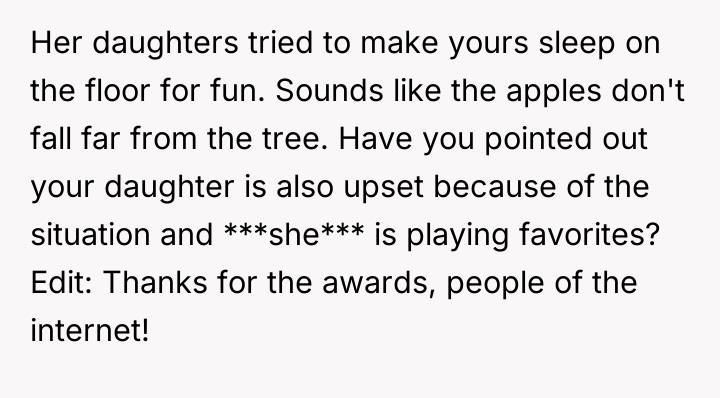

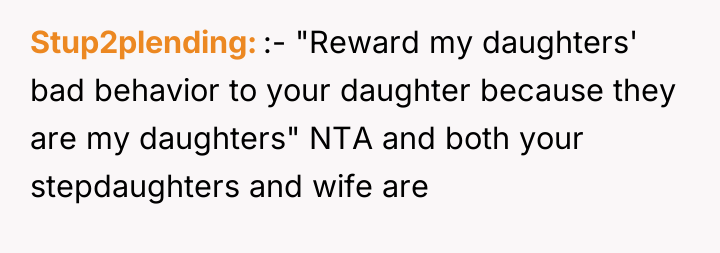
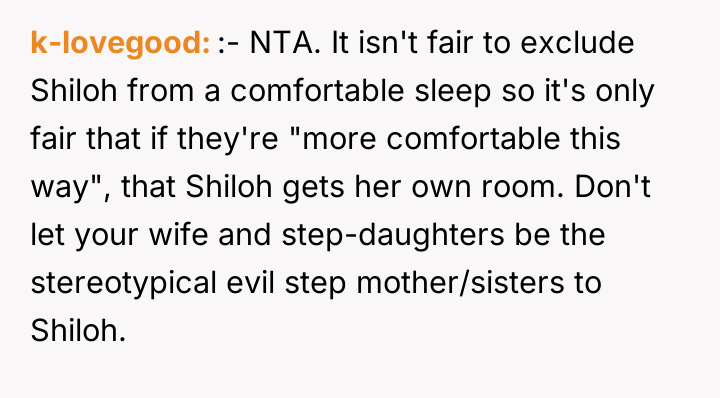


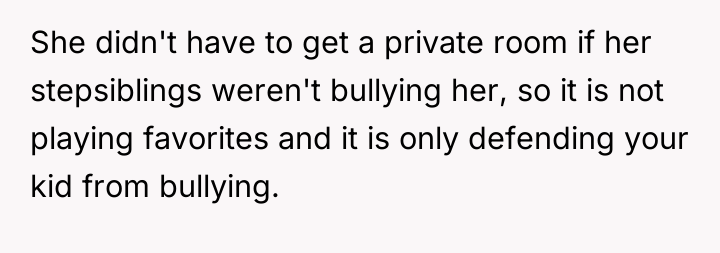
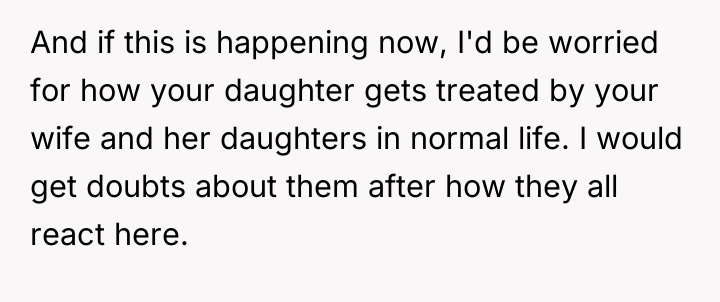
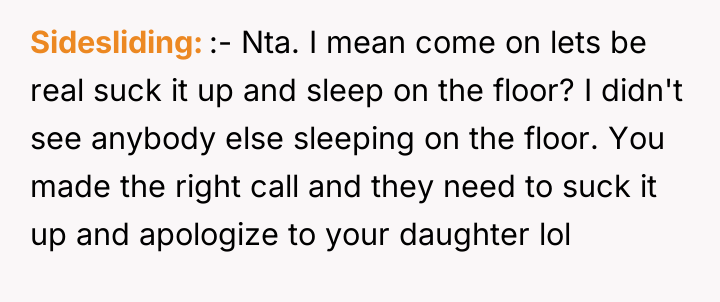
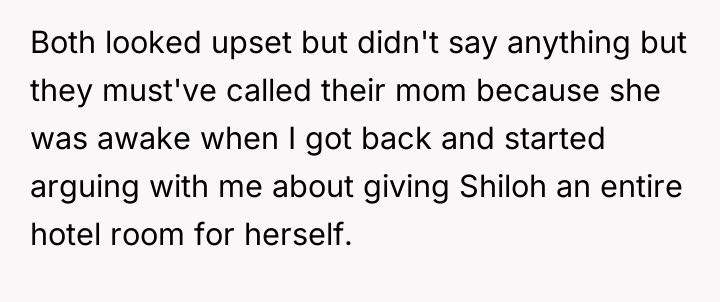
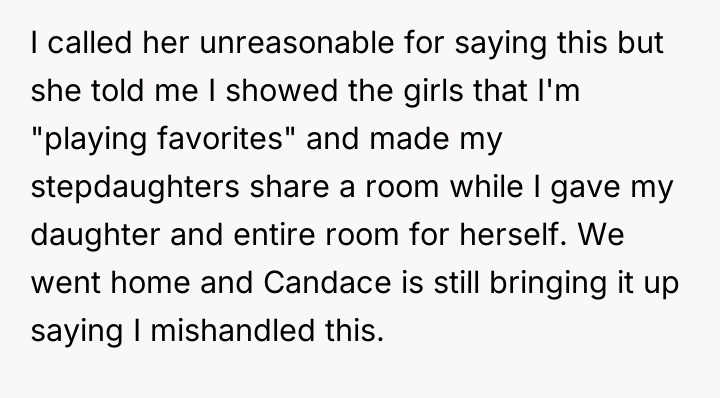
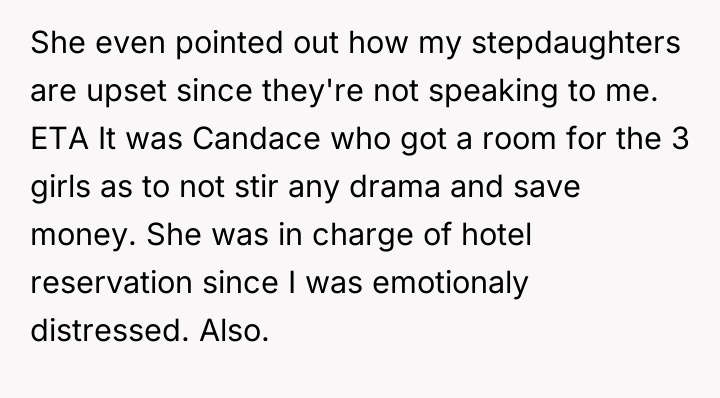
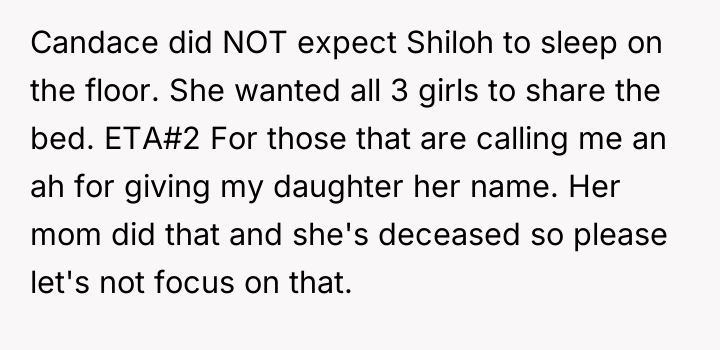
The original poster (OP) faced a situation involving his grieving daughter being told to sleep on the floor by her stepsisters, leading him to immediately secure a separate hotel room for her. This action stemmed from a protective instinct towards his daughter, directly contradicting the stepsisters' demand and the subsequent criticism from their mother about perceived favoritism and wasted expense. The central conflict lies between the OP's priority of ensuring his daughter's immediate comfort and dignity during a time of loss versus managing the feelings and financial expectations of his stepchildren and their mother.
Given the emotional stress following a parent's death, was the OP justified in prioritizing his daughter's immediate need for a safe and comfortable sleeping arrangement over concerns about appeasing the stepsisters or avoiding accusations of favoritism? Or should he have sought a compromise solution for the girls within the existing room setup, even if it meant temporary discomfort for his daughter?