AITA for deleting my friend's wedding photos in front of them?
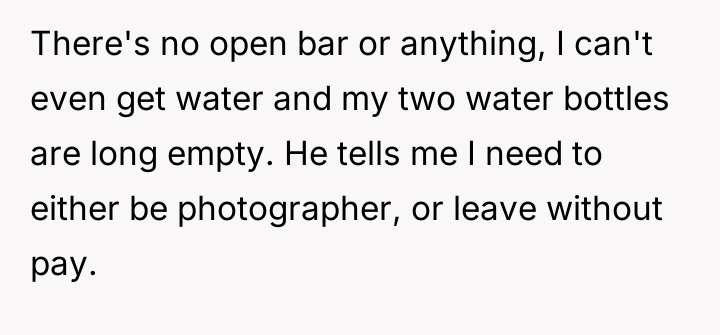
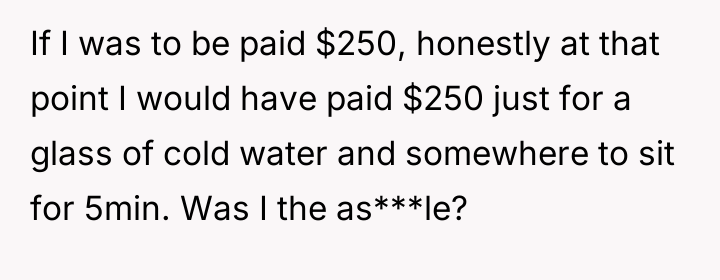
A dog groomer with a passion for capturing canine charm finds herself thrust into an unfamiliar world, tasked with photographing a friend's wedding on a shoestring budget. Despite her doubts and lack of experience, she embraces the challenge, driven by friendship and the promise of creating memories rather than perfect shots.
As the long day unfolds, she follows the bride from dawn appointments through the ceremony and into the reception, snapping moments that matter while ignoring her own needs. Bound by expectation and duty, she pushes through exhaustion, caught between her love for photography and the relentless demands of the event.



Subscribe to Our Newsletter
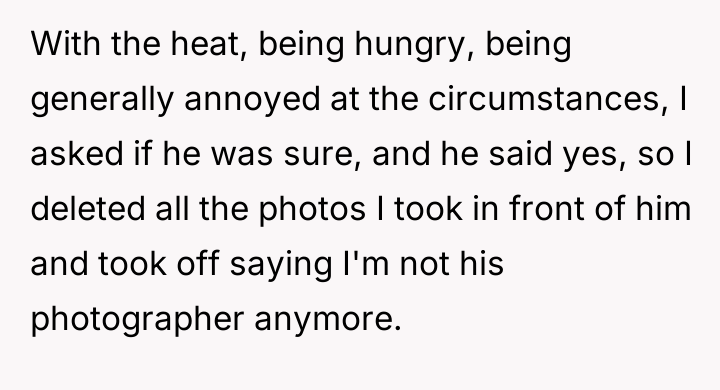
As renowned organizational psychologist Dr. Liane Davey explains, “Boundaries are about what you will do and what you will not do, and they are about communicating your needs clearly and calmly.” In this scenario, the OP, a dog groomer by trade, entered a boundary-testing situation by accepting a low-paying, high-demand wedding photography gig. While the initial agreement was informal, the working conditions quickly devolved into exploitation: ten hours of labor in extreme heat (110°F) without access to food or water, and no designated break or seating. The groom’s ultimatum—"either be photographer, or leave without pay"—represented a complete failure to recognize the OP as a worker deserving of basic human needs, even on a budget job. The deletion of the photos was an extreme, emotionally reactive measure driven by exhaustion, hunger, and a sense of betrayal. Psychologically, this action served as a drastic, albeit unprofessional, defense mechanism against perceived mistreatment and the threat of unpaid labor under duress. The OP felt trapped between fulfilling an unfair obligation and prioritizing physical well-being. The OP’s actions were understandable given the punitive working conditions but inappropriate from a professional standpoint; deleting the only existing records destroyed any chance of future reconciliation or partial payment. For future situations, the OP should establish clear contracts detailing mandatory breaks, access to amenities (food/water), and set an hourly rate that reflects the physical demands. If an employer violates these fundamental working conditions, the professional response is to cease work immediately and demand a prorated payment for hours worked, rather than resorting to destruction of property.
THIS STORY SHOOK THE INTERNET – AND REDDITORS DIDN’T HOLD BACK.:
The crowd poured into the comments, bringing a blend of heated opinions, solid advice, and a few reality checks along the way.
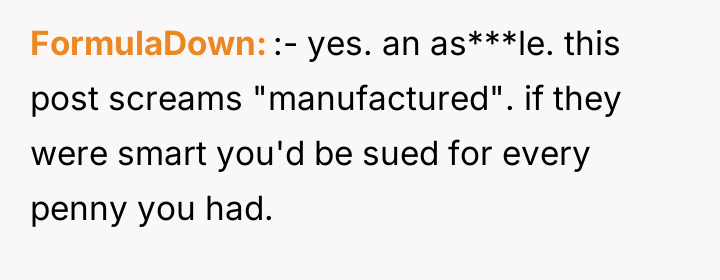
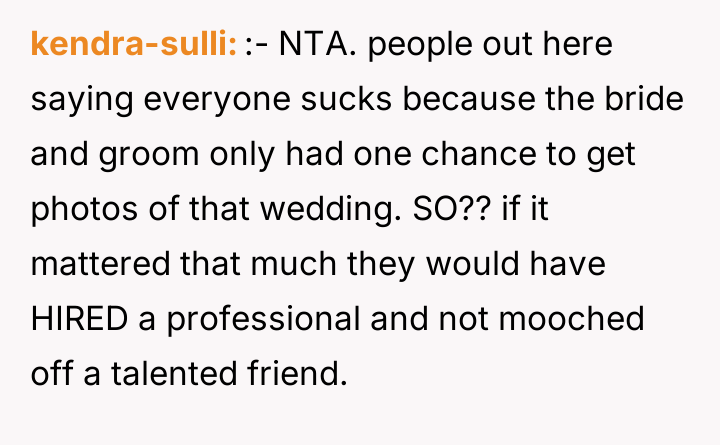
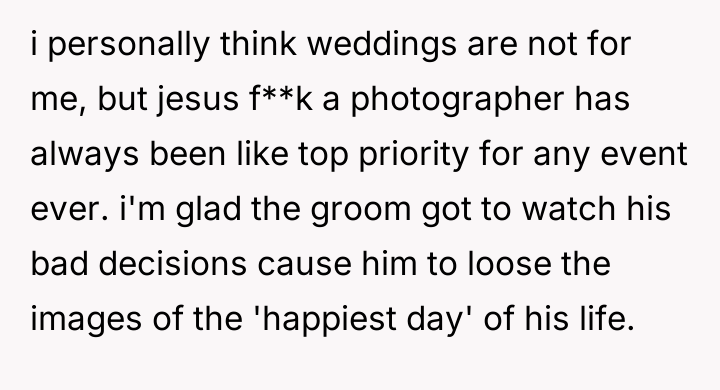

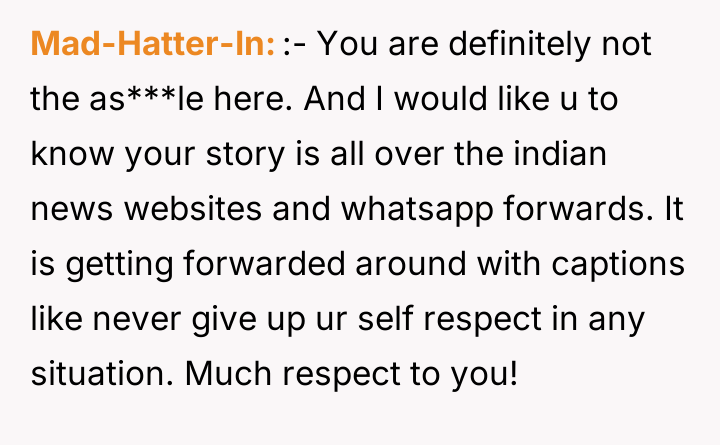
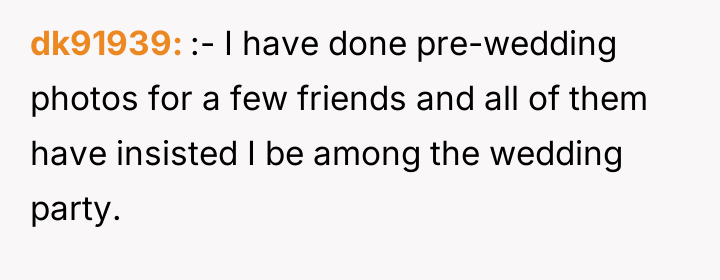

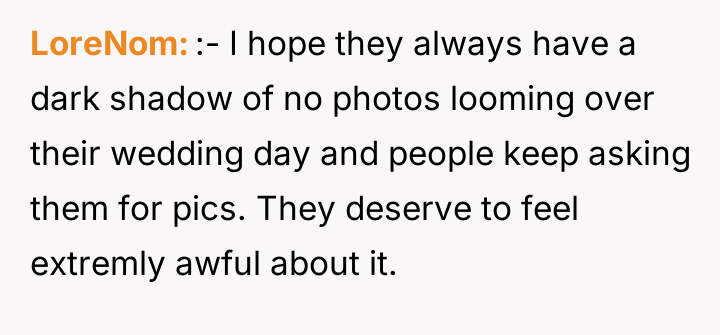


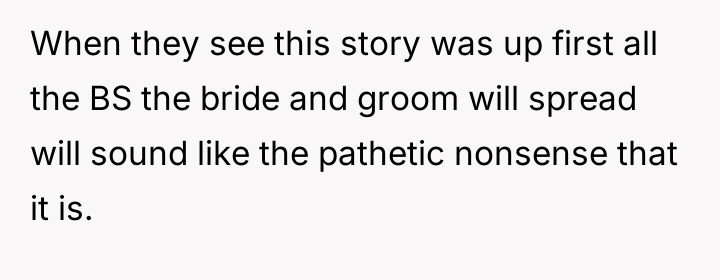
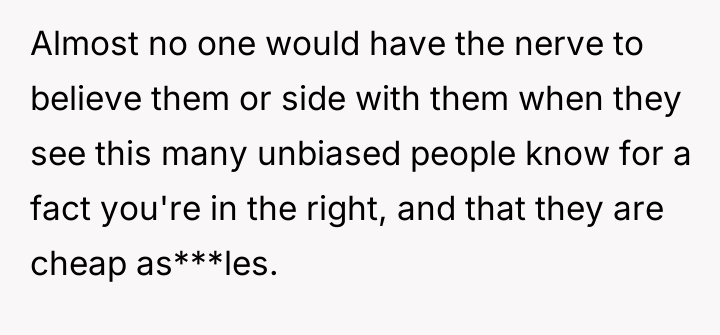
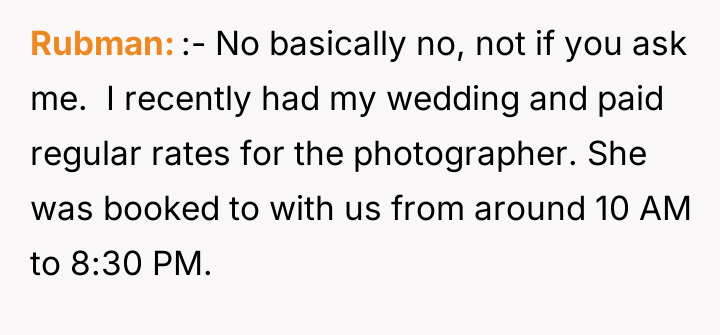
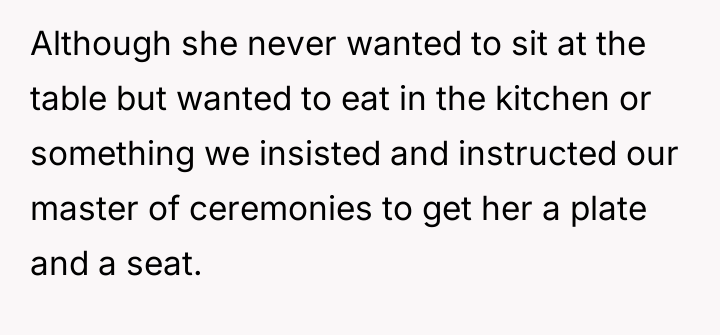
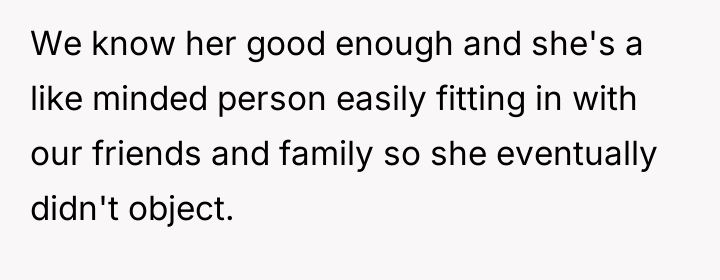
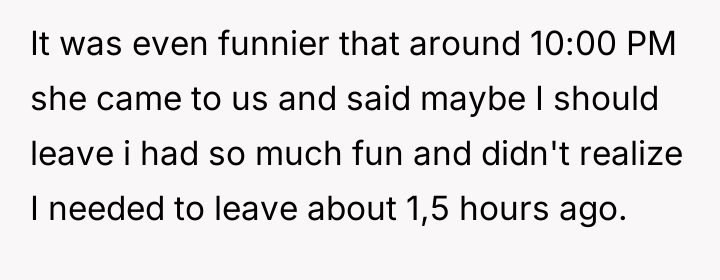
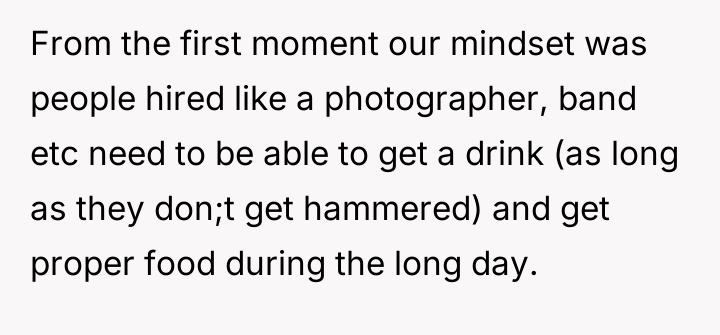
The original poster (OP) agreed to take on a professional task outside their usual expertise for a low fee, driven by friendship. The central conflict arose when the couple failed to provide basic support, such as food and hydration, during a long, hot event, leading the OP to terminate the agreement and delete the collected work.
Was the OP justified in deleting the photos as a response to being denied basic sustenance and respect during a demanding workday, or did the agreement, however poorly compensated, require them to complete the service? Where does the responsibility for fair treatment lie when a favor-based agreement turns into mandatory labor under harsh conditions?