AITA for telling my girlfriend to shut the f**k up after she insulted my sisters thighs?
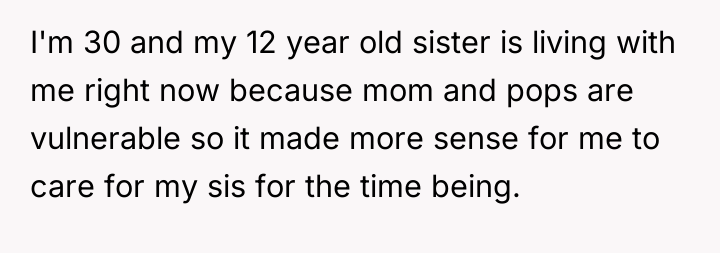
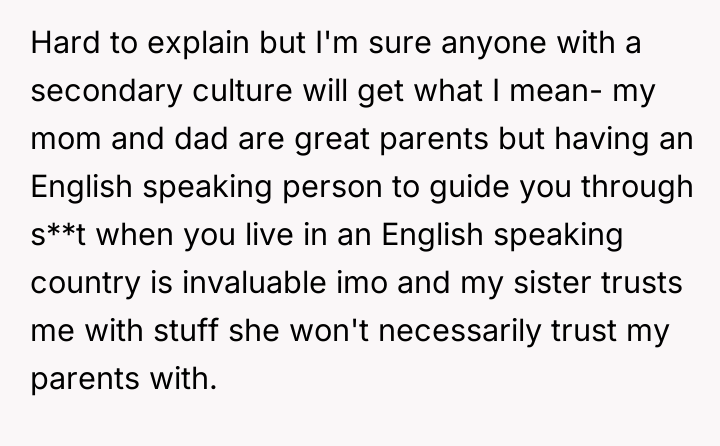
At 30, he found himself stepping into a role he never expected—caretaker and protector for his 12-year-old sister. With parents who struggled to bridge the cultural and language gap, he became the anchor she needed in a world that often felt foreign and unforgiving. Their bond was forged in unspoken understanding, a silent promise to shield each other from the challenges of growing up caught between two worlds.
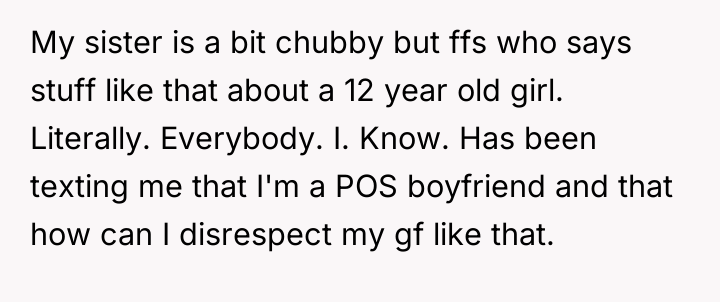
But when the one person who should offer love and support instead chose cruelty, the fragile trust he had built shattered in an instant. His girlfriend’s cruel words about his sister’s body ignited a fierce protectiveness within him, revealing the raw, unyielding love that defined their relationship. In that moment, the line was clear: his sister’s dignity was non-negotiable, and no one would tear it down—not on his watch.






Subscribe to Our Newsletter
As renowned developmental psychologist Dr. Lisa Damour explains, “When a child is in distress or facing an attack, the primary adult in the room must step in as an advocate first. The relationship repair can wait until the immediate threat to the child’s well-being is neutralized.”
The situation involves a clear conflict between the OP’s role as a temporary guardian/older sibling figure and their role as a romantic partner. The girlfriend's comment about a 12-year-old's body is fundamentally inappropriate and crosses a significant ethical boundary, regardless of the relationship dynamic with the OP. The OP’s instinctive reaction to defend the vulnerable party (the sister) aligns with principles of protective caregiving. The extreme reaction ("I saw red") suggests a profound emotional investment in the sister's well-being, compounded by the OP's unique history of raising and guiding her.
The subsequent social pressure for the OP to apologize to the girlfriend highlights a societal tendency to prioritize the feelings of an adult partner over the protection of a child from harmful commentary, especially concerning body image. While immediately ending the call was a strong communication method, it effectively shut down dialogue. The OP's action was appropriate in its intent—stopping the harmful speech—but the subsequent refusal to communicate or apologize risks the relationship. A constructive recommendation for the future would be to firmly address the boundary violation privately after the immediate situation is de-escalated, for example: “What you said about my sister was unacceptable and crossed a line. We need to discuss why that comment was harmful before we can move forward.”
THE COMMENTS SECTION WENT WILD – REDDIT HAD *A LOT* TO SAY ABOUT THIS ONE.:
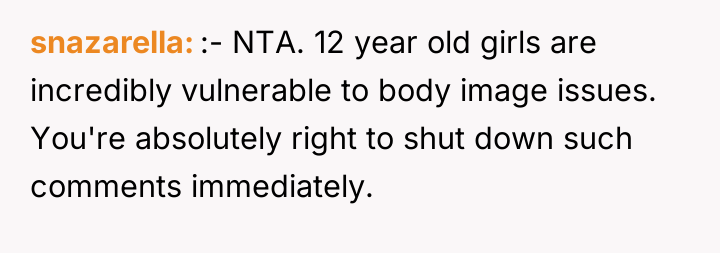
The community had thoughts — lots of them. From tough love to thoughtful advice, the comment section didn’t disappoint.

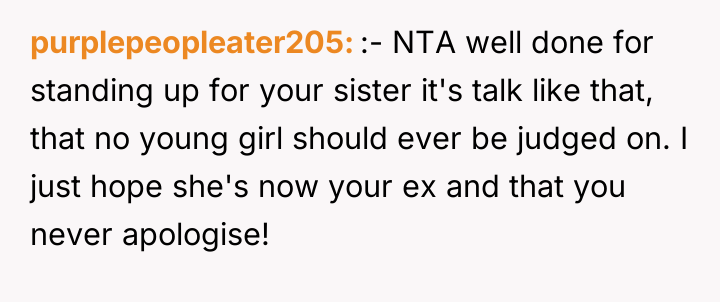

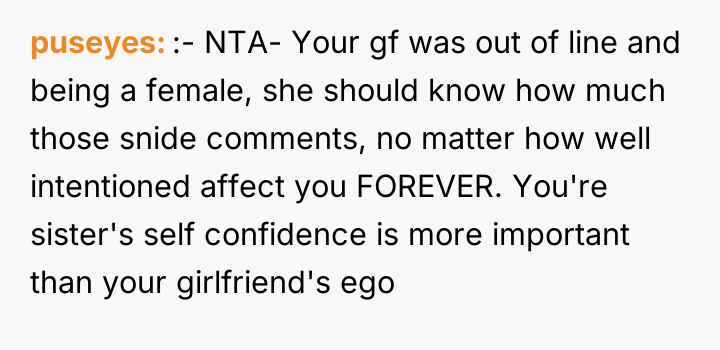
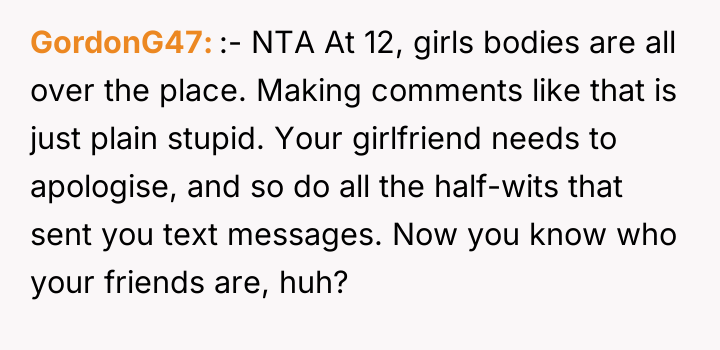
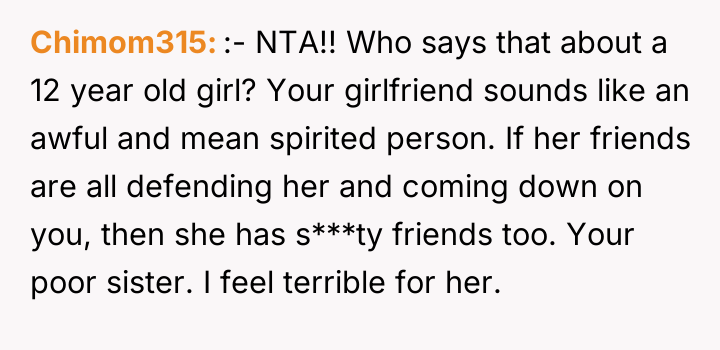

The original poster (OP) is facing a conflict rooted in their protective instinct toward their 12-year-old sister, particularly regarding comments made by their girlfriend about the sister's weight. The OP acted decisively to defend their sister, but this action led to social backlash, with friends and family criticizing the OP for disrespecting the girlfriend rather than supporting the OP's defense of the child.
Was the OP justified in immediately prioritizing the defense of their younger sister over their girlfriend's feelings and the social expectations of their peer group, or did the delivery of their reaction constitute an unacceptable disrespect toward their partner? The core debate centers on whether protecting a minor from body-shaming comments overrides the requirement for respectful communication within an adult romantic relationship.