AITA for kicking out my girlfriend
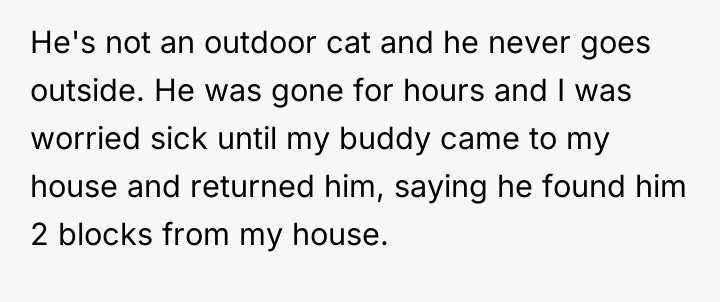
In the quiet sanctuary of his home, a man’s love for his cat, Raven, was shattered by the unexpected cruelty of the person he trusted most. The cat, once safe and cherished, vanished without a trace, leaving behind a haunting silence and a heart aching with fear and betrayal.
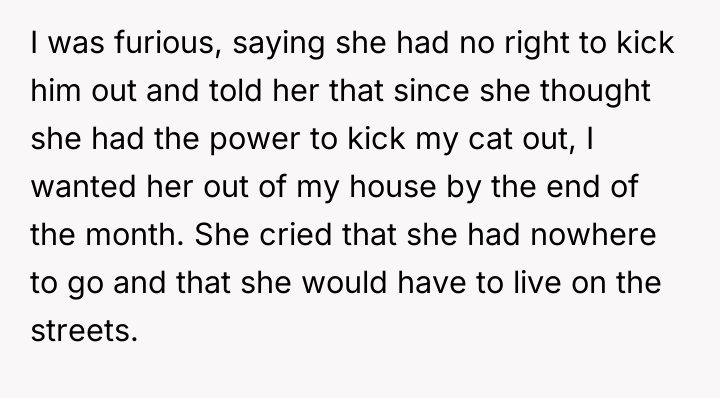
When Raven was found abandoned just blocks away, the truth emerged like a jagged wound—his girlfriend had kicked him out, shattering the fragile peace of their shared life. Faced with a choice between love and loyalty, he stood firm, choosing to protect the innocent soul who depended on him most, even if it meant letting go of the woman he once held dear.



Subscribe to Our Newsletter
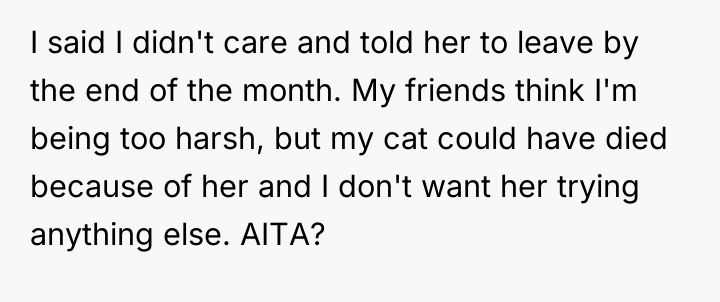
As renowned researcher Dr. Brené Brown explains, “Boundaries are the distance at which I can love you and me simultaneously.” This situation highlights a catastrophic failure in establishing and respecting foundational boundaries, particularly regarding shared living spaces and the care of dependents. The girlfriend’s action of kicking an indoor cat out of the house is a severe act that moves beyond simple dislike; it demonstrates a profound lack of empathy, disregard for the OP’s deeply held commitment to their pet, and a dangerous willingness to act unilaterally in a shared environment. The cat, Raven, represents a non-negotiable element of the OP's life. The OP's response—demanding she leave—is an extreme defensive reaction rooted in fear for their pet’s safety and anger over the violation of trust. While the girlfriend's fear of homelessness is a valid concern, it does not negate the severity of her choice to endanger the cat. The OP’s reaction, while understandable given the high emotional stakes (the cat's life), sets a precedent where conflict resolution defaults to immediate, harsh termination rather than negotiated separation. A more constructive approach in the future would be to immediately separate the girlfriend and the cat upon discovering the incident, communicate that such an action is grounds for ending the relationship, and then negotiate a short-term exit plan for the girlfriend that ensures safety for all parties involved, rather than issuing an ultimatum in the heat of fury.
REDDIT USERS WERE STUNNED – YOU WON’T BELIEVE SOME OF THESE REACTIONS.:
What started as a simple post quickly turned into a wildfire of opinions, with users chiming in from all sides.


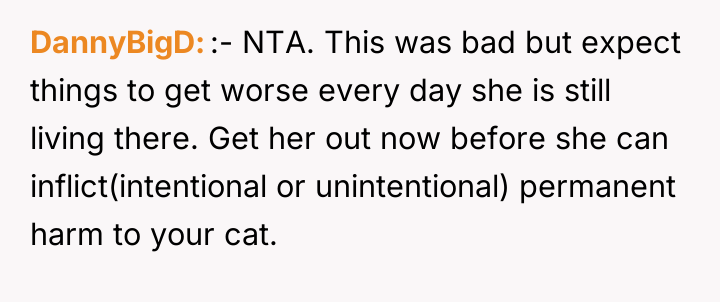


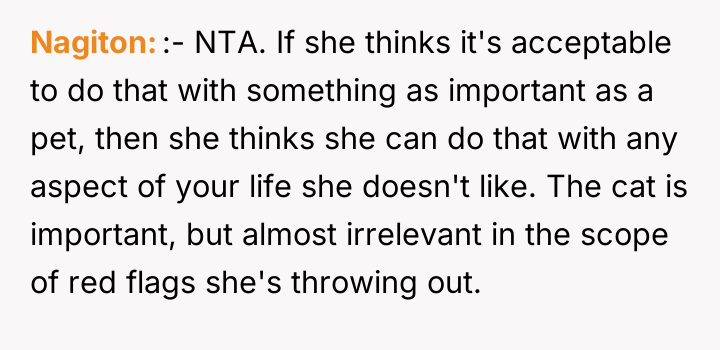
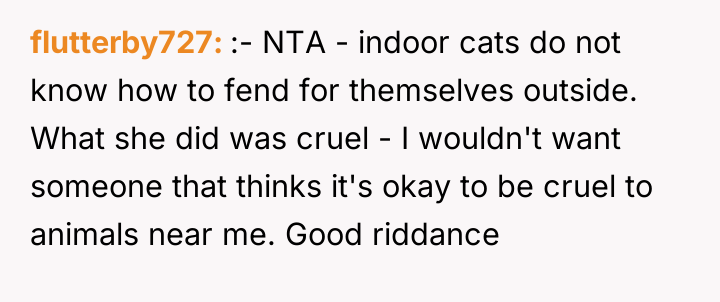
The original poster (OP) is experiencing intense anger and fear because their girlfriend intentionally put their indoor cat outside, an action that endangered the pet's life. The central conflict is the OP's firm belief that protecting their cat justifies an immediate and severe response—evicting the girlfriend—which contrasts sharply with the girlfriend's distress and her plea for a less harsh consequence.
Given the significant breach of trust and direct threat to a dependent being, is the OP justified in demanding the girlfriend leave immediately, or is the eviction too harsh a penalty for an action stemming from clear dislike of the pet?