AITA for speaking Italian to my GF's rude Italian American family and embarrassing them?
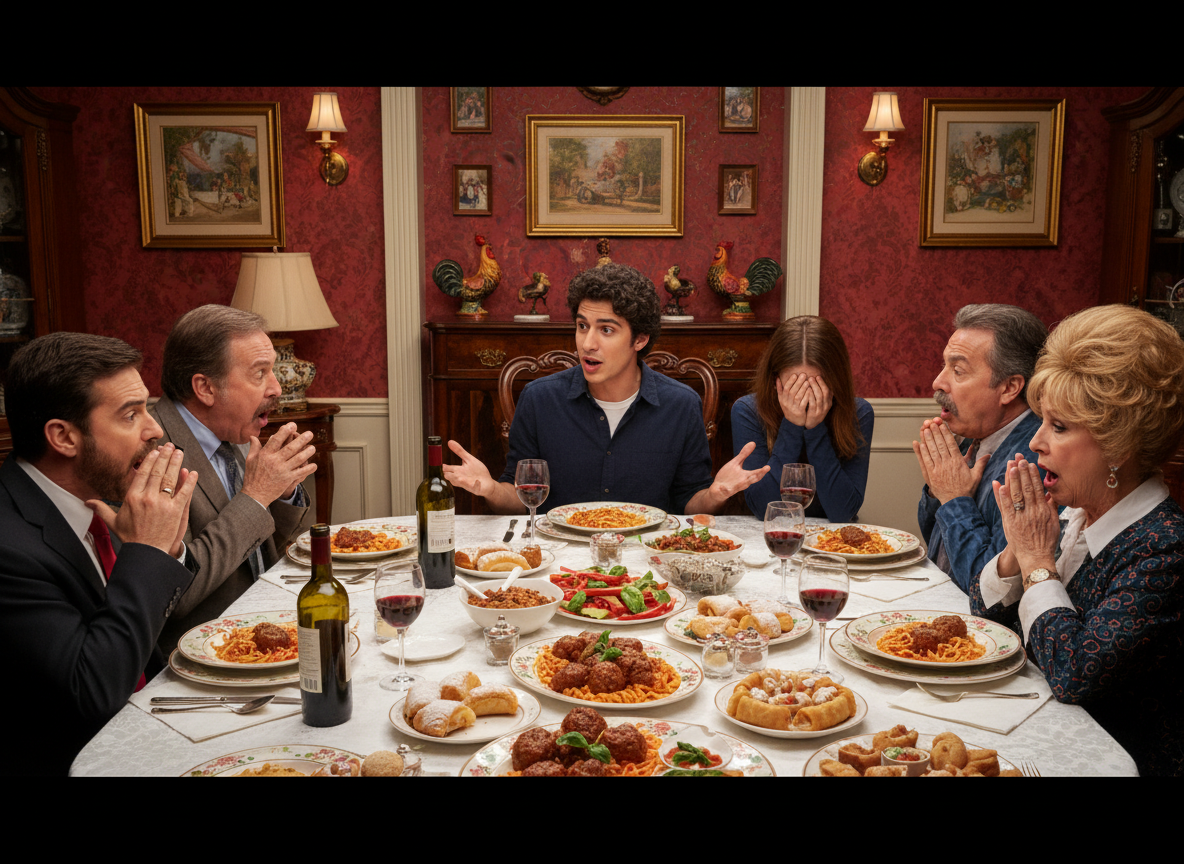
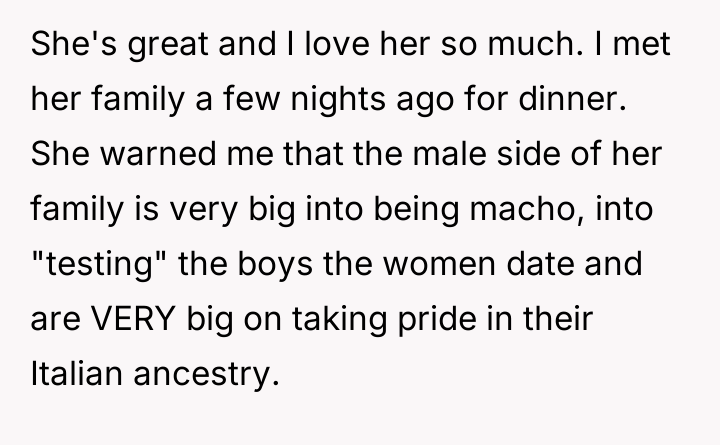
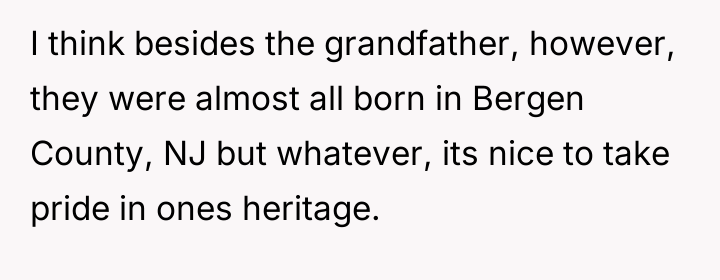
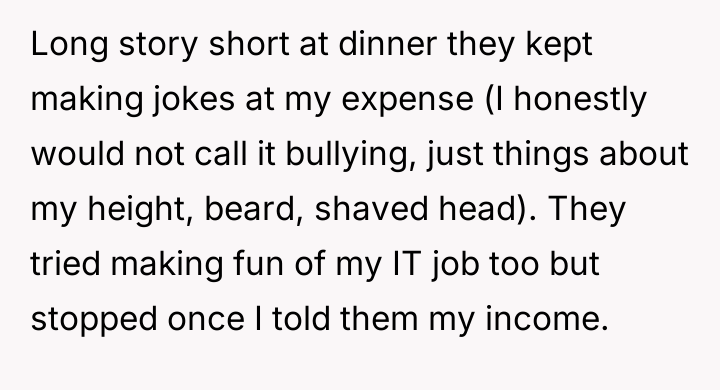
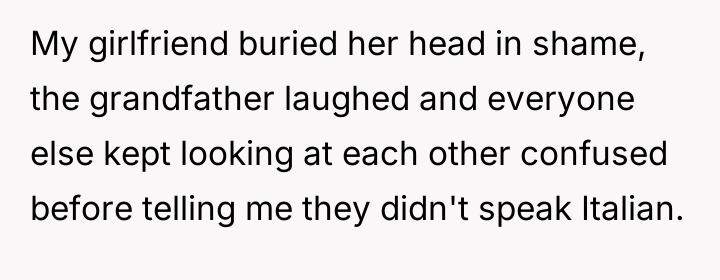
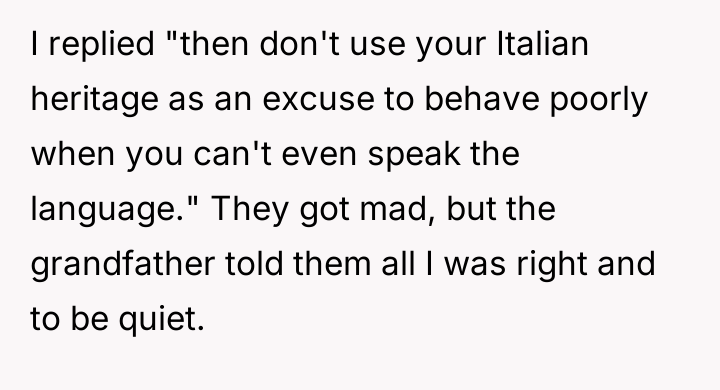
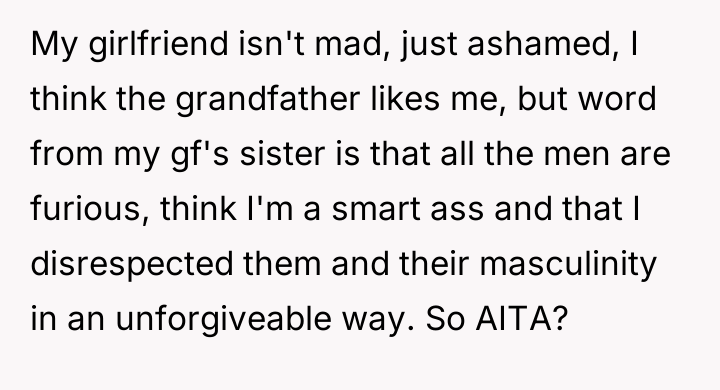
He walked into the lion’s den, heart pounding with a mix of love and dread. Meeting her family was supposed to be a simple dinner, but for him, it quickly turned into a gauntlet of sharp jabs and relentless testing, aimed at proving his worth through the harsh lens of macho pride and cultural bravado. Every joke about his height and background felt like a silent challenge, a trial by fire in the land of his beloved’s heritage.
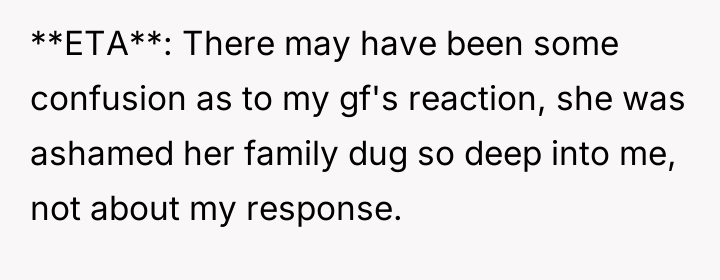
Beneath the laughter and teasing, a storm brewed inside him—shame, pain, and the crushing weight of expectation. Yet, in the aftermath of those brutal hours, when despair threatened to consume him, a fragile understanding emerged. His girlfriend, torn between embarrassment and support, finally saw the courage beneath his defiant response, realizing that sometimes, standing up with humor is the bravest act of all.


Subscribe to Our Newsletter
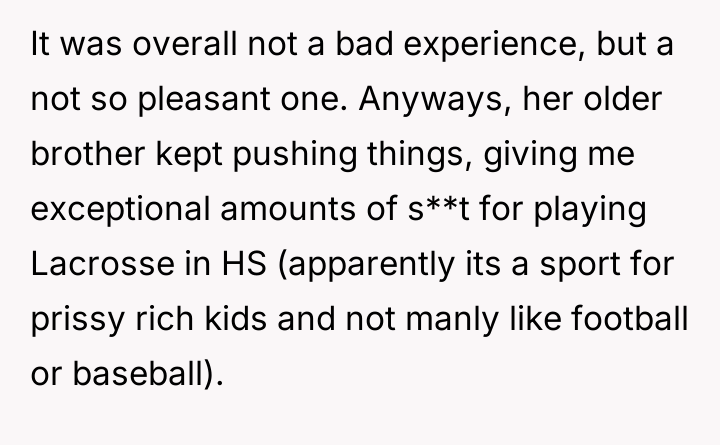
As renowned researcher Dr. Brené Brown explains, “Boundaries are the distance at which I can love you and me simultaneously.” This situation highlights a critical breakdown in establishing healthy relational boundaries early in a new connection. The family, particularly the brother, initiated aggressive testing behaviors rooted in outdated concepts of masculinity and cultural gatekeeping. The OP, feeling attacked on multiple fronts (height, job, sport choices), reacted defensively by using a specific skill (Italian language) to expose the hypocrisy of their cultural posturing. The OP's response was effective as a defense mechanism—it immediately stopped the perceived bullying by hitting a nerve regarding their authenticity. However, the method involved an aggressive counter-attack rather than assertive communication. When the family could not understand the language, the OP shifted the dynamic from one of teasing to one of intellectual and cultural superiority, which confirms their fears that he is a 'smart ass.' The girlfriend's shame is a predictable outcome, as she is now placed in the middle of defending her partner against her family's core values (masculinity/heritage). The OP was justified in defending himself against poor behavior, but the delivery was unnecessarily confrontational. A more constructive approach would have been to communicate his feelings directly after the initial teasing subsided, perhaps saying, 'I understand you like to joke, but when you mock my career or my past, it feels disrespectful.' Moving forward, the OP and his girlfriend must establish a united front regarding how the family's 'testing' behavior will be handled, ensuring that future interactions focus on mutual respect rather than defense and counter-attack.
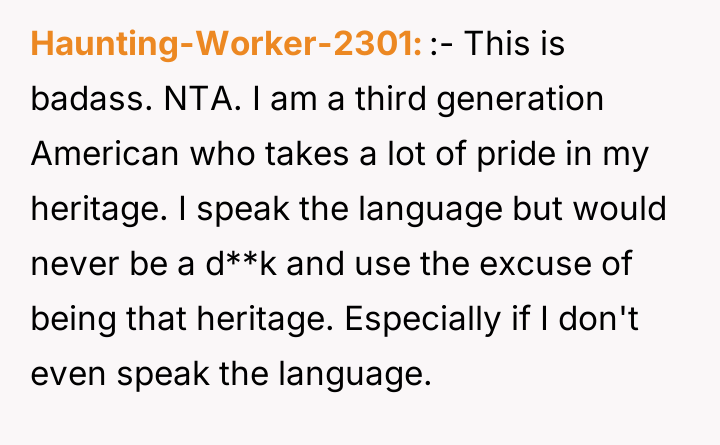
THE COMMENTS SECTION WENT WILD – REDDIT HAD *A LOT* TO SAY ABOUT THIS ONE.:
Users didn’t stay quiet — they showed up in full force, mixing support with sharp criticism. From calling out bad behavior to offering real talk, the comments lit up fast.




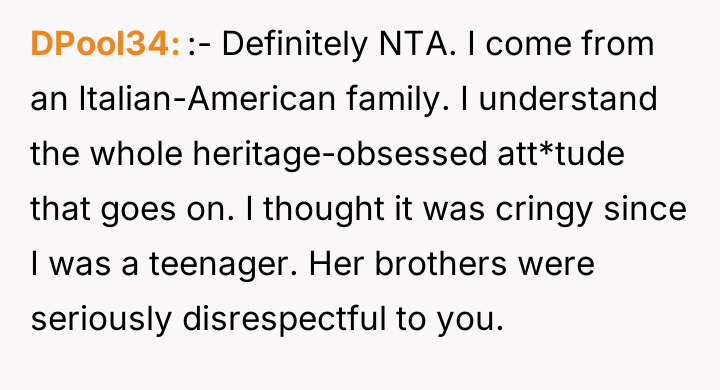
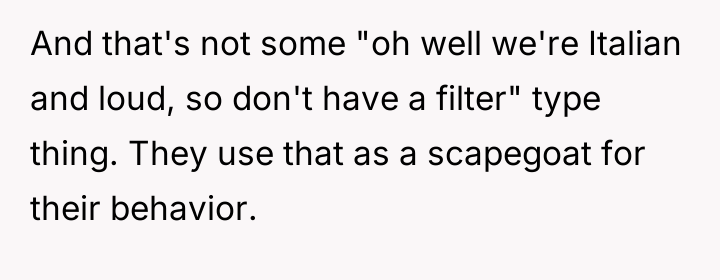
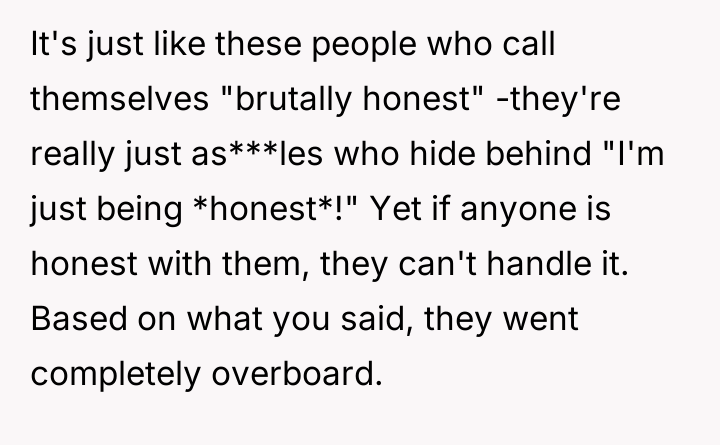
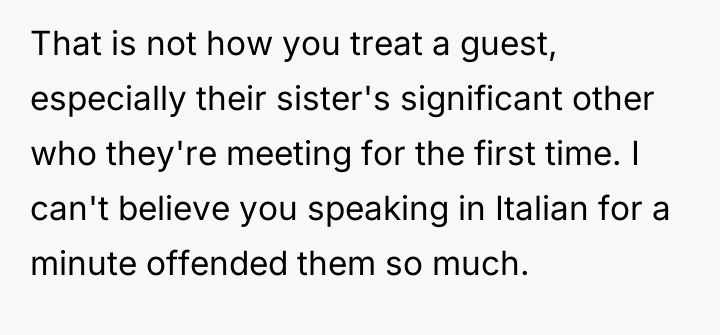
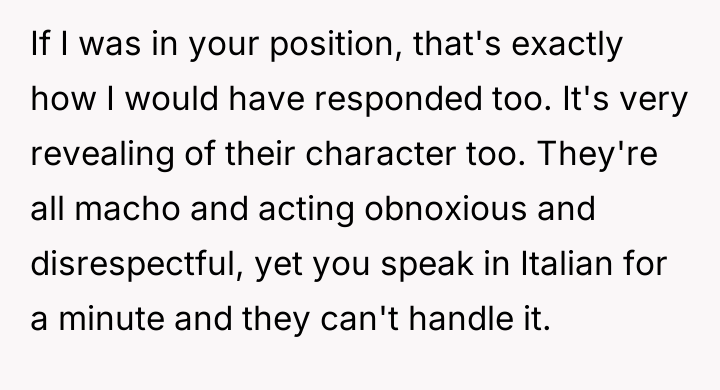
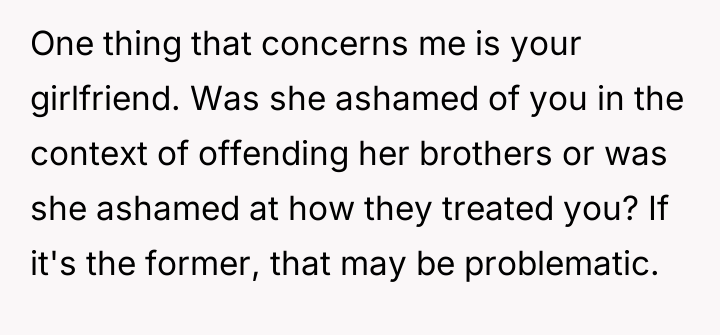
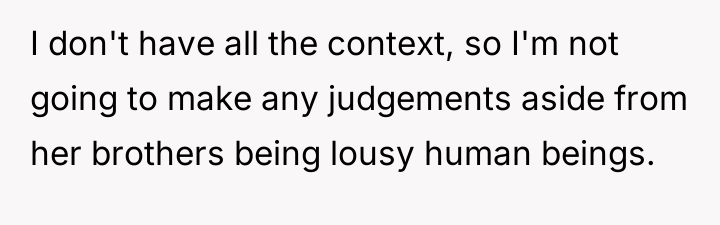
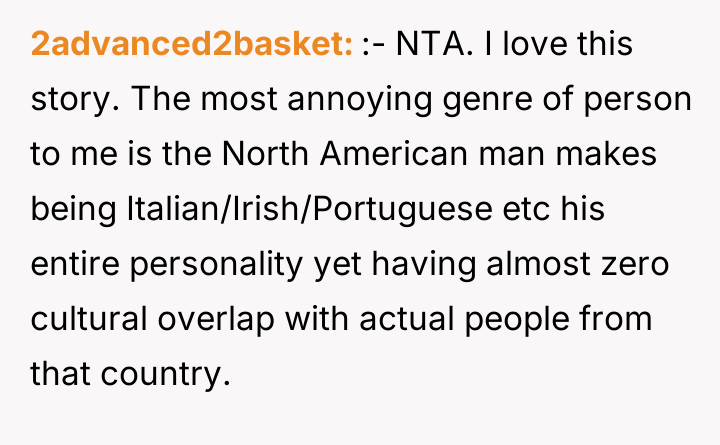
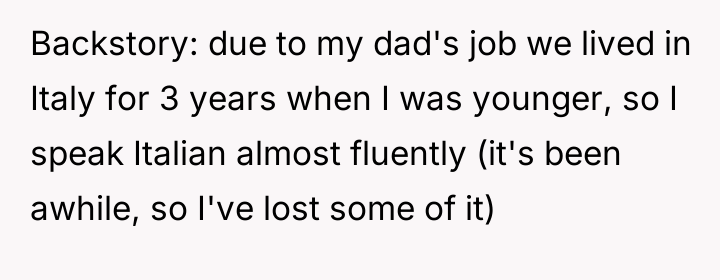
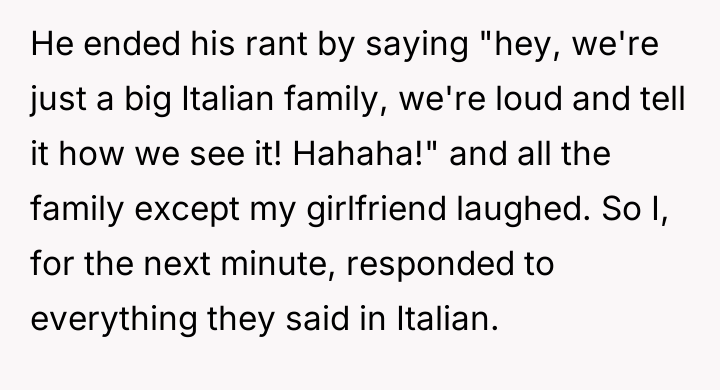
The original poster (OP) experienced initial hostility and teasing from his girlfriend's family, leading him to use his fluency in Italian to counter their cultural claims and behavior. While the OP achieved a temporary victory by silencing the critics, this action caused significant embarrassment for his girlfriend and alienated the male members of her family, creating tension in the new relationship.
Was the OP justified in using his linguistic skill to call out the family's performative pride in their heritage, or did this move cross the line into disrespecting the family's established dynamic, regardless of their initial behavior? The core question is where the line between self-defense and escalation lies in familial introductions.