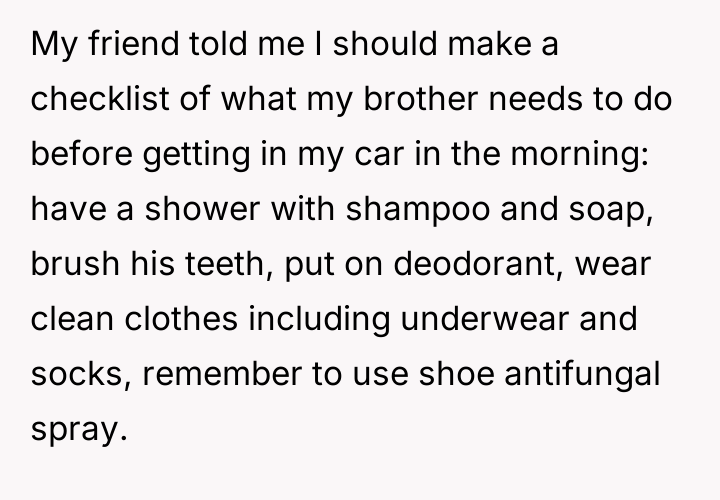
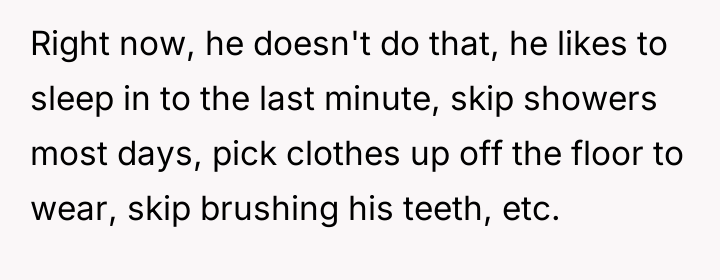
AITA for telling my parents I won't drive my brother to school unless he is more hygienic because his smell literally makes me sick?
A high school senior finds herself trapped in a cruel dilemma: she’s worked hard to earn her independence by buying a car and paying for her own gas, yet her parents remind her that driving is a privilege, not a right. They insist she must chauffeur her freshman brother to school, despite the existence of a bus, overlooking the harsh reality that her body rebels against the very act of driving—motion sickness grips her relentlessly, intensified by her brother’s presence.
Every trip becomes a torment, the nauseating smell triggering waves of sickness that she can neither escape nor ignore. Her resilience is tested daily, caught between her family’s expectations and her own fragile health. In this silent battle, she clings to small coping strategies, searching desperately for a way to reclaim control over her own life.


Subscribe to Our Newsletter
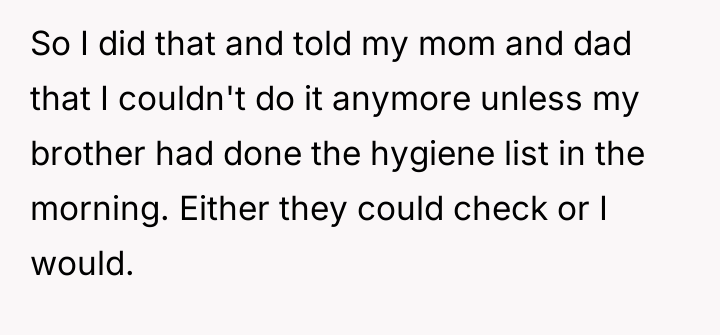
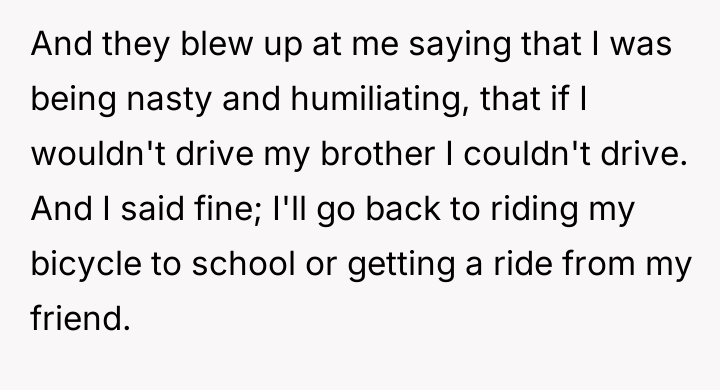
As renowned developmental psychologist Dr. Laurence Steinberg explains, “Adolescents are increasingly motivated by peer relationships and developing autonomy, which often brings them into conflict with parental authority regarding rules and privileges.” This situation centers on a conflict between the OP's legitimate medical needs and the parents' perceived control over the vehicle, which they partially finance (insurance). The OP's motion sickness is a verifiable physical limitation, making the brother's hygiene a direct barrier to their ability to operate the vehicle safely and without severe illness. The proposed hygiene checklist is a direct, proactive attempt to manage an environmental trigger related to a health issue, which is a mature form of self-advocacy. However, the parents interpreted this boundary setting as 'nasty and humiliating,' viewing it through the lens of parental authority and sibling dynamics rather than the OP's medical necessity. While the OP's ultimatum ('no driving') was a powerful way to enforce the boundary, it escalated the conflict unnecessarily. A more constructive approach would have been to present the medical issue and the required accommodations (the hygiene list) to the parents first, asking them to enforce it as a condition of using the OP's car for the brother, rather than presenting it as a non-negotiable ultimatum. The OP acted appropriately in identifying the problem and proposing a solution that addressed their health. The action was justified in principle, but the execution resulted in an overreaction from the parents. For future situations, the OP should focus on clear, non-confrontational communication about medical needs first, seeking parental mediation to implement necessary accommodations, rather than immediately escalating to withdrawing a privilege.
HERE’S HOW REDDIT BLEW UP AFTER HEARING THIS – PEOPLE COULDN’T BELIEVE IT.:
Users didn’t stay quiet — they showed up in full force, mixing support with sharp criticism. From calling out bad behavior to offering real talk, the comments lit up fast.
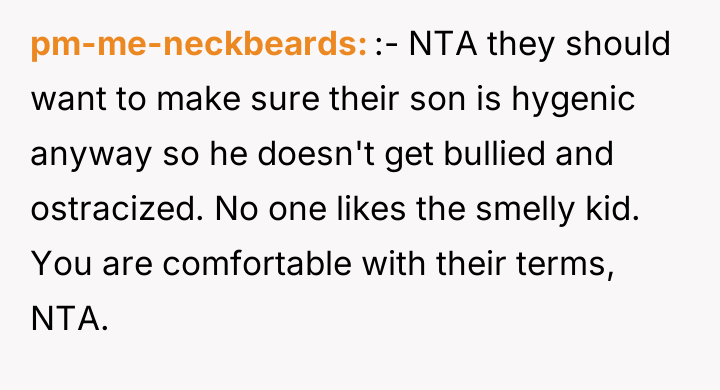
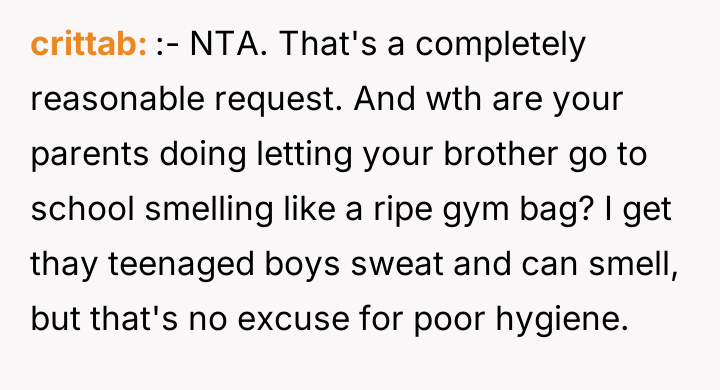


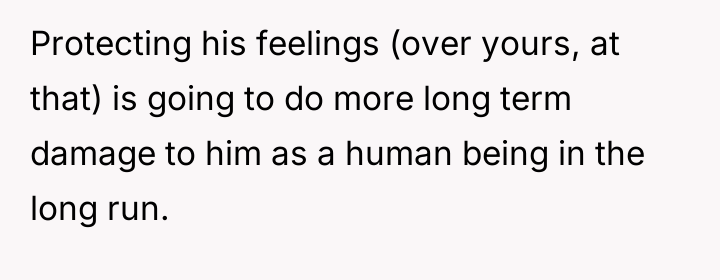
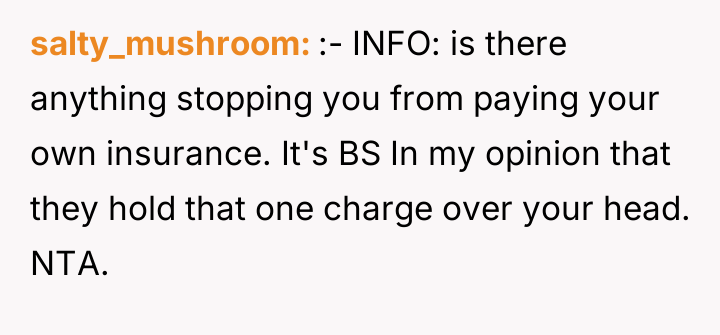

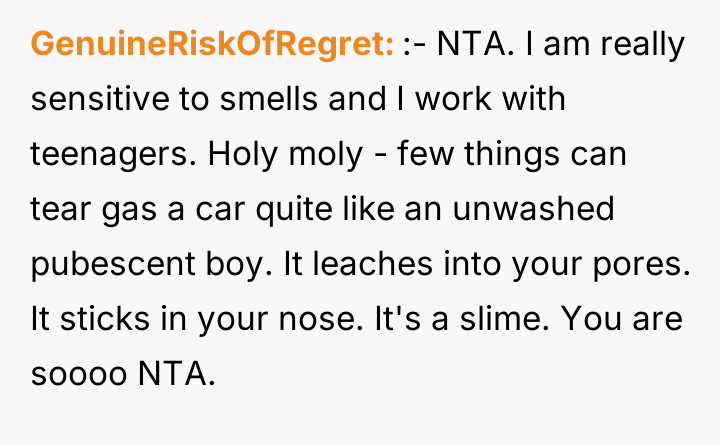
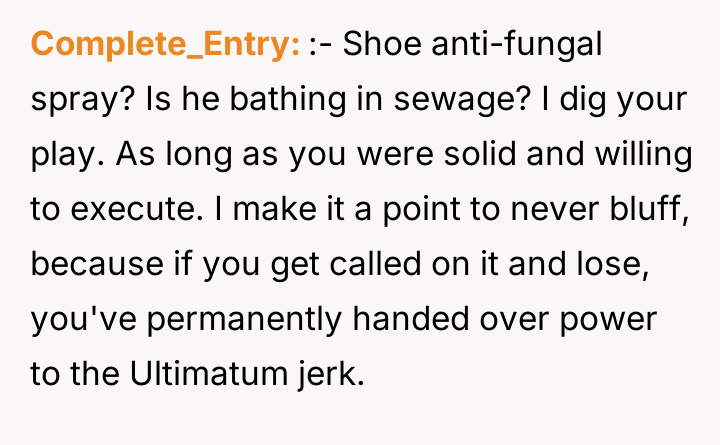
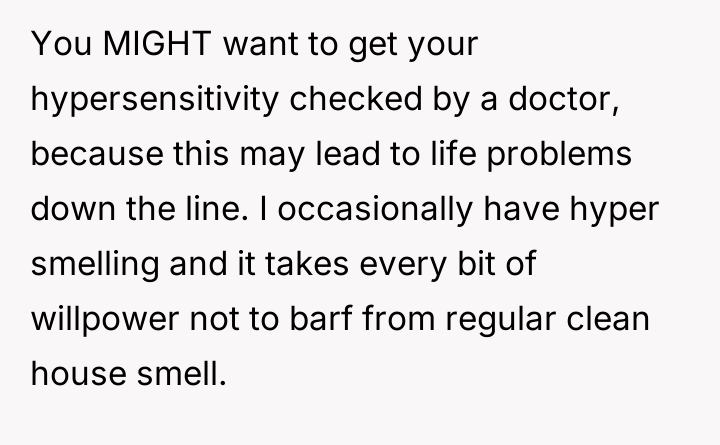
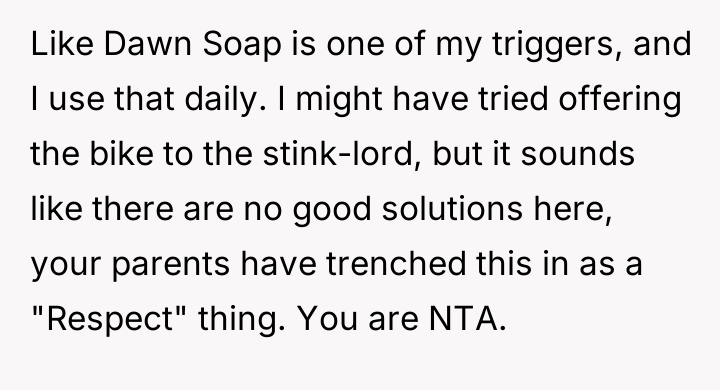
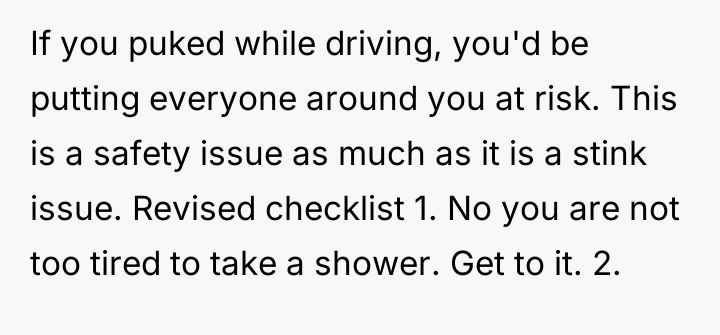


The original poster (OP) faces a difficult situation where a necessary accommodation for their medical condition (motion sickness exacerbated by their brother's hygiene) clashes with their parents' conditions for allowing them to use their own car. The OP attempted to set a reasonable boundary based on health needs, but the parents responded with punitive measures, forcing the OP to choose between their health/autonomy and the privilege of driving.
Was the OP justified in prioritizing their documented health issue over a parental condition attached to driving, even if it meant sacrificing the car privilege? Or did the method of enforcing this boundary cross a line into humiliating a younger sibling and disrespecting parental authority?