AITA for treating my coworker differently after she accused me of SA when i saved her live.
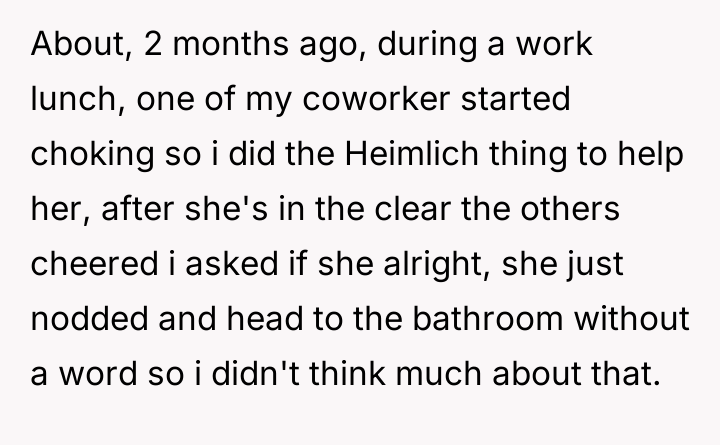
The man is described as a friendly and quiet individual who treats his coworkers like friends. A conflict began during a work lunch when a coworker started choking, prompting the OP to perform the Heimlich maneuver to save her.
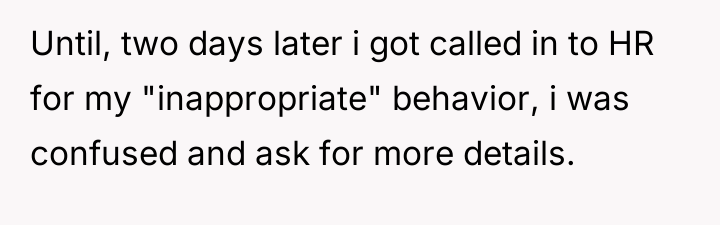
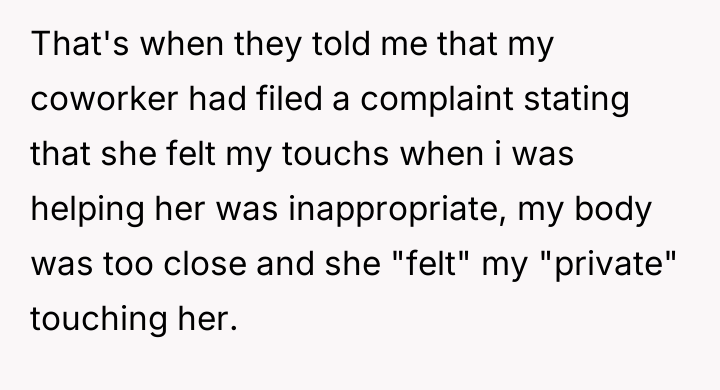
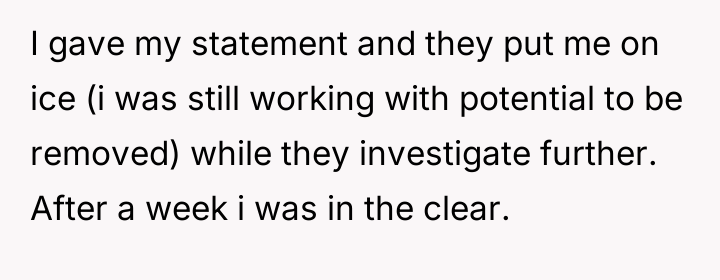
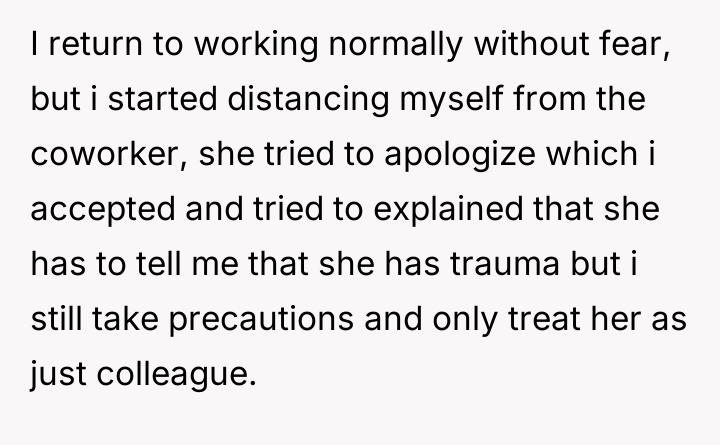
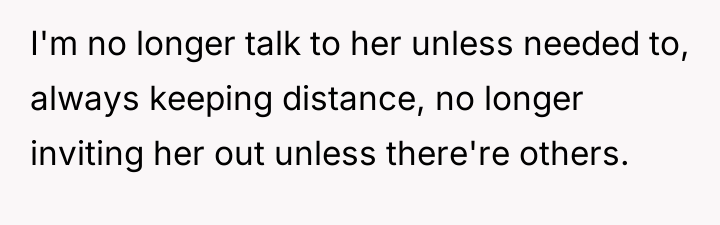
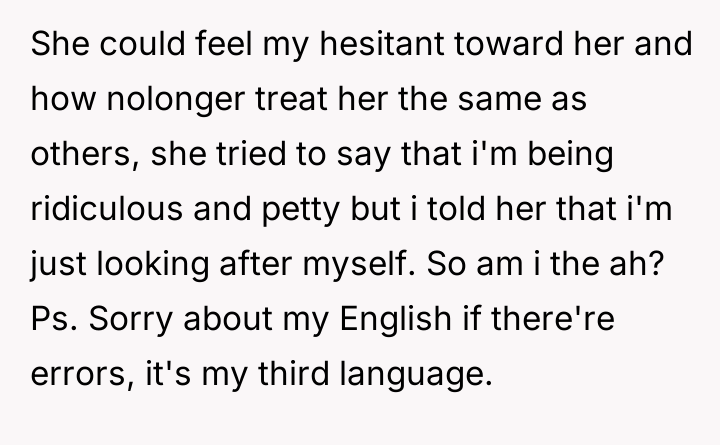
Immediately following the incident, the coworker nodded briefly and left without speaking. Shortly after, the OP was called to Human Resources because the coworker filed a complaint, alleging the physical aid involved inappropriate touching due to close proximity. The OP was suspended pending investigation, which cleared him after a week, leaving him unsure how to proceed with the coworker who now feels slighted by his resulting distance. The central question is whether the OP was wrong (an 'as***le') for changing his behavior toward the coworker after the complaint.


Subscribe to Our Newsletter
According to Dr. Evelyn Reed, a specialist in organizational psychology and workplace boundaries, "In high-stress, ambiguous physical interactions, individual interpretations of physical contact often diverge significantly, regardless of intent, especially when power dynamics or pre-existing vulnerabilities are involved." The OP acted altruistically in an emergency, which is commendable. However, the coworker's reaction, filing an HR complaint, signals a deep personal reaction, possibly rooted in past trauma or a strong sense of bodily autonomy violation, even if the touch was life-saving. When the OP was cleared by HR, his subsequent action of creating distance was a rational self-preservation tactic in the workplace. He is protecting himself against future potential risk, as the relationship has been fundamentally altered by the formal complaint process. The coworker's accusation that the OP is being 'ridiculous and petty' after he was cleared indicates a lack of accountability for the impact her complaint had on his professional standing. For a path forward, the OP should maintain strictly professional, documented interactions with this coworker. While he does not owe her forgiveness or a return to old behavior, he should communicate clearly that his distance is purely a procedural necessity following the HR case, not a personal judgment on her character, allowing for professional coexistence.
HERE’S HOW REDDIT BLEW UP AFTER HEARING THIS – PEOPLE COULDN’T BELIEVE IT.:
The internet jumped in fast, delivering everything from kind advice to cold truth. It’s a mix of empathy, outrage, and no-nonsense takes.
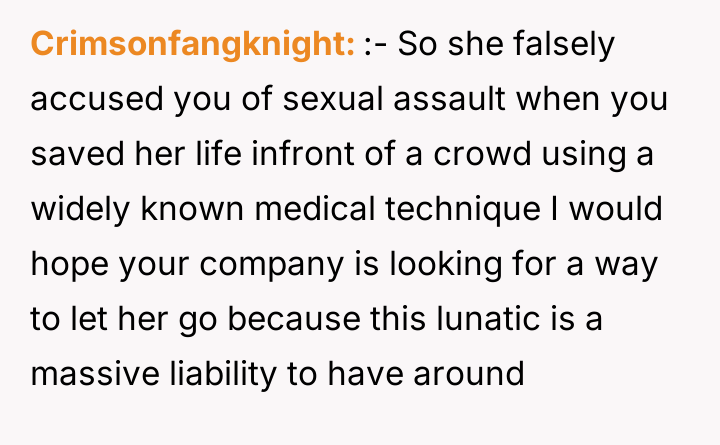
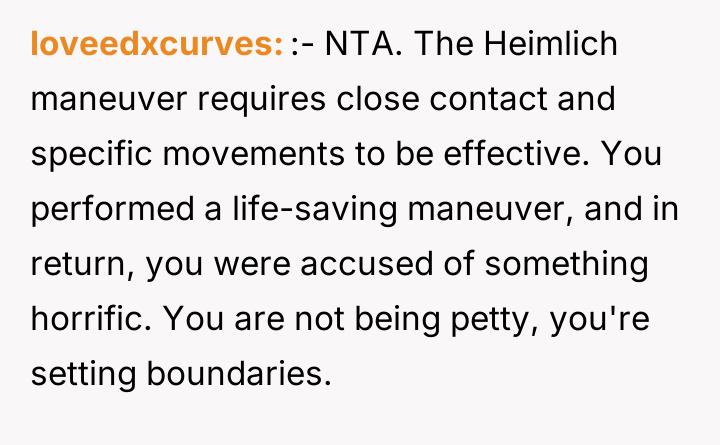
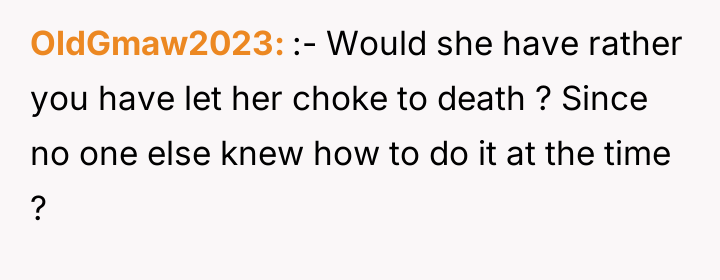
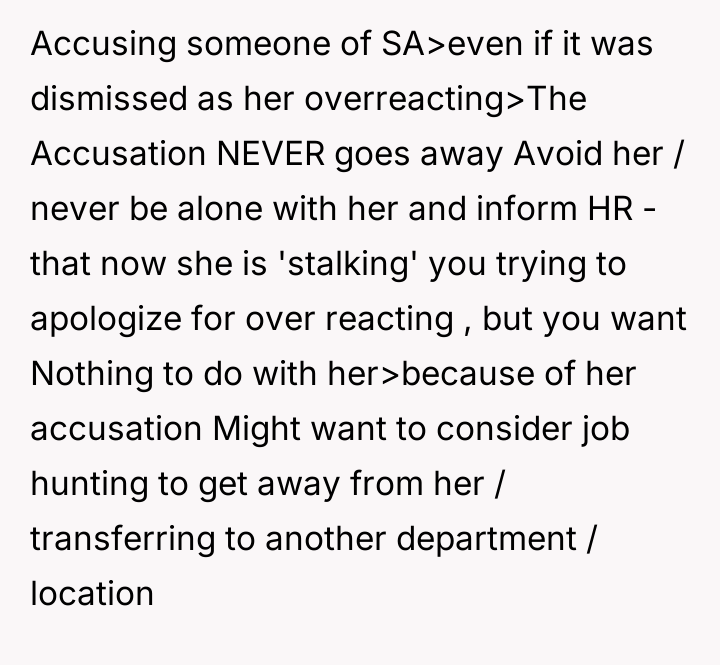
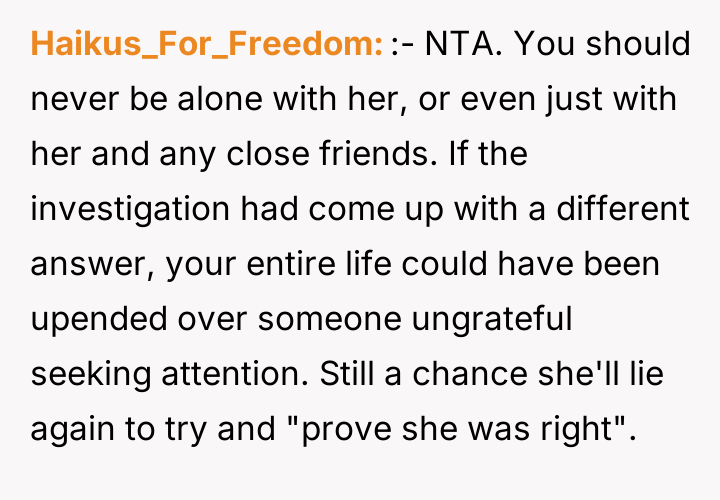

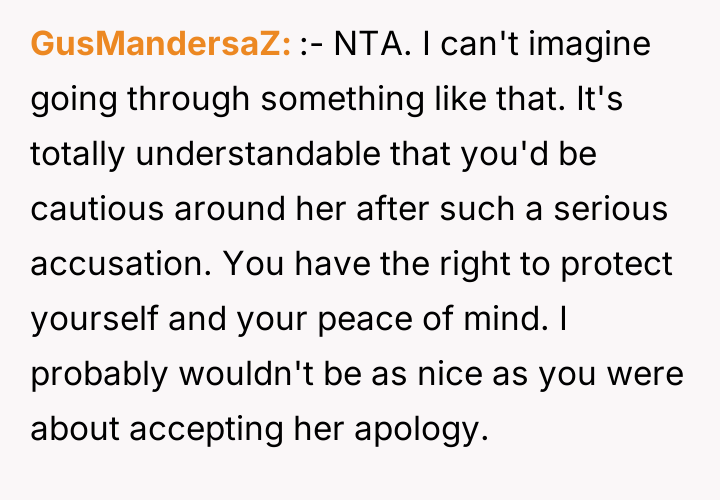
The OP is currently in a difficult position, balancing his genuine desire to be friendly with the need to protect himself following a serious workplace complaint based on perceived inappropriateness during a life-saving action. His current cautious distance reflects a response to the formal accusation, contrasting sharply with the coworker's expectation that he should revert to their previous level of familiarity.
The situation presents a conflict between necessary self-protection in a professional setting and the social expectations of friendship. Is the OP justified in maintaining strict professional boundaries to mitigate future risk, or is he being overly punitive and petty by refusing to treat the coworker as he treats others, despite her attempted apology?