Animal Facts6 min read
Why Do Cats Purr? The Surprising Science Behind the Most Soothing Sound in Nature
Cats purr when they are happy, but also when they are hungry, frightened, giving birth or badly hurt. Scientists are still uncovering how the sound is made, and a 2023 study overturned part of the textbook explanation.
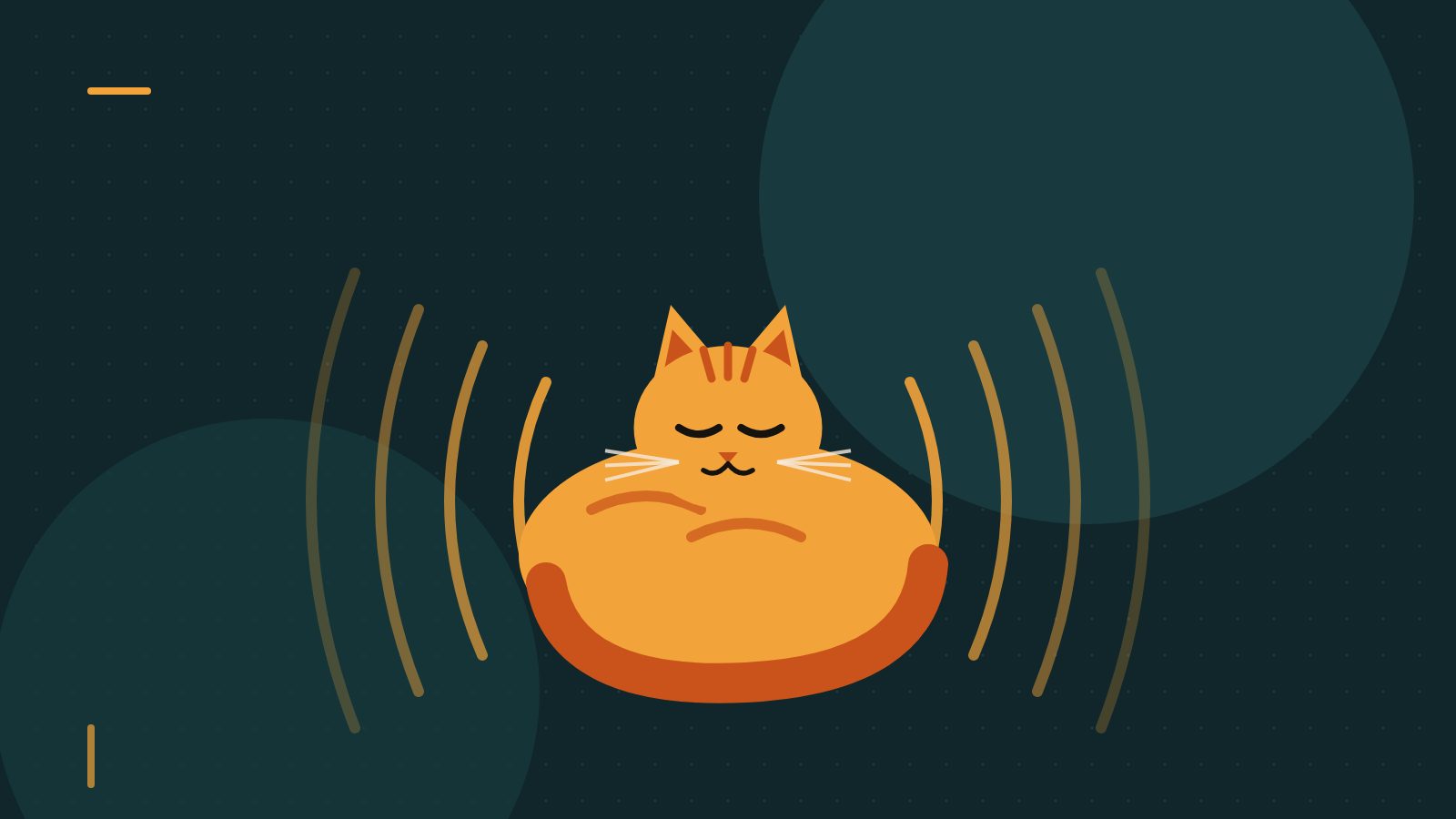
Few sounds are as instantly recognisable as a cat's purr. It is low, steady and strangely calming, a soft engine that seems to run on contentment. Many people would say they know exactly what it means: a happy cat.
The truth is more interesting. Cats purr when they are relaxed and being stroked, yes. But they also purr when they are hungry, when they are anxious at the vet, when they are giving birth and sometimes when they are seriously injured or close to death. A sound that means "all is well" in one situation seems to mean something quite different in another.
Here is what scientists know about why cats purr, how they do it, and what is still a mystery.
The quick answer
Cats purr mainly to communicate and to soothe themselves. The behaviour starts in the first days of life, when kittens purr while nursing and mothers purr back. In adult cats, purring can signal contentment, ask for something, such as food or attention, or help the cat cope with stress and pain. Some researchers also think the low frequencies of the purr may support healing, although that idea has not been proven.
Purring begins at birth
Kittens are born deaf and blind, but they can feel vibrations. Within a few days they purr while they suckle, and mother cats purr while they nurse. One idea is that purring works as a quiet, close-range signal between mother and kittens: "I am here, I am fine", without the noise of a meow that could attract predators.
That early link between purring, feeding and safety seems to stay with cats for life. Adult cats often purr in exactly the situations that remind them of being cared for: curled up on a lap, being stroked, kneading a soft blanket.
How do cats purr? The textbook answer gets a twist
For decades, the standard explanation was that purring is produced by the muscles of the larynx, the voice box. According to this view, a signal from the brain makes the laryngeal muscles twitch rapidly, opening and closing the space between the vocal folds many times a second as the cat breathes in and out. That is why a purr can continue almost without pause, on both the in-breath and the out-breath.
In 2023, a team led by voice scientist Christian Herbst at the University of Vienna published a study in the journal Current Biology that complicated the picture. The researchers examined larynges from domestic cats that had been put to sleep for medical reasons, with the owners' consent. In the laboratory, they blew warm, humidified air through the larynges and found that they could produce purr-like sounds at very low frequencies, around 20 to 30 hertz, without any nerve signal or rhythmic muscle contraction at all.
The team also described unusual pads of tissue embedded in the cats' vocal folds. These pads may help explain how such a small animal can produce such a deep sound, lower than the deepest human bass voice. The researchers were careful to say that their findings do not completely disprove the role of the muscles, but they show that the old explanation was incomplete. The anatomy of the larynx itself appears to do much of the work.
Not every purr means "I am happy"
If you live with a cat, you may have noticed that the purr at breakfast time sounds different from the purr on your lap in the evening. That is not your imagination.
In 2009, Karen McComb and colleagues at the University of Sussex published a study in Current Biology on what they called the "solicitation purr". They recorded cats purring in two situations: while trying to get food from their owners and while relaxing. When the recordings were played to people, listeners rated the food-seeking purrs as more urgent and less pleasant, even when they had never owned a cat.
The researchers found that the solicitation purr contained an extra, higher-pitched element hidden inside the low rumble, a sound reminiscent of a cry. Its frequency was in a range similar to that of a crying human baby, and humans are very sensitive to that kind of sound. The cats, the researchers suggested, had learned to embed a cry in their purr to get their owners moving. It is hard to ignore a purr that sounds a little bit like a baby asking to be fed.
Why cats purr when they are stressed or hurt
Vets and vet nurses see it regularly: a cat on the examination table, clearly nervous, purring loudly. Cats also purr while giving birth, when they are recovering from injury and sometimes in their final hours.
The most common explanation is that purring is a self-soothing behaviour, a little like a person humming to calm their nerves. The rhythmic action may help the cat regulate its breathing and cope with pain or fear. Some researchers have suggested that purring may be linked to the release of endorphins, the body's natural painkillers, although this has not been clearly demonstrated.
For owners, the practical lesson is simple. Purring is not a reliable sign that a cat is fine. A cat that is purring but hiding, not eating, breathing fast or behaving unusually may need to see a vet.
Can a purr heal bones?
This is the claim that circulates most widely online, and it needs care. In 2001, bioacoustics researcher Elizabeth von Muggenthaler presented measurements of purrs from domestic cats and several wild cat species at a meeting of the Acoustical Society of America. She reported that the dominant frequencies of purring fell in a range of roughly 25 to 150 hertz, and pointed out that low-frequency vibration in similar ranges is used in some therapies to stimulate bone growth and healing in humans.
Her suggestion was that purring might help cats keep their bones and muscles in good condition while they rest, which they do for a large part of the day. It is a fascinating hypothesis, and it is sometimes used to explain the old saying that cats have nine lives. But it remains a hypothesis. There is no solid evidence that a cat's purr heals its own fractures, or yours. A purring cat on your lap may well make you feel calmer, and that is real, but it is not a medical treatment.
Which cats can purr?
Domestic cats are not the only purrers. Many smaller wild cats purr, as do cheetahs and pumas, which are large but not part of the group known as the "big cats".
The roaring cats, lions, tigers, leopards and jaguars, are different. Their larynx is built for roaring, and they do not produce the continuous, in-and-out purr of a house cat. They make other friendly sounds instead, such as the soft, puffing "chuff" that tigers use as a greeting. Scientists still debate exactly which features of the larynx and the throat make purring or roaring possible, and the 2023 discoveries about vocal fold pads have reopened that discussion.
Other animals that make purr-like sounds
Several other animals make sounds that people describe as purring, including raccoons, mongooses, some civets and hyenas, as well as guinea pigs, which produce a low rumbling sound in some situations. These sounds are made in different ways and mean different things, but they show that low, rhythmic vocal signals are a useful tool across the animal kingdom.
How to read your cat's purr
Because purring can mean several things, the context is everything. Look at the rest of the cat:
- Relaxed body, slow blinks, kneading, eyes half closed: a contented purr.
- Purring while winding around your legs near the food bowl, perhaps with a meow: a request, most likely for food.
- Purring with a tense body, flattened ears, hiding or fast breathing: the cat may be stressed or in pain.
- Purring together with a change in appetite, litter-box habits or energy: worth a call to the vet.
The bottom line
The purr is one of the most versatile tools a cat has. It begins as a quiet conversation between a mother and her kittens and becomes a way to say "I am content", "feed me now" and "I am trying to stay calm". Science is still catching up with exactly how cats make the sound, and the most famous claims about healing remain unproven.
What is certain is that the gentle rumble on your lap is a message. Most of the time, it is a very good one.