Animals5 min read
The Monkey Who Threw Back Her Cucumber: Do Animals Have a Sense of Fairness?
A famous experiment with capuchin monkeys showed animals reacting to unequal pay with something that looks a lot like outrage. Dogs, rats and other species have since added surprising chapters to the story.
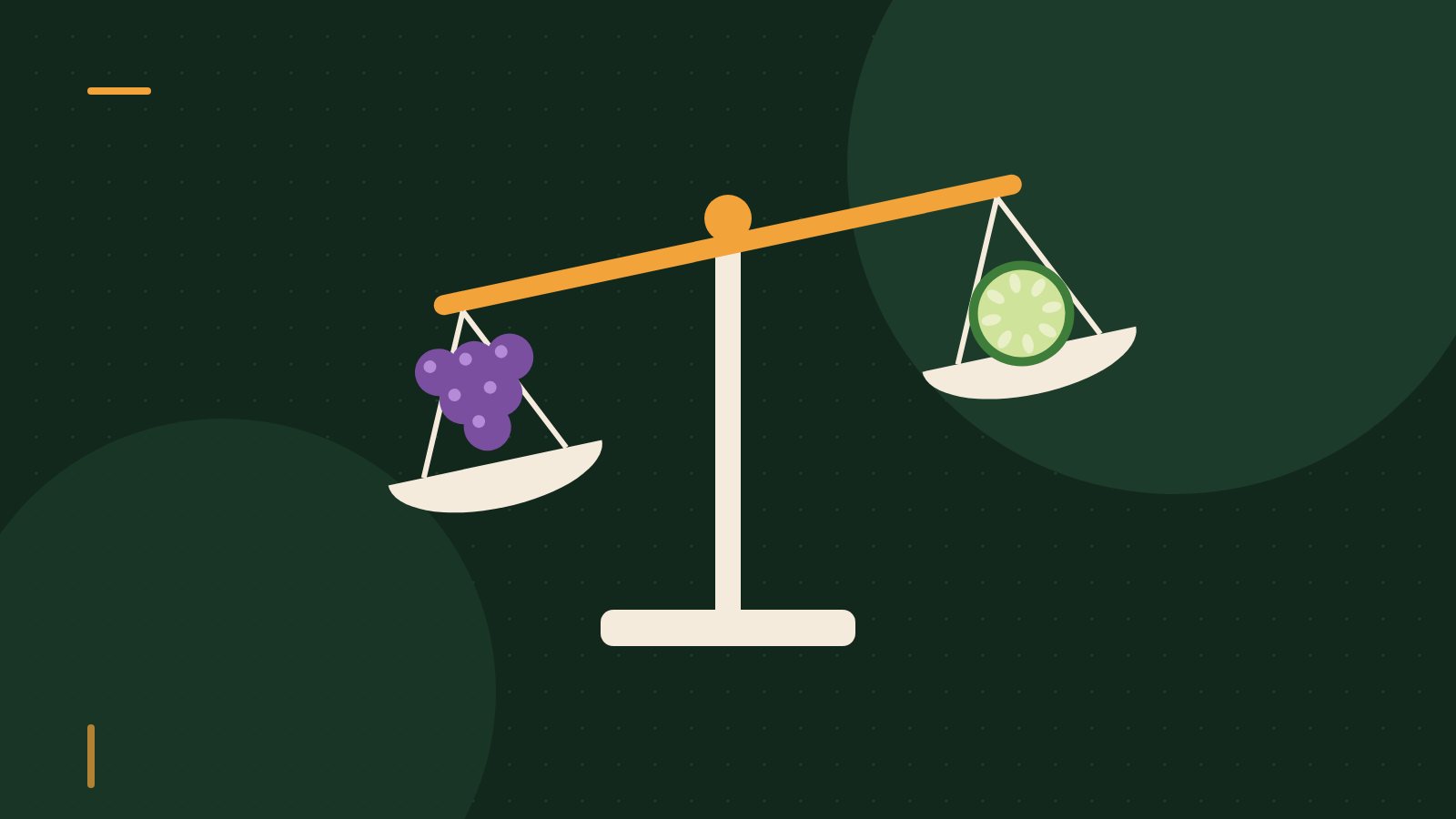
The video is only a minute or so long, and it has been watched by millions of people. Two brown capuchin monkeys sit in neighbouring enclosures with a clear partition between them, so each can see what the other receives. A researcher hands each monkey a small stone, then holds out an open hand. The monkey hands the stone back and receives a reward: a slice of cucumber.
The first monkey eats her cucumber happily. Then the researcher repeats the exchange with the second monkey, but this time the reward is a grape. Capuchins much prefer grapes. The first monkey watches. When it is her turn again, she hands over her stone, receives a slice of cucumber, takes one look at it and throws it straight back at the researcher. She rattles the enclosure. She slaps the floor. She is, by any human reading of the scene, furious.
The clip comes from research led by the primatologists Sarah Brosnan and Frans de Waal, whose findings were published in the journal Nature in 2003 under a title that sums it up neatly: monkeys reject unequal pay.
What the experiment showed
The design was simple. Capuchins were trained to trade tokens for food. When both monkeys in a pair received the same reward, they cooperated readily, even if that reward was the humble cucumber. When one monkey started receiving grapes for the same work, the other became far more likely to refuse to trade, or to refuse the food it was offered.
This is the striking part. From a purely economic point of view, rejecting the cucumber makes no sense. A slice of cucumber is better than nothing. The monkey who throws it away ends up worse off. Something other than simple hunger seemed to be driving the behaviour: a reaction to the comparison itself.
Researchers call this inequity aversion. Humans show it constantly. In economic games where one person proposes how to split a sum of money and the other can accept or reject the offer, people routinely turn down free money if the split feels unfair. They would rather both players get nothing than accept an insulting deal.
Dogs notice too
Capuchins were only the beginning. In 2009, a team led by Friederike Range at the University of Vienna published a study in the Proceedings of the National Academy of Sciences looking at dogs.
Dogs were asked to give their paw on command, the familiar "shake hands" trick. When two dogs sat side by side and only one was rewarded, the unrewarded dog stopped cooperating much sooner than when it was tested alone without a reward. It also showed more signs of stress, such as looking away or licking its lips.
Interestingly, the dogs did not seem to care much about the quality of the reward. If one dog got a piece of sausage and the other only a piece of bread, the bread-dog generally kept cooperating. The dogs reacted to getting nothing while a partner got something, but not to the finer differences that so upset the capuchins. That suggests a simpler version of the same sensitivity, perhaps shaped by thousands of years of living alongside humans and cooperating with each other.
Rats that free their friends
Fairness is one side of a broader question: do animals care about what happens to others? A 2011 study in the journal Science, by Inbal Ben-Ami Bartal, Jean Decety and Peggy Mason at the University of Chicago, offered a memorable answer.
Rats were placed in an arena with a cagemate trapped inside a narrow plastic tube. The tube could only be opened from the outside, and it took effort and practice to work out how. Many of the free rats learned to open the door and release their companion. They did this even when there was no reward for doing so, and they did not bother opening identical tubes that were empty or contained a toy rat.
Then the researchers added a twist. Alongside the trapped rat, they placed a second tube containing chocolate chips, a food rats love. The free rat could open the chocolate tube first and eat everything itself, or free its companion first. Many rats freed their cagemate and then shared the chocolate, leaving some for the other rat rather than eating the lot.
Not every rat behaved this way, and scientists continue to debate exactly what motivates them. But the results suggested that even animals we often think of as purely self-interested are sensitive to the distress of others.
The sceptics' case
It would be easy to jump from these experiments to the conclusion that monkeys have a moral code. Many researchers urge caution, and their objections are worth taking seriously.
One alternative explanation is frustration. A monkey who sees a grape may simply have its expectations raised. When it receives a cucumber instead, the disappointment, rather than any concept of fairness, might drive the outburst. Some follow-up studies have tried to separate these explanations, with mixed results, and the effect has not appeared consistently in every species or every lab.
There is also an important difference between noticing that you have been treated worse than someone else and objecting when you have been treated better. Humans sometimes reject unfair deals that favour themselves. That kind of fairness, sometimes called advantageous inequity aversion, is much harder to find in animals. There are hints of it in chimpanzees, which have occasionally been seen refusing a better reward when a partner got less, but the evidence is thin.
Perhaps the most honest conclusion is that animals show some of the building blocks of fairness, without necessarily having the full structure that humans have built on top of them.
Why the building blocks matter
Those building blocks still tell us something important. Frans de Waal argued for much of his career that human morality didn't appear out of nowhere. It grew from social instincts that many animals share: noticing how others are treated, caring about their distress, and reacting when cooperation turns into exploitation.
This makes evolutionary sense. Animals that live in groups and depend on cooperation need ways to keep that cooperation stable. An individual who keeps working while others take the best rewards is being exploited. Getting angry, and withdrawing cooperation, is one way to stop that from happening. Over time, the emotional reaction to unfairness may have become one of the glues that hold social species together.
Seen this way, the capuchin who throws back her cucumber is not acting irrationally at all. She is refusing to accept a deal that, if accepted again and again, would leave her permanently at the bottom of the pile.
What it says about us
There is something oddly reassuring about these experiments. Our sense of fairness can feel like a fragile, abstract idea, something taught in classrooms and courtrooms. The animal studies suggest it has far deeper roots. The jolt of indignation you feel when a colleague gets credit for your work, or when someone pushes past a queue, may be an ancient signal shared with monkeys, dogs and perhaps many other social animals.
It also offers a gentle reminder. If a monkey can recognise unequal pay for equal work, it is hard to argue that the idea is complicated. The hard part, for animals and humans alike, has never been noticing unfairness. It has been doing something about it.