Technology6 min read
Forget the Trolley Problem: The Real Moral Choices Inside Self-Driving Cars Are Far More Ordinary, and More Important
Millions of people have debated whether a driverless car should swerve to hit one person instead of five. Engineers say that dilemma almost never happens. The ethical decisions they actually face are hiding in plain sight.
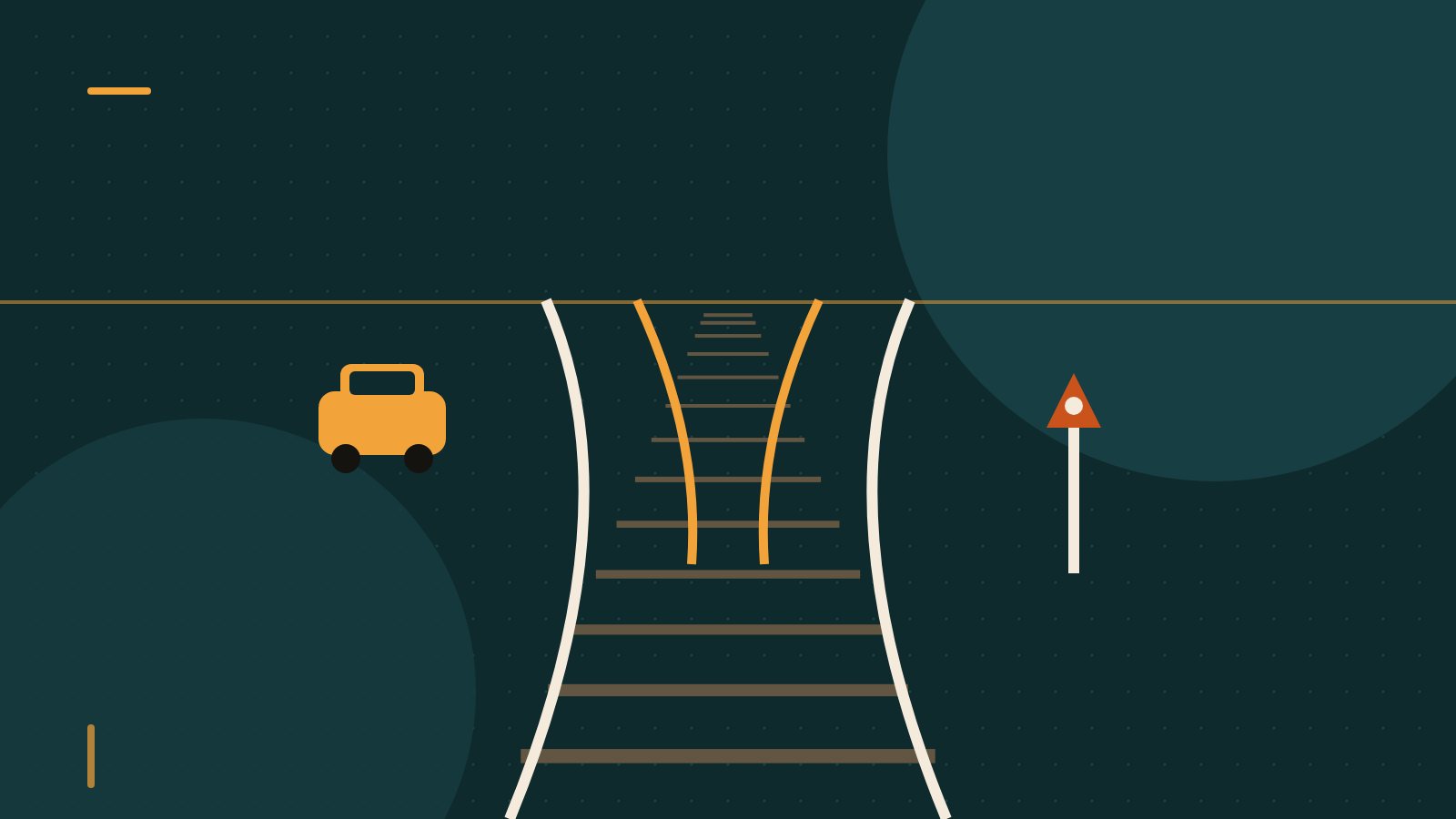
A runaway tram is speeding towards five people tied to the track. You are standing next to a lever. If you pull it, the tram switches to a side track, where it will kill one person instead. Do you pull it?
The British philosopher Philippa Foot introduced a version of this puzzle in 1967, in a paper about the ethics of harm. The American philosopher Judith Jarvis Thomson gave it its now-famous name, the trolley problem, in the 1970s and added a darker twist: what if, instead of pulling a lever, you could stop the tram only by pushing a large man off a footbridge into its path? Most people who would pull the lever refuse to push the man, even though the arithmetic is identical. That gap between the two answers has kept moral philosophers busy for half a century.
Then self-driving cars arrived, and the trolley problem escaped the seminar room.
The Moral Machine
In 2016, researchers at the Massachusetts Institute of Technology launched a website called the Moral Machine. Visitors were shown scenarios in which a driverless car's brakes fail and it must choose between two groups of people or animals. Swerve and hit an elderly couple, or stay on course and hit a young athlete? Save the passengers or the pedestrians? Spare the doctor or the person crossing against the light?
The project went viral. By the time the team published its results in the journal Nature in 2018, it had gathered around 40 million decisions from people in 233 countries and territories. Some preferences were nearly universal: spare humans over animals, spare more lives rather than fewer, and spare the young over the old. Others varied by region and culture. Respondents from some countries showed a weaker preference for sparing the young, for example, while others gave more weight to whether a pedestrian was obeying the law.
It was a fascinating snapshot of human moral intuition. As a guide to building cars, it was much less useful than the headlines suggested.
Why engineers roll their eyes
Talk to people who work on autonomous vehicles and many will tell you, politely, that the trolley problem is a distraction. The scenarios it describes are vanishingly rare. A car that finds itself choosing between two groups of victims has usually already made several mistakes: it was driving too fast for conditions, it failed to see a hazard in time, or it misjudged what someone was about to do.
The real engineering challenge is to avoid ever reaching that moment. That means perceiving the world accurately in rain, glare and darkness. It means recognising objects the system has never seen before, from a fallen mattress to a child in a dinosaur costume. Above all, it means predicting what other road users will do next: whether a cyclist will drift, whether a pedestrian will step off the kerb, whether the car in the next lane is about to cut in.
A grim real-world example shows the point. In 2018, a test vehicle operated by Uber struck and killed Elaine Herzberg as she walked her bicycle across a road at night in Tempe, Arizona. Investigators from the US National Transportation Safety Board found that the system detected her several seconds before impact but struggled to classify her and to predict her path. Automatic emergency braking had been disabled in that mode, and the safety driver behind the wheel was not watching the road. This was not a trolley problem. It was a cascade of ordinary failures in perception, design and oversight.
Where the real ethics live
None of this means self-driving cars are free of moral choices. Quite the opposite. The ethical decisions are simply less dramatic, and they are buried in thousands of settings that most people will never see.
How much space to give a cyclist. Passing a bike with a wide margin is safer for the cyclist but may mean waiting behind it or crossing into the opposite lane. Every autonomous system has to encode a preference, and that preference distributes risk between people.
How fast to drive past parked cars. A child could step out from between them. Driving slowly reduces that risk but makes journeys longer and frustrates the drivers behind. Human drivers make this trade-off by instinct. A machine needs a number.
How assertive to be. A car that always yields is safe but may never manage to merge into busy traffic or turn across a stream of oncoming cars. A car that pushes in more confidently will get through junctions but increases the chance of a collision. Somebody has to decide where to set the dial.
Who carries the risk of uncertainty. When the system isn't sure what an object is, should it brake hard and risk being hit from behind, or carry on and risk hitting something? Each answer shifts danger from one group of people to another.
These are moral questions in the most literal sense. They decide, across millions of journeys, who is more likely to be hurt. They are just not framed as a single heart-stopping choice between five people and one.
What regulators have said
Germany was one of the first countries to tackle the ethics of automated driving head-on. In 2017, an ethics commission set up by its transport ministry published a set of guidelines. Among them: protecting human life must take priority over avoiding damage to property or animals, and in unavoidable accident situations, any distinction based on personal features such as age or gender is strictly prohibited.
That last principle quietly rejects one of the Moral Machine's most popular intuitions. Many people said they would spare the young over the old. The German commission said a machine must not make that kind of judgement at all. It was a reminder that public opinion and ethical policy are not the same thing, and that a democratic society may decide some preferences should never be written into code.
The question we should be asking
The most important ethical question about self-driving cars is not what they should do in the one-in-a-billion dilemma. It is whether, overall, they make roads safer than human drivers do, for everyone who uses them, and how we will know.
Human drivers are, collectively, terrible at their job. They get distracted, tired, drunk, angry and overconfident. Road crashes kill well over a million people a year worldwide. An automated system that was substantially safer than the average driver could save an enormous number of lives, even if it occasionally made mistakes a careful human would not.
But "safer on average" hides important details. A system might reduce crashes overall while performing worse for particular groups, such as pedestrians in poorly lit areas, people using wheelchairs or cyclists in unusual situations. Fairness means checking not just the total number of crashes, but who ends up in them.
It also means transparency. Companies hold huge amounts of data about how their vehicles behave. Without independent access to that data, the public has to take safety claims on trust, and trust is exactly what a new technology needs to earn rather than assume.
Why the trolley problem still has value
For all its flaws as an engineering scenario, the trolley problem did one useful thing. It made millions of people realise that machines on the road will embody values, whether anyone chooses them deliberately or not.
The real values are not hidden in a single switch on a single track. They are spread across every decision about speed, distance, caution and confidence, and across every choice about how these systems are tested, regulated and held to account. That is less cinematic than a runaway tram. It is also where the lives will actually be saved or lost.